
28.10.25, 20:00, Duo Coordonné & ‘Ontzingen’ by Eva Binon and Arend Pinoy, Dowlands Seven Tears
You may remember Thomas Langlois (lute) as one of Klara’s Twintigers (Twenty-somethings) in 2023. Together with mezzo-soprano Anna Nuytten, he forms Duo Coordonné. They share a great love for Dowland’s work.
John Dowland wrote his Lachrimae, also known as Seven Tears, in 1604, based on a song, Flow my tears, which he had written a few years earlier and which became a real hit. Seven Tears was originally wordless: Dowland wrote it for a viola da gamba consort. Duo Coordonné rewrote the composition and alternates the seven variations with earlier songs by Dowland.
Ontzingen by Eva Binon and Arend Pinoy presents a version of Seven Tears that lies somewhere between performance and musical performance, between laughter and tears, between punk and consolation.
9000 Gent
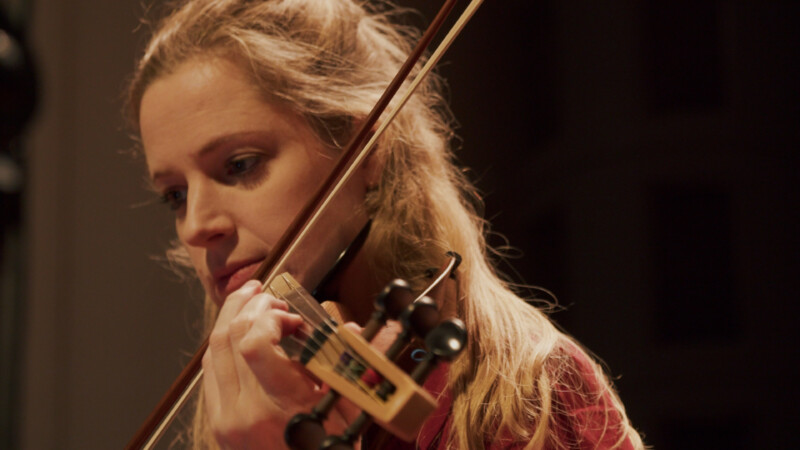 videoLees, kijk, luisterartistic activities Will to WanderEva Binon & Arend Pinoy about the new series at MIRY Concert Hall
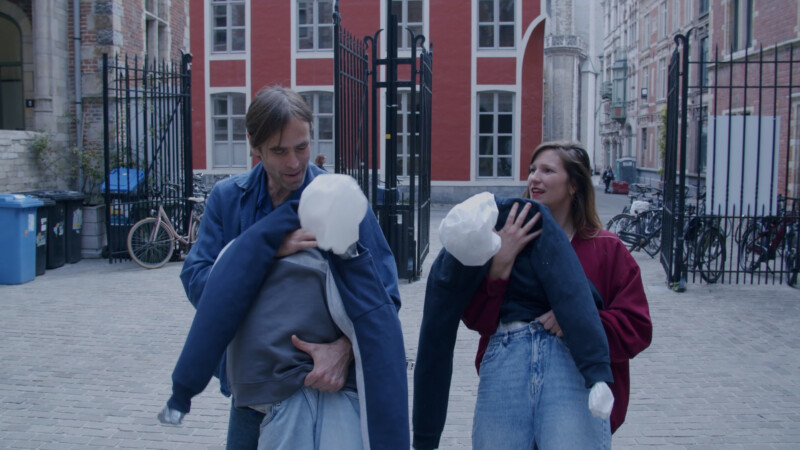 videoLees, kijk, luisterartistic activities
 An-Sofie Perneel & Greet Steeman, Rodrigo Evangelista, MIRY Concert hallconcertAgendaArtistic activities
Will to Wander concerts bring together a classical soloist or duo — specifically selected by MIRY — with a second artist who formulates an artistic response to the same piece.
An-Sofie Perneel is a talented young violinist who is making a name for herself as a soloist and concertmaster with various national and international youth orchestras. Pianist Greet Steeman specialised in piano, chamber music and song accompaniment, studying at institutions including the Guildhall School of Music and Drama in London. As a piano accompanist and coach, she has worked with a wide range of ensembles and musicians, and she leads annual Suzuki music workshops for young players. Perneel and Kolacny delve into the musical world of Béla Bartók.
This struck a chord with pianist Rodrigo Evangelista, who, ever since he swapped Argentina for Belgium, has been searching for the sound of home. Once you’ve lived in two such completely different places, can you ever feel completely at home anywhere? Evangelista interprets the duality between the sounds of the past and the sounds of the present in a wholly unique way, on a piano that is just as fragmented as his sense of home.
9000 Gent
 Pierre Fontenelle, Ali Choupani Nejad, MIRY Concert hallconcertAgendaArtistic activities
Will to Wander concerts bring together a classical soloist or a duo — specifically selected by MIRY — with a second artist who formulates an artistic response to the same piece. When one hears the term ‘cello suites’, J.S. Bach immediately springs to mind, but Benjamin Britten also wrote three. He dedicated them to one of the most important cellists of the last century, Mstislav Rostropovich. The Belgian Pierre Fontenelle chose the first and third suites for his performance at the MIRY Concert Hall. For a time, he was the principal cellist with the orchestra of the Opéra Royal de Wallonie-Liège, before embarking on a career as a soloist and chamber musician.
In his ‘Will to Wander’ response, Ali Choupani Nejad deconstructs Britten’s First Suite and uses the material to construct a new reality, in which repetition provides an auditory anchor within an otherwise thoroughly jumbled framework. His musical language has been shaped, amongst other things, by his Persian roots, his fascination with contemporary playing techniques, and the role that improvisation and the human body play in his life.
9000 Gent
 Korneel Bernolet, Nicolas Kummert, MIRY Concert hallconcertAgendaArtistic activities
Will to Wander concerts bring together a classical soloist or duo — specifically selected by MIRY — with a second artist who formulates an artistic response to the same piece.
Korneel Bernolet is one of the most sought-after harpsichordists on the international scene. He has repeatedly made a name for himself internationally with appearances at venues including the Teatro alla Scala in Milan, the Concertgebouw in Amsterdam, the Vienna State Opera, the Philharmonie in Cologne and the Philharmonie in Paris, and the Kennedy Centre in Washington D.C. He is also a welcome guest at Belgian venues and with Belgian ensembles, ranging from Il Gardellino to the Antwerp Symphony Orchestra.
His programme featuring two suites for solo harpsichord by Rameau inspired Nicolas Kummert to create a Rameau-inspired solo performance, in which his saxophone, voice and electronics form the building blocks. He recently launched a research project in which he is exploring Rameau’s work further; in his view, this work is not a finished product, but an invitation to continue creating.
9000 Gent
 Kaja Farszky, Cedric Haeck & Ine Garré, MIRY Concert hallconcertAgendaArtistic activities
For John Luther Adams, music encompasses more than just rhythm, harmony, melody and timbre. His compositions are veritable soundscapes and intriguing sonic worlds in which listeners can lose themselves entirely. Kaja Farszky selected four movements from his monumental work, The Mathematics of Resonant Bodies, in which Adams explores the rich potential of percussion instruments such as cymbals, tam-tams and snare drums, whose resonances often call to mind choral music.
Taking Adams’ ideas of resonance and music as their inspiration, Cedric Haeck and Ine Garré set to work. All they need are double basses and their own bodies. Through improvisation, they explore the boundary between music and dance and how tangible or fluid it is. After all, anything or anyone can be a resonating body.
9000 Gent
 Emmy Wils & Piet Kuijken, Croene & Cornelis Pianoduo, MIRY Concert hallconcertAgendaArtistic activities
Igor Stravinsky wrote the music for the ballet Petrushka in 1911 and later arranged it for orchestra. The story bears some resemblance to Pinocchio: a puppet comes to life and develops its own emotional world.
This four-handed performance features no dancing or orchestra but two excellent pianists: Emmy Wils and Piet Kuijken. The former was once the latter’s student, and now they sit together at the keyboard, pulling the strings of Petrushka and the other fairground puppets.
Opposite them sit the piano duo Croene and Cornelis. They perform Petrushka in their own unique way, questioning the balance of power: who is playing whom? Who follows and who leads? Is playing four-handed on one piano as symbiotic as it seems?
9000 Gent
 Duo Bel Ayre, FLUGI, MIRY Concert hallconcertAgendaArtistic activities
Humans have been traveling for as long as they have existed— for pleasure, out of necessity, to escape, or to reach something. Duo Bel Ayre playfully explores this Will to Wander. Where does this urge to travel come from? And why are we still subject to it today? Is it the drive toward the unknown, or the hope for a better future? Who are the travelers we encounter along the way, and what stories do they carry with them? Lieselot De Wilde (voice, tenorbanjo, barrel organ) and Peter Verhelst (guitar, oud) seek answers through songs from all corners of the world, following in the footsteps of troubadours and other traveling musicians.
Join this musical journey and let yourself be carried along—on the back of a Sicilian horse-drawn cart or on foot—from Antwerp all the way to the Black Sea. Elena Olga Groppo and Emiliano Cedillo feel completely at home in adventure and discovery: they combine contemporary music with—yes, you read that correctly—circus. Together, they create an artistic response full of acrobatics, musical or otherwise.
9000 Gent
 Duo Altiler, Aaricia Ponnet & Haroun Iqbal, MIRY Concert hallconcertAgendaArtistic activities
Beethoven's Kreutzer Sonata has often been a source of inspiration for other artists in the past — think of Tolstoy and Janáček — and the piece continues to provoke. This makes it ideal for Will to Wander, which shines a different light on classical works.
Beethoven dedicated his 9th sonata to his good friend, violinist Rodolphe Kreutzer, who is best known among violinists for his etudes. The original commission was for Bridgetower, who premiered the piece but found it unplayable. To err is human: the work is now part of the standard violin repertoire and is performed frequently. Tonight, you will hear it first in its original form by Duo Altiler, who won Klara's Supernova competition in 2025 and also took home the audience prize. After that, Aaricia Ponnet & Haroun Iqbal will let their imagination run wild.
9000 Gent
 Pianoduo Simplexity & Merel Vercammen, MIRY Concert hallconcertAgendaArtistic activities
At Will to Wander, you will hear each piece twice: first as it was written, then in a new guise. The central piece this evening is Steve Reich's Piano Phase. It is a constant shifting of similar material, divided between two pianos that seem to contradict, support, and complement each other. This is right up the alley of piano duo Simplexity, who want to understand how simplicity and complexity relate to each other. After the original performance, violinist Merel Vercammen will present her interpretation.
In the same vein as Piano Phase is John Adams' Hallelujah Junction, in which seemingly simple material is again divided between the two pianos in such a way that it produces an ‘acoustic version of a digital delay’. It sounds like a flight of starlings looks: like a cloud that keeps changing its mind.
Merel Vercammen, in turn, explores the artistic possibilities of the electric five-string violin. Inspired by the characteristic repetitive patterns in the piano repertoire of Steve Reich and John Adams, she develops a new soundscape in which the violin transforms into a full-fledged sound orchestra. Piano Phase and Hallelujah Junction are built on layered repetitions and subtle shifts in rhythm and harmony. This structure forms the starting point for Merel’s approach. Within that framework, improvisations arise that develop according to Reich’s and Adams’ logic of gradual transformation, but with their own voice and dynamics. In this context, the electric five-string violin is amplified and expanded with a series of guitar pedals. This technology makes it possible to create a layered, pulsating and richly orchestrated sound field live, on her own.
9000 Gent