

Project Iris
The Future Proef Award recognises final-year theses that contribute to a sustainable future. Recent graduate Lucas Coussement is a finalist for this award with his bachelor's project, Project Iris. Lucas studied interior design and chose Temporary Installations as his final study focus.
Update 29 April 2026: In the bachelor's projects category, Lucas Coussement won first prize.
Future Proef Awards
What was the subject of your graduation project?
Lucas Coussement
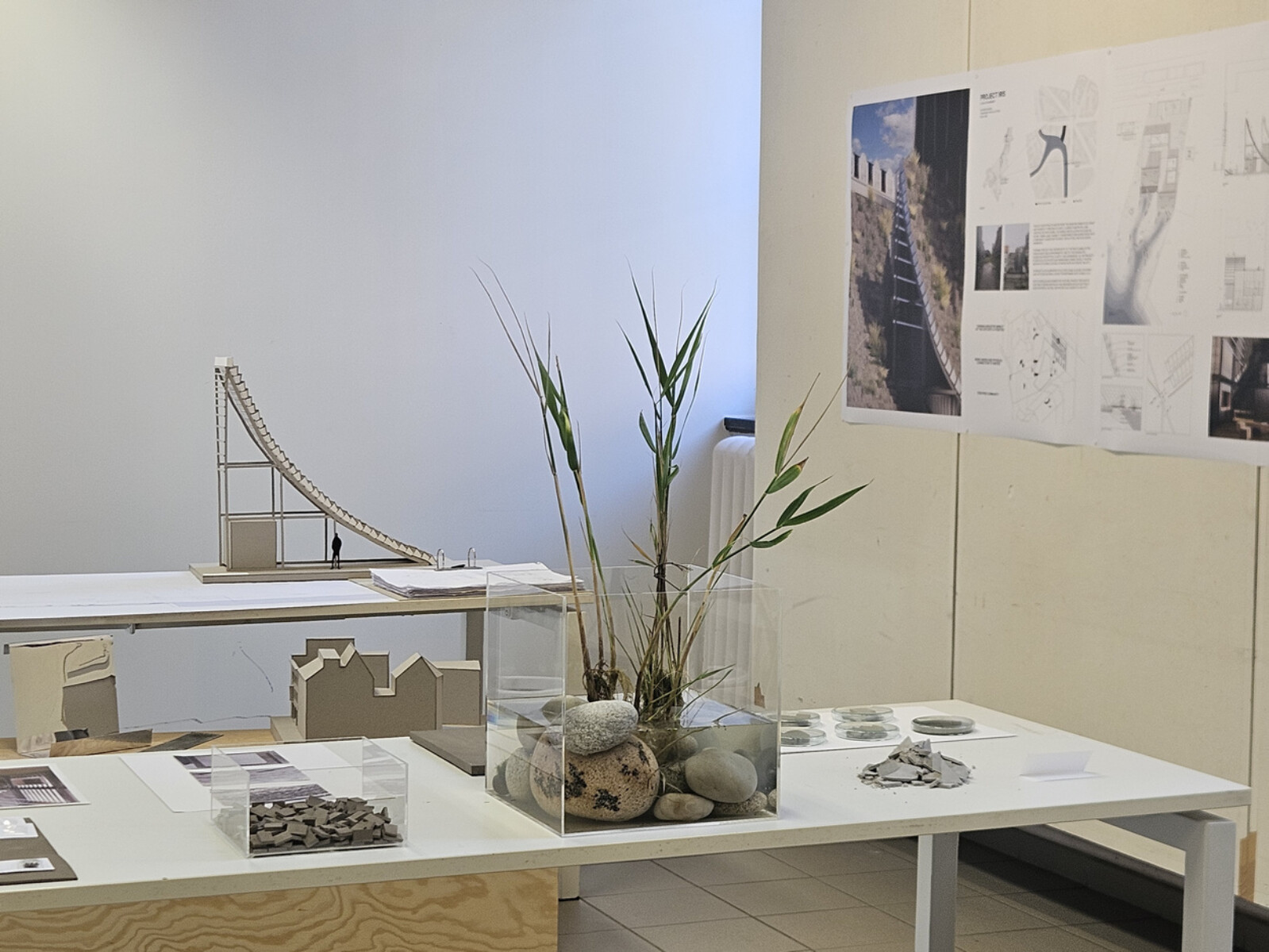
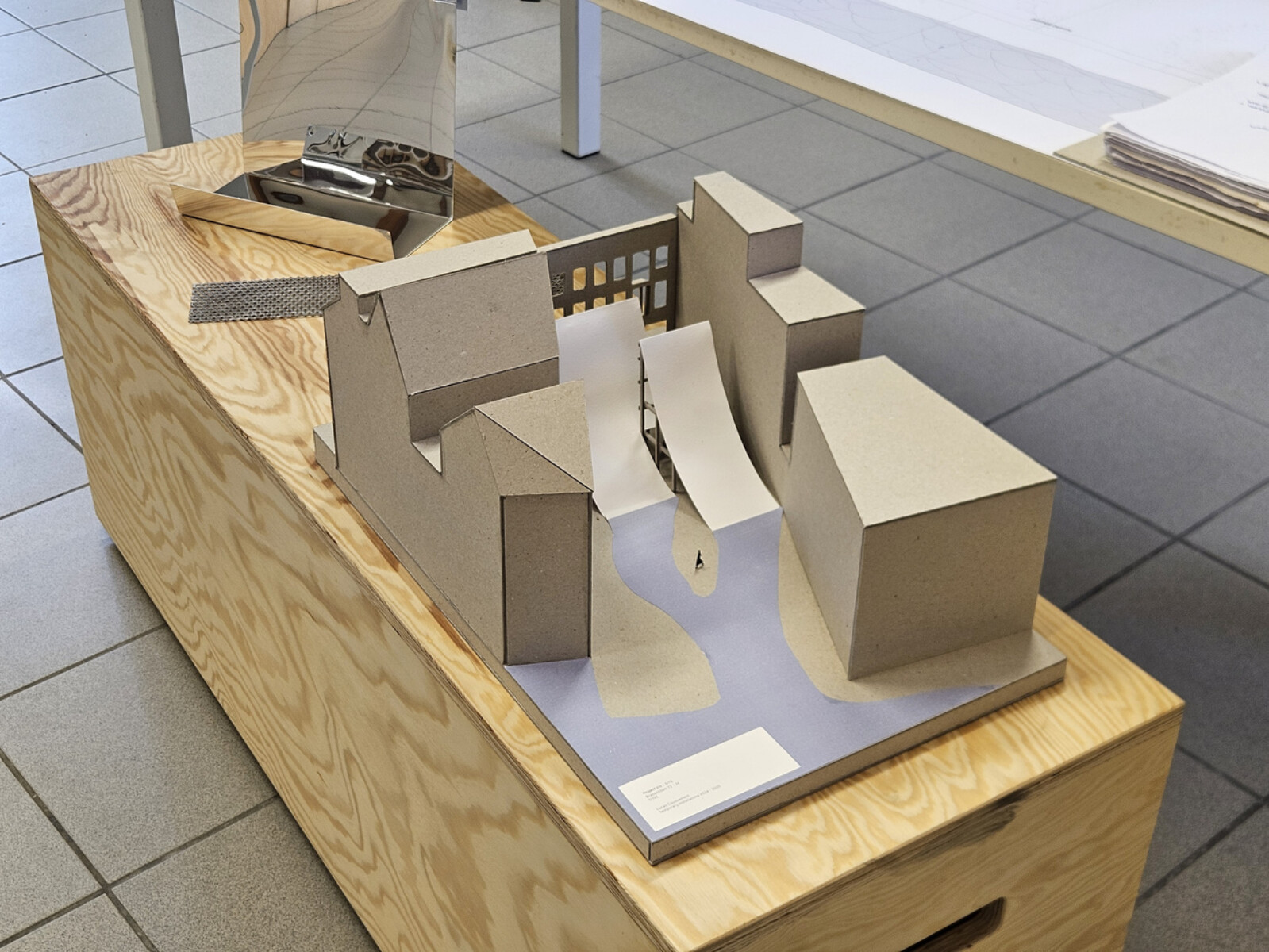
In my bachelor's project, Project Iris, I investigate how urban inland waterways can once again play an active role in a liveable, sustainable city. The project stems from the ambition to make Ghent’s waterways accessible again and, in time, even suitable for swimming. Using a mobile, temporary installation, water from Ghent’s inland waterways is purified through a combination of UV light, layered substrates and constructed wetland areas.
The installation is placed on derelict urban sites and transforms forgotten spaces into temporary landscapes for tranquillity, reflection and ecological awareness. Project Iris refers both to the iris flower, which grows in wet areas, and to the human eye, a symbol of perception and clarity. In this way, the project links technical water purification with urban imagination and awareness.
In addition to water purification, my bachelor's project also explores how contaminated canal sludge can be reused as usable clay, thereby putting waste streams to circular use. Thanks to its modular and flexible nature, Project Iris can adapt to different locations and contexts, and take on new meanings and functions each time.
My bachelor's project demonstrates how sustainability is not merely an ecological issue, but also a social, cultural and spatial challenge, in which water, the city and the community are reconnected.
FPA
How does your bachelor's project contribute to sustainability?
LC
Through my bachelor's project, I am contributing to sustainability by developing a holistic approach to urban water issues, bringing together ecology, public space and imagination. I demonstrate that water treatment need not remain hidden within technical infrastructure, but can also be visible, experiential and community-building.
Ecologically, Project Iris contributes to improving water quality and urban biodiversity by combining natural purification processes with technology. From a circular perspective, the project investigates how contaminated sludge can be reused as a raw material, thereby restoring value to waste streams. Socially, the installation creates temporary spaces for meeting, rest and reflection, and raises awareness of water and ecology among city dwellers.
A key added value of my bachelor's project is the temporary and modular approach. By not relying on permanent infrastructure, the project remains flexible, scalable and adaptable to changing urban needs. At the same time, it challenges existing notions of how water, nature and the city relate to one another.
My bachelor's project demonstrates that sustainability is not just about efficient solutions, but also about stories, imagination and engagement. By placing water back at the heart of the urban system, Project Iris contributes to a just, resilient and liveable city for current and future generations.
Future Proef Awards
The Department of Environment, Flemish higher education institutions and the Foundation Toekomstige Generaties are jointly organising this competition.
Curious to find out which students will win a Future Proef Award 2026 for their final project this year? Find out at the festive awards ceremony on 28 April from 17:30 at the VAC Dirk Bouts, Leuven, organised in collaboration with KU Leuven and UCLL.