

Archival Traces
About the reading of what is written without words
Having grown up between Belgium and Italy, I carry two emotional worlds within me: rationality and romance. In my work, they are constantly in tension with one another.
My research always begins anew in the archives of my grandmothers, my nonnas. Not in an official archive, not in boxes bearing the correct labels or acid-free paper, but in cupboards, rooms, drawers, photo albums and amongst fabrics that have been waiting for years. I start with their wardrobes, their analogue photographic archives and their domestic surroundings. There, I look for something that catches my eye. Something that moves me. Something that seems to be looking back at me even before I fully understand it myself.
The common thread is always the same: the old.
Old objects have an aura about them. They speak without words, through their yellowing, their stains, their tears and their creases. What may seem to many to be a lifeless consumer item appears to me as something alive. Something that carries a story and tries to whisper it through its physical characteristics.
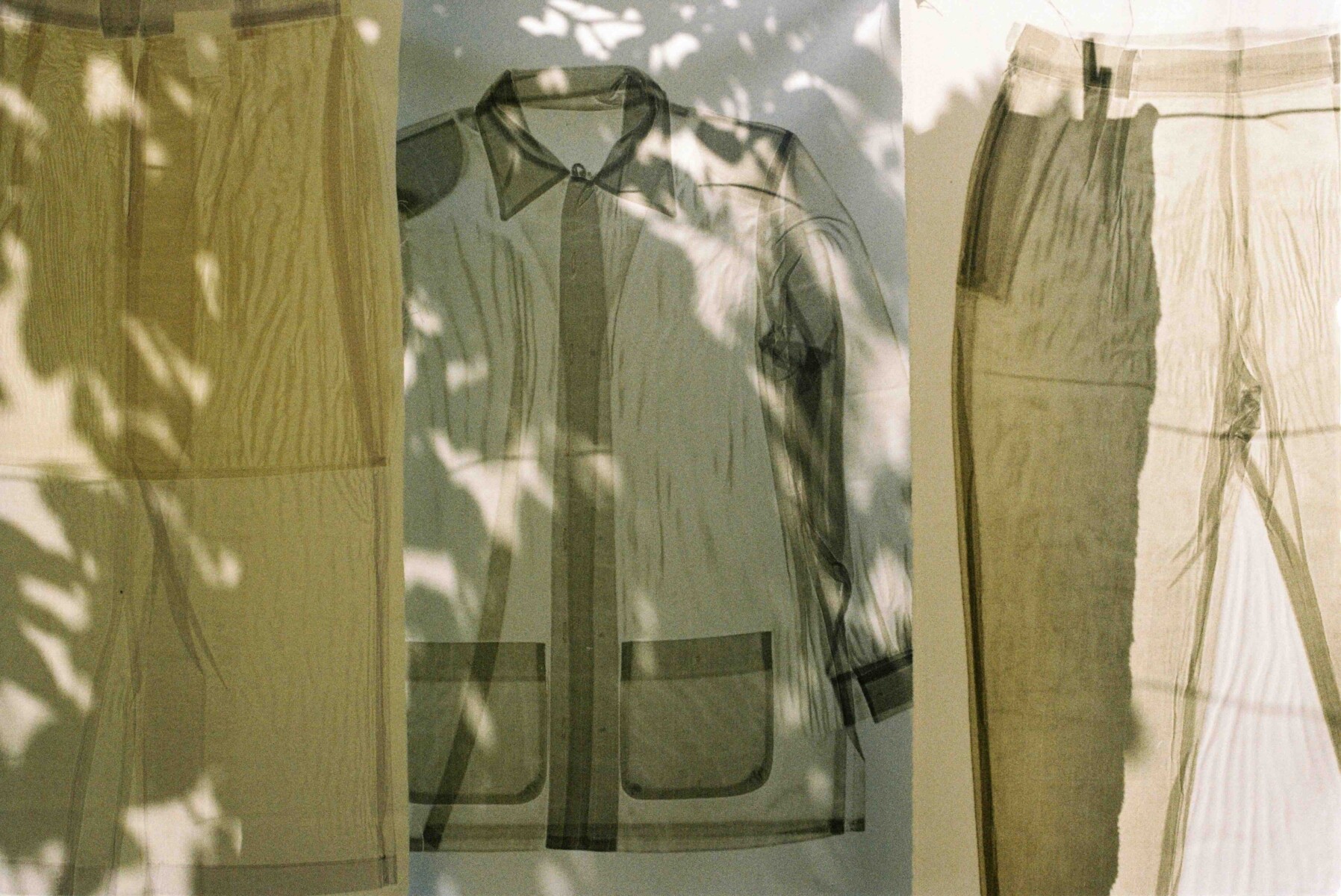
In Archival Traces, the focus is primarily on the clothes of my Italian grandmother, Nonna Lena. She is someone who finds it difficult to let go. Almost everything is kept in her house: clothes, fabrics, photographs, bags and objects that might one day come in handy. I call this ‘koesterdrang' – a desire to hold on to what is, in fact, already on the verge of disappearing.
This attitude forms the starting point for my work. Not out of nostalgia, but out of mindfulness. What happens when a garment is no longer merely worn, but read? When a stain, a crease or a discolouration is seen not as damage, but as a trace?
A key moment in my process arose almost by chance. I was already regularly making transfer prints of images onto fabric. To do this, I would place printed transfer paper onto fabric, together with old garments belonging to my nonna. During that process, I discovered that not only did the image on the transfer paper print onto the fabric, but so did the garment itself.
From that moment on, I increasingly left out the photographs. I began printing directly with the garments.
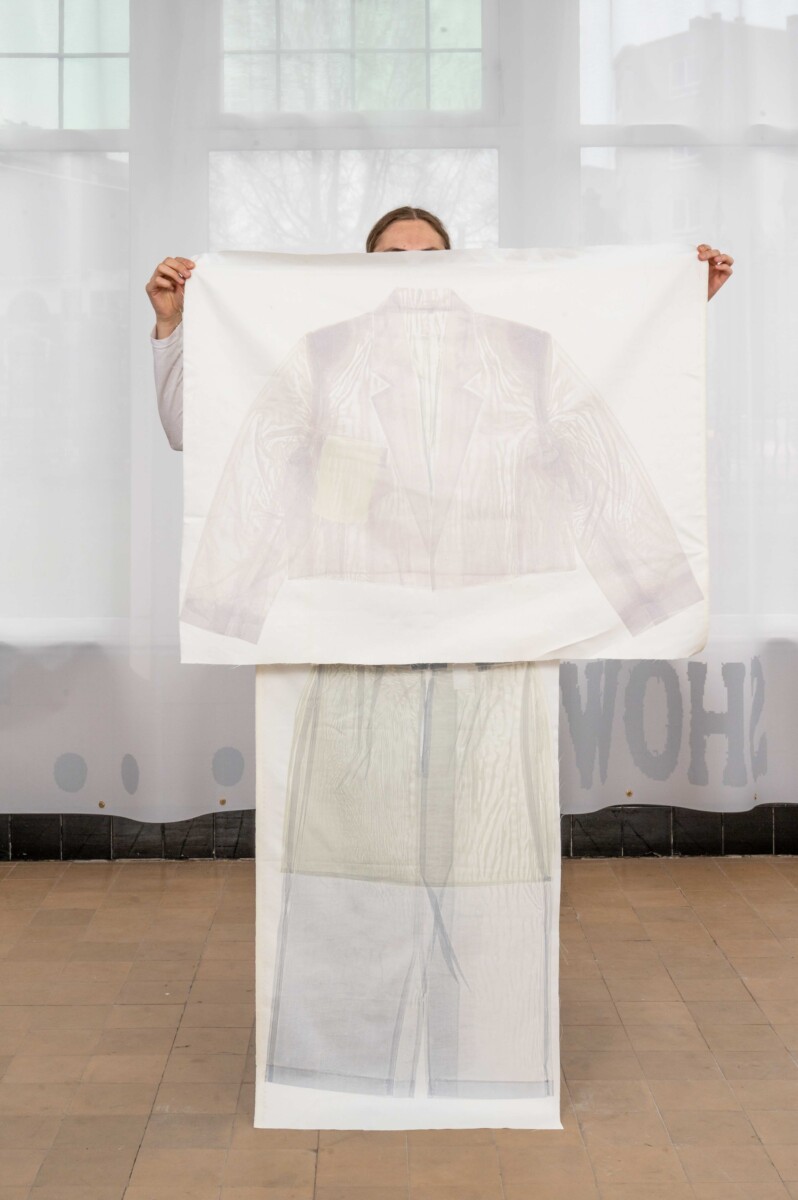
Under the heat of the press, the fabric releases something of itself. The old garments transfer colour, but also more than just colour. They leave a trace. An imprint that cannot be fully controlled. As if something from the garment breaks free and reattaches itself to another fabric.

For the best result, I use polyester. This fabric acts as a receptor. It absorbs the dyes, which are reactivated by the heat. The old clothes function almost like living transfer paper. Not as a carrier of an image, but as a source of transfer.
What happens technically lies somewhere between chemistry, chance and care. Many of my grandmother’s garments date from the 1940s, 1950s, 1960s and 1970s, a period in which synthetic fibres and blended fabrics became increasingly prevalent. Polyester, acetate, nylon and other synthetic fibres held the promise of modernity back then. They were associated with innovation, lustre, colour, convenience and durability. At the same time, garments were treated with a very different level of care compared to today.
At high temperatures, certain dyes in the old fibres become mobile again. These are probably not pigments in the strict sense of the word, but dyes that once penetrated deep into the fabric and are now beginning to migrate again due to the heat. The polyester fabric lying on top absorbs these dyes. This results not in a superficial print, but in a transfer of material.
The garment doesn’t leave behind a normal print. It gives something away.
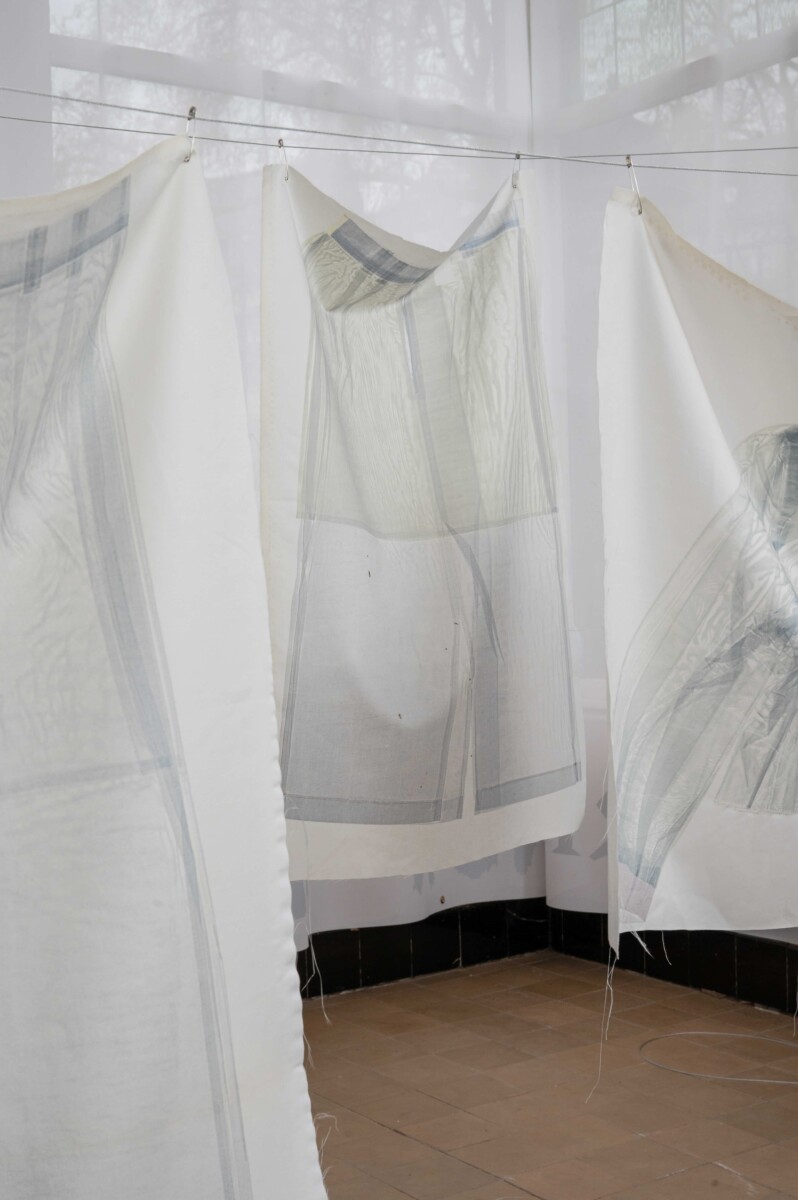
This also explains why I can produce multiple prints from a single garment. The garment acts as a reservoir. Not all the dye is released at once. Each time, a different trace is released. A further layer. A fainter echo. The repetition does not immediately exhaust the garment, but reveals how much still lies within it. As if the fabric contains more memory than is visible at first glance.
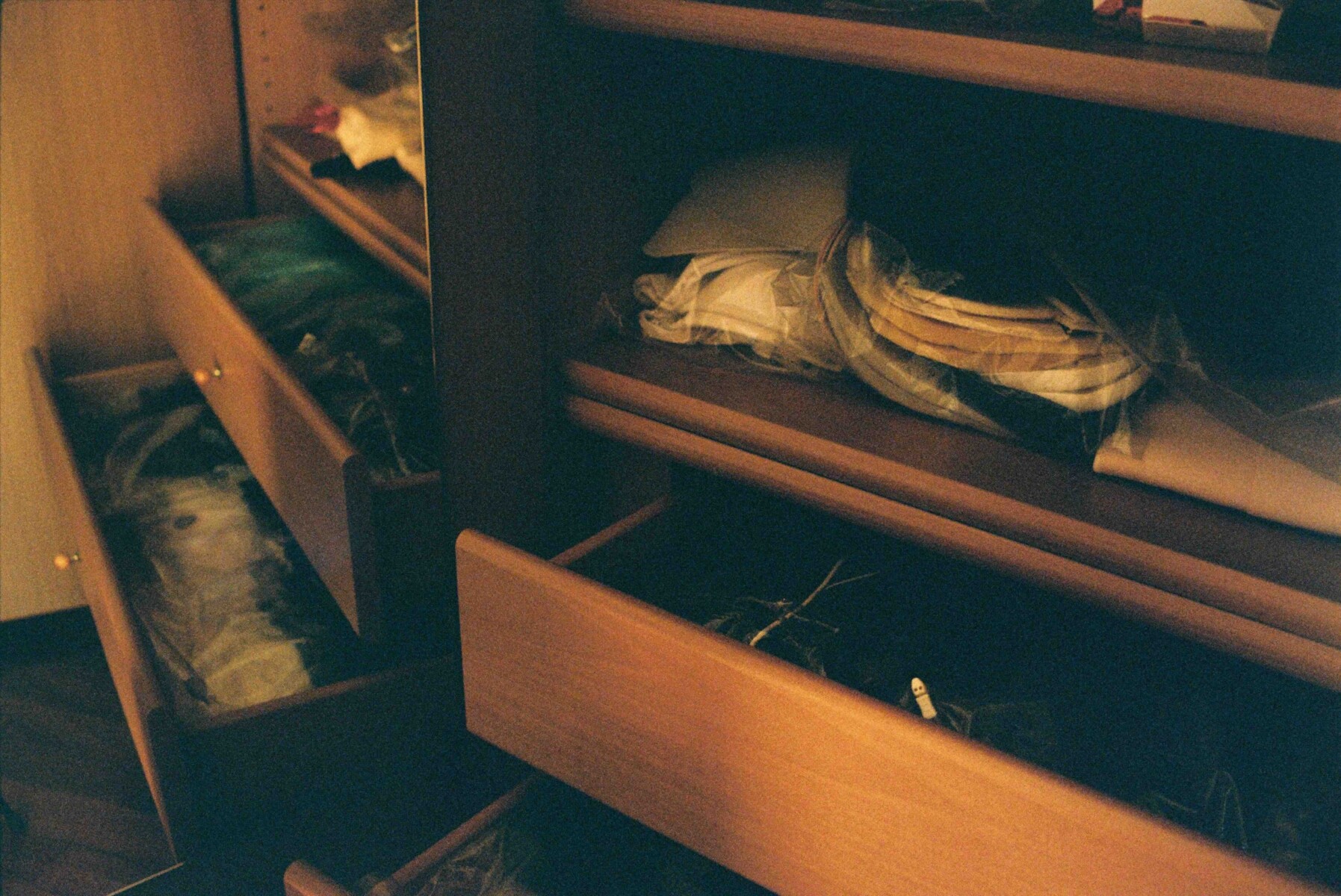
That memory isn’t just chemical. It’s also the result of care.
My grandmother always looked after her clothes with an almost ritualistic attention to detail. Many items hung separately in plastic bags in her wardrobe for years. Not carelessly crammed in, not constantly washed, not thoughtlessly worn and then replaced. Clothes were taken to the dry cleaners. Stains were treated locally, carefully and by hand. Anything soiled was not aggressively scrubbed clean. Anything delicate was protected.
That care has left its mark on the fabric. As the garments were not subjected to aggressive cleaning or worn out by excessive washing, dyes, residues, fibres and surface textures remained much more prominent. As a result, the colours still seem to be present in the garments, not only visible on the outside, but also embedded deep within the material.
Plastic also plays an important role in this. In my nonna’s house, plastic is not just careless packaging, but a form of protection. Items of clothing hang for years, individually wrapped in transparent sleeves, shielded from dust, light and touch. The plastic not only preserves the shape of a coat or dress, but also something of the time that has lingered around it.

In my project, this materiality of plastic reappears as a protective layer, as a membrane between clothing and the world. It preserves, but it also seals off. Just as the heat transfer press detaches something from the garment, the plastic seems to have held something within the garment for years: colour, scent, fabric, memory.
In this way, sublimation becomes more than a technical discovery. The print reveals not only the pattern or colour of a garment, but also the way in which it was produced, worn, cared for and preserved. The print depicts an encounter between industrial chemistry and domestic care, between synthetic fibre and a familial gesture.
In this process, a fragile balance emerges between preservation and deterioration. The fabric is placed under the press at a high temperature, but only for a limited time. Long enough to make something visible. Not so long that the garment burns. Every print therefore also carries a risk: something is transferred, but the original garment changes in the process.
What moves me about this is that the print is not a reproduction. It is not an image of the garment, but a print made by the garment. The print does not arise from an external layer of ink, but from the fabric itself. From colour that was once chosen, worn, washed, kept and forgotten. From fibres that still carry something within them.
As if the fabric’s vacuum is fixed onto a new surface.

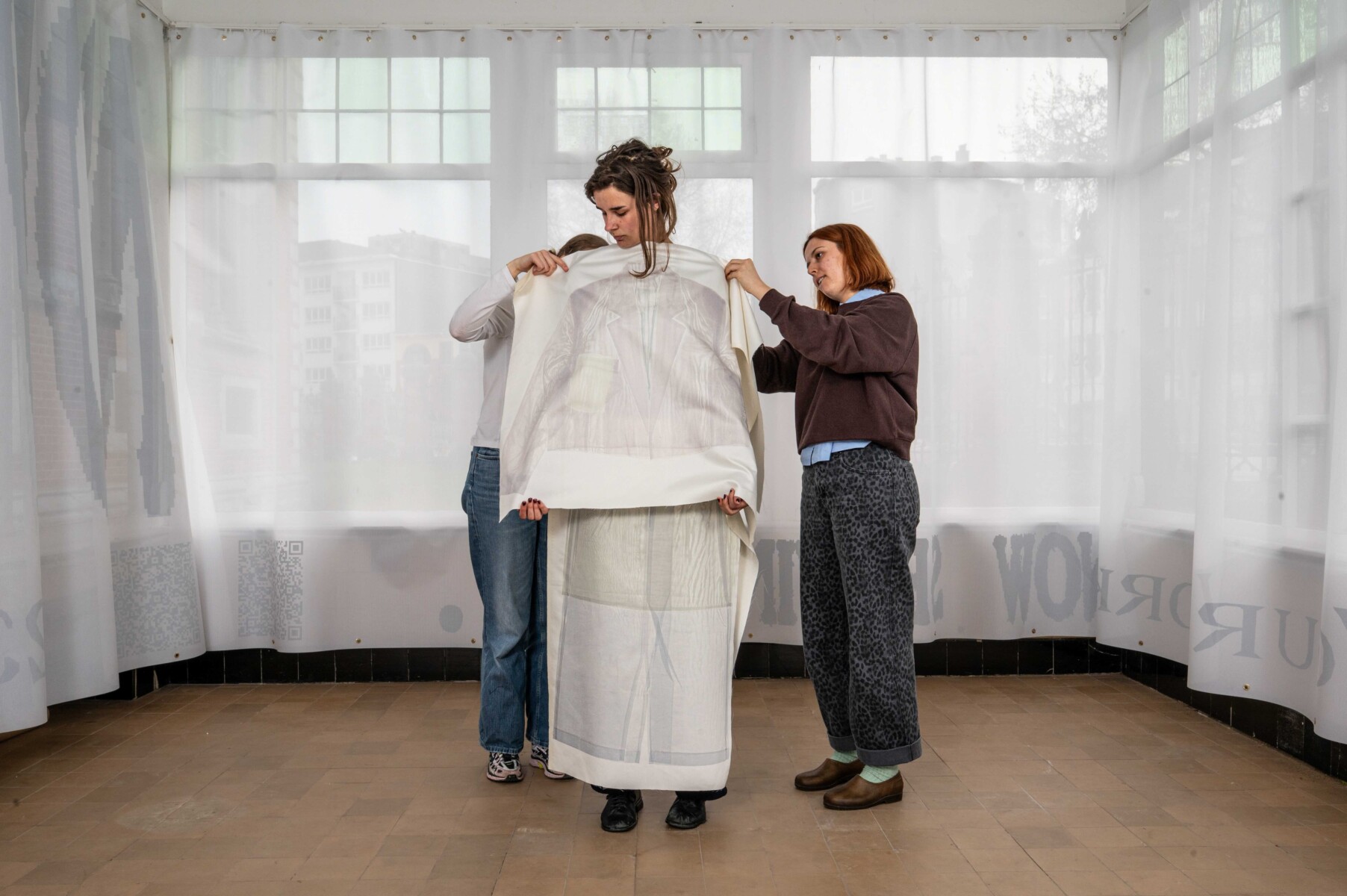
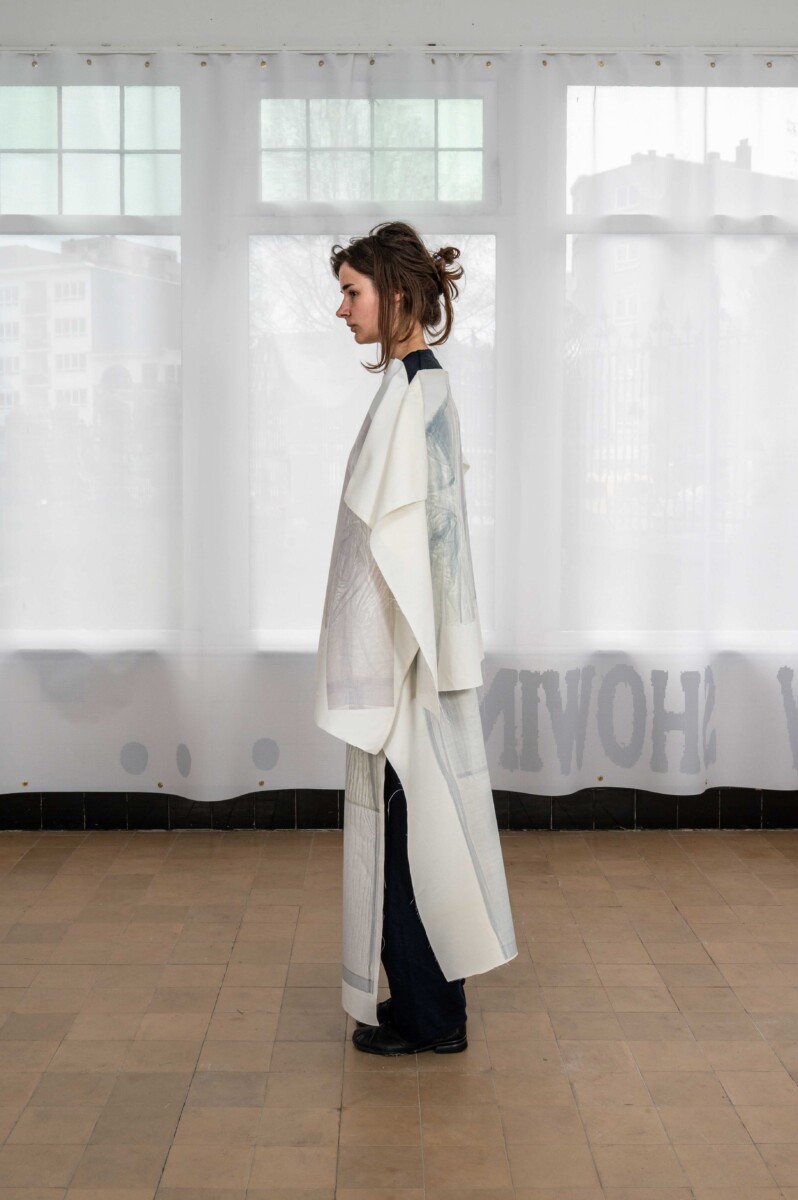
This discovery increasingly became the core of my bachelor’s project. In Archival Traces, I bring film, textiles, transfer prints, plastic, garments and my nonna’s home environment into dialogue with one another. The installation does not present an archive as a closed collection, but as a living field of traces. A place where garments, images and memories continue to intersect.
With my camera, I return time and time again to Vigevano, the town in northern Italy where my Italian grandmother lives. To her home, her hands, her cupboards, her movements. I film with as little staging as possible, driven by a desire to observe what usually remains almost invisible.
From the footage I have shot over the past few years, a short film has emerged that approaches the project in a gentle and poetic way. The film is set in her home and shows how my nonna encounters my work. She does not view the fabrics as art objects from a distance, but as something familiar to her. Like garments that once belonged to her. Which they are, in a way.
Only they have been reworked. Transformed. Re-emerged through a technique born of chance, heat, care and preservation.
Archival Traces is, for me, a way of reading what is written without words. In fabric, in colour, in stains, in plastic, in touch. In what has been preserved. In what had almost disappeared.
As if, after years in a wardrobe, the clothes not only want to be remembered, but want to say something themselves.
Expo Textielontwerp
Fancy seeing this work and that of other textile design students? Then do come along to the textile design exhibition on 20 and 21 June, from 11:00 to 18:00 at Hartetroef, Heilig-Hartplein, 9040 Ghent. The opening takes place on 19 June from 18:00. Everyone is welcome.
16.06.26