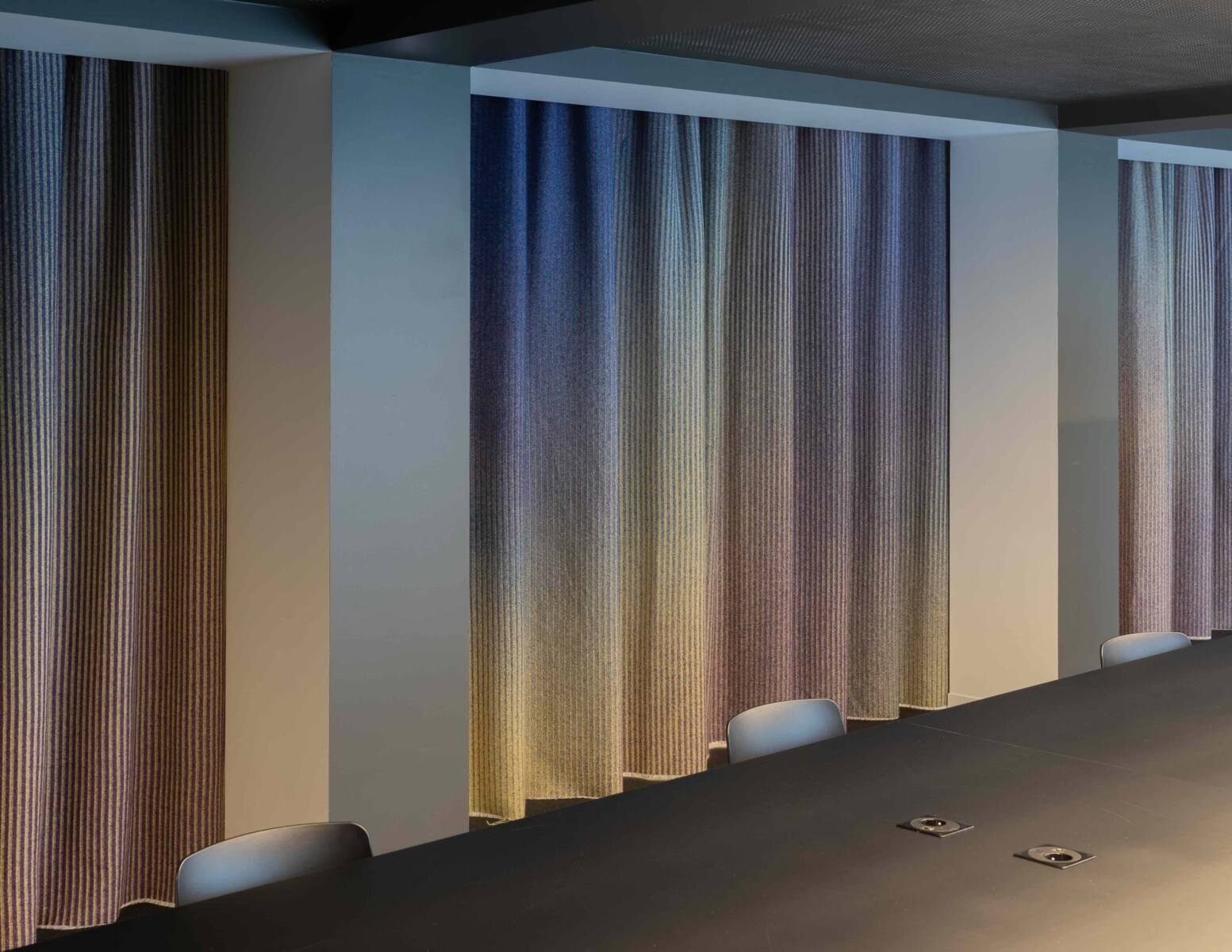
An acoustic and spatial intervention
During the academic year 2025-26, the 3rd bachelor students textile design engaged in a collaboration with the Muziekbibliotheek. Starting from a concrete question — how to improve both the acoustics and the overall spatial experience — this project explored the potential of textiles as an active medium within the space.
The library, as a place for listening, concentration, and encounter, became the context for investigating how material, tactility, and spatial interventions can contribute to both sound quality and atmosphere. For the students, this collaboration offered a valuable opportunity to engage with a concrete assignment, while also navigating the conditions of realisation.
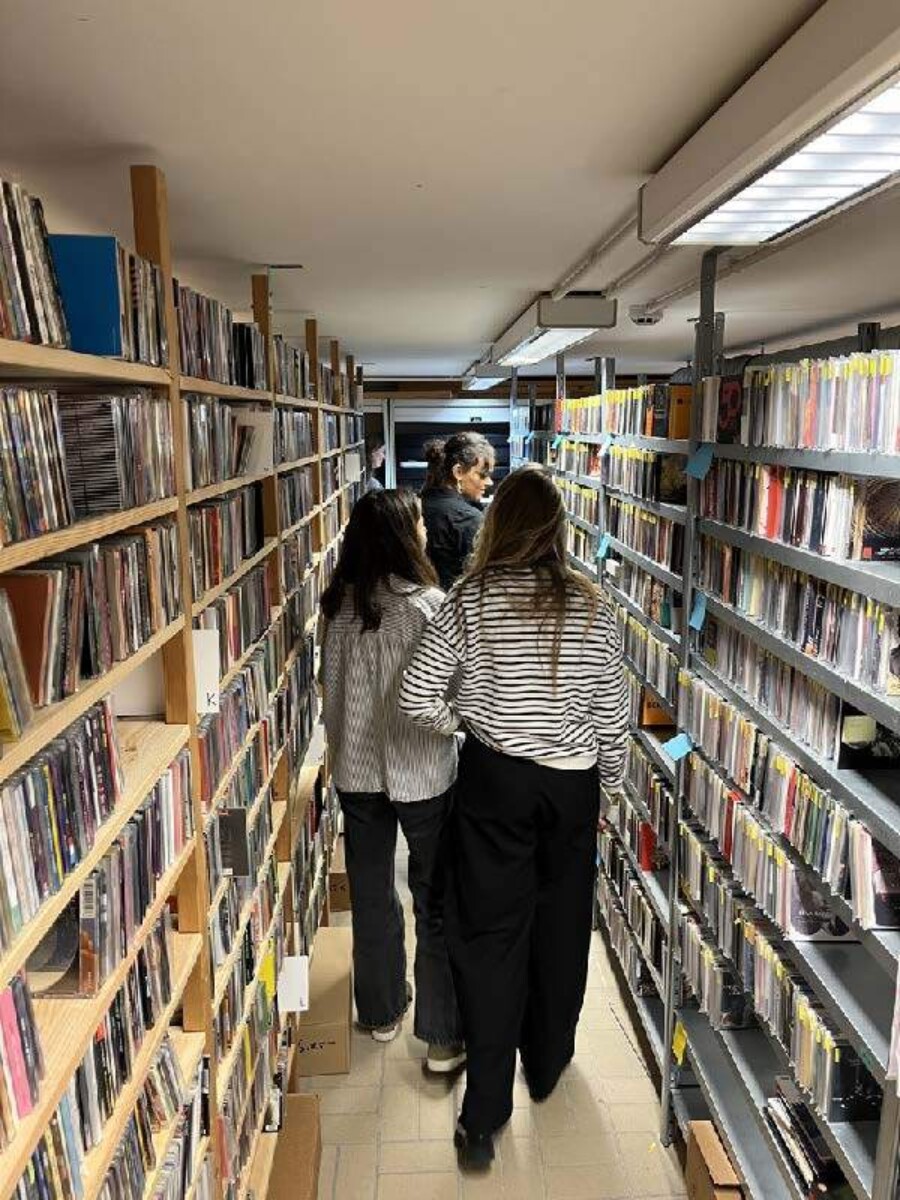
In addition to the dialogue with the Muziekbibliotheek, the project was enriched through collaborations with weaving company B&T textilia and knitting manufacturer Cousy. These partnerships introduced the students to the realities and constraints of production, challenging them to translate their concepts into feasible and technically informed proposals.
Through observation, analysis, and an exploration of the library itself and his library collection, the students developed individual proposals. During the process there was an ongoing dialogue with the Muziekbibliotheek, leading to a selection of designs that were further developed.
This collaboration not only allowed for a connection between artistic research and practical application, but also highlighted how textiles can play an active role in shaping a space—both functionally and experientially.
Visit to weaving company B&T Textilia
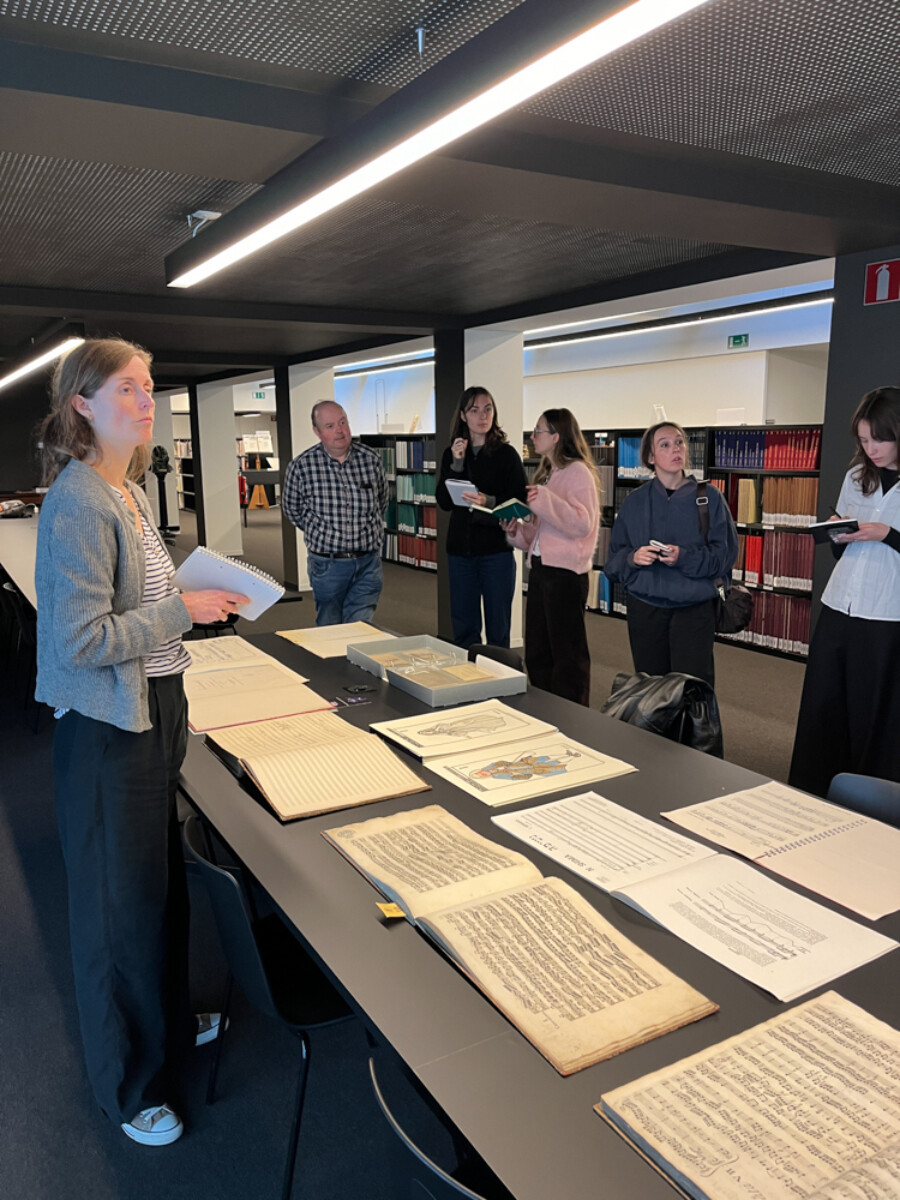
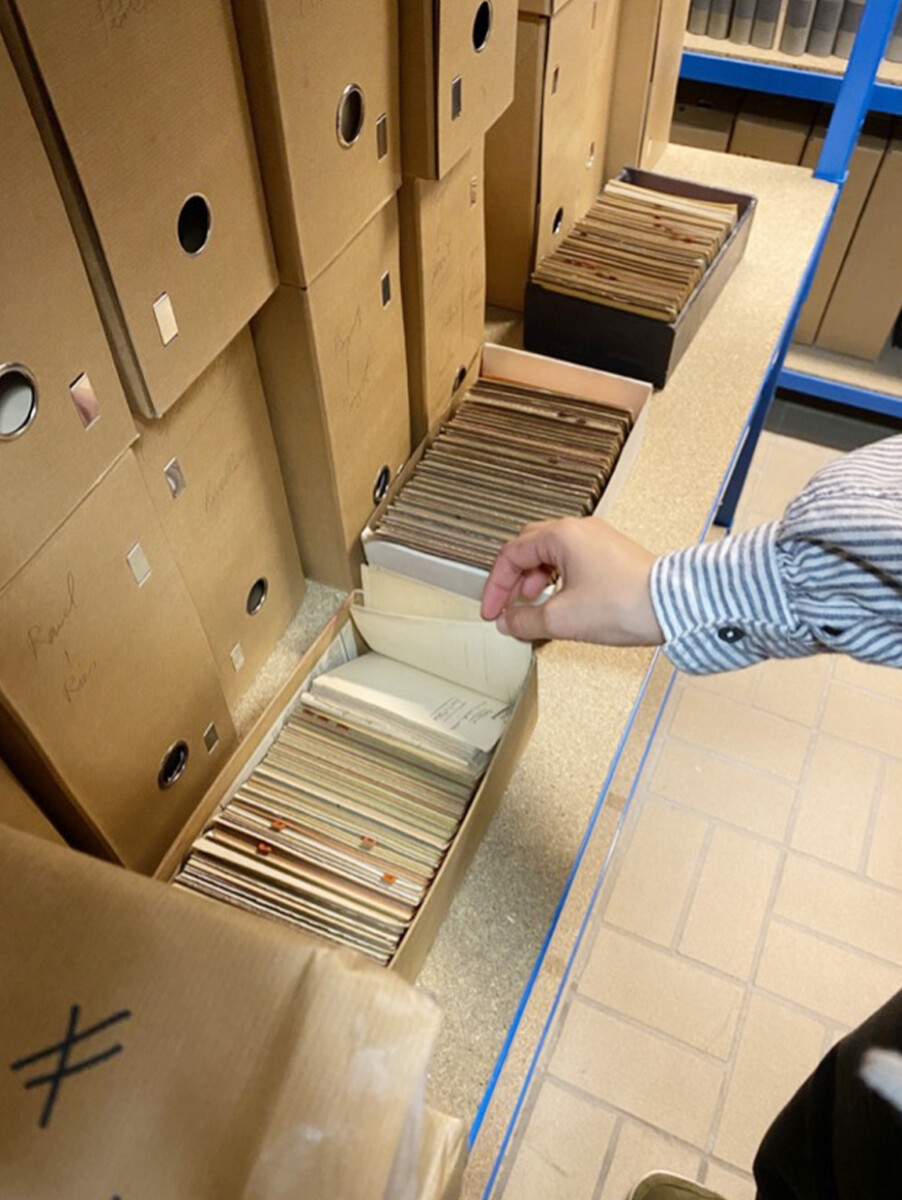
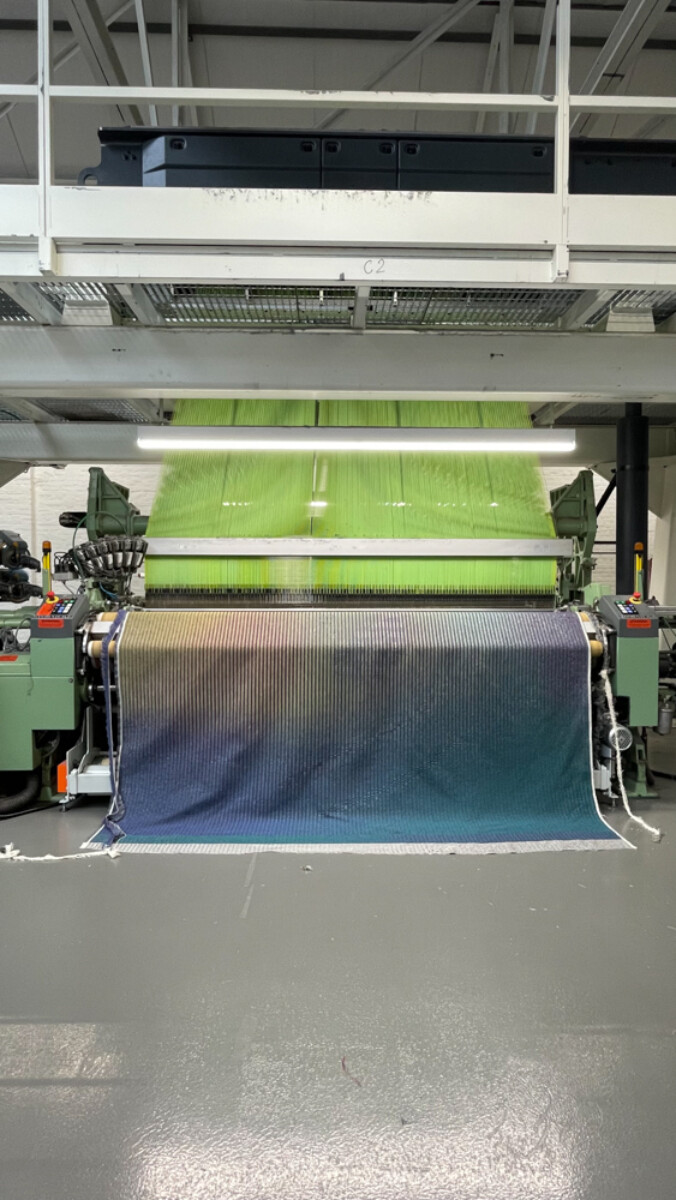
As part of the development process, the students visited B&T Textilia, the weaving company responsible for the production of the curtains. The visit began with an introduction to the company’s archive, which contains a collection of patterns, technical drawing and fabric samples. This was followed by a tour of the weaving facilities, offering insight into production techniques and material possibilities.
The students were also introduced to the textile lab, where fabrics are developed and designed. This provided an opportunity to explore samples in detail and discuss technical options relevant to the project.
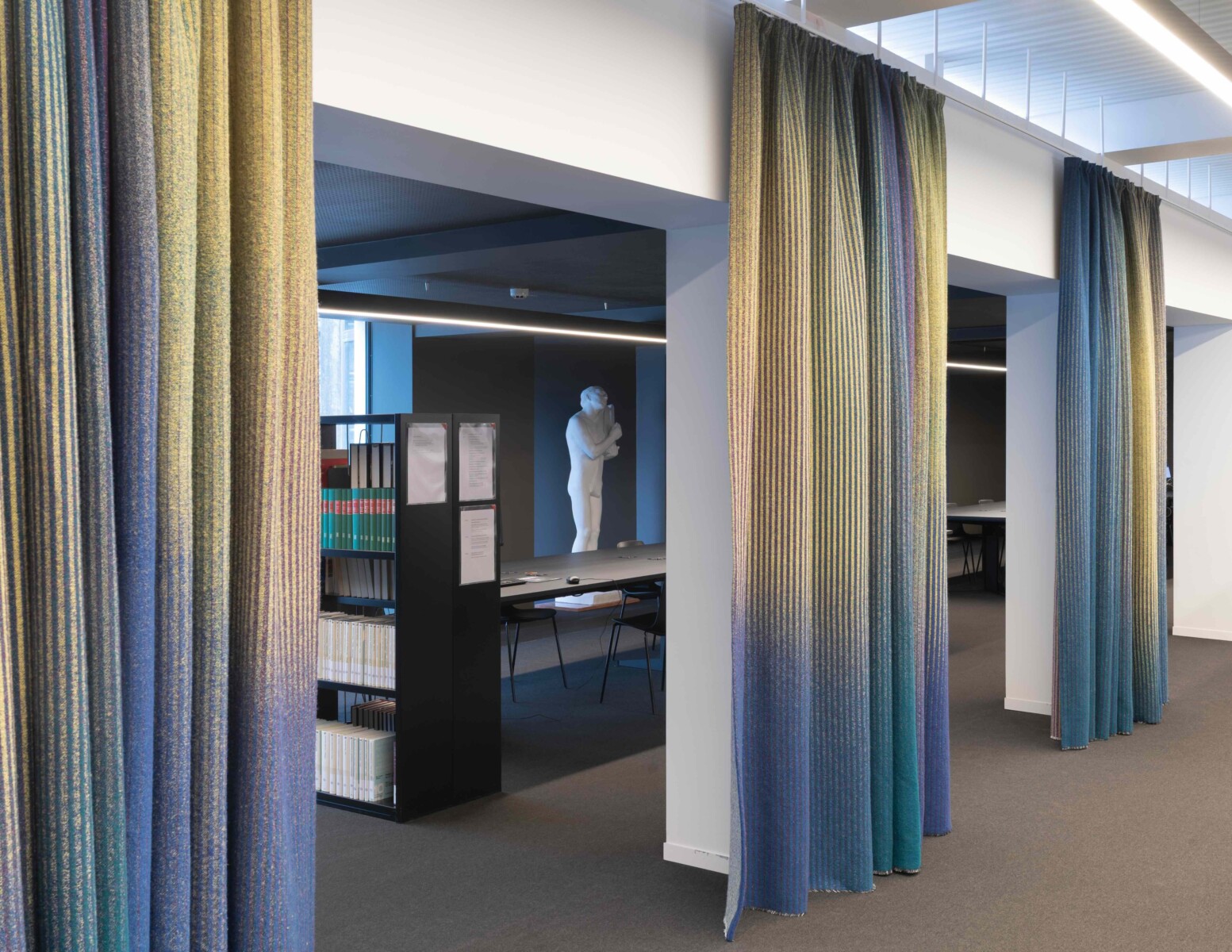
Curtains
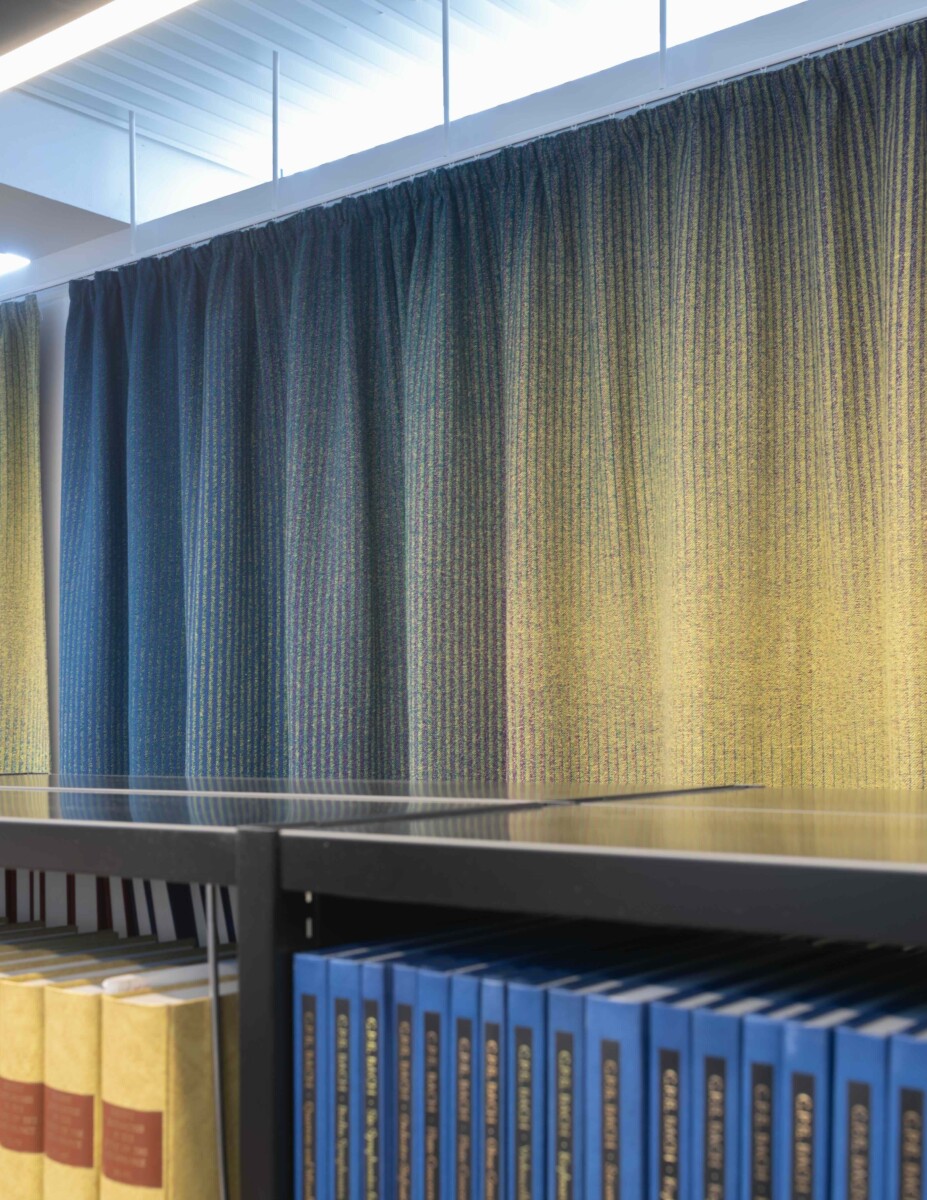
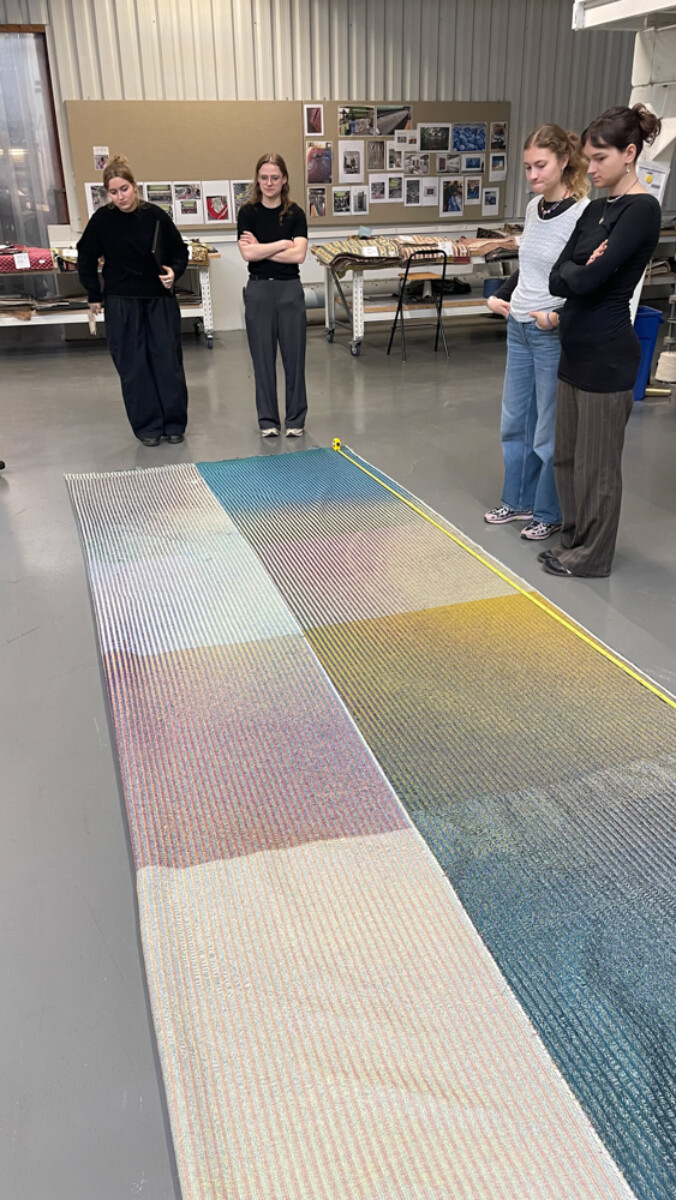
The final concept builds on the idea of archiving: a large accumulation of information that, when viewed from a distance, forms a new, coherent image.
Through the use of colour contrast, a positive–negative effect is created between the front and back of the curtain. The curtain is therefore designed to function on both sides, offering a light and a dark variation.
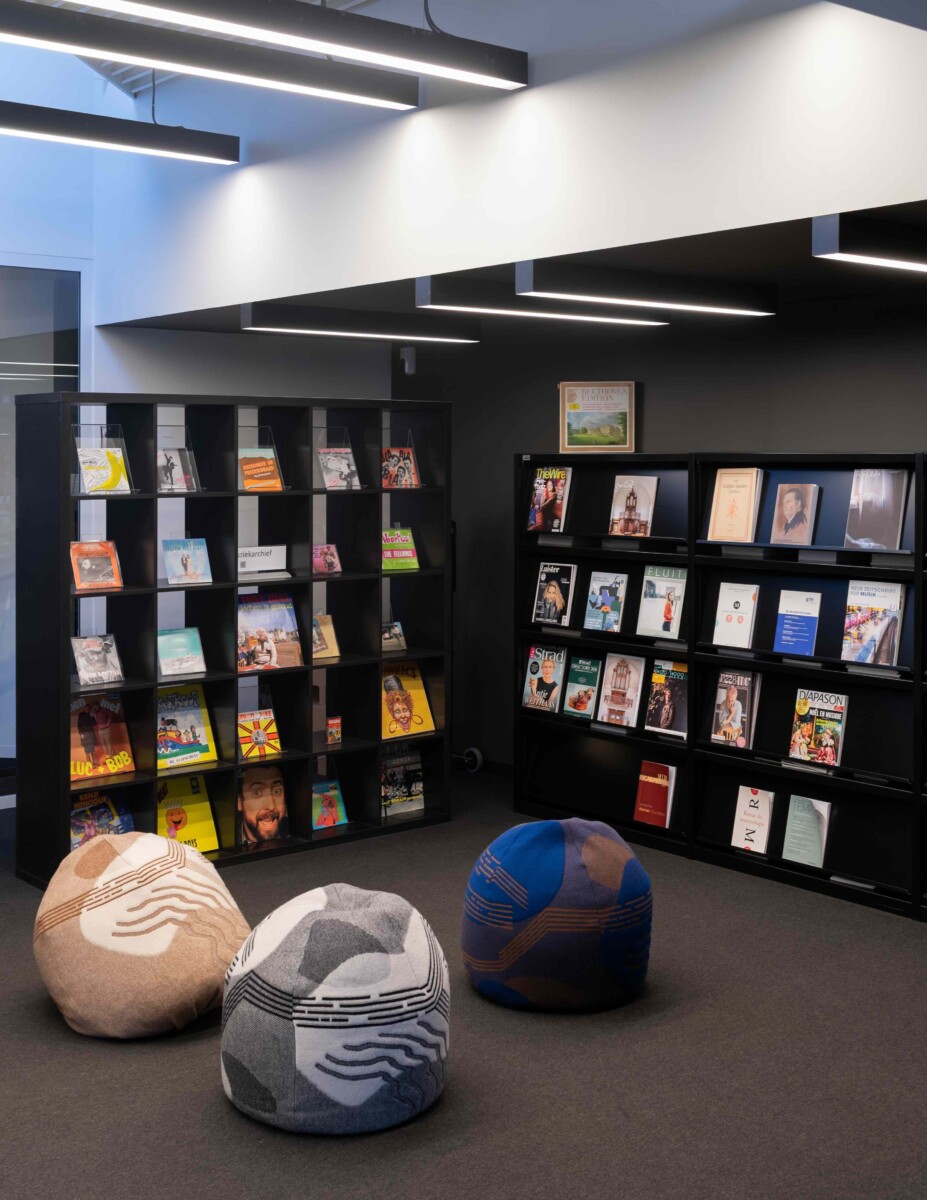
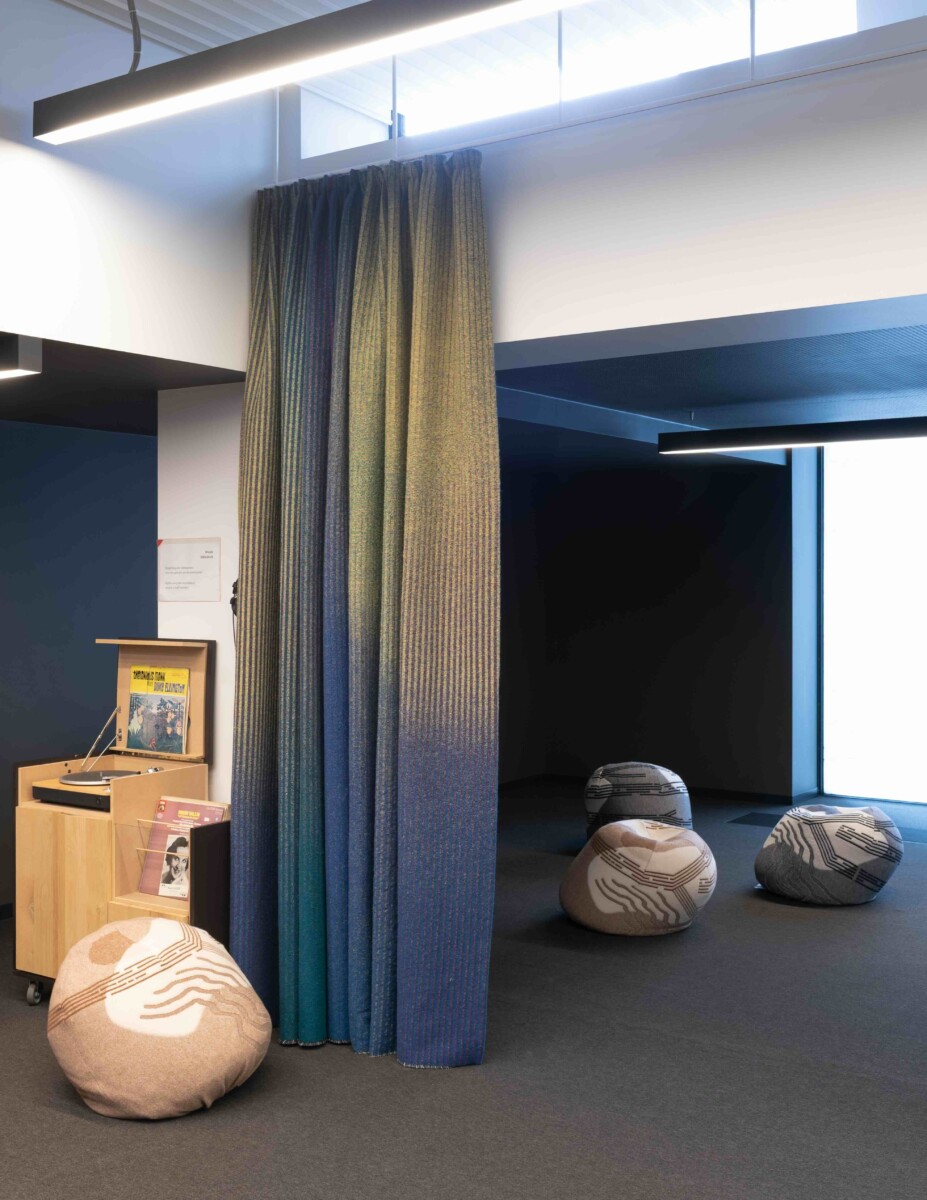
Poufs
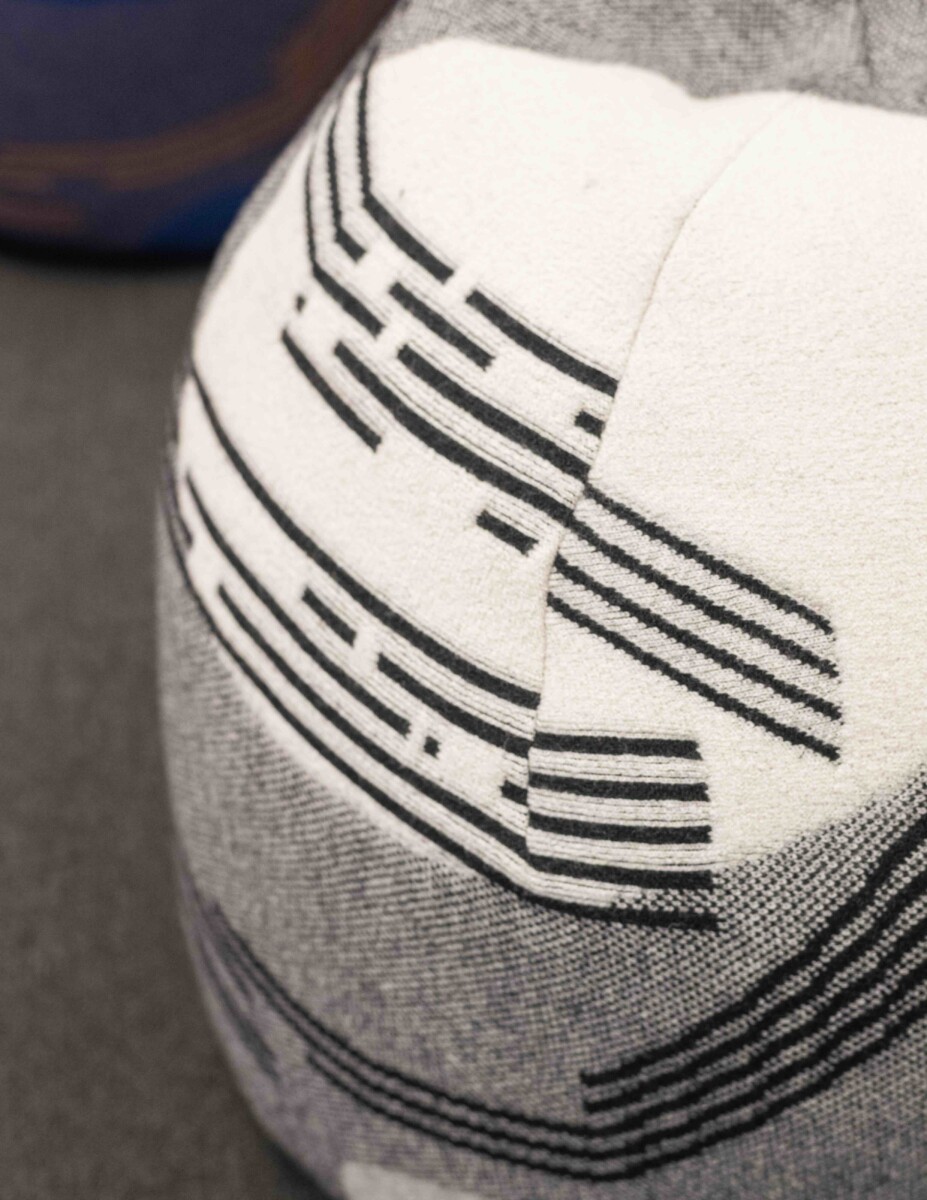
The pouf design originated from the graphic notation found in musical scores. The students explored how these visual patterns could be translated into form, texture, and material.
A key consideration was fire safety, leading to the use of 100% wool, a material with natural flame-retardant properties. The development process focused on the relationship between graphic drawing, three-dimensional form, and material.
 An acoustic and spatial intervention, MuziekbibliotheekexpoAgendaArtistic activities
Over the past year, third-year Bachelor’s students in Textile Design have been working with the Muziekbibliotheek on a project to transform the library space. They investigated how textiles could improve the acoustics and the spatial experience of the reading room.
On 19 November 2026, the Textile Design programme is organising a reception at the Muziekbibliotheek to showcase the results of this project.
 Je veux de l'humour!, MuziekbibliotheekexpoAgendaArtistic activities
Let yourself be swept away by the playful side of music in a surprising exhibition brimming with humour and imagination. Discover sheet music in which humour surfaces in the melody or lyrics, eye-catching record sleeves and compositions in which bizarre sounds take centre stage. Amidst the books and sheet music, live music plays that surprises, goes off the rails and brings a smile to your face. The musician engages in a playful interplay with the sound installation; sometimes harmonious, sometimes like a cheerful duel.
And anyone who is immediately captivated by the artwork on the audio material can immerse themselves even further: the Music Archive is also opening its doors for guided tours. Delve into an impressive collection of records and CDs featuring over 40,000 Belgian recordings.
 Musicians at home abroad, MuziekbibliotheekexpoAgendaArtistic activities
Composers and musicians often travelled in search of artistic inspiration and growth, e.g. Prix de Rome. But of course they also did so to give concerts. Commonly known is Wolfgang Amadeus Mozart's tour of Europe in the second half of the 18th century, but Belgian composers such as François-Auguste Gevaert, Adrien François Servais, Adolphe Samuel, Hendrik Waelput, Robert Herberigs and Martin Lunssens also explored Europe. Remarkably, they all eventually returned to their heimat.
The exhibition highlights these journeys and shows scores from our collection, including old prints and manuscripts.
 Opera & Ghent, MuziekbibliotheekexpoAgendaArtistic activities
Opera originated in Italy at the end of the 16th century and transformed over the following centuries from a noble entertainment to a tool for social change. During the 19th century, opera played an important role in the social fabric of Europe. In Belgium, opera even triggered the revolution of 1830 that led to independence. This exhibition comprises pieces from the collections of the Muziekbibliotheek Gent, Opera Ballet Vlaanderen and the International Opera Academy that demonstrate the importance of opera in the city from the 19th century to the present day.
Throughout the exhibition, you will see costumes from Opera Ballet Vlaanderen's production of Philip Glass' opera Akhnaten, which was performed in 2015. The costumes are the work of Belgian designer Walter Van Beirendonck. These contemporary pieces are on display along with the Muziekbibliotheek Gent's own collection of manuscripts and iconography from the 19th to 21st centuries.
At the end of the exhibition, you can watch an interview with Jacqueline Van Quaille. Ms Van Quaille studied at the Ghent Conservatory and describes her studies here in the 1950s and her international opera career.
fri-sun: closed
 Studiedag 19th Century Salon - les Salons Bruxello-Gantoises, Muziekbibliotheekresearch presentationAgendaArtistic activitiesOnderzoek
Embedding Historical Sources in Modern-Day Performance of Romantic Music
Deze studiedag focust op het praktijkgericht aanwenden van historisch bronnenmateriaal bij de uitvoering van muziek uit de Romantische periode. Studenten, docenten en onderzoekers van KASK & Conservatorium (HOGENT - Howest) en Koninklijk Conservatorium Brussel gaan in dialoog met externe onderzoekers over hun ervaringen, methodieken, onderzoeksresultaten en bevindingen. Dit gebeurt aan de hand van praktijkgerichte workshops door internationale onderzoekers, gevolgd door een ronde-tafelconferentie en een selectie van praktijkgerichte lecture-performances. De studiedag vormt een aanzet tot het inrichten van een hogeschooloverschrijdende onderzoeksgroep binnen het veld van de uitvoeringspraktijk van muziek uit de romantische periode.
Sprekers:
- Dr. Inja Stanovic (University of London, pianist, early recording specialist)
- Dr. George Kennaway (University of Leeds, cellist)
- Dr. David Milsom (University of Huddersfield, violinist)
- Dr. Emily Worthington (University of York, clarinet player)
- Dr. Jeroen Billiet (KCB & KASK & Conservatorium, horn player)
- Dr. Aleks Kolkowski (sound artist, early recording specialist)
- Dr. Tom Beghin (Orpheusinstituut)
- Researchers from Koninklijk Conservatorium Brussel and KASK & Conservatorium (HOGENT - Howest)
Bekijk het volledige programma
Met steun van het Onderzoeksfonds Erasmushogeschool Brussel, Alliantiefonds HOGENT / EHB, Onderzoeksfonds Kunsten van HOGENT.
I.s.m. early-recordings.com
 François Servais, the Paganini of the Cello, and the Belgian School of Cello Playing, MuziekbibliotheeklectureAgendaArtistic activities
François Servais (1807-1866) was een baanbrekend cellist, een Europese ster en een van de grondleggers van de Belgische celloschool. Hij musiceerde met Mendelssohn, Rossini en Vieuxtemps en werd hoog gewaardeerd door Schumann, Meyerbeer en Berlioz. Anderhalve eeuw na zijn dood klinken zijn virtuoze cellocomposities nog steeds na in de hele wereld.
Musicoloog en historicus Peter François zal spreken over Servais' leven en werk en over de Belgische School voor Cello.
 François Xavier Tourte en L’Archet de Viotti: Perspectives from a Violinist at the Workbench, MuziekbibliotheeklectureAgendaArtistic activities
Deze presentatie onderzoekt de ontmoeting in 1782 tussen de strijkstokkenbouwer François Xavier Tourte en de violist Giovanni Battista Viotti en hoe de creatieve sprong in het ontwerp van de "moderne" strijkstok ontstond door hun interactie. Ellie Nimeroski put uit haar ervaring in het maken van strijkstokken, archiefdocumenten van het Parijse Conservatorium en een manuscript van een van Viotti's leerlingen, de Belgische violist André Robberechts om Viotti's ontmoeting met Tourte te verbeelden.
