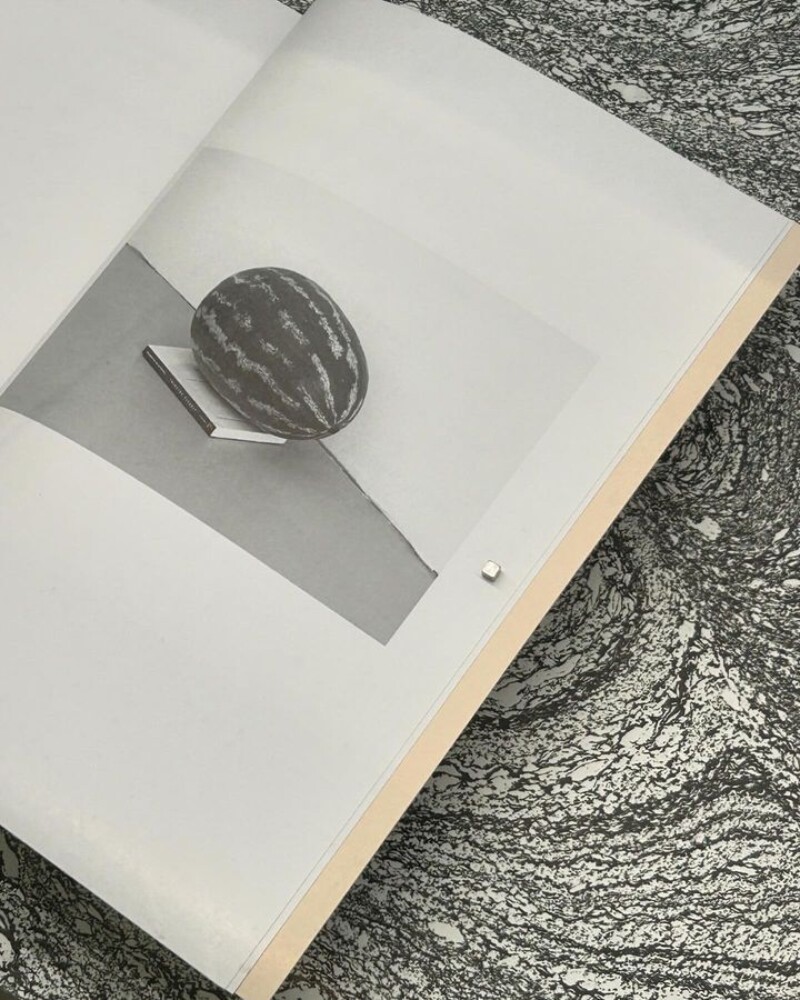
02.09.24 – 25.10.24, Paul Bailey, (B)ending(s)
“If you’re looking for something here let me point you in the right direction…”
Paul Bailey curated a new selection of artists’ books in our 1M3 vitrine, whilst thinking on the words by Fred Moten.
In 2015, 1M3 was established as an exhibition space for artists' books from Kunstenbibliotheek's collection. A guest curator is asked to make their own unique selection and present them in 1M³'s showcases.
Jozef Kluyskensstraat 2,
9000 Gent
 articleLees, kijk, luistereducationartistic activitiesstudent curatorial studies A World Seen Through
 articleLees, kijk, luistereducationartistic activities
 Alice Zitelli & Samira Alirezabeigi, KunstenbibliotheekexpoAgendaArtistic activities
This selection of volumes invites the audience to transcend a passive contemplation in favor of an embodied engagement, where the artwork is fully completed only through the subject’s interaction. Rooted in the movements of Constructivism, Kinetic and Programmed Art, these artworks are conceived as exemplaires de recherche that replace the artist’s subjective expression with a rational and experimental methodology. The exploration of light, movement and rhythm is central to this approach as these variables extend the static object into space through sensory activation.
Drawing upon Umberto Eco’s theory of the Open Work, each project presents itself as a field of infinite perceptual possibilities, governed by a dialectic between chance and program. The visitor’s physical displacement activates the artwork’s system, transforming the gaze into a critical act. Within this curation, the selection ranges from the GRAV group—featuring the systematic grids of François Morellet and the interactive works of Julio Le Parc and Francisco Sobrino—to the Belgian artist Marc Verstockt’s tridimensional structures and the colorful Plexiglas pages of Paul Ibou. We invite you to engage with these pages, where the user ceases to be a spectator to become a co-producer.
Alice Zitelli is a curator and researcher based in Belgium. Her work focuses on exhibition history and postwar neo-avant-garde movements, with a particular interest in curatorial practices as forms of research. She holds a BA in Art History and an MA in Economics and Management of Arts from Ca’ Foscari University in Venice.
Samira Alirezabeigi is a researcher based in Brussels. Her research focuses on the intersection between artistic practice, science and technology and pedagogical forms. She holds a PhD in educational sciences from KU Leuven.
Alice and Samira are both currently following the postgraduate Curatorial Studies at KASK & Conservatorium (2025–2026).
 Charlotte Frenay, KunstenbibliotheekexpoAgendaArtistic activities
Fugitive Pages began as a gesture anchored in Black History Month. As the artists’ book collection was explored, a rupture emerged: out of nearly two thousand books, only five could be identified as authored by African-descendant artists. What began as a necessity became a site of transformation. With the support of the Kunstenbibliotheek, 1M³ expands beyond the existing collection, welcoming books already present alongside new commissions intended to enter it, not as symbolic corrections, but as required gestures.
Guided by the thought of Fred Moten and Stefano Harney, this cubic metre operates as a site of fugitive planning: a space that inhabits the academy without fully belonging to it. Moving quietly through its gaps and constraints, it cultivates forms of study, care, and connection that resist, expand, and seek to do better, working within institutional power without seeking its recognition.
Within the space, these shelves function as a parallel network for learning, circulation, and knowledgemaking. The books are not silent; they carry weight, absence, and the promise of continuity. At the centre sits a measured void: a shelf holding exactly the number of books initially present, rendering a glass ceiling visible and making countable the invisible barriers that shape the limits of recognition, authorship, and institutional space.
Across the vitrine, voices converge – diasporic, African, American, British, Francophone – entering into dialogue. The book becomes a site of circulation, a place where histories meet without hierarchy.
Visitors are invited to leave traces: names, references, absences still felt within the institution. Each note gestures toward future acquisitions, toward presence yet to come.
This vitrine does not claim completeness. It insists on attention, on making absence felt, on building a library that listens, shifts, and grows in relation — a space of care, reflection, and collective possibility.
Charlotte Frenay
Charlotte Frenay is a Brussels-based researcher working on alternative archival practices. She holds a BA in Media and Communications from Goldsmiths, University of London, and later completed an MA in African Studies at Ghent University. She is currently enrolled in the postgraduate Curatorial Studies at KASK & Conservatorium for 2025–2026.
 Eline Adriaensen, KunstenbibliotheekexpoAgendaArtistic activities
Inspired by Virginia Woolf’s A Room of One’s Own, this 1M3 space transforms the notion of creative space into one of collective visibility. A bookshelf is personal yet a place of prestige, carrying cultural weight and authority. Within this space, women’s voices take their place in public view. Together, they remind us that both knowledge and space must be continuously reimagined and reclaimed. In the context of a bookshelf, fiction represents the imaginative dimension of knowledge, the realm of what could be. Over time, the bookshelf shifts and reshapes itself. What is visible and what is concealed remain in constant conversation. The shelf becomes a living archive of thought, curiosity, and care.
Eline Adriaensen is an architect based in Antwerp and Ghent. She holds a Master’s degree in Architecture from the University of Antwerp, complemented by an exchange program at the Umeå School of Architecture in Sweden.
At the moment, she is participating in the curatorial studies postgraduate programme at KASK & Conservatorium.
Jozef Kluyskensstraat 2,
9000 Gent
 Design x Connection, Design DialogueslectureAgendaArtistic activities
Verity-Jane Keefe, visual artist, explores the complex relationship between people and their environment in her work. Through moving images, text, and installation, she examines public space not only as a physical location but also as a place of stories, memories, and interactions. Her practice focuses on urban redevelopment, questioning how art can contribute to making both existing and often invisible communities more visible and empowered.
In this lecture, Verity-Jane Keefe engages in conversation with Irish graphic designer Paul Bailey, who approaches graphic design as a critical tool to unravel the complexities of contemporary culture.
During this Design Dialogue, both speakers explore the connections between art, design and urban development, the role of creativity in building meaningful connections, with a focus on interactions within communities, in a time when the relationship between people, space, and culture is constantly evolving.
SPEAKERS
Verity-Jane Keefe
Verity-Jane Keefe is a British visual artist working predominantly in the public realm to explore the complex relationship between people and place.
She is interested in the role of the artist within urban regeneration and how experiential practice can touch upon and raise ambitions of existing and invisible communities. Since 2003 she has been developing new models of practice within municipal, collaborative contexts – following long term residency approaches that produce outcomes that explore the politics of participation. Her practice takes many forms, but always starts with lurking, place and archives. The incidental, the overheard, the conversation, the observed. Working with text, moving image, site-based research, archives, installation, print, social structures and object. She is recently delivered a public commission with Towner Gallery (Eastbourne) and is the current Wheatley Fellow and Incidental Artist with Eastside Projects (Birmingham), and is a pre-doc candidate at ZHdK (Zurich). She is an associate lecturer at Central Saint Martins where she teaches on the BA Fine Art XD pathway and was formerly a Unit Master at the Architectural Association.
Paul Bailey
Paul Bailey is an Irish graphic designer, researcher and educator based in London (UK), exploring a practice that is made public through exhibitions, publications, performances, workshops, writing, teaching and curation.
He has collaborated with various artists, organisations and institutions such as Forensic Architecture, Victoria & Albert Museum, Royal Institute of British Architects and Irish Museum of Modern Art. His studio practice, teaching and research have been awarded, exhibited and published internationally.
He has been an invited presenter, critic, jury member and examiner at a range of international institutions such as Architectural Association, Central Saint Martins, Goldsmiths University, Royal College of Art (UK); Icelandic Academy of the Arts (IS); National College of Art & Design (IE). He co-authored and directed the MA Graphic Media Design course at London College of Communication, UAL (2014-22), and was an advisor at the Jan van Eyck Academie (2015-18).
He is presently Professor for Communication Design & Research at HfG Karlsruhe (DE); pursuing a PhD in the Arts at KASK & Conservatorium (BE); and leads an independent design-research studio (UK). He recently published ‘I Shivered Violently / Don’t be Startled in the Night’ with Bryony Quinn (Set Margins’)
Design Dialogues
Design x Connection is part of the curated lecture series Design Dialogues organised by the design department of KASK & Conservatorium and Design Museum Gent. Unique voices from the broad field of design are invited to reflect on the role, impact, and future of design in a changing world. Each lecture is a critical dialogue centered around a theme and concludes with an open discussion between the speaker and the audience. Our mission: to provide engaging perspectives that empower design students and enthusiasts to tackle the challenges of today and tomorrow.
i.c.w. Design Museum Gent
Cloquet
Louis Pasteurlaan 2
9000 Gent
 Marie Cathérine Stalpaert, KunstenbibliotheekexpoAgendaArtistic activities
Peeping (noun, verb)
The act of secretly or furtively looking at something, often through a small opening or from a hidden position. It typically implies curiosity, mischief, or voyeurism.
Peep Show is an exploration of intimate gazes and the fragile tension between what is visible and what should remain hidden. It transforms twelve windows into peep holes, inviting visitors to engage in a quiet, yet playful act of looking. A curated collection of texts, photographs, objects and personal ephemera uncovers intimate fragments of life. It provokes a reflection on the thin line separating observation from voyeurism, reconfigurating the act of peeping into a deliberate, poetic inquiry. In this realm, the line between observer and observed gets blurred, asking us to embrace the inherent vulnerability of our curiosity.
Marie Cathérine Stalpaert is born in Antwerp, Belgium. She is a graduate in architecture from the University of Antwerp and the Ecole Nationale Supérieure d’Architecture de Paris-Belleville. She is currently participating in the curatorial studies postgraduate.
 Léane Lloret, KunstenbibliotheekexpoAgendaArtistic activities
The more or less sign (±) is a mathe-matical symbol used to indicate precision in an approximation, or as a shorthand in the notation of a quantity with two possible values.
The symbols “±” and “∓” are used in chess to assess the positional advantage of a player. In chess, the“±” sign indicates that the White player has a better position than the Black player.
Léane Lloret was born in 1999 in Grenoble, France. A graduate in fashion and costume history of the Ecole du Louvre – Palais du Louvre, Paris, France she is specialized in contemporary artist’s books. She takes part in the Curatorial Studies programme at KASK & Conservatorium, Ghent, Belgium for 2024–25.
Jozef Kluyskensstraat 2,
9000 Gent
 Jean Watt, KunstenbibliotheekexpoAgendaArtistic activities
When an unknown back door turns a vitrine into a window, or a square pierces empty pages to expose a text printed on their backs, our surroundings are revealed as ways to see the world through. Glimpses of the street can be caught between parked cars as the bus goes by, figures can be grasped in the nearly closed curtains of a living room. At the edges, and the ends, and the backs, and the gaps, there is a life in passing motion.
A World Seen Through is a guide towards these gaps, a selection made for ways of looking and hiding. Use these as your glasses, your binoculars, your telescopes, your windows, your doors, your cat flaps, your eyes cut through a newspaper, the bottom of your beer glass, the gaps in your fingers with your head in your hands. If you listen at the open window, the cars and birds are coming in.
Jean Watt is studying on the Curatorial Studies postgraduate programme at KASK & Conservatorium. She runs the site-specific curatorial project, A Place to Rest, situating artworks in unusual spaces.
Jozef Kluyskensstraat 2,
9000 Gent
 Book presentation I Shivered Violently / Don’t be Startled in the Nightresearch presentationAgendaOnderzoek
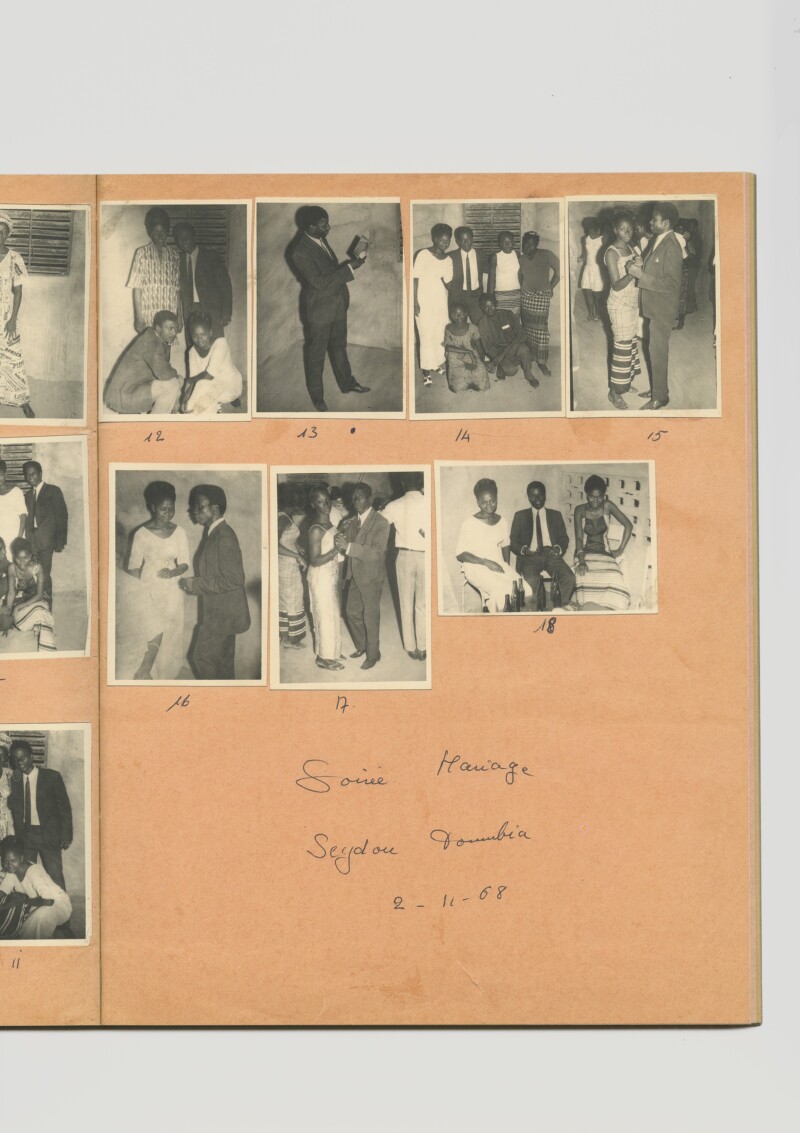
At Open Masereel, researcher Paul Bailey and Bryony Quinn present the new publicationI Shivered Violently / Don't be Startled in the Night; A networked essay on (dis)order, (il)legibility and (dis)orientation.
By way of gathers and gaps, leaps and snaps, this publication presents two networked essays that, between them, attempt to bring into view the poetics and possibilities of (dis)order, (il)legibility and (dis)orientation.
I Shivered Violently / Don’t Be Startled in the Night… approaches the renowned dynamic ordering and continual inventory of the Sitterwerk Foundation Kunstbibliothek (CH) as a site and a system of intrigue. In particular, these essays track the intent of a bespoke machine, fitted with an RFID scanner, that reads the shelves of the library at the end of the day. Visitors return items to the stacks at random and so, at night, an up-to-date record — and map — of the collection is created.
The behaviour of magnets, prompted by their role in the library’s technology used in the library, guides the attention of this publication, and is the subject of the written essay by Bryony Quinn. The visual essay, by Paul Bailey, which arranges material harvested from the Sitterwerk collection and beyond, deals with the conditions and manipulations of seeing with, and through, machines.
This publication is an A4-size folder with 5 mm spine, which includes 6 A2-size posters folded to A4.
Open Masereel is a brand new biennial arts festival centered around print as a way for artists to express themselves, understand art and the world that surrounds us, connect and more. In addition to multiple new editions, publications and a print art fair, the program includes live performances and music, a culinary experience by a top chef, artist talks and more.
Masereeldijk 5
2460 Kasterlee
 Ipek Aytekin, KunstenbibliotheekexpoAgendaArtistic activities
- In 2015 1m3 was initiated as an exhibition space dedicated to artists’ books from Kunstenbibliotheek’s collection. A guest curator is asked to make her/his selection from the library and present it within the vitrines of 1m3.
How many pantomimers have we seen and thought they had nothing to say? Some shadows cametogether to find some sort of a lie to agree on. One of them asked: “How could they know it is a lie, if we protect it with silence?” That evening shadows, faces and texts met up behind a glass door. They had this idea for the first time ever, when no-one could imagine colours. The idea that might start a lie that would last forever.“Making up a story that is never going to be told by words will kill them over and over!”
Pantomime of Nostalgia is a story that is not possible to tell. A wordless story, about something that is made up. Some stories make up themselves not for us to tell, but because there is no other way for words to come together. I let my stories be free. In this showcase, all the images chosen are based on intuition and emotions. I wanted to look at the glass, trying to see through my own reflection. Yet I wanted to look into a pair of eyes that seemed to hear all that went on, behind the glass door.
 Meeting Grounds: Essay as Eventresearch presentationAgendaOnderzoek
The Meeting Grounds series invites investigation, and experimentation, with the visual essay as a verb (essaying), an event (a gathering) and as a social form for collective reasoning.
‘If we stop thinking about the form of the essay as the form of a thing, the form of an object, and reconsider it as the form of an activity or action (as in a dancer’s form, or the form of a golfer’s swing, or the form of a tennis player’s backhand), we can locate a consistent and unbroken line of agreement about the nature and the form of the essay to contemporary essayists and theorists; the essay is kineticism incarnate—the embodiment of perpetual mobility, motion and movement’. - Paul Heilker, The Essay: Theory and Pedagogy for an Active Form (1996).
For this edition at the Camden Art Centre, we will explore essayistic strategies that bring the temporalities, materialities and opacities of language into view, and consider how they might be put to use across contemporary practices of graphic design, literature, performance and installation.
Guided by a series of propositions shared by our contributors, guests are invited to join the gathering as participants in a rehearsal for an essay yet-to-come.
‘It is the essayist’s job to gather up the shards and map them where they are, to find patterns out there or make one … about the disconnections and mysteries’. – Rebecca Solnit, The Best American Essays (2019).
Paul Bailey is affiliated as an artistic researcher to KASK & Conservatorium, the school of arts of HOGENT and howest. Meeting Grounds is financed by the HOGENT Arts Research Fund, with support received from the Centre for Other Worlds (PT), Kunsthal Gent (BE) and the Camden Art Centre (UK). This iteration of the Meeting Grounds identity, developed with Sjoerd Beijers and Seppe-Hazel Laeremans, features oblique and swirling extensions to Garamon(d/t) typeface published by fonderie.download
Arkwright Road
London NW3 6DG