
Decentering Design
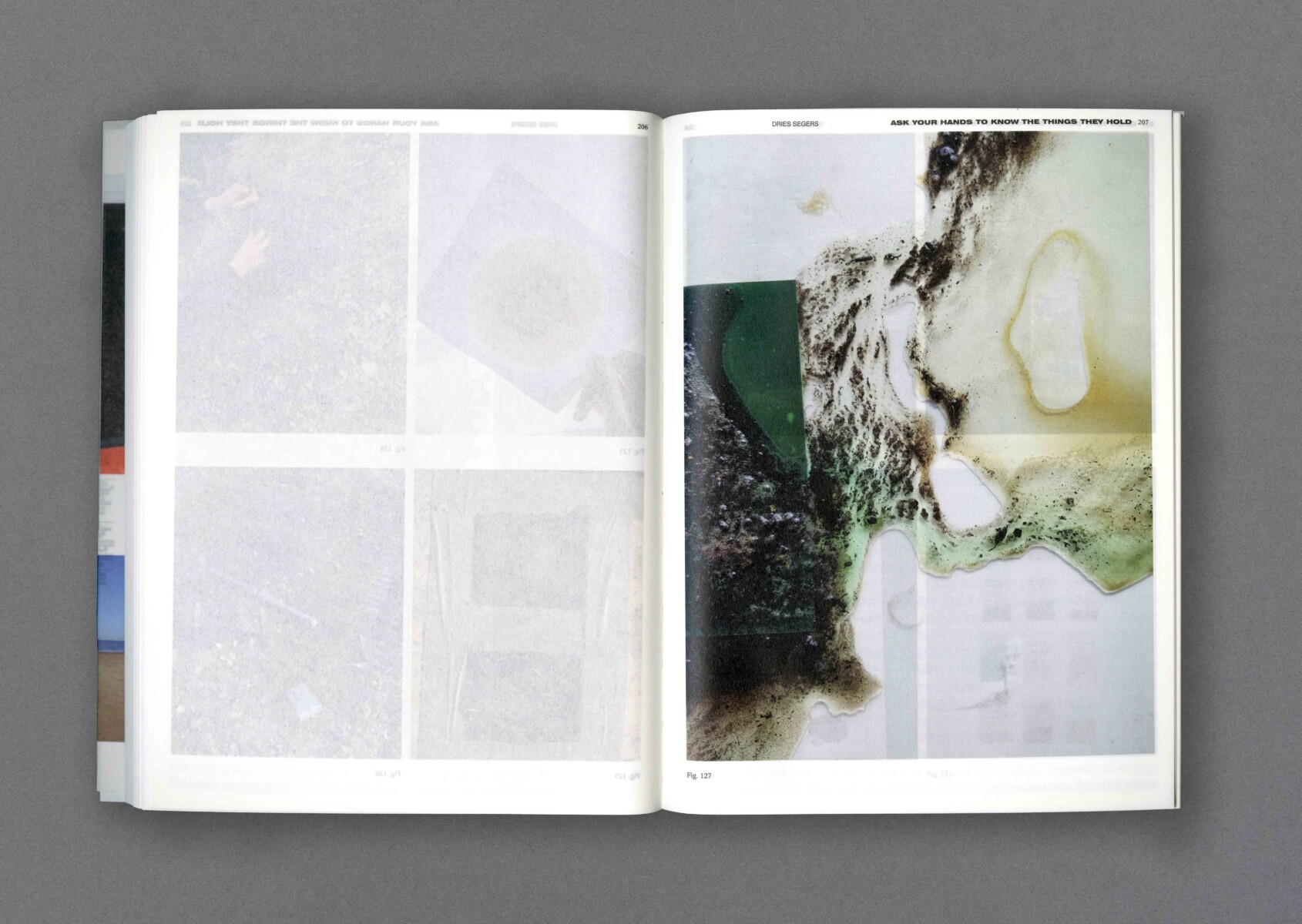
An invitation to journey beyond human- centric thinking and into the more-than-human world. By merging theory with practice, it offers strategies, insights, and exercises that cultivate a deeper sensitivity to the interconnected more-than-human community we form with all living beings. With diverse contributions by architects, landscape architects, product- and interaction designers, artists, photographers, philosophers, academics, curators, policy makers and policy officers. Contributions include FormaFantasma, Superflux, Eva Meijer, Clemens Driessen, Mihnea Tanasescu, Dries Segers, Jacopo Leveratto amonst others.
Edited and designed by Jurgen Maelfeyt, the outcome of a research project by Bert De Roo, Giliam Ganzevles, Mirte van Aalst and Glenn Deliège. Published by Art Paper Editions.
published by Art Paper Editions
EN, 2025
ISBN 9789464775853
 Jaron Vandevelde, Decentering DesignlectureAgendaOnderzoek
In the lecture More than Human, Jaron Vandevelde and the collective Decentering Design invite us to reconsider design as a practice that extends beyond the human. At a time of ecological crisis and growing awareness of interdependence, this lecture explores how art and design can engage with a wider spectrum of living beings and challenge deeply rooted anthropocentric assumptions.
Drawing from his artistic practice, Jaron Vandevelde invites living systems, such as insects, and birds, as collaborators within processes of care and co-creation. He explores how artistic and design practices can operate within, rather than apart from, more-than-human systems. Through his projects, Jaron invites a reconsideration of our relationship with the environment and proposes alternative models for sustainable collaboration with other living beings.
Decentering Design approaches these questions from a research-driven and interdisciplinary perspective. The collective investigates how design methodologies can become more relational, plural, and situated, and how they might support multispecies forms of coexistence. Their work critically examines how dominant design frameworks determine whose perspectives are included, and explores alternative approaches that make space for non-human actors within both theory and practice.
The lecture will offer insights into how more-than-human perspectives can reshape design and art processes, challenge existing hierarchies, and contribute to imagining more fair and sustainable futures.
Jaron Vandevelde
Jaron Vandevelde explores possible ways of teaming up with more-than-human beings. Through artistic and design methodologies, he invites living beings, such as insects (Woodwormdesign), birds (Meer koet, minder afval) to take part in a collective practice. These projects become collaborative processes in which humans and non-human animals connect toward shared outcomes.
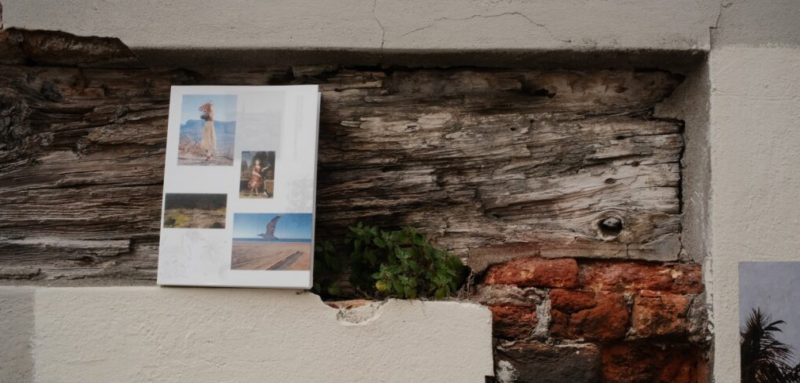
His collaboration with birds is currently publicly visible through a series of artistic bird houses installed along Ghent’s waterways.
Jaron’s work has received national and international recognition. His projects won the First Prize in the Designblok Diploma Selection Award for Product Design (Prague), the Horlait-Dapsens Grand Prize and the Bruynseraede - De Witte Foundation Award. His work is included in the collections of STAM Ghent and the Verbeke Foundation.
He recently graduated from autonomous design at KASK & Conservatorium and holds a bachelor in painting there. As well as a BA in Furniture Design from VOMO Mechelen. This combined background in arts and design directly informs the conceptual and material strategies of his projects.
Decentering Design (Bert De Roo, Giliam Ganzevles)
Decentering Design is an interdisciplinary collective of designers, philosophers, and artistic researchers based at the research center Futures through Design. Through design, artistic, and research projects, the collective explores more-than-human theory and practice, questioning dominant worldviews and investigating how design can become more relational, plural, and situated. By connecting theory with practice, Decentering Design offers insights, perspectives, and strategies that support the field in imagining and designing for more equitable, multispecies forms of coexistence.
Giliam Ganzevles (1994) is a Dutch designer and artistic researcher based in Brussels, working across design, technology, and research. His practice explores what it means to remain human - or more-than-human - in a rapidly changing, technologized world. As an artistic researcher at KASK & Conservatorium, he focuses on the more-than-human turn in design, developing approaches that bring non-anthropocentric perspectives into creative practice. His work connects theory and making, spanning publications, education, and interdisciplinary research projects that investigate multispecies relations, digital ecologies, and the role of emerging technologies such as generative AI.
Bert De Roo (1984) is a Belgian architect and researcher whose work focuses on more-than-human design methodologies and participation within spatial contexts. Based in Ghent, his research investigates socio-ecological communities and explores how designers can operate within these complex more-than-human realities as participants rather than external problem-solvers. As a researcher within the research center Futures through Design and the Disobedient Practices research cluster, he is specifically interested in the political and cultural implications of the more-than-human turn in spatial practices. His work examines how design processes and their artefacts shape what and who becomes perceptible, whose voices are heard, and who is able to participate. From this perspective, he questions how dominant spatial imaginaries are produced, framed and appropriated in ways that don’t align with more-than-human realities, and explores their translation into multispecies spatial constructs beyond exclusively human domains.
Cloquet
Louis Pasteurlaan 2
9000 Gent
 Disobedient Bodiesresearch presentationAgendaOnderzoek
Three recently completed book projects inspire an evening of reflection. From very different angles these projects look for ways to think and act beyond anthropocentrism. They challenge the idea of the human as a singular, dominant maker of the world, seeking to demonstrate a rich plurality of perspectives instead. How can artists and designers be receptive in their work to the voices of the non-human entities we live among?
Disobedient Bodies marks the first public moment for two newly formed research clusters at KASK & Conservatorium: The Body Plural and Disobedient Practices. Members of both clusters will present their work and engage in dialogue around these themes, inviting new ways of imagining our relationships with the entities around us.
The event will consist of a small exhibition, informal presentations and an in-depth conversation about the areas where the books and the research clusters overlap. The evening will be moderated by curator and researcher Edith Doove.
The following books will be subject of discussion:
- Tju|ho – Thoughtful Ways of Making and Walking
Published by Jap Sam Books, Tju|ho – Thoughtful Ways of Making and Walking is a fully bilingual (English and Ju|’hoan) publication that explores thoughtful design, showing how place and community shape sustainable ways of making and walking.
The book centres on the re-creation of the traditional hunting sandal N!ang N|osi in Nhoma, Namibia, and its true owner, the Eland. Since 2021, the project has evolved through close collaboration with the Ju|’hoan communities of Nhoma and Tsumkwe.
At its heart, Tju|ho is a living process of annotation and re-narration, aimed at showing different ways of perceiving and relating to the environment.
The publication is edited by Catherine Willems, Festus Soroab, Anca Ușurelu, and the Ju|’hoan Transcription Group in Tsumkwe, Namibia. Catherine Willems is affiliated with the research cluster The Body Plural.
- Decentering Design – Practice in a More-than-human World
An invitation to journey beyondhuman-centric thinking and into the more-than-human world. By merging theory with practice, the publication offers strategies, insights, and exercises that cultivate a deeper sensitivity to the interconnected more-than-human community we form with all living beings. With diverse contributions by architects, landscape architects, product- and interaction designers, artists, photographers, philosophers, academics, curators, policy makers and policy officers. Contributions include FormaFantasma, Superflux, Eva Meijer, Clemens Driessen, Mihnea Tanasescu, Dries Segers and Jacopo Leveratto, among others.
This publication is the outcome of a research project by Bert De Roo, Giliam Ganzevles, Mirte van Aalst and Glenn Deliège, and edited and designed by Jurgen Maelfeyt. Published by APE (Art Paper Editions). A new project, Intermediate Zones, by Bert De Roo, Giliam Ganzevles and Jerry Galle Galle is affiliated with the research cluster Disobedient Practices.
- Liberate the Machines!
A personal experience of a dialogue with machines, narrated through the making of the experimental film Mechanisms Common to Disparate Phenomena; #59. Through this narration the book develops a view on how humans can learn from the devices they constructed. The human technical milieu is a collective product, a long-term external memory to which each generation contributes and the design and development of technology is therefore a form of politics. Media archaeology is presented as a method to investigate this collective construction.
By Joost Rekveld, design by Isabelle Vigier. Published by Studio Joost Rekveld and KASK & Conservatorium. Joost Rekveld is affiliated with the research cluster Disobedient Practices.
Lange Steenstraat 14
9000 Gent
start: 20:30