Reflecting on Reflecting Light/Night

In 2021, a group of six theater makers/lighting designers—Geert Belpaeme, Jan Maertens, Emese Csiornai, Ezra Veldhuis, Henri-Emmanuel Doublier, and Jan Fedinger—will gather at KASK & Conservatorium. What connects them is a shared intuition: that (their) lighting design extends beyond the boundaries of the existing vocabulary. Conventional lighting (design) remains confined to the visual realm, is mainly expressed in passive spotlights, and can above all be regarded as a cosmetic intervention — illuminating a subject or story without actually being an integral part of it. For the six creators, these common definitions are therefore inadequate: light does more than just make things visible. It is more than a purely physical non-thing at the service of other things.
Rather, the group argues, lighting design is an autonomous (theatrical) discipline that generates its own narrative and meaning. But what remains unnamed remains unilluminated — so they set themselves one common goal: to search for a language that expresses what light means to them; a language that gives words to what light can be and do.
For five years, the Reflecting Light research group searched for an alphabet for their work and working materials. Navigating between theory and practice, they approached light from different angles. They collected their findings in nine Fanzines, each of which focuses on a specific theme or approach to the theme. For example, one zine talks about light from the perspective of darkness, while another approaches it as an ecological problem/potential. Yet another turns light into a dancing body. A true and layered discourse on light gradually takes shape.
In December 2025, the research project came to an end in two ways: with a final workshop, which mainly reflected on the acquired discourse through group discussions and thus provided the material for the ninth and final Fanzine, and also a closing celebration slash light show with a packed program of multiple installations — christened Reflecting Night — at BUDA in Kortrijk.
I distill two key moments from both evenings, because in both — albeit in different ways — I see the effectiveness of the discourse that has been established reflected. With the findings — the ‘language’ — of the zines in mind, both performances can be read as textbook examples of the changed view of light (design). By translating what I have seen into language, I see how the saying confirms itself. What emerges is a quod erat demonstrandum for the effectiveness of the discourse that has been established.
1.
After the workshop, as night fell, an installation was set in motion in a dark corridor of KASK & Conservatorium. The installation—conceived by Henri-Emmanuel Doublier—involved a bicycle, but not just any bicycle. Once connected to a projector and set in motion by a cycling body, the bicycle illuminated a dark corridor with words and sentences.
While cycling, sentences from the preceding workshop passed by: reflections on light in a progressive or conservative world, in which there is either scarcity or abundance of goods.
In fact, what the installation attempts to convey is simple: the bicycle, like the researchers throughout Reflecting Light, turns conventional wisdom on its head. Instead of conceiving of light as a means — i.e., that which merely illuminates subjects — light here becomes an end. The performer's body is no longer that which is illuminated, but an instrument of illumination itself. Through this reversal, light itself becomes active, a subject in its own right, and as a subject it is capable of carrying information and telling stories. This movement is completed by the projected texts that depict different worlds. The entire installation is thus a metaphor for the way in which light, as a carrier of information, reflects possible images of our future. It is lighting design as an autonomous discipline, a storytelling imagination machine.


2.
At BUDA, Leticia Skrycky presented the performance Las Lámparas. Skrycky takes lighting design out of the realm of the purely visual. As a result, Las Lámparas is entirely an ode to the synesthetic qualities of light: it is felt warmth, smelled scent, heard sound... This multi-perceptuality also perpetuates light as a body that exists in its own right.
Skrycky calls her performance an ‘electric choreography’ — an immersive performance that evokes a primitive perceptual state. She succeeds in this: I catch myself thinking that this is how it must have been when Prometheus stole fire from the gods. All this is reminiscent of the concept of hauntology, which is also raised by the research group as a way of describing the specific presence of light. Light is like a spirited, ghostly presence, omnipresent but incomprehensible, just as the past lives on in every present — ‘the past haunting the present’. Because our perception resonates during Las Lamparas, our senses overlap, we penetrate to a core experience, and the light is able to evoke something primal.
Las Lámparas thus also serves as conclusive proof for the premises of the research.
The two performances are by no means exhaustive for the trajectory of Reflecting Light and the insights gained therein. However, they were key moments that enabled the six artists to complete their research. But it is clear that so much more is possible. The discourse on light that they have established manifests itself throughout this double ending above all as an open playing field, in which the creators, with their practice, can continue to circle far into the future.


Geert Belpaeme, Jan Maertens, Emese Csiornai, Ezra Veldhuis, Henri-Emmanuel Doublier, and Jan Fedinger are artistic researchers affiliated with KASK & Conservatorium, the school of arts of HOGENT and Howest. The research project Reflecting Light was funded by the HOGENT Arts Research Fund.
Bram Coeman (Buda Arts Centre) and Tomi Humalisto (Uniarts Helsinki) were also involved in the project.
 Reflecting Nightresearch presentationAgendaOnderzoek
How can we make light a fully-fledged and equal contributor within contemporary dramaturgy? Reflecting Light is a research project by various lighting designers who are literally shining the spotlight on the use of light in the performing arts. With the support of KASK & Conservatorium and arts centre BUDA, they have been shaping a discourse on lighting design for four years now, and are trying to share this knowledge – formally and informally – through fanzines and residencies, among other things.
The project grouped lighting designers Emese Csornai, Ezra Veldhuis, Henri Emmanuel Doublier, Jan Fedinger, Jan Maertens and Tomi Humalisto - and collaborated with Bruno Pocheron, Estelle Gautier, Ingunn Fjellang Sæther, Leticia Skrycky, Maureen Beguin, Meri Ekola, Minna Tiikkainen, Pernille Plantener Holst and Materia Leve.
To conclude this part of the project, Reflecting Light uses the darkness of the longest nights to host two nights of lectures, presentations and installations on light and lighting design.
Reflecting Night — Kortrijk
A party disguised in lighting installations - by Emese Csornai, Ezra Veldhuis, Henri Emmanuel Doublier, Leticia Skrycky, Lucas Van Haesbroeck & Minna Tiikkainen - music, the performance Las Lámparas by Leticia Skrycky, drinks, food and Campfire by Bosse Provoost and Ezra Veldhuis.
Las Lamparas, an electric choreography where sound moves the light and light turns again into sound, warming up the surroundings. Spot lights as electrical bonfires, aiming to activate a primordial state of observation like the one we feel when we contemplate a fire. Las Lámparas welcomes us, and allows itself to open, from the inside out, revealing itself as a place to stay and at the same a time to let go.
Kapucijnenstraat 10
8500 Kortrijk
 Reflecting Light, Kunstenbibliotheekresearch presentationAgendaArtistic activitiesOnderzoek
How can we make light a fully-fledged and equal contributor within contemporary dramaturgy? Reflecting Light is a research project by various lighting designers who are literally shining the spotlight on the use of light in the performing arts. With the support of KASK & Conservatorium and arts centre BUDA, they have been shaping a discourse on lighting design for four years now, and are trying to share this knowledge – formally and informally – through fanzines and residencies, among other things.
The project grouped lighting designers Emese Csornai, Ezra Veldhuis, Henri Emmanuel Doublier, Jan Fedinger, Jan Maertens and Tomi Humalisto - and collaborated with Bruno Pocheron, Estelle Gautier, Ingunn Fjellang Sæther, Leticia Skrycky, Maureen Beguin, Meri Ekola, Minna Tiikkainen, Pernille Plantener Holst and Materia Leve.
To conclude this part of the project, Reflecting Light uses the darkness of the longest nights to host two nights of lectures, presentations and installations on light and lighting design.
Reflecting Light, Kunstenbibliotheek
Several artists raise questions from within the collected Reflecting Light fanzines - in a programme with collective readings, talks, performative interventions, the presentation of a new platform and some installations. With a.o. Materia Leve, Judith Dhondt, Amelia Malfait Lakhtara & the lighting designers from Reflecting Light.
Geert Belpaeme is affiliated as an artistic researcher to KASK & Conservatorium, the school of arts of HOGENT and howest. The research project Reflecting Light was financed by the HOGENT Arts Research Fund.
 Design X Play, Design DialogueslectureAgendaArtistic activities
Theo De Meyer (BE), moderated by Geert Belpaeme (BE)
Can the focus on "play" in design and architecture change the way we experience objects and spaces? In this Design Dialogue, Ghent-based architect Theo De Meyer invites you to explore the potential of play in architecture and design. Under the title “State of Play” he collaborates with Stefanie Everaert to examine the role of play in the design process. Together, they investigate how play uniquely combines form, function, and meaning. Their approach goes beyond pure amusement; the element of play fosters creativity and makes design both accessible and meaningful.
During his lecture, Theo De Meyer shares his vision on the intersection of play and design. How does "play" influence the interaction between people and their surroundings? How can it inspire designers to think beyond conventions? Drawing on his expertise and practical experience, De Meyer sheds light on how such an approach not only leads to innovative solutions but also contributes to the creation of spaces and objects that resonate with a wide audience. With play as a starting point, creative boundaries are pushed, bridging functionality, aesthetics, and human experience.
Theo De Meyer will also engage in conversation with artistic researcher and KASK & Conservatorium lecturer Geert Belpaeme, who uses the practice of the actor as a basis for a broader exploration of play and the formation of meaning in our existence.
Speakers
Architect Theo De Meyer (BE) lives and works in Ghent. De Meyer alternates between architecture, design and the arts, often reconciling the various disciplines in his projects. He plays with context and scale, interprets and transforms, creating new worlds from the act of building. In addition to his work as an architect, De Meyer is also teaching. Collaboration plays an important role in his cross-disciplinary practice. He and Stefanie Everaert (Doorzon Interieur Architecten) together represent the core of the modular collective Stand Van Zaken (‘State of Play’). They create furniture and architecture in collaboration with specialists in various fields. Driven by the shared enthusiasm of its members, Stand van Zaken supports the creation and development of objects, buildings and ideas.
Geert Belpaeme (BE) is a theater maker and performer. He graduated in 2010 from the drama program at KASK & Conservatorium, where he has since been teaching and conducting research. His work focuses on the power and relevance of clowning as a contemporary practice. His artistic language combines playfulness with philosophical rigor in performances that aim to challenge the dominant narratives of our time. He has also recently written the essay ‘De speelse mens’ (The playful human), a philosophical exploration of playfulness in our existence.
Design Dialogues
Design Dialogues is a curated lecture series organized by the design department of KASK & Conservatorium and Design Museum Gent. Unique voices from the broad field of design are invited to reflect on the role, impact, and future of design in a changing world. Each lecture is a critical dialogue centered around a theme and concludes with an open discussion between the speaker and the audience. Our mission: to provide engaging perspectives that empower design students and enthusiasts to tackle the challenges of today and tomorrow.
i.c.w. Design Museum Gent
Cloquet
Louis Pasteurlaan 2
9000 Gent
 Book presentation Geert Belpaemeresearch presentationAgendaOnderzoek
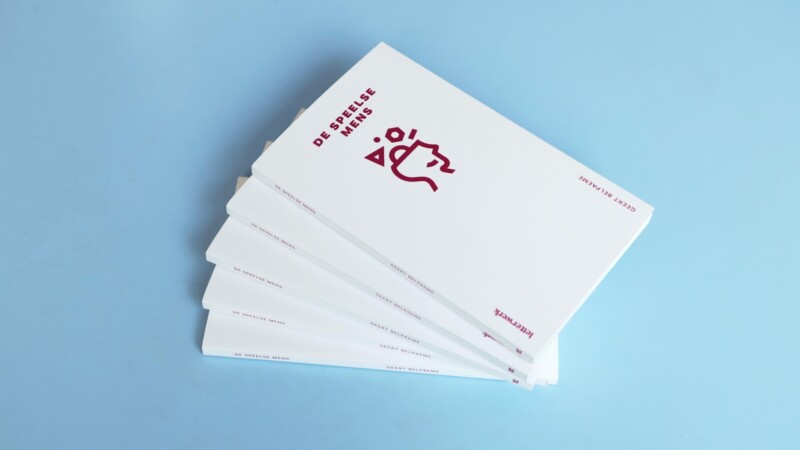
The Speelse Mens by artistic researcher Geert Belpaeme examines the practice of the actor as a starting point for a broader exploration of playfulness and meaning-making in our existence. It will be available from 16 September in bookstores in Flanders and the Netherlands and on the website of Letterwerk.
During the book launch, teacher Jan Steen, former student Marie Schraepen and writer, theatre and film maker Pieter De Buysser will react to the text from their perspectives.
The book launch is free of charge. You may reserve a place by sending an e-mail to boekhandel@limerick.be.
Geert Belpaeme is affiliated as an artistic researcher to KASK & Conservatorium, the school of arts of HOGENT and howest. The research project Towards a New Materialism was financed by the HOGENT Arts Research Fund.