

This research investigates and experiments with the visual essay as an instrument to recognise non-normative sensibilities, mentalities and disciplinary imaginaries for, and from, contemporary practices of graphic design.


Visual essay as critical instrument
 Book presentation I Shivered Violently / Don’t be Startled in the Nightresearch presentationAgendaOnderzoek
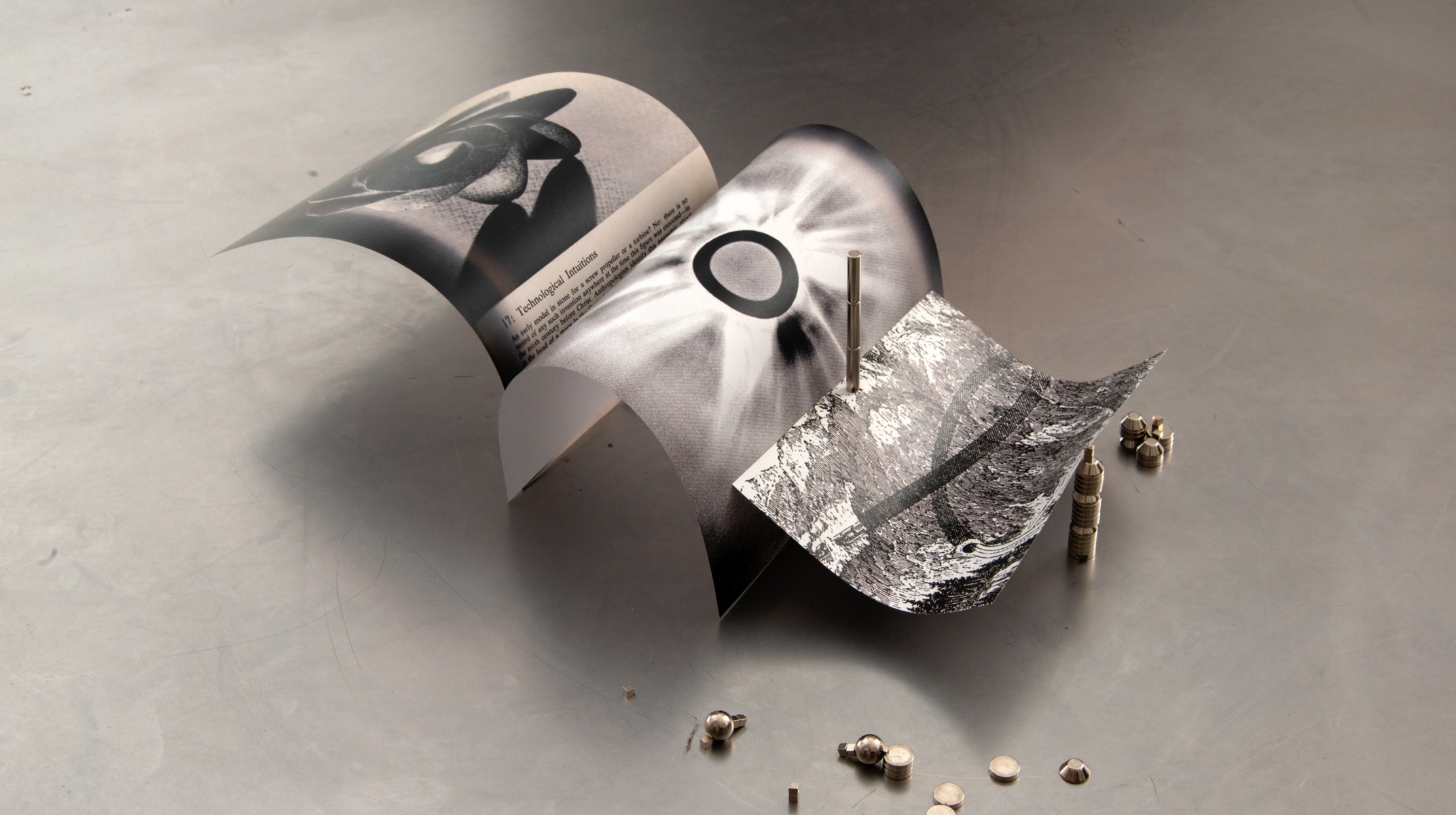
At Open Masereel, researcher Paul Bailey and Bryony Quinn present the new publicationI Shivered Violently / Don't be Startled in the Night; A networked essay on (dis)order, (il)legibility and (dis)orientation.
By way of gathers and gaps, leaps and snaps, this publication presents two networked essays that, between them, attempt to bring into view the poetics and possibilities of (dis)order, (il)legibility and (dis)orientation.
I Shivered Violently / Don’t Be Startled in the Night… approaches the renowned dynamic ordering and continual inventory of the Sitterwerk Foundation Kunstbibliothek (CH) as a site and a system of intrigue. In particular, these essays track the intent of a bespoke machine, fitted with an RFID scanner, that reads the shelves of the library at the end of the day. Visitors return items to the stacks at random and so, at night, an up-to-date record — and map — of the collection is created.
The behaviour of magnets, prompted by their role in the library’s technology used in the library, guides the attention of this publication, and is the subject of the written essay by Bryony Quinn. The visual essay, by Paul Bailey, which arranges material harvested from the Sitterwerk collection and beyond, deals with the conditions and manipulations of seeing with, and through, machines.
This publication is an A4-size folder with 5 mm spine, which includes 6 A2-size posters folded to A4.
Open Masereel is a brand new biennial arts festival centered around print as a way for artists to express themselves, understand art and the world that surrounds us, connect and more. In addition to multiple new editions, publications and a print art fair, the program includes live performances and music, a culinary experience by a top chef, artist talks and more.
Masereeldijk 5
2460 Kasterlee
 Meeting Grounds: Essay as Eventresearch presentationAgendaOnderzoek
The Meeting Grounds series invites investigation, and experimentation, with the visual essay as a verb (essaying), an event (a gathering) and as a social form for collective reasoning.
‘If we stop thinking about the form of the essay as the form of a thing, the form of an object, and reconsider it as the form of an activity or action (as in a dancer’s form, or the form of a golfer’s swing, or the form of a tennis player’s backhand), we can locate a consistent and unbroken line of agreement about the nature and the form of the essay to contemporary essayists and theorists; the essay is kineticism incarnate—the embodiment of perpetual mobility, motion and movement’. - Paul Heilker, The Essay: Theory and Pedagogy for an Active Form (1996).
For this edition at the Camden Art Centre, we will explore essayistic strategies that bring the temporalities, materialities and opacities of language into view, and consider how they might be put to use across contemporary practices of graphic design, literature, performance and installation.
Guided by a series of propositions shared by our contributors, guests are invited to join the gathering as participants in a rehearsal for an essay yet-to-come.
‘It is the essayist’s job to gather up the shards and map them where they are, to find patterns out there or make one … about the disconnections and mysteries’. – Rebecca Solnit, The Best American Essays (2019).
Paul Bailey is affiliated as an artistic researcher to KASK & Conservatorium, the school of arts of HOGENT and howest. Meeting Grounds is financed by the HOGENT Arts Research Fund, with support received from the Centre for Other Worlds (PT), Kunsthal Gent (BE) and the Camden Art Centre (UK). This iteration of the Meeting Grounds identity, developed with Sjoerd Beijers and Seppe-Hazel Laeremans, features oblique and swirling extensions to Garamon(d/t) typeface published by fonderie.download
Arkwright Road
London NW3 6DG
 Meeting Grounds: Essay as Eventresearch presentationAgendaOnderzoek
Essay as Event
A gathering devised by Paul Bailey with the graphic design department at KASK & Conservatorium and special guest contributors: Metahaven (Vinca Kruk and Daniel van der Velden), Dayna Casey and Katja Mater.Doors open: 17:00
Presentations & Performances: 18:00-19:45
Conversation: 20:00-20:30
Deejay(essayistic) Set at Sheela’s Bar: 20:30-23:00
The essay for the American essayist and climate activist Rebecca Solnit is a meeting ground. It is a process of ‘gathering up the shards and mapping them where they are, to find the patterns out there or make one … about the disconnections and the mysteries’.*
Drawing from Solnit’s framing of the essay, Meeting Grounds invites investigation, and experimentation, with the visual essay as a verb (essaying), an event (a gathering), and as a social form for collective reasoning.
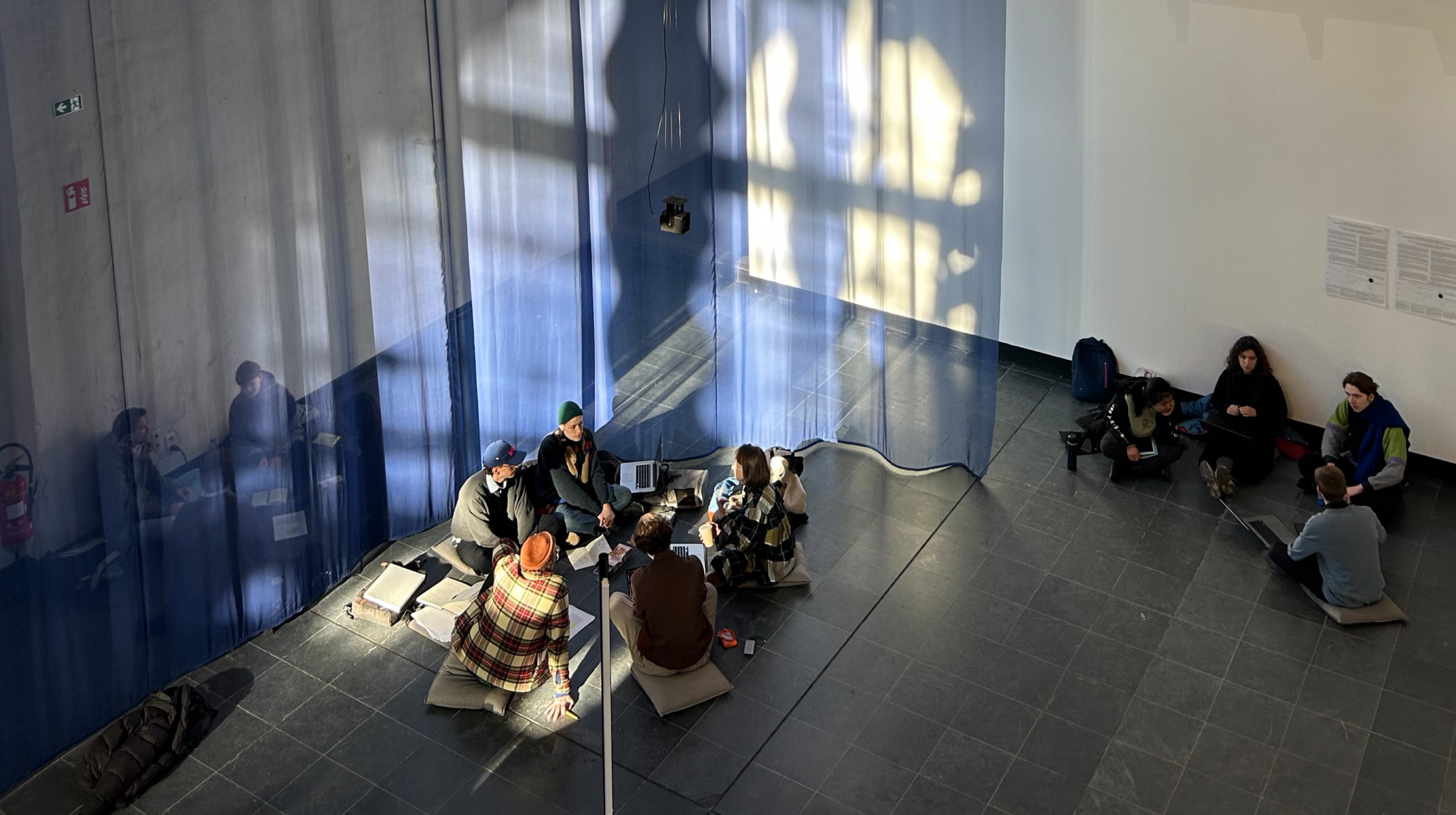
Throughout the evening we will gather around essayistic propositions shared by our guest contributors; meander through a series of essays (re)staged by graphic design students from KASK; and move along to, and between, a selection of tracks sampled and arranged by an essayistic ear.
Paul Bailey is affiliated as an artistic researcher to KASK & Conservatorium, the school of arts of HOGENT and howest. The research project Meeting Grounds was financed by the HOGENT Arts Research Fund.
Meeting Grounds identity developed with Anouck Voisin, Seppe-Hazel Laeremans and Sjoerd Beijers featuring oblique and swirling extensions to Garamon(d/t) typeface published by fonderie.download
* Rebecca Solnit, Introduction, The Best American Essays, 2019pay what you can
Lange Steenstraat 14
9000 Ghent