06.02.25, 19:00, Mira Thompson
People with disabilities are often helped individually and on an occasional basis to increase their radius of action. In this lecture, Singer-songwriter Mira Thompson argues, following the findings from the US Disability Justice movement, to see disability as a shared responsibility so that everyone can have equal and unhindered access to society. Arts and culture can take the lead in this.
Because of the inaccessibility of the Ghent city centre and Belgian public transport, it is difficult for Mira to move around Ghent. Therefore, in the context of accessibility, this lecture is digital. After the lecture, there will be an opportunity to ask questions.Mira Thompson is a singer, writer, artist and teacher and works with several Dutch art institutions on access and crip theory in the arts.
Cloquet
Louis Pasteurlaan 2
9000 Gent
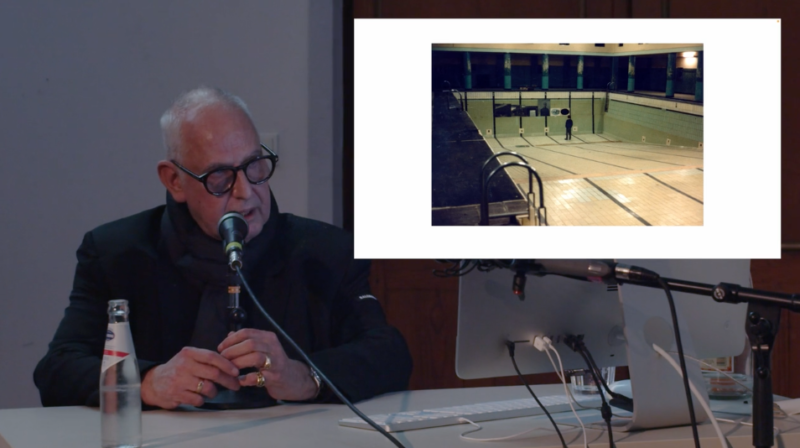 videoLees, kijk, luisterartistic activities Marijke De Roover, KASKlezing, 08.02.24Recording of Marijke De Roover's lecture
 videoLees, kijk, luistereducation KASKlezing, 09.03.23, Linda van Deursenrecording of the lecture
 videoLees, kijk, luisterartistic activities KASKLezing, 20.04.2023, The Black ArchivesOpname van de lezing van Mitchell Esajas van The Black Archives.
 videoLees, kijk, luisterartistic activities Het einde van het kunstonderwijs
 articleLees, kijk, luistereducation Jonas Staal
 articleLees, kijk, luisterartistic activities
 Lichen Hamraie, Staci Bu Shea, Carly Everaert, Studium Generale, KASKlezingenlectureAgendaArtistic activities
The evening starts with an online lecture by Lichen Hamraie, followed by a conversation together with Leni Van Goidsenhoven. Afterwards there will be interventions by Staci Bu Shea and Carly Everaert, ending with an aftertalk.
Accessibility is often understood as a way to correct built environments not designed with disability in mind. In this talk, Dr. Lichen Hamraie, Canada Research Chair in Technology, Society, and Disability, will will instead explore the broader meanings and practices of access in the twentieth and twenty-first century architecture, design, and disability arts. The talk will focus on four themes: assimilation and anti-assimilation, productivity and anti-productivity, normalization and critique, and the new vocabularies of critical access.
Considering how we can be transformed through giving and receiving care, curator, writer and careworker Staci Bu Shea will reflect on vulnerability and its implications for connection and dignity across interpersonal and institutional domains.
Award-winning costume designer and dramaturgical scenographer Carly Everaert’s presentation will trace how creating spaces for other(ed) bodies — and radically rethinking what a learning space can be — opened the way for their long-term collaboration with Mira Thompson: “Interdependence: On Disability Justice and the (Performing) Arts”. Together, they developed a practice in which co-creation is lived interdependence, crip time is a generative force, and artistic freedom can flourish. This led Carly to altarscenography: theorising how care, attention and solidarity create sacred spaces, where aesthetics and ethics meet as the spiritual foundation for solidarity itself.
About the speakers
- Lichen Hamraie is the Canada Research Chair in Technology, Society, and Disability, and Associate Professor of Social Science at York University. Hamraie’s research on disability and design has helped form the fields of critical access studies and crip technoscience. They are the director of the Critical Design Lab. Hamraie is author of ‘Building Access: Universal Design and the Politics of Disability’ (2017) and host of the Contra* podcast on disability and design. They are a 2022 United States Artists Fellow and Member of the U.S. Access Board.
- Staci Bu Shea is a curator, writer, educator and careworker based in Utrecht, the Netherlands. Broadly, Bu Shea convenes with others over aesthetic, critical, and poetic practices of social reproduction and care work, as well as its manifestations in interpersonal relationships, daily life, community organizing, and institutional practices. Bu Shea is the author of Dying Livingly (Solution series, Sternberg Press, 2025). Bu Shea was curator at Casco Art Institute of Working for the Commons (Utrecht, 2017–2022) and co-curator of Barbara Hammer: Evidentiary Bodies at Leslie-Lohman Museum of Art (New York, 2017). Bu Shea holds an MA from the Center for Curatorial Studies, Bard College (Annandale-on-Hudson, 2016).
- – Carly Everaert is an award-winning costume designer and dramaturgical scenographer. As a lecturer and researcher at the Academy of Theater and Dance in Amsterdam, Carly explores costume, bodies, and sustainability from an intersectional perspective. Their practice is becoming increasingly rooted in the principles of Disability Justice, making diverse abilities, knowledge, and ways of moving more visible. Carly collaborates with artists, curators, educators, and scholars who prioritize embodied knowledge. Carly’s methodology combines critical reflection with material experiments—where making is viewed as a form of thinking. Carly is chair of the jury for the Dutch Theater Festival’s Design Award. Their essay ‘Altarscenography, disability justice and staging coincidence, a secular-spiritual practice of solidarity, on solidarity, coincidence, and shared vulnerability as scenographic practice’ will be published in August 2026.
- Leni Van Goidsenhoven is Assistant Professor of Critical Disability Studies at the Department of Literary and Cultural Analysis at the University of Amsterdam (The Netherlands). Her research focuses on disability, illness, neurodiversity, and non-normative bodyminds in the arts and literature. She is the author of Autisme in veelvoud (Garant, 2020) and OnGehoord (EPO, 2021). Her recent work includes the special issue Cripping Choreography and the forthcoming volume Disability Heritage: Participatory and Transformative Engagement (co-edited with Manon Parry, Routledge). Alongside her academic work, she regularly curates projects for theatres and museums.
This programme is a collaboration between Curatorial Studies, KASKlectures and Studium Generale Gent. The event will be in English and will take place in the Zwarte Zaal of KASK & Conservatorium. The Zwarte Zaal is located on the ground floor and is accessible to wheelchair users, there’s also an accessible toilet in the hallway of KASKcafé. In case you use a wheelchair, go via the entrance of KASKcinema instead of the Louis Pasteurlaan entrance. There are works in the street of KASKcinema, but it’s possible to pass by the entrance at Godshuizenlaan 4. A translation into Flemish sign language will be provided. If you have any further questions about accessibility facilities, please contact the organisation: helena.verheye@hogent.be
Marissal
Louis Pasteurlaan 2
9000 Gent
 [cancelled] Julian Abraham "Togar", KASKlezingenlectureAgendaArtistic activities
Due to visa issues, this KASK lecture has been cancelled.
Julian Abraham "Togar" is a drummer and visual artist whose practice flows with visual art, sonic practice and experimental filmmaking. Togar's practice often focuses on the demystification and dissemination of specialist scientific knowledge to broader communities through sound, installations and collaborative practices.
Togar's works have been presented at the 17th Istanbul Biennial; 15th Gwangju Biennale; 13th Taipei Biennale; 58th Carnegie International (Pittsburgh); and in public institutions and museums such as De Appel (Amsterdam), KHOJ (New Delhi), SculptureCenter (New York), Nottingham Contemporary and Cemeti (Yogyakarta), among others.
 Miko Revereza, KASKlezingenlectureAgendaArtistic activities
Miko Revereza is a filmmaker born in Manila, Philippines, who currently lives in Oaxaca, Mexico. His upbringing as an undocumented immigrant and his current exile from the United States have shaped his relationship with moving images.
During the next edition of the Courtisane festival, Miko Revereza will visit Ghent and present several films and a performance. In No Data Plan, he uses the resources immediately at his disposal—his camera, his smartphone, his nomadic existence, and his unique perspective as a stranger in a strange land—to construct an evocative meditation on home and homeland. After his decision to leave the United States, he charted his return to the Philippines in Distancing using superimpositions of intimate 16mm images of the airport, his home, and his family. The performance FOLDS is a film poem consisting of a series of superimpositions/double exposures and a live soundtrack. Just like a folded map, distances are collapsed and placed opposite each other. By superimposing years of images of portraits of people and places, the separation between borders disappears.
In this KASK lecture, Miko Revereza talks about his work and the impact of exile and boundaries on his oeuvre.
“It’s complicated to call any place home. Mexico is a place that’s not my home as it is for other people who have lived here for generations. Every place I live, it’s hard to connect to as home, like the US and the Phillippines, but I also feel like there’s so much weight to the word “home,” and it doesn’t need to be such a priority.”
 Gaëlle Choisne, KASKlezingenlectureAgendaArtistic activities
Sensitive to contemporary issues, Gaëlle Choisne’s practice considers the complexity of the world, its political and cultural disorder, whether it be the over-exploitation of nature, its resources, or the vestiges of colonial history, where Creole esoteric traditions, myths and popular cultures mingle.
Her projects are conceived as ecosystems of sharing and collaboration, pockets of «resistance» where new possibilities are created, notably with the «Temple of Love» project. Initiated from Roland Barthes’ original essay on love, «Fragments d’un discours amoureux» (1977), Gaëlle Choisne adds a political dimension to the concept of love by paying homage to invisible bodies, minority and fragile souls, and dispossessed hearts. «Temple of love » is an evolutionary project defining itself through its modes of appearance and genesis according to its invitations and its location.
The works/installations of Gaëlle Choisne have been exhibited in many institutions: (Vitry-sur-Seine), Centrale Powerhouse (Montreal), CAFA Museum (Beijing), Pera Museum (Istanbul), MAM - Musée d’art moderne de Paris, Musée Fabre (Montpellier), Zacheta Gallery (Warsaw), The Mistake Room (Los Angeles), Bétonsalon (Paris), Gr-und project space (Berlin), MAMO - Centre d’art de la Cité radieuse de Marseille, La Villette x Pompidou (Paris), Centre d’art contemporain La Halle des bouchers (Vienne), Musée archéologique Henri-Prade (Lattes), Musée des Beaux-Arts de Lyon etc.
She has also participated in several biennials and triennials: 15th Gwandju Biennial (2024), 3rd Toronto Biennial of Art (2024), 5th New Museum Triennial (2021), 11th International Biennial of Contemporary Art (GIBCA), 13th International Biennial of Lyon (2015), 12th Havana Biennial (2015), Sharjah Biennial 13 (2017) and 14th Curitiba Biennial (2017).
In 2024, Gaëlle Choisne won the Marcel Duchamp Prize and, in 2021, the AWARE Prize. In 2019 she is nominated for the Ricard Foundation Prize and the Sam Art Project.
 Andrius Arutiunian, KASKlezingenlectureAgendaArtistic activities
Andrius Arutiunian is an Armenian-Lithuanian artist and composer based between The Hague and Paris. Working across installation, sound, and sculpture, Arutiunian's practice explores hybrid forms of listening, vernacular knowledges, and contemporary cosmologies.
In 2022, Arutiunian represented Armenia at the 59th Venice Biennale. Solo presentations include Fondation d'entreprise Hermès (Tokyo, 2026), Dat Bolwerck (Zutphen, 2025), and Meduza (Vilnius, 2023). Arutiunian has participated in biennials including the 14th Shanghai Biennale, 15th Gwangju Biennale, 17th Lyon Biennale, 15th Baltic Triennial, and Performa NYC, with group exhibitions at Centre Pompidou, Palais de Tokyo, M HKA, Kadist Paris, and Pinchuk Art Centre, among others. In 2024, he was shortlisted for the Future Generation Art Prize and was a DAAD artist-in-residence fellow in 2023.
 Anouk De Clercq, KASKlezingenlectureAgendaArtistic activities
In my never-ending search for other ways of looking and other ways of making images and presenting film, the explorative realm of cinema is full of adventure.
The way we see the world is influenced by what we know or what we believe in. There are many possible perspectives from which to look at a thing, a landscape, a person, a story, yourself. Unfortunately, we poor myopic humans lack the gift of birds of prey, with their long-range sight, and the talents of houseflies, with their panoramic vision. Through our large brains, however, we are at least aware of the limits of our seeing. With a humility rare in our species, we acknowledge that there is much we cannot see and therefore devise ways to observe the world.
It is difficult to look and to see at the same time. Only genuine attention is able to rival the most powerful magnifying lens. If you look long enough at what seems ordinary, it often becomes strange and unfamiliar, as every child learns when they repeatedly say their own name out loud. If our looking is limited to our eyes, we are seeing blind. When our field of vision is not demarcated by an edge, but presents itself as an infinitely explorable openness, the world breaks open.
In this lecture, we approach film in an adventurous way. How can a film be made in which the camera does not mimic the human eye? How can a film be made that is not based on the ordinary way humans see the world? How can a film be experienced when there are no images to see? How can cinema become an adventure? Using films and film clips, we try to answer these questions in the freest way possible.
Anouk De Clerq
Anouk De Clercq is a multidisciplinary artist and filmmaker who explores the boundaries of cinema, music and spatiality. With a background in music and film, she creates immersive audiovisual experiences that challenge traditional narratives and perceptions. Her work often focuses on imaginary and utopian landscapes, brought to life through a combination of digital techniques and analogue sensitivity.
Her work has been shown internationally at venues including BOZAR, Centre Pompidou, MAXXI, CAC Vilnius and Tate Modern, and is part of several collections. De Clercq is co-founder of Auguste Orts and initiator of Monokino, mentor to emerging artists and author of Where is Cinema. She is also affiliated with KASK & Conservatorium as a visiting teacher.
Cloquet
Louis Pasteurlaan 2
9000 Gent
 Rietlanden Women’s Office, KASKlezingenlectureAgendaArtistic activities
Graphic designers Elisabeth Rafstedt and Johanna Ehde are Rietlanden Women’s Office (2018, Rietlanden in Amsterdam). They are interested in current and historical methods of collaborative graphic design. Together they make the publication series MsHeresies which is about the ornamental in feminist collaboration. They give lectures and guest teach in book design and typography at various institutions around Europe, and together with Phil Baber of The Last Books they organise the poetry reading series Don’t Pay Your Rent.
Cloquet
Louis Pasteurlaan 2
9000 Gent
 Ahmet Öğüt, KASKlezingenlectureAgendaArtistic activities
In this lecture, artist Ahmet Öğüt explores the strategic use of humour in his practice as a means to disarm power, provoke thought, and engage audiences. Drawing from a range of works and collaborations, Öğüt reflects on how irony and playful subversion can become powerful tools for navigating complex political and social realities.
Born in Silvan, Diyarbakir, Ahmet Öğüt completed his BA from the Fine Arts Faculty at Hacettepe University, Ankara, MA from Art and Design Faculty at Yıldız Teknik University, Istanbul. He works across different media and has exhibited widely, more recently with solo exhibitions in institutions including Art on the Underground & New Contemporaries, Van Abbemuseum, State of Concept Athens, Kunstverein Dresden, Kunsthal Charlottenborg, Chisenhale Gallery; Berkeley Art Museum; and Kunsthalle Basel. He has also participated in numerous group exhibitions, including; Singapore Biennale (2025); Sense of Safety, Yermilov Centre Kharkiv (2024); Dhaka Art Summit (2023); 17th Istanbul Biennial, Istanbul, (2022); FRONT International 2022, Cleveland Triennial for Contemporary Art, Ohio (2022); Asia Society Triennial: We Do Not Dream Alone (2021); In the Presence of Absence, Stedelijk Museum Amsterdam (2020); Zero Gravity at Nam SeMA, Seoul Museum of Art (2019); Echigo Tsumari Art Triennale (2018); the British Art Show 8 (2015-2017); the 13th Biennale de Lyon (2015); Performa 13, the Fifth Biennial of Visual Art Performance, New York (2013); the 7th Liverpool Biennial (2012); the 12th Istanbul Biennial (2011); the New Museum Triennial, New York (2009); and the 5th Berlin Biennial for Contemporary Art (2008). Öğüt was awarded the Visible Award for the Silent University (2013); the special prize of the Future Generation Art Prize, Pinchuk Art Centre, Ukraine (2012); the De Volkskrant Beeldende Kunst Prijs 2011, Netherlands; and the Kunstpreis Europas Zukunft, Museum of Contemporary Art, Germany (2010). He co-represented Turkey at the 53rd Venice Biennale (2009). Lives and works in Amsterdam and Istanbul. His works in institutional collections such as Guggenheim Museum New York; Kadist, San Francisco, US - Paris; Rennie Collection, Vancouver; Sammlung Goetz, Munich; Frans Hals Museum; FRAC Nord-Pas de Calais, Dunkerque; Laumeier Sculpture Park, St. Louis; KIASMA Museum of Contemporary Art, Hesinki; Van Abbemuseum, Eindhoven; Fondazione Giuliani, Rome; MSU Broad Art Museum, East Lansing; Vehbi Koç Foundation, Istanbul.
 Laura Huertas Millán, KASKlezingenlectureAgendaArtistic activities
Archivo Fantasma — Spectral Fictions presents different cinematic approaches and strategies of counter — and alter — narratives to address official archives and records that Laura Huertas Millán’s practice engages with. It posits fiction as a critical and emancipatory strategy for engaging with colonial violence, institutional silences, historical erasures, and the ideological construction of collective memory. This artistic practice draws from Latin American traditions of meta-fiction and epistemic disobedience, emphasizing how historical records are shaped by regimes of truth that legitimize certain epistemologies while excluding others. This talk will present her critical series on “ethnographic fictions”, and a recent investigation inspired by Saidiya Hartman’s “critical fabulation”, a history “written with and against the archive” to articulate how fiction can serve as a reparative method, to address not only the documents of the past but also the languages shaping our present and future.
Laura Huertas Millan is a Colombian and French artist and filmmaker based in Brussels, Belgium. Selected in major cinema festivals such as the Berlinale, Toronto International Film Festival (TIFF), Rotterdam International Film Festival, New York Film Festival and Cinéma du Réel, her films have been awarded at the Locarno Film Festival, FIDMarseille, Doclisboa and Videobrasil, among others. More than twenty retrospectives and focuses on her work have been organized internationally, in cinematheques (Toronto ́s TIFF Lightbox, Harvard ́s Film Archive, Bogota ́s cinematheque, Austrian Film Museum, Tabakalera); museums (CA2M, CCA Glasgow, OCA Norway); film festivals (Mar del Plata, Rencontres du Documentaire de Montréal, FICUNAM, Curtocircuito); and non-fiction seminars (The Flaherty seminar, DocsKingdom). Her films have been featured in solo exhibitions at the MASP Sao Paulo, Maison des Arts de Malakoff and Medellin ́s Modern Art Museum; in biennials such as the Liverpool Biennial, FRONT Triennial, Videonnale and ScreenCity Biennial; and screenings in museums such as the Centre Pompidou, the Jeu de Paume, the Solomon R. Guggenheim Museum. Her work is part of private and public collections such as KADIST, CNAP, Banco de la República de Colombia, CIFO Miami, and FRAC Lorraine. Since 2019, she is part of the curatorial and research collective Counter Encounters, which has developed projects at the Centre Pompidou and Tate Modern.
 Marwa Arsanios, KASKlezingenlectureAgendaArtistic activities
Marwa Arsanios is an artist, filmmaker and researcher whose work can take the form of installation, performance and moving image. She reconsiders the political development of the second half of the twentieth century from a contemporary perspective, focusing on gender relations, collectivism, urbanism and industrialization. Her research work includes many disciplines and is deployed in numerous collaborative projects.
Several solo exhibitions have been dedicated to her work: Heidelberger Kunstverein, Germany (2023); Mosaïc Rooms, London (2022); Contemporary Arts Center, Cincinnati (2021); Skuc Gallery, Ljubljana (2018); Beirut Art Center (2017); Hammer Museum, Los Angeles (2016); Witte de With, Rotterdam (2016); Kunsthalle Lissabon, Lisbon (2015); and Art in General, New York (2015).
Her work has also been featured in numerous group exhibitions including: Documenta 15, Kassel (2022); 5th Mardin Bienali (2022); 3rd Autostrada Biennale, Pristina (2021); 11th Berlin Biennale (2020); The Renaissance, Chicago (2020); 2nd Lahore Biennale (2020); Kunsthalle Wien, Vienna (2019); 1st Sharjah Architecture Triennial (2019); SF Moma, San Francisco (2019); 1st Warsaw Biennial (2019); 14th Sharjah Biennale (2019); Nottingham Contemporary (2017); Maxxi Museum, Rome (2017); Sursock Museum, Beirut (2016); Ludwig Museum, Cologne (2016); Thessaloniki Biennial (2015); Home Works Forum, Ashkal Alwan, Beirut (2010, 2013, 2015); New Museum, New York (2014); 55th Venice Biennial (2013); M HKA, Antwerp (2013), In Other Words, nGbK, Berlin (2012); or the 12th Istanbul Biennial (2011).
Her films have been screened at Cinéma du Réel, Paris (2021); Rotterdam Film Festival (2021); EMAF, Osnabrück (2021); Film Fest, Hamburg (2020); State of Concept, Athens (2020); FID Marseille (2019); tiff, Toronto (2019); RIDM, Montreal (2019); Berwick Film & Media Arts Festival (2019); Walker Art Center, Minneapolis (2017); Centre Georges Pompidou, Paris (2011, 2017); Berlin International Film Festival (2010, 2015); and e-flux storefront, New York (2009).
She received the Georges de Beauregard International Prize at FID Marseille (2019), the Special Prize of the Pinchuk Future Generation Art Prize (2012), and was nominated for the Paulo Cunha e Silva Art Prize (2017) and the Han Nefkens Foundation Award (2014). She was awarded the Akademie Schloss Solitude scholarship in Stuttgart in 2014 and the Tokyo Wonder Site, Tokyo Arts and Space in 2010. She is a co-founder of the 98weeks Research Project.
 Saddie Choua, KASKlezingenlectureAgendaArtistic activities
Am I the only one who is like me? This is a question characteristic of Saddie Choua’s (°Bree, 1971) life and work. It problematizes the position of the solitary I that is also never disconnected from the other. The power order that conditions the solitary “I”, is another central subject. Where does this otherness sit in the hierarchy of power? Where is her oppression and exploitation concealed or exoticed?
Saddie Choua asks us to think about how we consume images and dialogues about the other and how they affect our self-image and historical consciousness. How can we intervene in the images that write our history and conceal social struggle? Do we first have to refute memory to tell another story? Or is the removal or recombining of certain associations and references already sufficient to create a different history and self-image?
Saddie Choua's work can therefore be read as a fragmented self-reflective visual essay that questions the relationship between maker and image. How do you make blind spots that just invite you to forget visible? How to speak and depict differently from a subalternal position, or is it just the concept of "the other" that confines her in dominant images and narratives?
Saddie Choua lives and works in Brussels and Ostend. She uses meta-documentary tactics, collage, own (film) material, re-appropriation of popular intercultural formats and autobiographical elements to put racism, discrimination against women and class, and her cats in the spotlight. She creates a new pseudo-realistic imaginary world that is at once highly recognizable and utterly alien. It is her way of undermining the (visual) language of our media and of sharpening the critical and political gaze of her audience. The challenge is to create 'situations' that reveal the power structures behind the images that we internalize and reproduce. Saddie is a doctoral researcher at the RITCS in Brussels and a lecturer at Sint Lucas Antwerp and the RITCS. She is one of the laureates of the Belgian Art Prize 2020.
Saddie Choua had solo and group exhibitions at, among others, BOZAR, Brussels, 2014; WIELS, Brussels, 2015; Marrakech Biennial, Marrakech, 2016; MU.ZEE, Ostend, 2016; Showroom, Sint Lucas School of Arts, Antwerp, 2016; KIOSK, Ghent, 2017; Festival Concreto, Fortaleza, 2017; Kooshk-Air Antwerp, Tehran, 2018; Kanal-Centre Pompidou, Brussels, 2018-2019; Savvy Contemporary, Berlin, 2018; Akademie der Künste der Welt, Cologne, 2018; Villa Empain, Brussels, 2018; Contour Biennal, Mechelen, 2019, Biennale Warszawa, Warsaw, 2019; La Veronica Gallery, Modica, 2020; Les Rencontres Internationales Paris/Berlin, 2020; Centre Wallonie-Bruxelles, Paris, 2020; Temporary Gallery, Cologne, 2020; Kunsthalle Wien, Vienna, 2020; Extra City, Antwerp, 2021; Kunstverein Hamburg 2021; Kadist, Paris, 2021; Undercurrent Gallery, NYC, 2021. Her work is in national and international private and public collections.