 videoLees, kijk, luisterresearchresearchers Structural Colors
 articleLees, kijk, luisterresearchresearcher Living Colors (Laboratorium)
 publicationLees, kijk, luisterresearchresearcher Laboratorium
 publicationLees, kijk, luisterresearch
 Heleen Sintobin, María Boto Ordoñez, Disobedient Practices
 ongoingOnderzoek
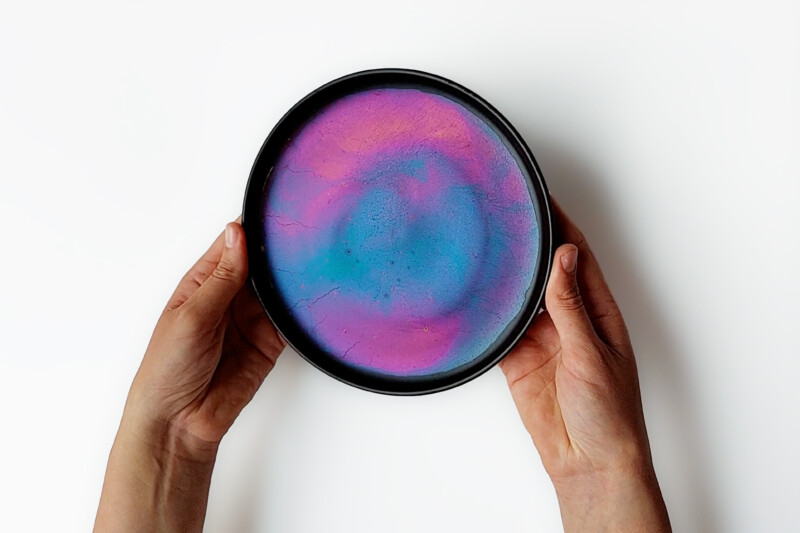
Structural Colours, Beyond Pigment
Ecology of Colour, María Boto Ordoñez, Negotiating RealitiescompletedOnderzoekEcology of Colour
Relational Design, Futures through Design
 completedOnderzoek
Relational Design
The Color Biolab, Bram Crevits, completedOnderzoekThe Color Biolab
 Only Yesterday (1991), KASKcinemafilmAgendaArtistic activitiesOnderzoek
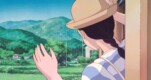
In a languid summer, 27-year-old Taeko leaves the concrete bustle of Tokyo behind and travels to the countryside in search of peace and nostalgia. On the farm, she is carried away by the simple rhythms of rural life, and fragments of her childhood emerge - the dreams, infatuations and small disappointments of her younger self. In Only Yesterday, director Isao Takahata weaves a subtle and philosophical portrait of coming of age and the ephemerality of childlike innocence. The film unfolds as a tender meditation on who we were and who we want to be, with a rhythm that breathes like a warm summer breeze.
As always, Studio Ghibli's animation manages to reveal the beauty of the everyday in a world of colour. Matching the films affection for vanishing traditions is its fascination with Beni, a technique for distilling colour from the bright orange Safflower plant. The unique shade of green produced through this method is of great cultural importance in Japan and can be found in a resembling ceremonial and everyday applications. Before the film we will discuss this special colour method and its symbolic power through a short make-up tutorial.
This film is introduced by colour scientist Maria Boto Ordonez. Before the screening, we will watch the short film Beni (2016, Sasaki Maiko).
In collaboration with the Ecology of Colour research project at KASK & Conservatorium and Tokyo Polytechnic University.
Cloquet
Godshuizenlaan 4
9000 Gent
 ColourexpoAgendaOnderzoek
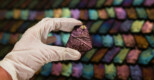
Pigments are everywhere. From paints to cosmetics and clothes, from everyday objects to your food and drinks, they literally add colour to life. Unfortunately, the pigment and dye industry is one of the most polluting industries in the world. In the search for natural alternatives, Laboratorium – the biolab for art, design and biotechnology at KASK & Conservatorium in Ghent – went a long way. Here, melanin proved to be a fascinating track. In Z33, researchers, designers and artists present show their results for the first time.
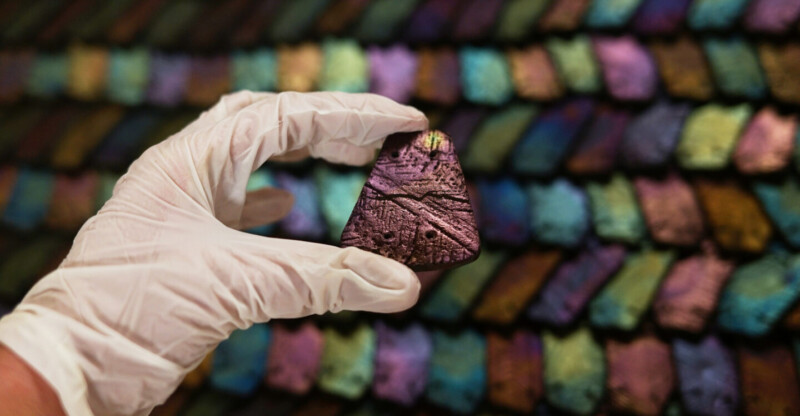
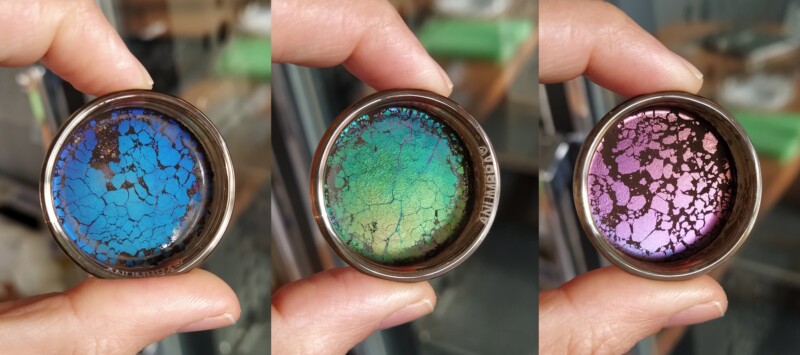
Melanin is found in our skin and determines our colour. But what few people know is that the pigment is also found in animals and has a very wide range of tones. Think of the wings of a butterfly or peacock feathers. Because of the structure in the wings on which light refracts, you can observe different colour tones. Can these natural solutions help us in the search for less polluting dyes? Several designers and artists got to work with this structural colour and are showing their work for the first time.
From petri dish to design
Amandine David & Heleen Sintobin, together with scientist María Boto Ordoñez, led the research project at KASK & Conservatory and found inspiration for their work in nature.
1548 Pennae is a plumage of ceramic plates bearing the new colour melanin. Up close, you can see how each piece bears the structure of a turkey feather. This is no accidental find, but a tribute to an ancient Mayan tradition, where the turkey played an important role.
How does melanin behave on paper? You will see that discover this in Entomo Colours, a series of origami beetles based on endangered or extinct species in Flanders. Where a traditional insect collection dwells on the past, this collection tells says something about biodiversity today. Finally, with Coral Colours, they bring to life the impact of climate change on the underwater world.
Jewels on the wall
This is the best way to describe Ridges 1, 2 and 3 by Bram Vanderbeke. His aluminium wall sculptures show rhythmic lines and catch the light. As you move, the intensity of the colour changes, creating a play between the shape and its reflection. For her part, Belgian artist Ann Veronica Janssens is showing Future Forms of Beauty, where she manipulates transparent ribbed glass with a thin layer of synthetic melanin. One of the only ones in this expo, she She’s one of the only ones in this expo to already applies apply the this technique in her art. Finland’s Tiina Pyykkinen subverts traditional painting with Disguised Messages. Her mirrored panels are a play of revealing and concealing, where shadows of trees shine through.
Geometric connectedness
A floating kite adorns the exhibition space. The colours on its surface range from blue and purple, to orange and yellow. For this, Dimitris Theocharis was inspired by the colours of a flying flock of starlings. He based the shape on a kite from 1907 by Alexander Graham Bell, the inventor of the telephone.
No hard peelings
Humour and alienation go hand in hand with Dutch fashion designer Marlou Breuls. Where her rubber artwork approaches a cuddly human skin, the metallic blue-green colour enhances a strange feeling. The head pins she uses to hang it give it a sinister discomfort, as if looking at a skinned human skin. The headpins she uses to hang it give it a sinister unease, as if you were looking at flayed human skin.
Participating artists and designers: Amandine David, Ann Veronica Janssens, Bram Vanderbeke, Dimitris Theocharis, Heleen Sintobin, Marlou Breuls, Tiina Pyykkinen
Curator: Annelies Thoelen
Scenography: Woman Cave Collective
Laboratory, the biolab for art, design and biotechnology at KASK & Conservatory specialises in sustainable colour production. The research project Ecology of Colour develops a palette of structural colour thanks to nanotechnology. Based on synthetic melanin, a colour film is being developed to be applied to paper, metal, ceramics, glass, etc.
The research project Ecology of Colour is financed by the HOGENT Arts Research Fund.
Bonnefantenstraat 1
3500 Hasselt
 Maria Boto Ordoñezlectureresearch presentationAgendaOnderzoek
How are pioneering art academies redefining material practice through (bio)-labs? Join our upcoming ETHO Online Session to explore how these innovative spaces shape new ways of making, learning, and researching with living and biological systems.
Experts from Future Materials Bank (Jan van Eyck Academie), The Living Library (HfG Karlsruhe), and Laboratorium (KASK & Conservatorium) will share their insights on material research and experimentation in biolabs, the challenges and opportunities of working with living materials, and how students can be equipped with the skills needed to address climate and sustainability issues through creative practice.
Speakers
- María Boto Ordóñez, researcher at KASK & Conservatorium, focusing on sustainable colour production and its application in the arts, and lead at Laboratorium, the experimental lab for art, design, and biotech at KASK & Conservatorium.
- Julia Ihls, interdisciplinary researcher, designer and head of The Living Library at HfG Karlsruhe, working at the intersection of material philosophy, media theory, and spatial staging.
- Dorieke Schreurs, interim coordinator of the Future materials bank at Jan van Eyck Academie, supporting artists and designers in adopting sustainable practices.
- Aldje Van Meer, senior lecturer at Willem de Kooning Academy, where she teaches, researches, and integrates technological innovations into creative education.
ELIA
ELIA is a globally connected European network that provides a dynamic platform for exchange and development in higher arts education.
 María Boto Ordóñez, KunstenbibliotheekexpoAgendaArtistic activities
María holds a degree in Food Technology from the University of León and a PhD in Life Science from the University of Barcelona. After completing her PhD, she began a quest at the intersection of science and art at the Waag Society in Amsterdam, where she worked as a lab assistant for artists and designers in the field of bioart and biodesign. Since 2016, María has been working as a researcher at KASK & Conservatorium. Her main research interest is in sustainable colour production and application within the arts. In her first project, The Colour Biolab, she investigated sustainable alternatives to synthetic inks and dyes, including the use of bacteria and microalgae as colour sources. In addition to her role as researcher, she is responsible for LABORATORIUM, the experimental lab for art, design and biotechnology at KASK & Conservatorium, where students and researchers can investigate materials and methods from science in their artistic practice
Essential ReadingEssential Reading seeks to enrich and broaden the Kunstenbibliotheek's book collection from a different perspective. Which books are, today, truly indispensable for an Kunstenbibliotheek? Guests of Essential Reading collect and present the books they find most valuable in their lives and work.
Godshuizenlaan 2A
9000 Gent
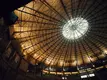 FTI Gent The Expoexporesearch presentationAgendaOnderzoek
Walk on the Wild Side of Technology – Past, Present & Future
During Flanders Technology & Innovation Ghent, visit the Winter Circus on 16 & 17 March for a unique blend of history, technology, art and wonder. The Expo features work by researchers at KASK & Conservatorium Valery Vermeulen, María Boto Ordoñez & Elias Heuninck.
Valery Vermeulen
- Making Music Using Data Stemming from Deep Space
Valery Vermeulen is a Belgian electronic musician, new media artist, researcher at the Department of Mathematics at the University of Antwerp and guest professor at KASK & Conservatorium. In 2001 and 2013, respectively, he obtained a PhD in pure mathematics in the field of algebraic group theory at the University of Ghent and a Master of Arts in music production at the city’s Royal Conservatory.
As an artist, his work covers a broad range of disciplines including algorithmic music composition, (generative) sound synthesis, affective computing, artificial intelligence, biofeedback & psychophysiology, creative evolutionary systems design, astrophysics, theoretical physics, econometrics and data sonification.
In 2021, he released the ‘black hole album’Mikromedas AdS/CFT 001, which received an honorary mention at the S+T+Arts Prize – Ars Electronica. For The Expo by ArcelorMittal, Vermeulen will showcase his data-driven Mikromedas project, in which compositions are created using data stemming from deep space and astrophysical simulation models. On a conceptual level, it deliberately balances on the edge where scientific knowledge ends and a speculative vision of reality starts to emerge.
María Boto Ordoñez & Elias Heuninck
- Mixing Transdisciplinary Research with Complex, Surprising and Disorienting Art
María Boto Ordóñez is a food scientist by training – she specialises in microbiology and did her PhD at the University of Barcelona. However, wanting to share her knowledge with a wider audience, she switched from academia to the art world, where she does transdisciplinary researchon sustainable colour materials.
Elias Heuninck, in turn, studied media art at KASK and draws inspiration from the aesthetics of scientific images. He works with a range of media – though film is ubiquitous in his art – and often uses home-made sensors and machines to explore landscapes.
He says he likes computers and machines for their accuracy and repetitive nature. Heuninck too generally keeps the processes simple and transparent, which is by no means to say that the outcome cannot actually be very complex, surprising and disorienting.
The Expo is a collaboration with ArcelorMittal
Miriam Makebaplein 2
9000 Gent
María has a background as a scientist with a PhD in Life Sciences from the University of Barcelona. After completing her PhD, she began a journey into the intersection of science and art at the Waag Society in Amsterdam, where she worked as a lab technician for artists and designers in the fields of bioart and biodesign.
Since 2016, María has been a researcher at KASK & Conservatorium. Her main research interest is in sustainable colour production and application within the arts.
In her first project, The Colour Biolab, she explored sustainable alternatives to synthetic inks and dyes, including bacteria and microalgae as colour sources.
Her current research project, Ecology of Colour, done in collaboration with the designer Heleen Sintobin, aims to bridge nature and art by dissecting the bases of structural colour generation and translating them into applicable and sustainable materials. With this goal, she works closely with professional artists and designers to explore the aesthetics and sensoriality of the colors generated.
In parallel to her role as researcher, she is responsible for Laboratorium, the experimental lab for art, design, and biotechnology at KASK & Conservatorium, where students and researchers can explore materials and methods from the scientific field in their artistic practices.