Cedric Haeck
About a feral child and a bass guitar
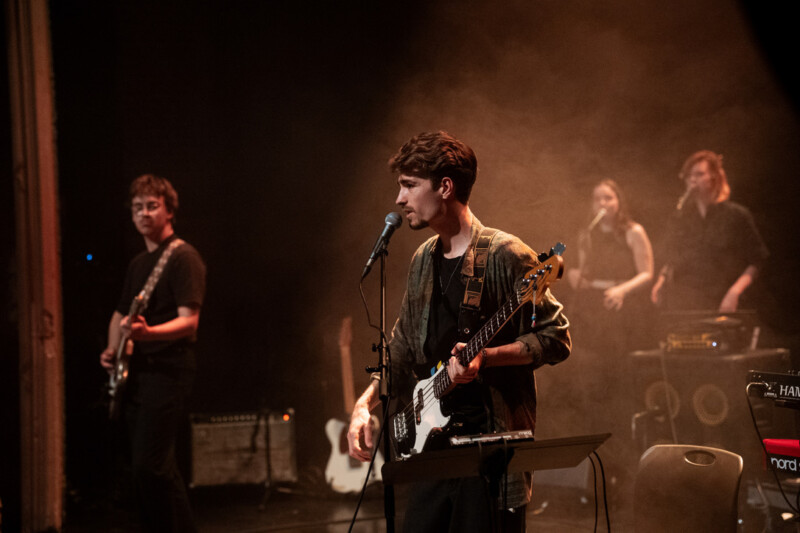
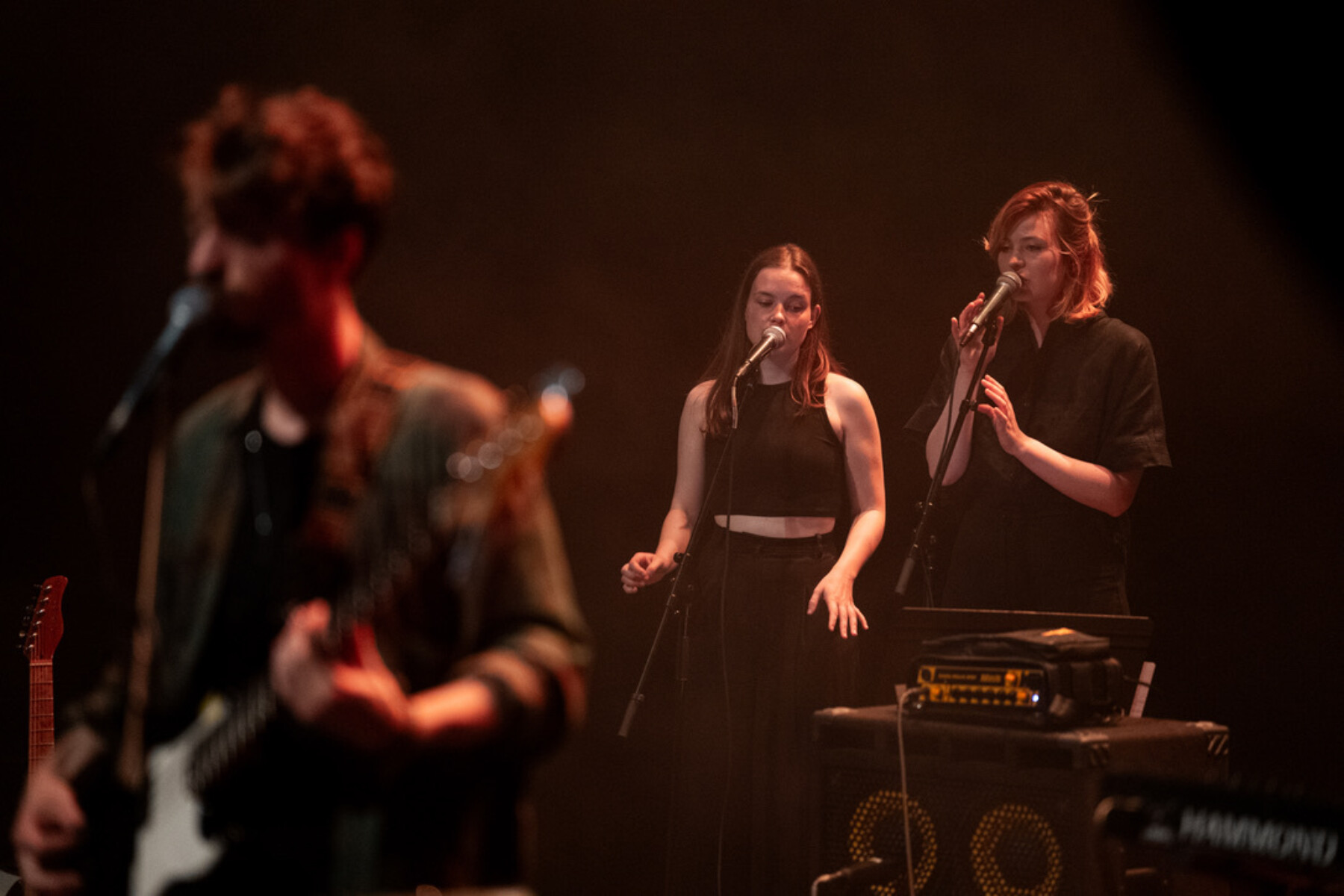
Cedric Haeck graduated as a bass player from the pop programme. For his graduation project, he presented Saege, a band with its roots in Americana, but with an open mind for other disciplines, resulting in a beautiful and personal presentation that combined music and dance.
Cedric Haeck
In high school, I had a very enthusiastic music teacher who organized a big concert project every year. I participated in this for three years, first as a member of the choir and later as a bass player. That teacher also played bass guitar, which sparked my interest.
At one point, I performed Chet Baker's ‘My Funny Valentine’. That was the first time I brought something on a stage that felt special. It became clear to me that I didn't want to continue in the humanities, but wanted to study music. So I switched to Muda Kunstsecundair to do finish high school there. I started taking the bass seriously and practiced hard to get into KASK & Conservatorium.
Stijn Buyst
Can you tell us something about your graduation project?
CH
From the very first year, I always wanted to do my own thing. For my bachelor's thesis, I worked with a large choir and wrote arrangements for them. For my master's thesis, I wanted to bring a completely different undertone in terms of atmosphere to the music. Over the past year, I've written things that are darker and rougher in style. That's just the trip I'm on right now. It has to do with the music I'm listening to at the moment, but also with what's happening in the world. Themes such as war, grief, human vulnerability, images of masculinity and femininity... And, of course, the digital contamination of our minds, which is a theme that preoccupies many of my peers.
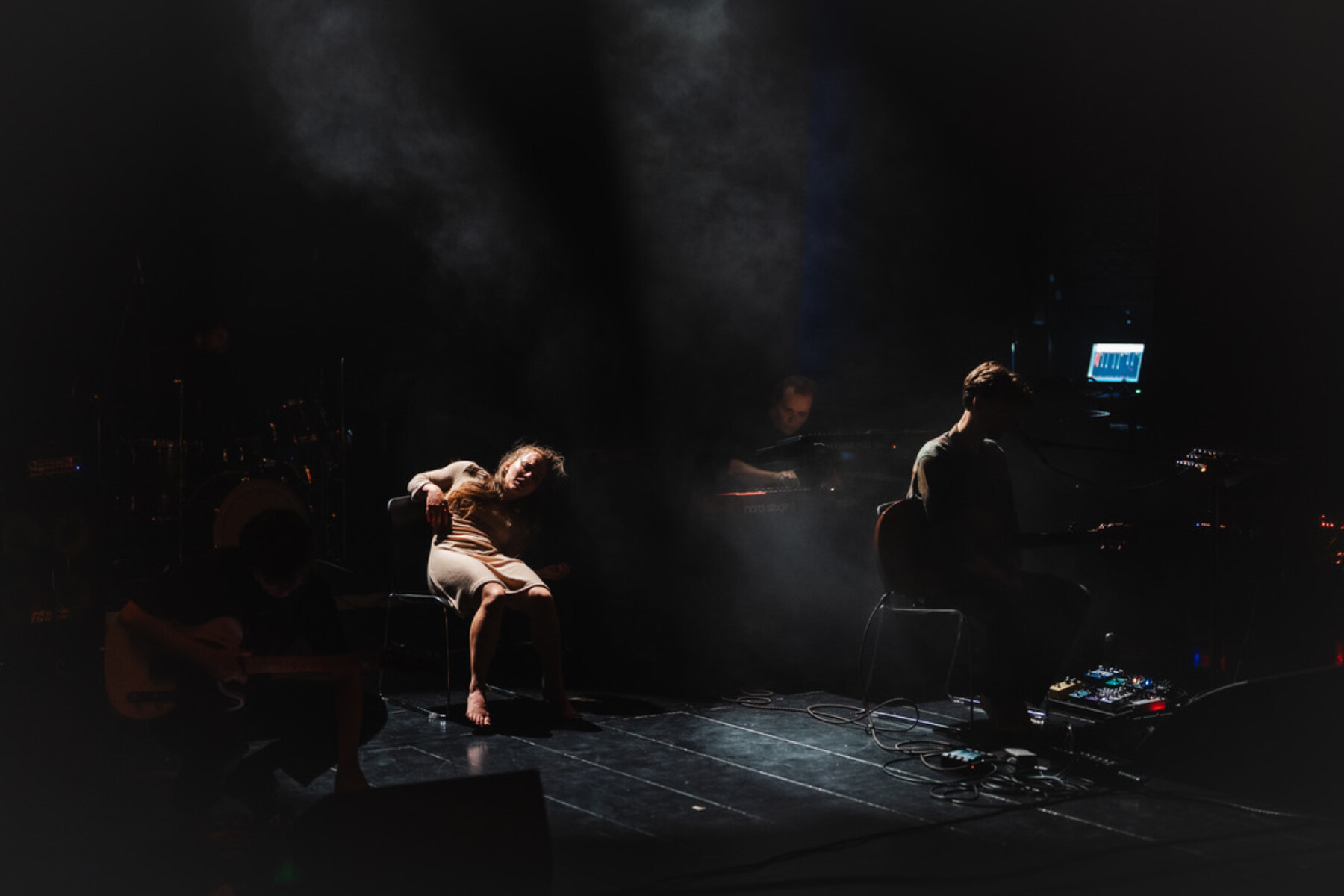
I also involved my girlfriend, who is a contemporary dancer, in the project: she dances a solo to one of the songs, which is about a feral child. We also created a duet in which we were tied together with a rope. I'm glad we did that. I really wanted to start the concert with something that would allow me to completely overcome my reserved personality, which is something I have always struggled with.
SB
That feral child intrigues me.
CH
When I was studying human sciences, I heard the story of Genie Wiley, a girl who was locked up in the basement of her house for years, where she had to survive without light and on a diet of cold porridge. When she finally got out, she suddenly found herself in a world of media and science, and everyone wanted a piece of her. They tried to teach her all kinds of things and to get her to communicate using sign language. That story stuck with me, partly because I believe that the upbringing of children is the most important thing: it is the foundation of society. I had wanted to do something about it for a long time, but hadn't found the right way yet. I didn't feel comfortable commenting on it, or at least I hadn't found the right way to do so. In the end, I decided to base my lyrics on quotes from testimonials from people who knew her. Only in the final verse do I briefly express my own thoughts.
Based on existing footage of Genie, my girlfriend conducted movement research, and we attempted to visually interpret that story in the language of dance.

SB
The band you performed your graduation project with is called Saege. Did you form it especially for that occasion?
CH
Yes. Before that, I made more folk-Americana-style songs with Kinsman. But the patriotic connotation of that name bothered me a bit. Sage is known as an herb that helps your memory, and I'm a very absent-minded person. I drank a lot of sage tea as a child. And I also really like the pastel-like color: that's reflected in the visual aspect of the project. The ‘ae' comes from my last name.
SB
Which genre of music influences you?
CH
I love folk, Americana, and swampy, bluesy stuff, but I'm just as fond of Hiroshi Yoshimura's ambient music, and I also enjoy exploring non-Western musical traditions such as Maqam.
SB
Is there a lesson from your education that you will remember for the rest of your life?
CH
Well, I learned a lot in Christian Mendoza's band coaching sessions. He chose to do a group session every week, a very open conversation. This created a bond and commitment with my fellow students that reminded me of the close-knit group our class had in the first year, when we were in lockdown, ironically enough. That class was super close because of what happened. Afterwards, that bond remained, but not to the same extent. And with Christian's band coaching sessions, it came back. Someone would sit down at the piano and play something, and then we would listen and discuss it together. Christian guided that very well.
SB
Zijn er medestudenten naar wie je opkijkt?
CH
I immediately think of Lander Lampaert—his project is called Floaters—a very atypical guitarist. Most guitarists in the programme mainly like to shred. Lander was more into noise and weird shit. The soundscape of his final exam was such a trip that I walked out with a big smile on my face.
And Indira Bergmans is a pop singer who performs Dutch-language music. She had a mega-cool band, too. Not the kind of music I usually listen to, but it radiated such joy that it was contagious. Stanny Rijckaert managed to reconcile his gentle personality and heavy metal taste in Constant Force, a Brutus-esque group. But I also really enjoyed the graduation projects by Leonie Geens and Alexis Bowen.


SB
You've now graduated, but your career had
already been underway for a while, right? You play bass with Milo Meskens.
CH
Milo was also a student at KASK & Conservatorium, and at one point he was looking for a new bass player. He asked Vincent Pierins if there was a bass player at school who suited his style and could also sing backing vocals. I studied dilligently and was able to play everything from memory at the audition. I was very green when I started with Milo. That was two years ago, and I learned a lot from him about the field and how the sector works.
text: Stijn Buyst
 ExhibitionexpoAgendaArtistic activities
Spread out over the Bijloke campus, you can discover the work of students in photography, graphic design, autonomous design, fine arts, textile design, fashion, musical instrument making, interior design, landscape and garden architecture, landscape development, digital design and development, curatorial studies, educational master in audiovisual and visual arts and the educational master in music and performing arts.
Fri, Sat, Sun, 12:00 – 20:00
 film and animationfilmAgendaArtistic activities
Our audiovisual arts master students will project their final works into the world during the avant-premières at Sphinx Cinema on 24 June. You can book tickets here.
Later, from 26 to 29 June, we will repeat the films at KASKcinema. Admission is free, no need to make a reservation.Sint-Michielshelling 3
9000 Gent
9000 Gent
 Fashion and textileeventAgendaArtistic activities
Fashion students from KASK & Conservatorium present their graduation projects during 2 shows in the Floraliënhal.
From 20 to 21 June, you can visit the exhibition of fashion and textile design students at the same venue.
You only need to buy a ticket for the shows on Saturday 21 June, the exhibition is free to enter.
Citadelpark
9000 Gent
21.06.25
 MastersoundsconcertAgendaArtistic activities
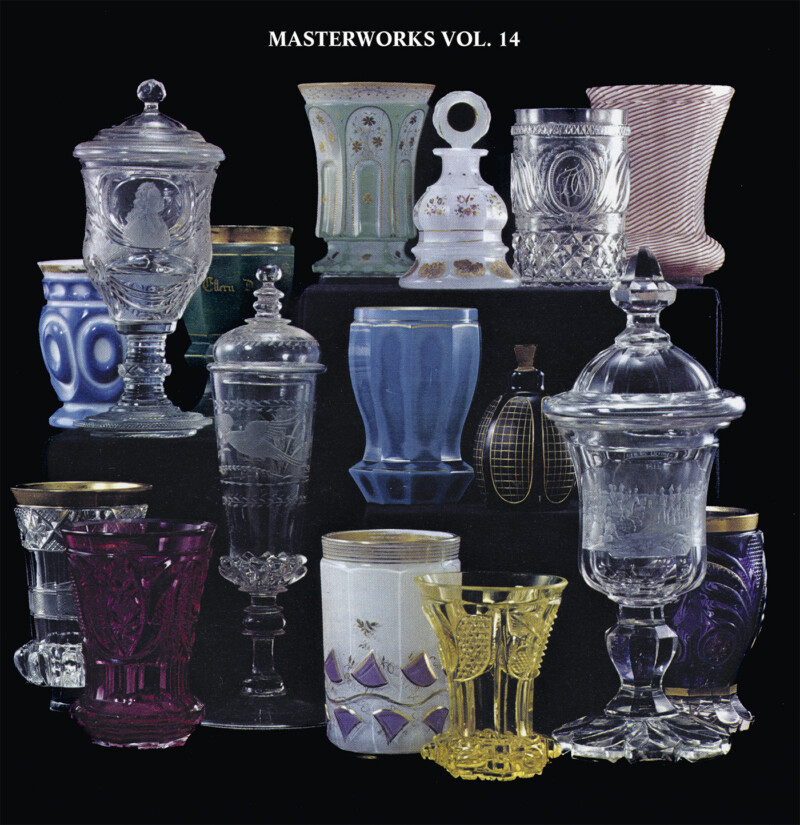
Mastersounds is known among connoisseurs as the holy grail of up-and-coming musical talent. During this festival, part of Graduation 2025 at KASK & Conservatorium, graduating students in jazz, pop and music production present their own projects. Between 16 and 25 June 2025, they will shake the foundations of the Minard theatre and De Centrale. They were preceded by Ramkot, Balthazar, Tomàn, Senne Guns, Douglas Firs, Nordmann, Amatorski, Faces on TV, Shht... In addition, every year we celebrate the birth of the new Masterworks LP, a compilation album that brings together all that talent. Get your copy at the festival.
Romain Deconinckplein 2
9000 Gent
Ham 70
9000 Gent
 Drama, KASK DramadramaAgendaArtistic activities
During the Drama Festival, drama master’s students present their graduation work. Offbeat and classical drama, crossovers, performances and multidisciplinary work can be seen at de Kazematten, CAMPO, Minard and Arsenaalsite. The Drama Festival runs from 14 to 21 June 2025.
 Classical music, MIRY Concert hallconcertAgendaArtistic activities
Our classical music students hone their skills until they are ready for their exam recitals. You can attend this joyous occassion, as the exam concerts of master’s students of classical music and composition are open to the public. Postgraduates musical performance practice will also spoil your ears. All concerts take place in our very own MIRY Concert Hall.
 For some time I’ve been standingexpoAgendaArtistic activities
For some time I’ve been standing is an exhibition curated by curatorial studies 2024-2025 participants that takes place at the Old House, Kunsthal Gent from May 30 to August 31, 2025.
Bringing together works by Chupan Atashi, Manon de Boer, Michael Kleine, Brigitte Louter, a workshop by Emma Ydiers and a performance by Astrid Specht Seeberg, the exhibition sets out to trace gestures of rehearsal, repetition, and return, exploring what it means to pause, to stand still, or to remain in motion.
By entering into dialogue with the fresco on the back wall of the Old House, the artworks reiterate its significance as a palimpsest — responding to, echoing and reimagining it. Immediately drawing the gaze, the fresco tends to direct a body’s movement in the space. Between the other white walls, it attracts the eye, inviting it to wander over its worn, bodily surface, to follow the contours of the gaps and cracks, to glide over the smooth areas and to acknowledge its most vulnerable parts.
The exhibition takes its title from a passage in Kathy Acker’s 1993 novel My Mother: Demonology, “For some time I’ve been standing, in front of a white stucco wall, on a white road that is raised above all the surroundings and the dirt underneath, as though it’s a platform. All around me are masses of luggage, suitcases and bags”. Integral to Acker’s writing is the process of rewriting and reinterpreting, often plagiarising other sources as her own. This reflects the impetus of the exhibition to enter into conversation with the fresco on the back wall of the Old House, reiterating its significance as a palimpsest with artworks that respond, echo, and reimagine.
Accessibility statement
For some time I’ve been standing is located in the Old House, which is wheelchair accessible through the main entrance, if accompanied. Michael Kleine’s “Plateau” is only accessible via stairs, but is available in video format that can be accessed by scanning the QR code on the wall next to the work. Feel free to speak to a staff member if you need help. General exhibitions at Kunsthal Gent do not currently have an audio guide. However, the volunteers do give explanations to those who want and a room plan is available at the entrance. During opening hours, you will find visual signage to the different areas of Kunsthal Gent. Do you have any questions/remarks or would you like more information on the accessibility of Kunsthal Gent? Please feel free to contact us at info@kunsthal.gent.
Lange Steenstraat 14
9000 Gent
 articleLees, kijk, luistereducation Prize winners
 newsLees, kijk, luistereducationstudents interior design in distance education Graduating in distance education
 articleLees, kijk, luistereducationstudents landscape and garden architecture The answer is already present in the landscape.
 articleLees, kijk, luistereducationstudent classical music The piano is never far away
 articleLees, kijk, luistereducationstudents musical instrument making The transfer of a piece of history
 articleLees, kijk, luistereducation Drama Masters 2025Evelyne Coussens and Simon Van Schuylenbergh in conversation about the graduation performances
 articleLees, kijk, luistereducationstudent photography Who Am I Without You Mister Man?
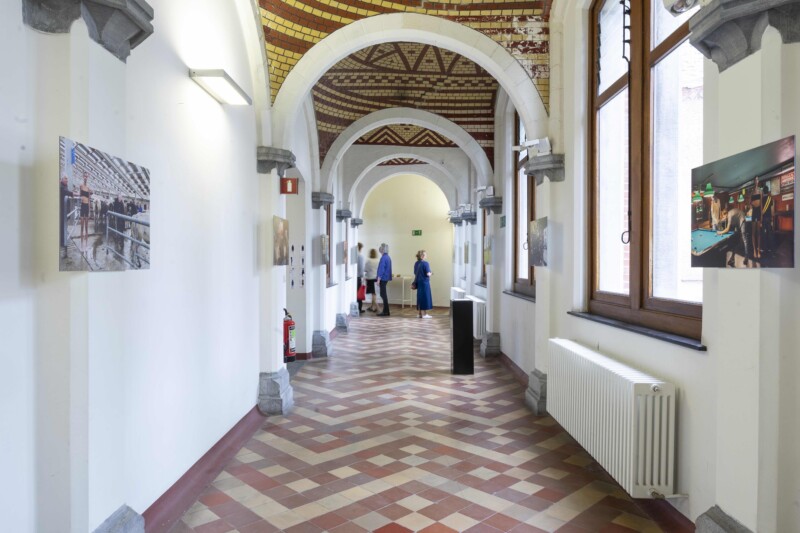 articleLees, kijk, luistereducationstudent graphic design emese veszely, master of graphic design
 articleLees, kijk, luistereducationstudent film As far as we imagine
 articleLees, kijk, luistereducationstudent music production A producer has to be a jack-of-all-trades
 articleLees, kijk, luistereducationstudent autonomous design The Sock Puppet Screaming Choir & The Craftivist Analmanac Vol. 1
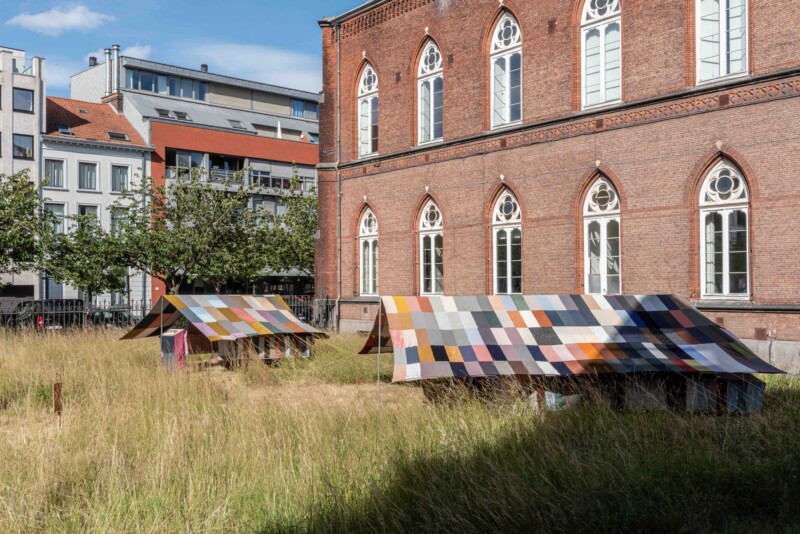 articleLees, kijk, luistereducationstudent fashion being
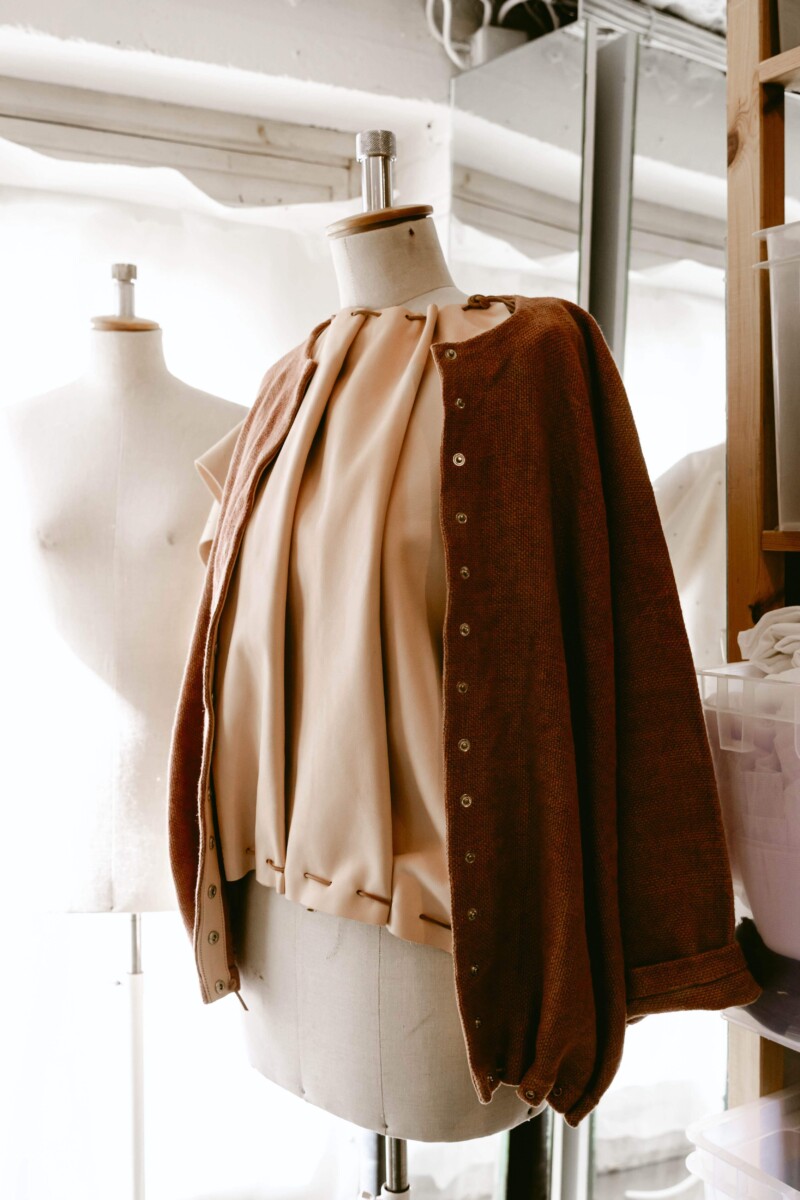 articleLees, kijk, luistereducationstudent animation film Overripe
 articleLees, kijk, luistereducationstudent jazz Alver
 articleLees, kijk, luistereducationstudent fine arts Film Titel Proposition; Einmalig
 Lees, kijk, luisterstudent jazz & pop The Light and His Intergalactic Stars
 articleLees, kijk, luistereducation Masterworks Vol. 14
 publicationLees, kijk, luistereducation