Graduation 2025
Prize winners


Bruynseraede – de Witte
The Stichting van Openbaar Nut Bruynseraede-de Witte presents annual awards to master's students in graphic design and interior design.
Julie Casier (interior design, focus concept and spatiality)
For her bachelor's project, which focused on the concept and spatiality of the theme “Repurposing an old V-TEX factory in the centre of Kortrijk into a cultural and community centre”, Julie achieved an astonishing result.
In her assignment, Julie demonstrated from the analysis phase through to the design and her presentation dossier that she is able to get to the essence of each phase and develop and respond to it with astonishing spatial and graphic refinement and sensitivity.
The cumbersome, sturdy and dilapidated concrete structure has been preserved as much as possible and incorporated into the elaboration and experience of Julie's design. Furthermore, the surrounding park site has been tackled in the same way to form a coherent whole between the building, the neighbourhood and the city in order to strengthen social interaction! Her design is generous, remarkable, inviting and yet a little understated.
The interior design is the result of weeks of reworking and refining until everything fell into place like a complex puzzle. A perfect symbiosis of space, material, function and experience.
Jaron Van De Velde (autonomous design)
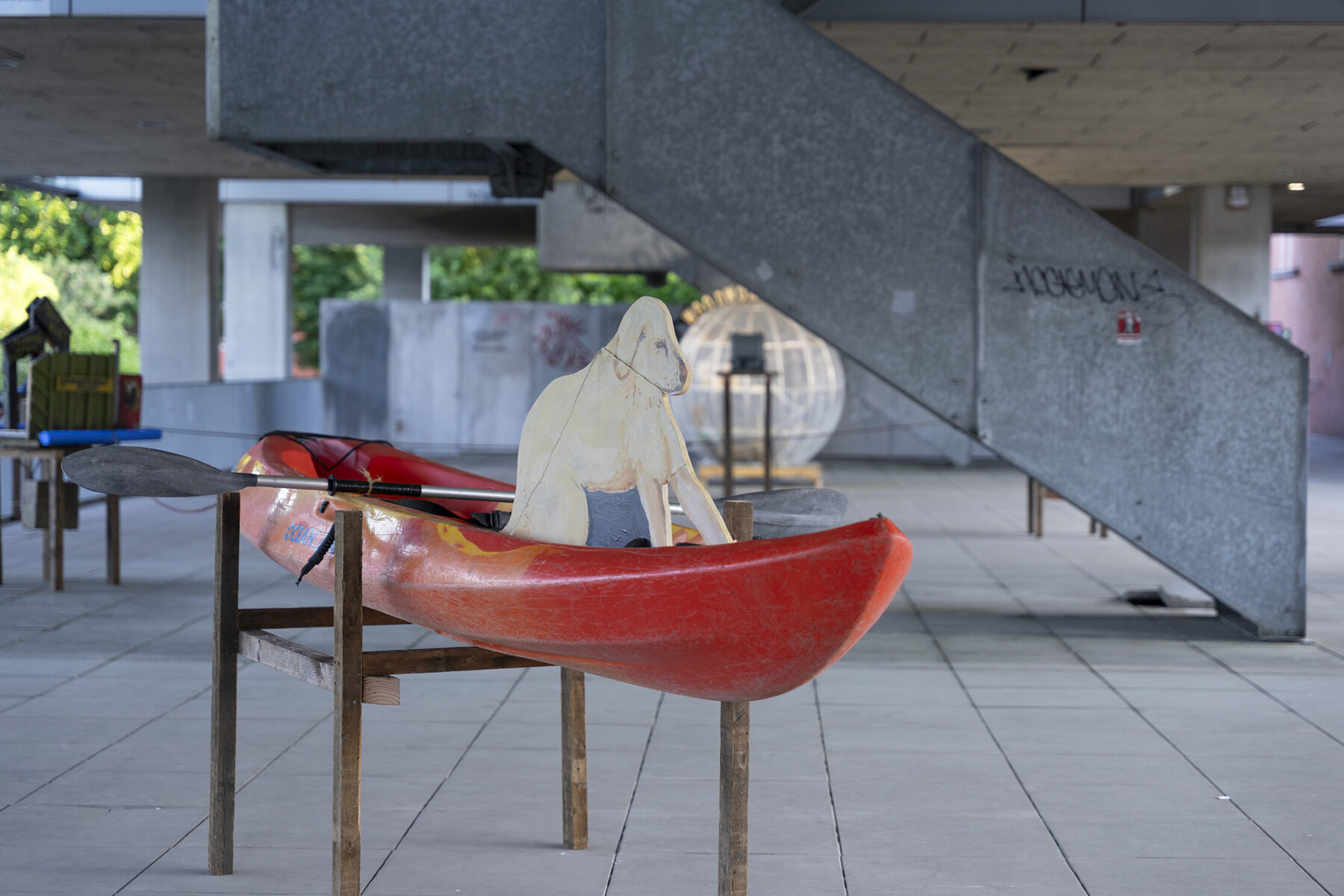
Jaron Vandevelde knows how to charm. In his projects Meer koet, minder afval (More coot, less waste) and Woodwormdesign, he enters into a respectful and credible partnership with animals. Coots get to work as ecological activists, while the ever-hungry woodworm takes centre stage as a designer. The disarming mise-en-scène further increases the overall cuteness factor. Nevertheless, the show element does not dominate. His work combines playfulness and charm with a serious search for equal, curious relationships between humans and animals, focusing not on spectacle but on cooperation. Ecology, aesthetics and social interaction have rarely been connected in such a unique way before.
Eva Cosyns (graphic design)
In her project The soul of an inkstroke, Eva explores her Polish identity and family history through the handwriting of family members. Eva taught herself the handwriting of her mother, grandmother and great-grandparents using archive material. In this way, she approaches unique handwritings as typography and uses them to design letters addressed to the same family members, some of whom have long since passed away.
Through a video installation and accompanying publication, an intergenerational conversation emerges in which spoken and written language are embodied by Eva as a typographer.
This project weaves together the hyper-personal with universal human themes such as identity, language migration and family ties in an impressive yet understated way.
Honourable mentioons
Nina Pinoo (interior design, focus furniture and design)
Nina deserves an honourable mention because her design offers an innovative and people-oriented solution that tangibly improves the daily well-being of people with dementia. Her door handles with personal handprints combine functionality with emotional value and enhance recognition, orientation and ownership. By connecting design with empathy and practical needs, she elevates care environments to a warmer and more human level.
Guanaëlle Cantineaux (graphic design)
The jury would also like to give an honourable mention to Guanaëlle Cantineaux's project “space and memory”. In this project, Guanaëlle reconstructs a series of spaces she has traversed in the distant or recent past in the form of models. In doing so, she explores how spaces, in a physical and conceptual sense, guide memory and colour or create memories. The poetic landscape of small models is approached in a way that is both intuitive and improvisational, as well as systematic and analytical. In a beautifully designed book, Guanaëlle reveals the colour system and design principles of the models, and frames the research with her own texts and quoted literary passages.
Maxence Duterne (autonomous design)
Maxence Duterme's “Compost printer” project shows how wasteful consumer printers are. We throw our printers away at the slightest problem because repairing them is more expensive than buying new ones. Maxence took a printer apart to better understand the device and the exploitative economic system of which it is a part. Maxence also devised a way to print free stickers for demonstrations and activist gatherings: a hack on the UPS delivery system. The jury appreciates that Maxence is speaking out against the questionable practice of technology companies programming obsolescence into devices. The work calls for a more conscious approach to technology and offers space for criticism and alternatives.


Daikin Duurzaamheidsprijs
Jaron Van De Velde (autonomous design)
See above.
Vincent Van Asten (visual arts)
With his organically grown horn loudspeakers, which give voice to an imaginary biotope, Vincent poses fundamental questions about our relationship with non-human ecologies. His installation invites us to listen and be present in a new way: beyond control and understanding, towards symbiosis with the living world. His work combines a strong and idiosyncratic visual language with an innovative approach to sustainability and ecological themes, focusing on sensory interaction and reflection. The jury appreciates the artistic power and potential for further development and social impact.
Lucas Coussement (interior design, temporary installations)
Lucas impressed with a modular and mobile design that is not location-dependent and therefore proves to be particularly future-proof and adaptable. His project combines ecological and social impact in a moving and intelligent way. It is well-founded and excels in its innovative character. The jury sees great potential in this work for scalability, public education and direct ecological impact. Lucas offers one of the most convincing examples of integral sustainability: ecological, social and spatial interwoven in one powerful design.

Blikveld Arena Prijs
Frederik De Smedt (landscape and garden architecture)
Throughout his studies, Frederik demonstrated a clear passion for the field. His prior training in architecture and the extra years of life experience he had compared to his fellow students gave him additional knowledge that not only enabled him to delve deeper into his studies, but also inspired his fellow students and the programme in general.
His internship at Jan Minne Gardenist further built on the cross-pollination between art, architecture and landscape. The same approach was also clearly reflected in his bachelor's project. Through a number of well-considered and targeted interventions, he transformed the village of Neerijse into a green-blue source village. The quality of your analysis and master plan was evident in even the finest details.
The once strong tree culture in our region – of which two peace trees in Neerijse still bear witness today – was given a new impetus thanks to Frederik's proposal to plant a dance lime tree on the square near the village hall.
The interaction between aesthetics and interventions with natural or living materials that combine multiple functions was further developed through the use of stacked walls. These serve both as paths and as flood defences. You also made use of layered planting, which on the one hand creates views and atmosphere, and on the other hand contributes to biodiversity in the village.
Frederiks' background as an architect naturally translated into a pavilion for the park.
This thoughtful elaboration of plans, his eye for detail and his willingness to take the time to research and truly understand things were evident throughout the entire programme. These qualities are clearly present in the final result and form a common thread throughout the three years of study.
It was very exciting to be able to supervise Frederik as a student in the programme. We wish him every success in this particularly fascinating field. Our paths are likely to cross again in the future!


Horlait-Dapsens
Grand prize: Jaron Vandevelde (autonomous design)
See above.
Runner-up prize: Manizja Kouhestani (drama)
In My Nemesis, Manizja Kouhestani brings two grotesque performance artists to the stage. Their mutual jealousy and physical tension give rise to an intellectual catfight that raises all kinds of urgent questions. Who has the right to speak? How malleable is trauma? Where is the fine line between authentic activism and artistic coquetry? The jury appreciates the self-critical gaze with which the creators explore the limits of their own convictions.
Runner-up prize: Tom Lyon (photography)
Photographer Tom Lyon focuses his lens radically on the present. With Arena, he develops an alternative space in which media strategies related to migration and its criminalisation are subtly dissected and linked together. This borderline experience is subtly shaped by the confrontation of different types of visual material. The jury greatly admires the authentic commitment that emanates from this project.
Runner-up prize: Raouf Moussa (film)
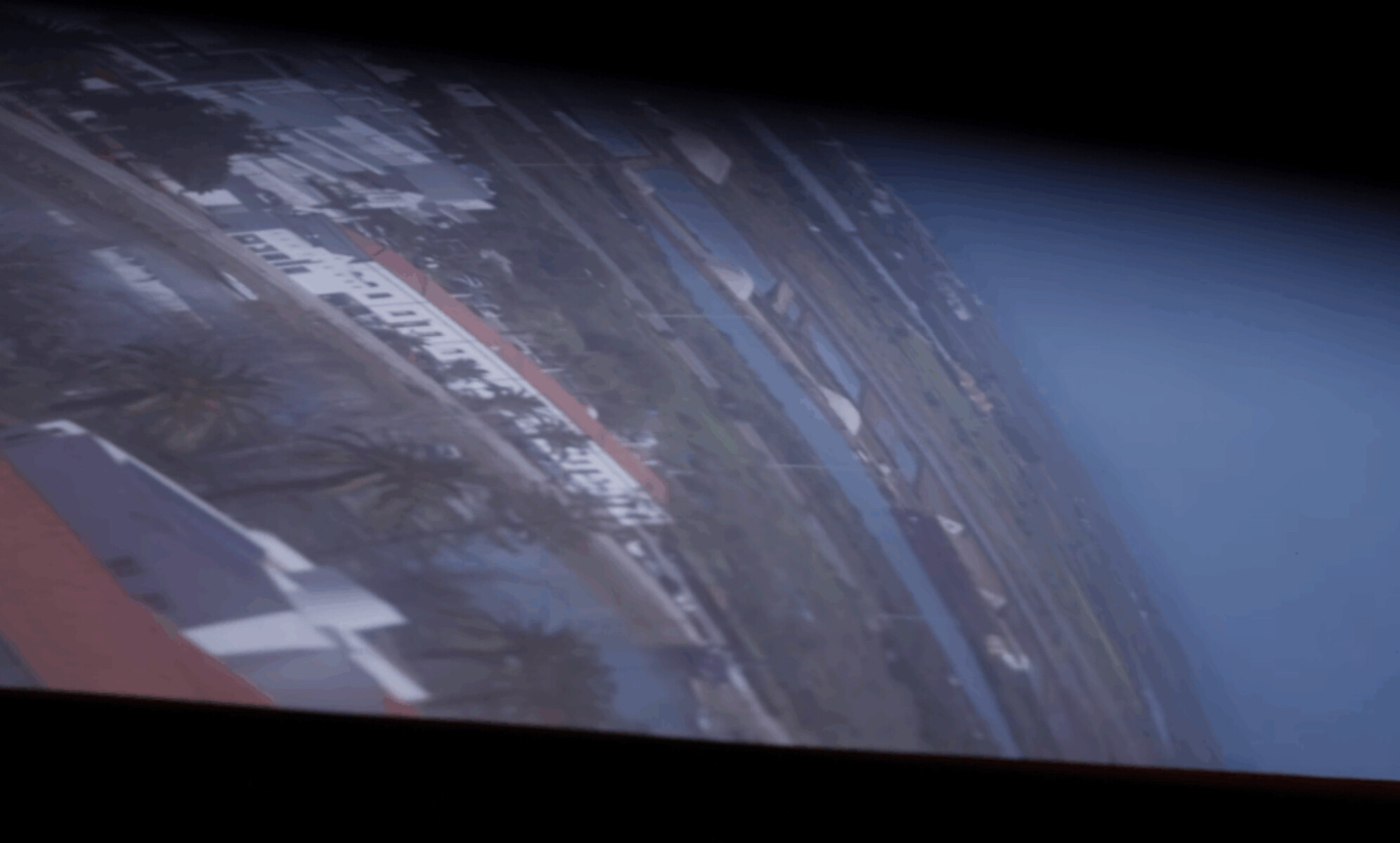
In Raouf Moussa's film As Far as We Imagine, a personal quest forms the starting point for a more general epistemological reflection. He spans a misleading horizon between his parents' nationalities, which gradually flares out into a kaleidoscope of projections, digital cartography and subtitles. The filmmaker's former interest in cosmology and physics is then rehashed into the necessary metaphorical language. The jury particularly appreciates the strong dialogue between form and content.


Roger De Conynck Fonds
Davide Degano (photography)
Davide Degano continues his research in which photography is the preferred medium for exploring the concept of identity, at the intersection of collective and individual memory. Davide Degano works with both archival material and new recordings, building a layered oeuvre with multiple entries and forms.
Davide Degano continues his research in which photography is the preferred medium for exploring the concept of identity, at the intersection of collective and individual memory. Davide Degano works with both archival material and new recordings, building a layered oeuvre with multiple entry points and forms.
Lotte Maes (photography)
Lotte Maes has embarked on an original photographic work in which she uses mise-en-scène, performance and self-portraits in real situations to test feminist intentions and critical analyses of patriarchy, which are central to her work.
Playright+ prijs
Cedric Haeck (jazz & pop music)
With his self-composed music show SAEGE, bassist Cedric Haeck proves himself to be a consummate performer. Ready to take to any professional stage with a rich repertoire of his own that musically brings together everything between jazz and pop. Profound themes such as mortality, neglect, paranoia and war form the backdrop to his self-penned songs, which shine aesthetically without being overly heavy. Cedric sings them himself while accompanying himself on bass guitar or guitar, always from the right emotional perspective, leaving enough room for the audience to determine their own (social) relevance. His captivating performance moved the jury to tears. Not least because of the striking crossover with contemporary dance, performed by Ine Garré. And certainly also because of the excellent interaction with his band in this project, in which each musician played every note in function of the overall story that Cedric wants to convey with SAEGE. Memorable!
Maryam Sserwamukoko (drama)
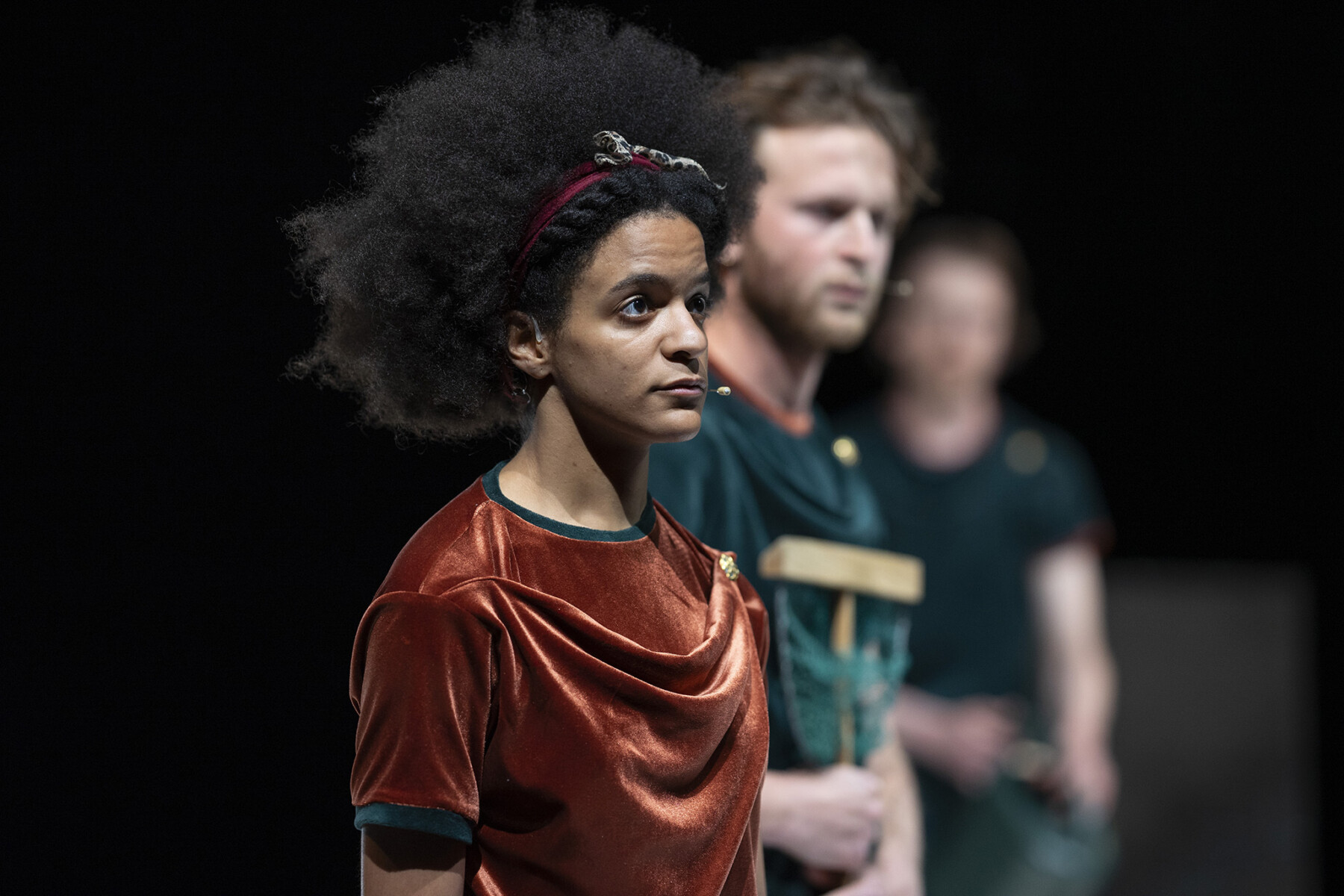
Maryam Sserwamukoko has a unique ability to combine text delivery and physical language. Her background in dance gives her performance great expressive power. Physical expression means that meaning lies not only in what she says, but above all in how she speaks and acts. In the graduation performance MODDER SPEAK TO ME, which she created together with Tijmen Van Damme and Titus Smessaert, she plays a cyborg (a hybrid of human and robot) with precision and dedication. In it, she interweaves her personal quest, both thematically (towards Afrofuturism and “world-building”) and in terms of acting (the use of body and voice), with collective research into science fiction and ecological mourning. Over the past year, we have also seen her at work on stages across Europe for her internship in the production Werken en dagen by FC Bergman / Toneelhuis.

Legaat De Smet
Floor Veltman (interior design in distance education, concept and spatiality)
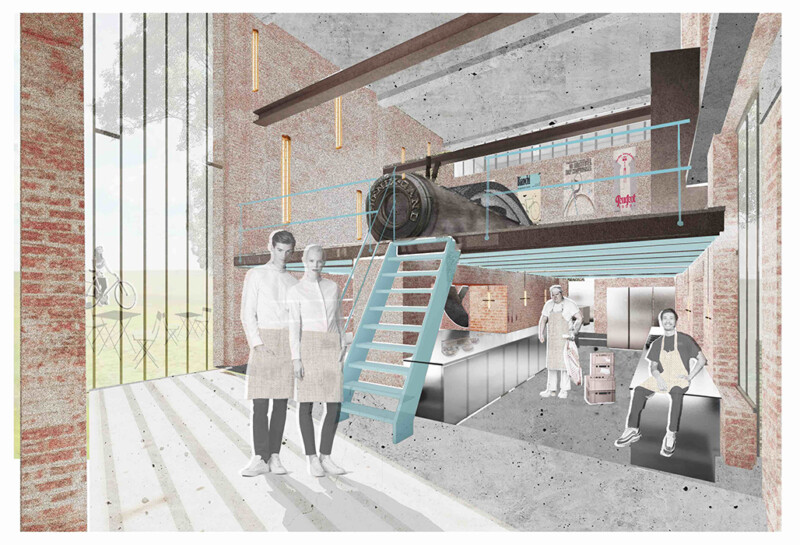
For her bachelor's project, which focused on concept and spatiality, Floor Veltman presented an impressive design for the repurposing of an old flax mill in Kuurne. In her design, she created a place of residence where tranquillity and rejuvenation are central. The introverted, austere character of the original industrial building is reinforced and refined in her design. Floor made an extremely careful choice of materials and colours that match the original atmosphere, with a subtle but powerful, contemporary look and a high degree of refinement. The building is once again surrounded by water, a nod to the crucial role it played in the flax rooting process. This water not only forms a landscape barrier, but also creates a subtle separation between the open landscape and the new intimate living spaces within the building. The existing façade openings on the ground floor are elegantly framed in rusty steel, creating a visual and physical bridge to the surroundings.
On the top floor, in contrast to the massive building, Floor introduces light, open structures that offer a panoramic view, embracing the surrounding nature and the River Leie.
Floor's work is a paragon of refinement and thoughtfulness in the broadest sense of the word: from the spatial design and choice of materials to the beautiful details. But what really makes this work special is the clear presence of her strong personality and dedication, which can be felt in every aspect.
Floor undoubtedly deserves a great deal of appreciation for her work. With her design, she has not only created a space, but also a spatial experience that invites reflection and tranquillity.

Legaat De Leu
Mathijs Nonneman (landscape and garden architecture)
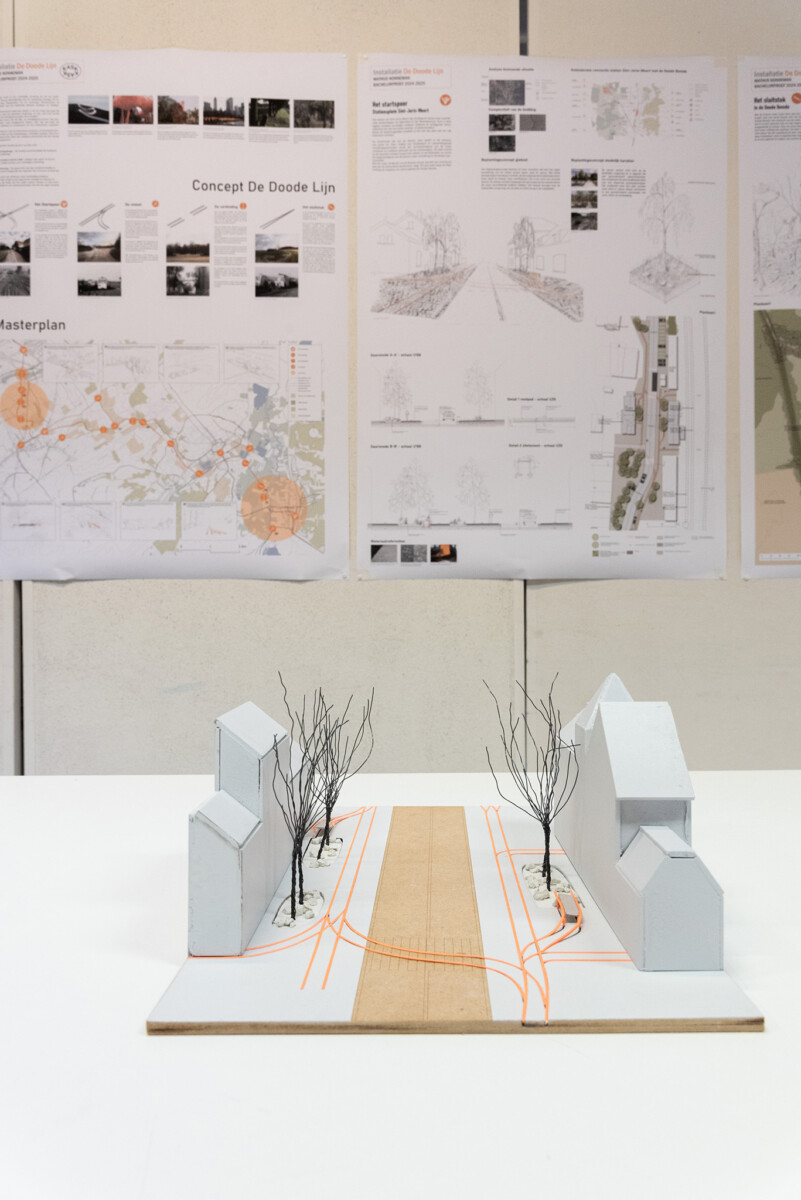
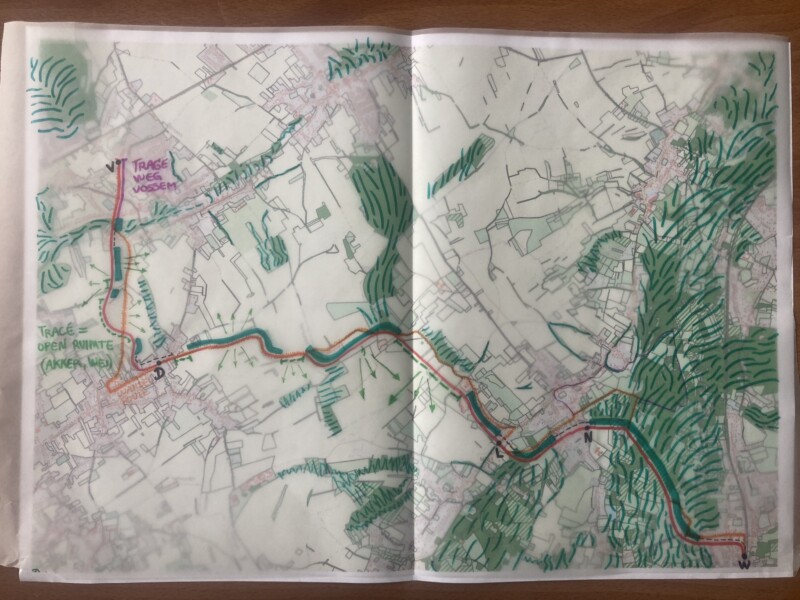
For his final project, Matthijs Nonneman sought to find his way between the stories, human needs, history, ecology, recreation, connection... of tram line “de Zwette Jean”. He went in search of the experiential layer of this railway and set out with questions such as: how do you experience the railway from above, alongside it, on it, lowered into the landscape... How can you experience “de Zwette Jean”? He chose to give “De Zwette Jean” a new role: as a landscape carrier that connects gentle recreation with ecology, heritage and the local economy. This involved not only a complete reconstruction of the tram line, but also a careful reinterpretation by working with sightlines, meeting places, storytellers and experience points/installations.
According to the jury, both Matthijs's work process and end products show great courage because he dares to tackle issues that are not obvious. He also impressed the jury with his special series of models. During his final exam, Matthijs showed that, in addition to his immense talent, he also has an enormous passion for his profession.
Youssef Elkhiar (visual arts)
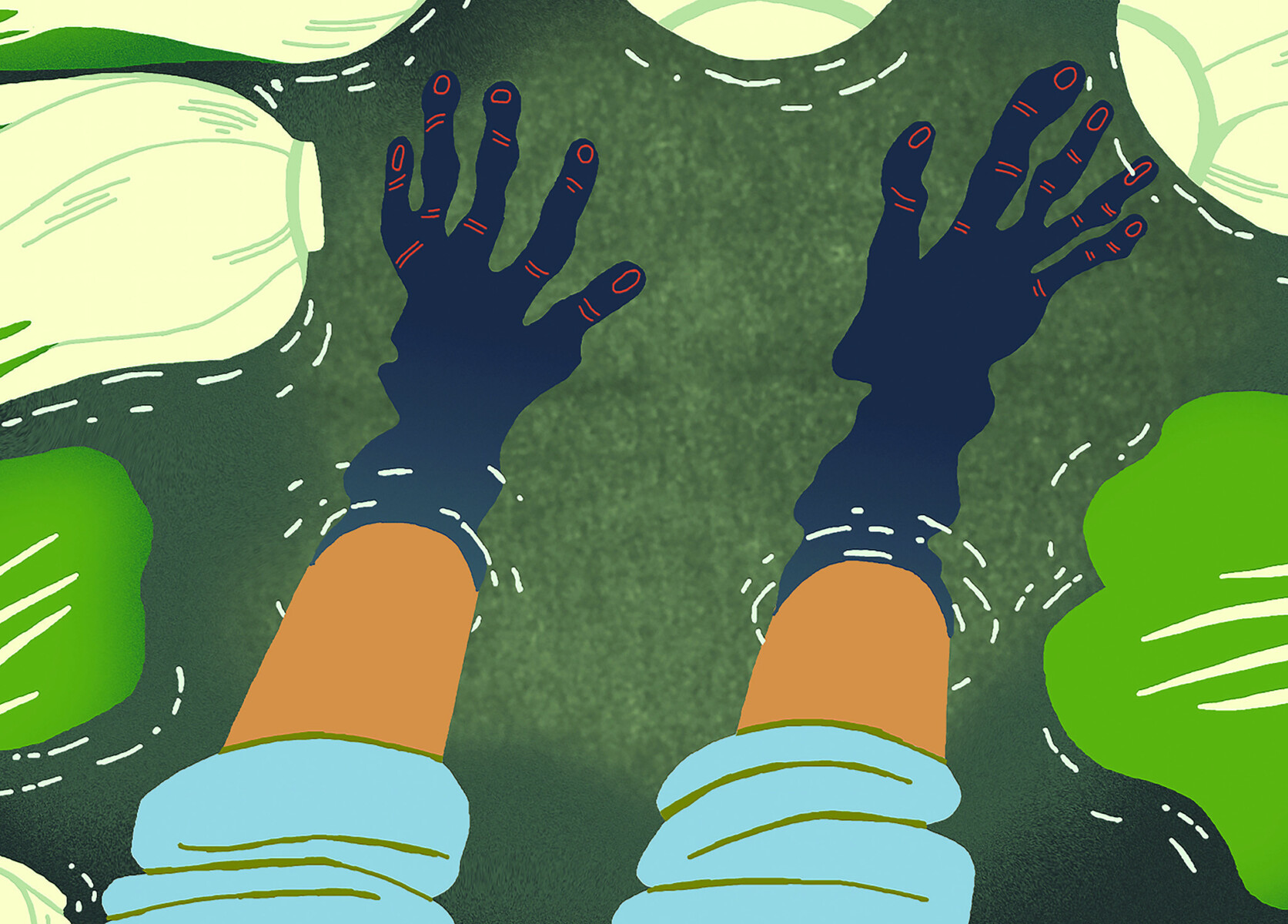
Youssef Elkhiar is a creator pur sang. In Born from a Wish, he generates structures that feel both old and new. Using the fish and the egg as his starting point, he intuitively creates an immersive tableau. The jury admires his drive and the radical honesty with which he inspires his practice.
Erica Moriconi (animation film)
In Overripe, Erica Moriconi presents a poetic evocation of loneliness. With an almost erotic touch, she animates a tranche de vie of a supermarket employee into a slightly absurd but captivating portrait. The jury praises the deep humanity that underlies Moriconi's work.
Ward Albert (musical instrument making)
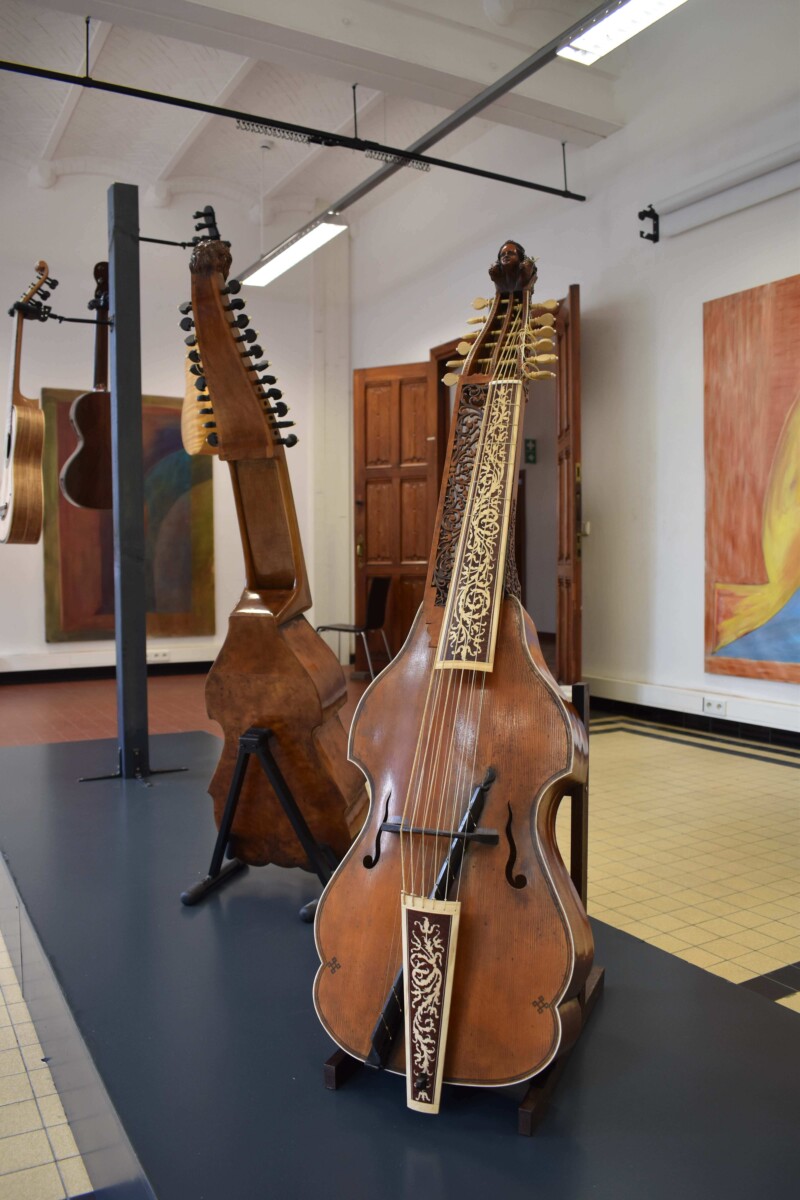
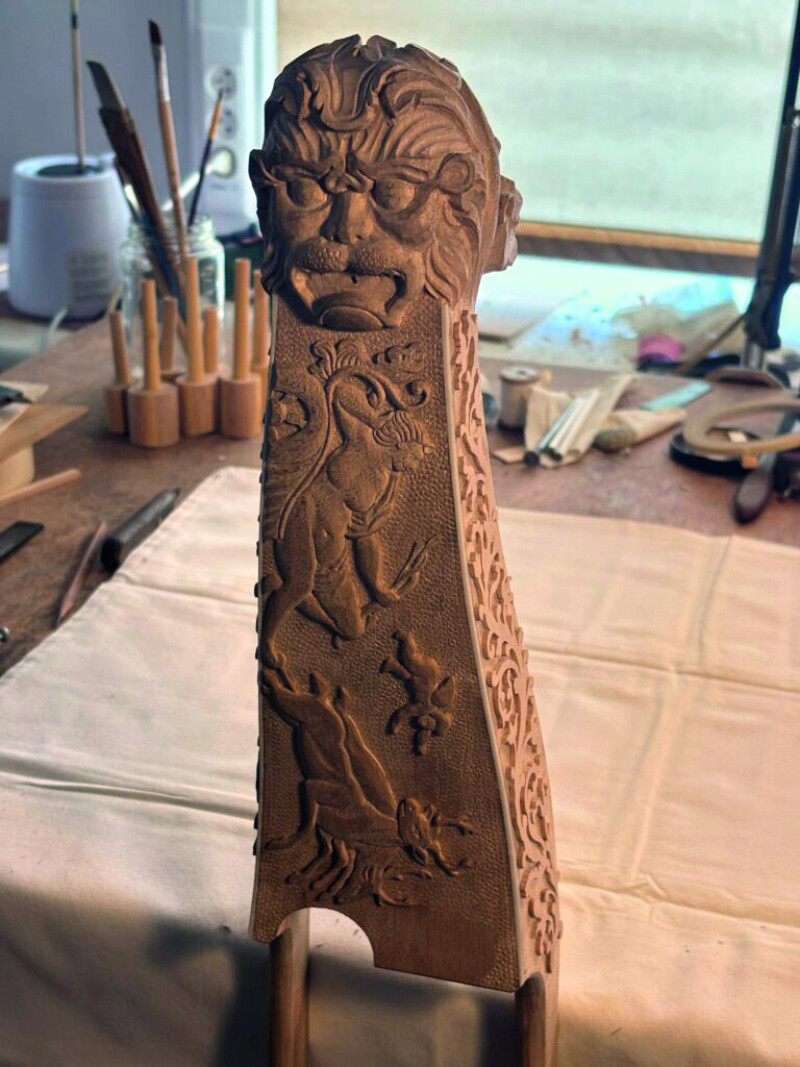
Ward Albert did not make it easy for himself in his graduation project. Only a small fragment of one of Joachim Tielke's baritones had stood the test of time, but Albert made it his mission to reconstruct the rest based on thorough research. The result is a hypothetical reconstruction of an instrument that the jury believes should at least have existed.
Prijs Remouchamps
Ioannis Piperkos-Kyparidis (classical music)
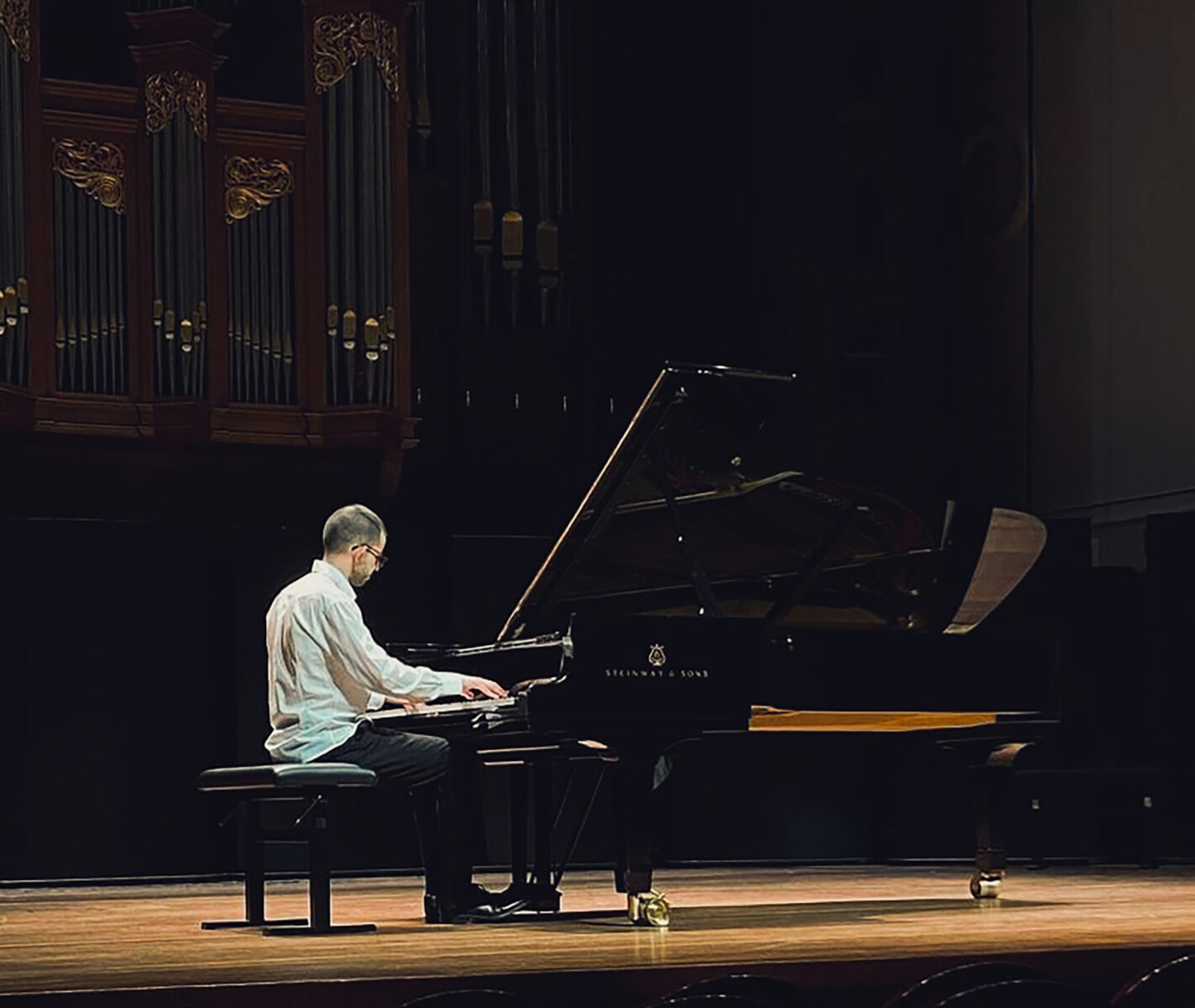
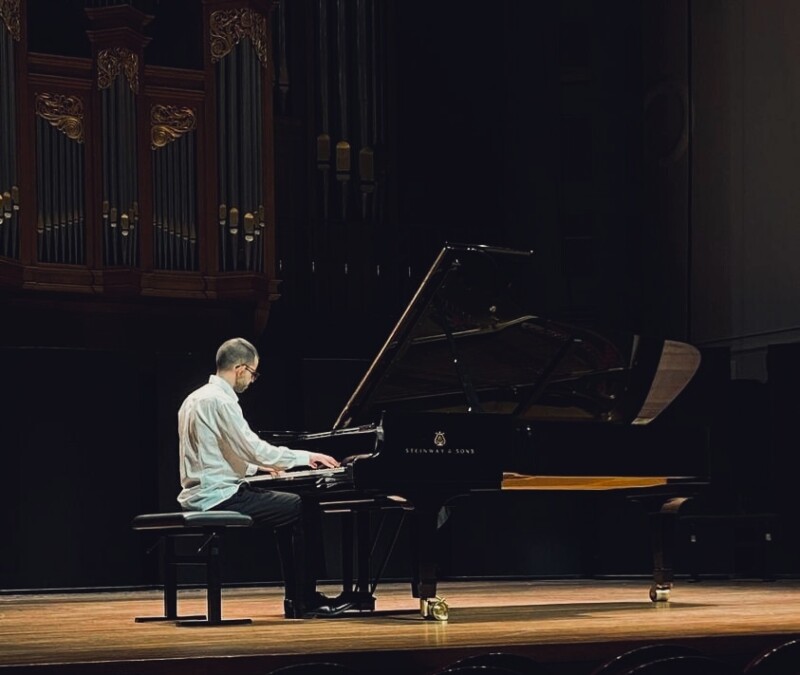
Ioannis gave a very enjoyable concert in which he demonstrated his qualities as an outstanding musician. His playing is very controlled and intelligent, always balanced with sensitivity and emotion. He combines technical mastery with natural musicality and a wonderful stage presence, captivating the audience with his performance. With clarity, elegance and thoughtful artistry, Ioannis proves himself to be an exceptionally promising artist.
 ExhibitionexpoAgendaArtistic activities
Spread out over the Bijloke campus, you can discover the work of students in photography, graphic design, autonomous design, fine arts, textile design, fashion, musical instrument making, interior design, landscape and garden architecture, landscape development, digital design and development, curatorial studies, educational master in audiovisual and visual arts and the educational master in music and performing arts.
Fri, Sat, Sun, 12:00 – 20:00
 film and animationfilmAgendaArtistic activities
Our audiovisual arts master students will project their final works into the world during the avant-premières at Sphinx Cinema on 24 June. You can book tickets here.
Later, from 26 to 29 June, we will repeat the films at KASKcinema. Admission is free, no need to make a reservation.Sint-Michielshelling 3
9000 Gent
9000 Gent
 Fashion and textileeventAgendaArtistic activities
Fashion students from KASK & Conservatorium present their graduation projects during 2 shows in the Floraliënhal.
From 20 to 21 June, you can visit the exhibition of fashion and textile design students at the same venue.
You only need to buy a ticket for the shows on Saturday 21 June, the exhibition is free to enter.
Citadelpark
9000 Gent
21.06.25
 MastersoundsconcertAgendaArtistic activities
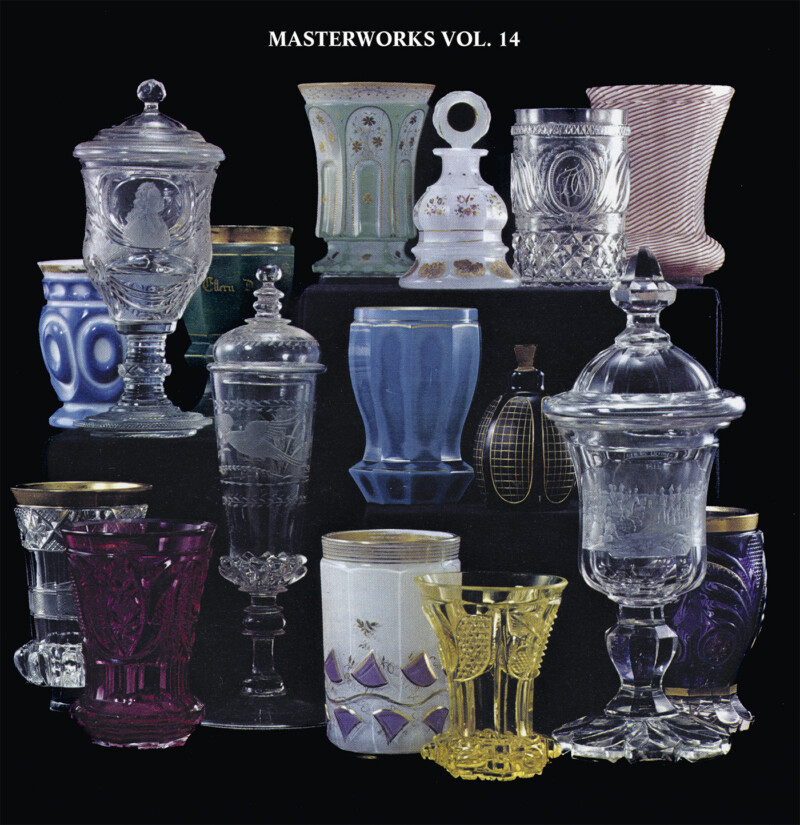
Mastersounds is known among connoisseurs as the holy grail of up-and-coming musical talent. During this festival, part of Graduation 2025 at KASK & Conservatorium, graduating students in jazz, pop and music production present their own projects. Between 16 and 25 June 2025, they will shake the foundations of the Minard theatre and De Centrale. They were preceded by Ramkot, Balthazar, Tomàn, Senne Guns, Douglas Firs, Nordmann, Amatorski, Faces on TV, Shht... In addition, every year we celebrate the birth of the new Masterworks LP, a compilation album that brings together all that talent. Get your copy at the festival.
Romain Deconinckplein 2
9000 Gent
Ham 70
9000 Gent
 Drama, KASK DramadramaAgendaArtistic activities
During the Drama Festival, drama master’s students present their graduation work. Offbeat and classical drama, crossovers, performances and multidisciplinary work can be seen at de Kazematten, CAMPO, Minard and Arsenaalsite. The Drama Festival runs from 14 to 21 June 2025.
 Classical music, MIRY Concert hallconcertAgendaArtistic activities
Our classical music students hone their skills until they are ready for their exam recitals. You can attend this joyous occassion, as the exam concerts of master’s students of classical music and composition are open to the public. Postgraduates musical performance practice will also spoil your ears. All concerts take place in our very own MIRY Concert Hall.
 For some time I’ve been standingexpoAgendaArtistic activities
For some time I’ve been standing is an exhibition curated by curatorial studies 2024-2025 participants that takes place at the Old House, Kunsthal Gent from May 30 to August 31, 2025.
Bringing together works by Chupan Atashi, Manon de Boer, Michael Kleine, Brigitte Louter, a workshop by Emma Ydiers and a performance by Astrid Specht Seeberg, the exhibition sets out to trace gestures of rehearsal, repetition, and return, exploring what it means to pause, to stand still, or to remain in motion.
By entering into dialogue with the fresco on the back wall of the Old House, the artworks reiterate its significance as a palimpsest — responding to, echoing and reimagining it. Immediately drawing the gaze, the fresco tends to direct a body’s movement in the space. Between the other white walls, it attracts the eye, inviting it to wander over its worn, bodily surface, to follow the contours of the gaps and cracks, to glide over the smooth areas and to acknowledge its most vulnerable parts.
The exhibition takes its title from a passage in Kathy Acker’s 1993 novel My Mother: Demonology, “For some time I’ve been standing, in front of a white stucco wall, on a white road that is raised above all the surroundings and the dirt underneath, as though it’s a platform. All around me are masses of luggage, suitcases and bags”. Integral to Acker’s writing is the process of rewriting and reinterpreting, often plagiarising other sources as her own. This reflects the impetus of the exhibition to enter into conversation with the fresco on the back wall of the Old House, reiterating its significance as a palimpsest with artworks that respond, echo, and reimagine.
Accessibility statement
For some time I’ve been standing is located in the Old House, which is wheelchair accessible through the main entrance, if accompanied. Michael Kleine’s “Plateau” is only accessible via stairs, but is available in video format that can be accessed by scanning the QR code on the wall next to the work. Feel free to speak to a staff member if you need help. General exhibitions at Kunsthal Gent do not currently have an audio guide. However, the volunteers do give explanations to those who want and a room plan is available at the entrance. During opening hours, you will find visual signage to the different areas of Kunsthal Gent. Do you have any questions/remarks or would you like more information on the accessibility of Kunsthal Gent? Please feel free to contact us at info@kunsthal.gent.
Lange Steenstraat 14
9000 Gent
 articleLees, kijk, luistereducationstudents interior design in distance education Graduating in distance education
 articleLees, kijk, luistereducationstudents landscape and garden architecture The answer is already present in the landscape.
 articleLees, kijk, luistereducationstudent classical music The piano is never far away
 articleLees, kijk, luistereducationstudents musical instrument making The transfer of a piece of history
 articleLees, kijk, luistereducation Drama Masters 2025Evelyne Coussens and Simon Van Schuylenbergh in conversation about the graduation performances
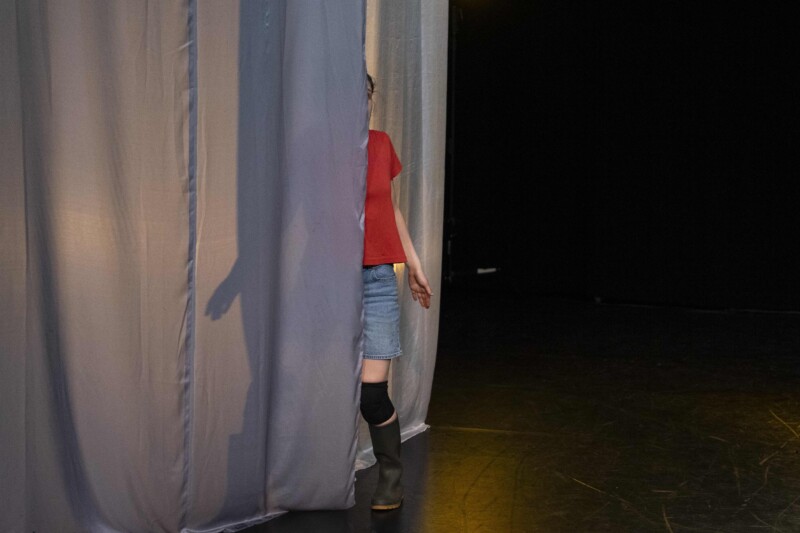 articleLees, kijk, luistereducationstudent photography Who Am I Without You Mister Man?
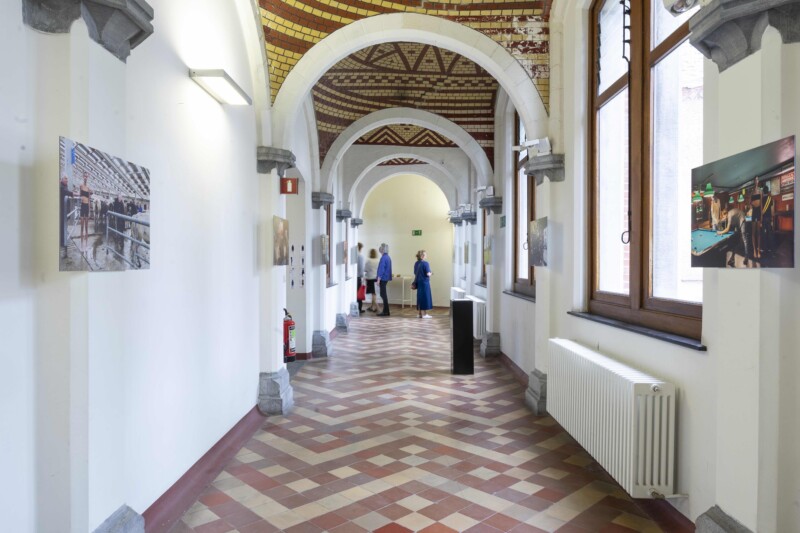 articleLees, kijk, luistereducationstudent graphic design emese veszely, master of graphic design
 articleLees, kijk, luistereducationstudent jazz & pop About a feral child and a bass guitar
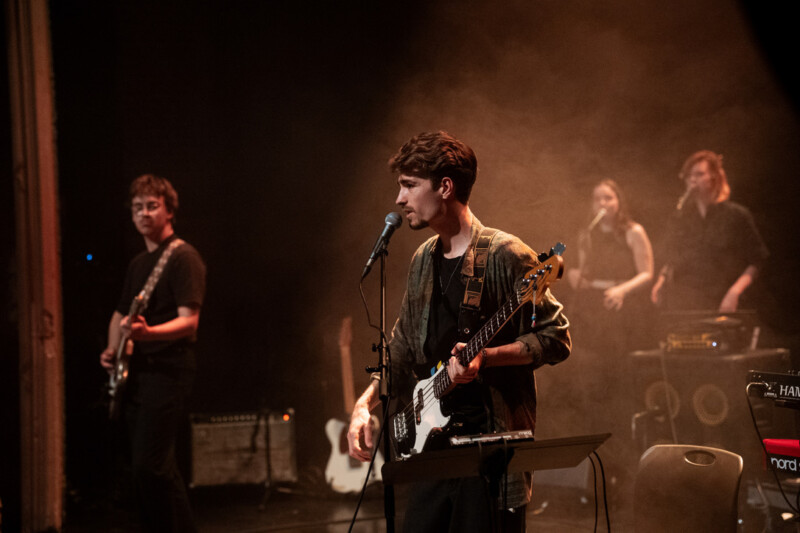 articleLees, kijk, luistereducationstudent film As far as we imagine
 articleLees, kijk, luistereducationstudent music production A producer has to be a jack-of-all-trades
 articleLees, kijk, luistereducationstudent autonomous design The Sock Puppet Screaming Choir & The Craftivist Analmanac Vol. 1
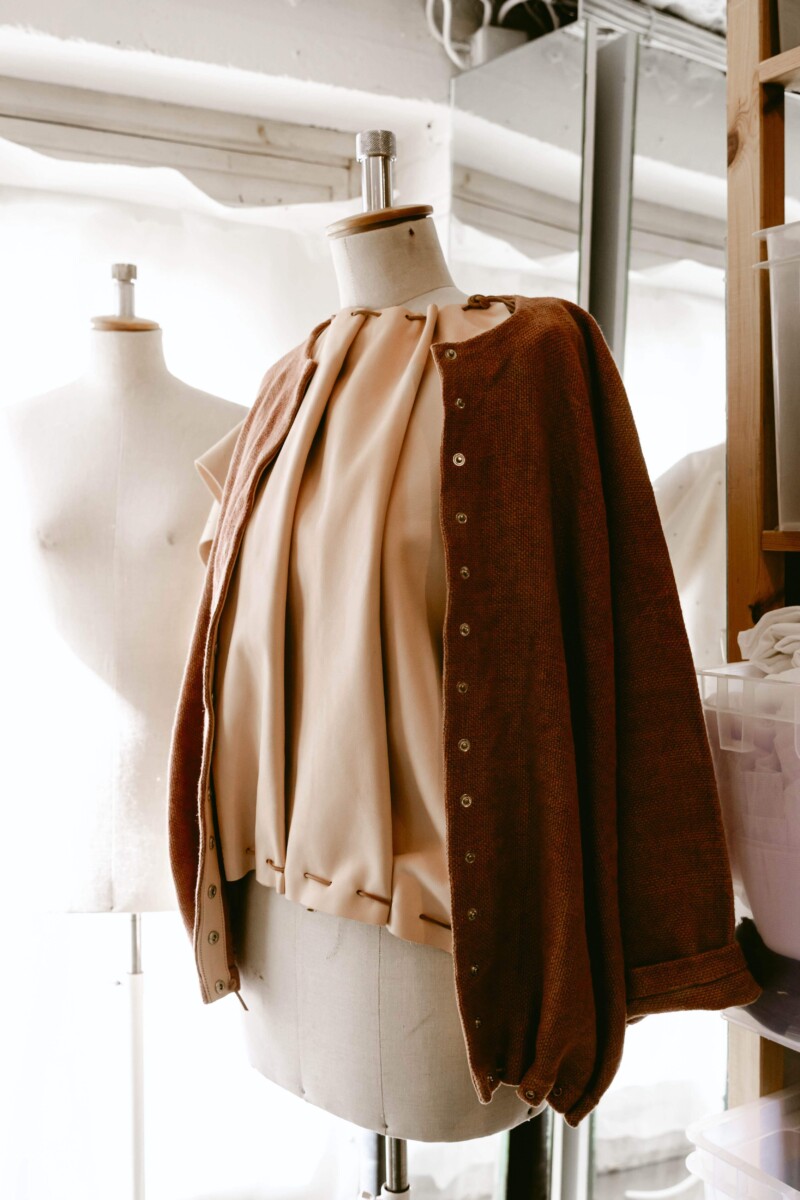
 articleLees, kijk, luistereducationstudent fashion being
 articleLees, kijk, luistereducationstudent animation film Overripe
 articleLees, kijk, luistereducationstudent jazz Alver
 articleLees, kijk, luistereducationstudent fine arts Film Titel Proposition; Einmalig
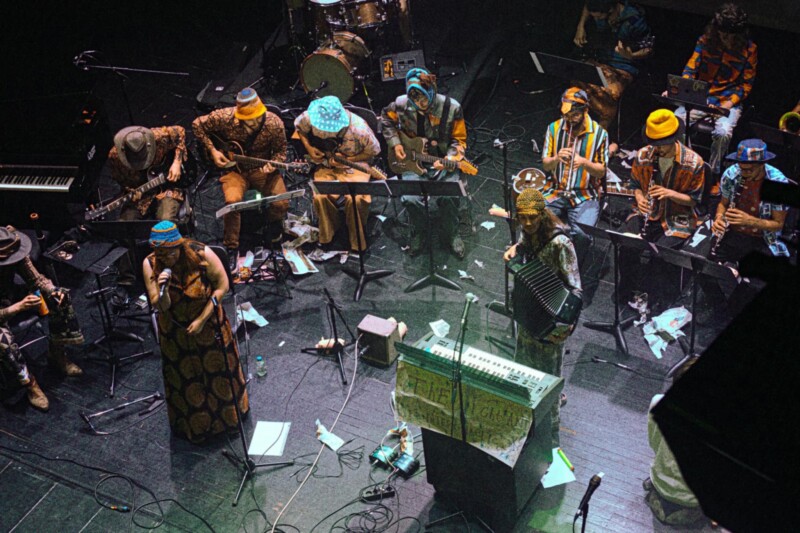
 Lees, kijk, luisterstudent jazz & pop The Light and His Intergalactic Stars
 articleLees, kijk, luistereducation Masterworks Vol. 14
 publicationLees, kijk, luistereducation