Could you sketch out your vision for Bijloke 2.0 in 2100?
To conclude their advanced bachelor’s degree programme in landscape development, the students set out to explore a new vision for the Bruges Ommelanden for the year 2100. The new vision of the future they created for this project was based on the research question: “What will be the significance and character of Bruges’ surrounding countryside in 2100, in a context where a strong interaction and reciprocal collaboration between the city and its surrounding countryside is once again emerging?” They studied the various surrounding countryside areas in Bruges in terms of their different landscape types and scales. Each of the existing landscapes and surrounding areas – such as the polders and creek landscape, the Gistel-Maldegem sand ridge and the valley landscape of the Reie – had its own history, character and challenges.
The coordinating lecturers also formulated sub-questions such as: “If we were to reimagine the landscape with a time horizon extending to 2100, what would it look like? What will be the new normal in the landscape of our (great-)grandchildren?”
These questions prompt us to re-examine the landscapes in our immediate surroundings. It makes one curious to see how the students – having spent several years at the Bijloke campus – will apply the insights gained from their programme and this Ommeland project to the site. Here, too, there is a unique interplay between ‘city and open space’, ‘land and user’, ‘human and animal’, and ‘history, current use and future’. Students Sam Latré and Ringer Wiegersma have already formulated a few answers.
LIENE AERTS
How would you briefly describe the types of landscape that the Bijloke site currently encompasses?
SAM LATRÉ
You could describe the Bijloke site as a landscape in its own right. Whilst it does exist in a sort of bubble, this means it encompasses various types of green space: urban green, historic green, park green and school green. These terms describe not only the green spaces themselves, but also the different functions and meanings the site has acquired over time. The historic orchard is a fine example of this. Whilst it once served as a source of food for the sick, the same spot is now urban green space: a place to linger, to find shelter, the backdrop to a park, or, as school green space, a place to gather together.
Consequently, the Bijloke site is not a collection of separate landscape typologies, but a landscape that can be described using different typologies over time. The place remains the same, whilst its meaning, use and relationship with people are constantly shifting.
RINGER WIEGERSMA
The site has a park-like structure that, within the walls of the medieval hospital, forms a sheltered, pleasant, open space in the bustling city. Set amongst the old wards are small gardens that reveal the site’s historical layout, offering room for tranquillity and reflection. The site opens out towards Godshuizenlaan and, around the old abbey, provides various open spaces for gatherings, festivals and social interaction. As you walk across the site, you feel carried by the history hidden within the trees, walls and grounds.
LA
What does the Bijloke site mean for the quality of life in a city like Ghent? What constitutes a sustainable relationship between the bijloke site and the city from both perspectives?
SL
You could see the Bijloke site as a sort of stepping stone within the city. For a local child, it can be their first encounter with a manageable and safe form of nature. For a student who visits every day, that connection becomes more natural. For others, it is the place where you seek out a sunny spot in summer, where people play sport and games, or where you simply spend a little time. For me, therefore, the Bijloke site is more than just an open space within the city. It is a landscape that teaches people to observe and make use of it, whilst at the same time serving as a sounding board for society and its changing needs. The walnut tree, once planted to ward off evil spirits, now literally provides a cool respite on a hot summer’s day. The tree has remained the same, but what we seek and need from it is changing.
For me, a sustainable relationship between the city and the Bijloke site therefore means an interplay in which the place can retain its distinct character and history, whilst providing room for the changing needs of the city and its residents.
RW
Together with the cultural institutions based on the site, the site offers the opportunity to delve deeper, connect, marvel and reflect.
LA
What challenges and tasks does the Bijloke site face in terms of climate?
SL
I think that, when it comes to spatial planning, people often think in terms of the wrong patterns. The Bijloke site is a place for people and evolves in line with societal trends. However, a landscape takes time to change. Human trends simply move faster than the growth of a tree.
For me, therefore, the climate challenge is not just a challenge for the sitein itself, but above all a challenge concerning the way we, as people, interact with this place. The annual reseeding of the lawn used by Gent Jazz, the trees that are struggling here, and the lack of shade are becoming increasingly apparent during periods of heat and drought. At the same time, during wetter periods, water collects on the bare, newly sown field, where puddles sometimes struggle to drain away.
In my view, the challenge lies in seeking a landscape that needs to be adapted less constantly to its use, and is given more room to change in its own right. Not every problem calls for a new intervention. Sometimes the landscape simply needs time, room and a different approach.
RW
As a cultural park and monument, the Bijloke site faces various major challenges, such as temperatures that are difficult to regulate, accessibility for minority groups, and flooding or drought. These challenges are already becoming apparent in various places on the site. In and around the buildings, temperatures rise significantly in summer. Due to the hardening and compaction of the ground, the site either dries out or is left with large puddles.
LA
What do you wish for the Bijloke’s future?
SL
I hope that today we can turn that narrative on its head: that the insides of the building will now care for the outdoor space. That we look not only at what the Bijloke site can do for people, but also at what the landscape itself needs to remain healthy and resilient.
As a result, the Bijloke site need not be merely an urban, park, garden or historical landscape. I also see it as a test landscape and a landscape of recovery: a place where students, visitors and users not only make use of the space, but also help to think about how it can change, recover and continue to grow.
A place where there is room to experiment, to learn and to give time to what needs time. Perhaps that is where the future of the Bijloke site lies: not in a single, fixed end goal, but in a landscape that, together with its users, continues to seek out what it needs.
RW
As a beacon of art and creativity in an ever-changing city, I hope that the Bijloke site will continue to fulfil its important role as a connector. May it remain a place to find peace: for centuries, the site has been a place for reflection. May the site increasingly establish itself as a champion of a compassionate society driven by the arts. May it be a place for the people of Ghent and its visitors to come together, be inspired and celebrate life
LA
Could you sketch out your vision of Bijloke 2.0 in 2100?
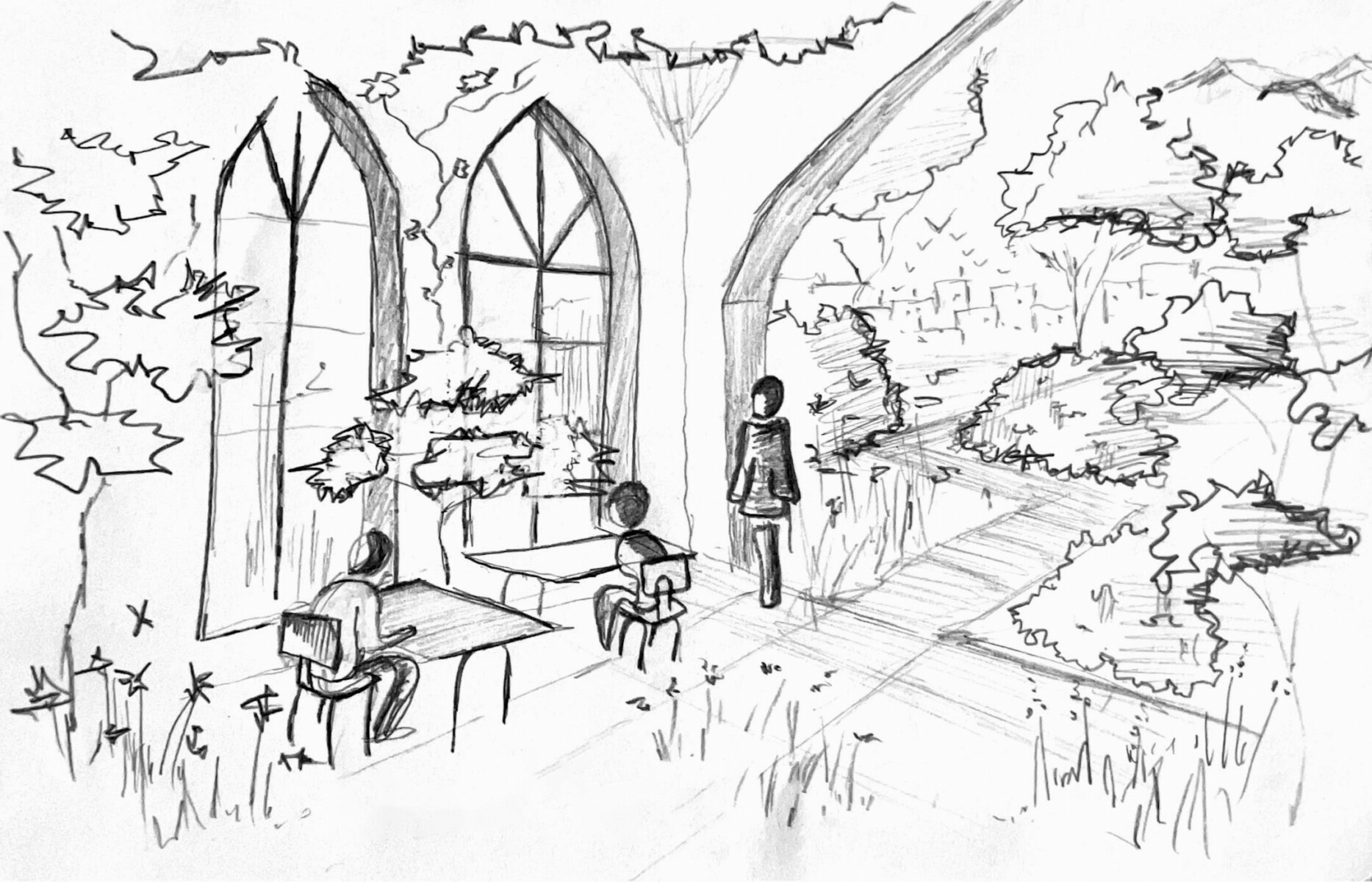
tekst: Liene Aerts
 FashioneventAgendaArtistic activities
Fashion students from KASK & Conservatorium present their graduation projects during 2 shows on Campus Bijloke, for the first time in the Gent Jazz tent.
Godshuizenlaan 2
9000 Gent
 ExhibitionexpoAgendaArtistic activities
Spread out over the Bijloke campus, you can discover the work of students in photography, graphic design, autonomous design, fine arts, textile design, fashion, musical instrument making, interior design, landscape and garden architecture, landscape development, digital design and development, curatorial studies, educational master in audiovisual and visual arts and the educational master in music and performing arts.
 film and animationfilmAgendaArtistic activities
Our audiovisual arts master students will project their final works into the world during the avant-premières at Sphinx Cinema on 23 June. Tickets will be available soon.
Later, from 25 to 28 June, we will repeat the films at KASKcinema. Admission is free, no need to make a reservation.
9000 Gent
9000 Gent
 MastersoundsconcertAgendaArtistic activities
Mastersounds is known among connoisseurs as the holy grail of up-and-coming musical talent. During this festival, part of Graduation 2026 at KASK & Conservatorium, graduating students in jazz, pop and music production present their own projects. Between 15 and 25 June 2026, they will shake the foundations of the Minard theatre and De Centrale. They were preceded by Ramkot, Balthazar, Tomàn, Senne Guns, Douglas Firs, Nordmann, Amatorski, Faces on TV, Shht, Yong Yello, Loverman, Iskander Moon... In addition, every year we celebrate the birth of the new Masterworks LP, a compilation album that brings together all that talent. Get your copy at the festival.
Romain Deconinckplein 2
9000 Gent
Kouter 29
9000 Gent
Romain Deconinckplein 2
9000 Gent
 Drama, KASK DramadramaAgendaArtistic activities
During the Drama Festival, drama master’s students present their graduation work. Offbeat and classical drama, crossovers, performances and multidisciplinary work can be seen at various locations in Ghent. The Drama Festival runs from 15 to 20 June 2026.
 Classical music, MIRY Concert hallconcertAgendaArtistic activities
Our classical music students hone their skills until they are ready for their exam recitals. You can attend this joyous occassion, as the exam concerts of master’s students of classical music and composition are open to the public. Postgraduates musical performance practice will also spoil your ears. All concerts take place in our very own MIRY Concert Hall.
 As If More Could Save UsexpoAgendaArtistic activities
As If More Could Save Us emerges from the inhabitation of Curatorial Studies 2025-2026 in Kunsthal Gent. As one of the main partners of Curatorial Studies, Kunsthal Gent has hosted exhibitions from the postgraduate program since 2023. Building on this ongoing collaboration, this year’s exhibition is shaped by the building’s spaces, its internal dynamics, and both existing and new works. It takes place from 29 May to 28 June, 2026.
At the heart of Kunsthal Gent lies the story of Sarah Winchester, the heiress to a weapon manufacturer’s fortune, who relentlessly expanded her house with its endless rooms under the belief that she was haunted by restless spirits. Her house, with its endless rooms, staircases leading nowhere and looping corridors, translates as a ritual of building in response to uncertainty.
Mirroring this spatial imagery, Kunsthal Gent itself reads like a manuscript constantly written and rewritten; a fragmented landscape in which exhibitions unfold over time. After being built as a carmelite monastery in the 13th century, the building which now houses Kunsthal Gent underwent many transformations from opera storage to archaeological museum, and even to a squatting site.
In the spirit of Sarah Winchester, As If More Could Save Us reintroduces a selection of objects from STAM – Ghent City Museum to Kunsthal Gent, where they were previously exhibited during a time when the site still served as an archaeological museum, alongside objects from Huis van Alijn, which enter this context for the first time. Placing the past alongside the present, this ever-changing environment also gains an additional layer through contemporary works by Danai Anesiadou, Pélagie Gbaguidi, Mélina Ghorafi, Leto Keunen, Susu Laroche, Pàpoo Thibau and Julie Vanlook.
By bringing together historical objects, contemporary artworks and the spatial complexity itself, As If More Could Save Us explores how meaning is never fixed but continuously renegotiated. The exhibition builds on this evolving structure. Each space is shaped by what came before; a layering of gestures and intentions across centuries. Things accumulate here, like they always have.
Curators
Eline Adriaensen, Samira Ali Reiza Beigi, Houda Ben Azzouz, Anna Bruni, Cristina Carnelos, Alex Celis, Emma Crombé, Anaïs Du Champs, Tess Ego, Youssef Elkhiar, Zinnia Fay Fay, Nora Franco, Charlotte Frenay, Val Holfeld, Théo Jack Scherer, Bruna Martins, Antoine Meffre Chol, Sutanee Panyajai, and Alice Zitelli.
Supported by
curatorial studies and Kunsthal Gent
Many thanks to
Sonia D’Alto, Laura Herman, Isabel Van Bos and Curatorial Studies KASK Team; Valentijn Goethals, Danielle van Zuijlen, Jana Vasiljević, Tomas Lootens, Aike Roodenburg, Bert Bossaert, Klaartje Van Thuyne, Jens Wijnendaele, Tim Bryon, Mark Kokotov and Kunsthal Gent Team; STAM Ghent and Huis van Alijn.
Lange Steenstraat 14
9000 Gent
 articleLees, kijk, luistereducationstudent jazz & pop Show us who you are, not what you do
 articleLees, kijk, luistereducationstudents interior design The parasitic pavilion, The inner landscape, The contemporary temple
 articleLees, kijk, luistereducationstudent classical music Two years in Messiaen’s World
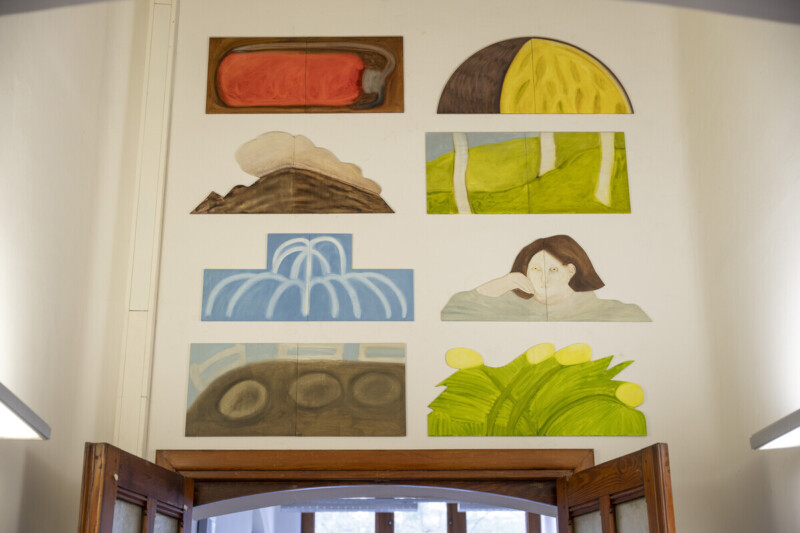
 articleLees, kijk, luistereducationstudent graphic design Master Year
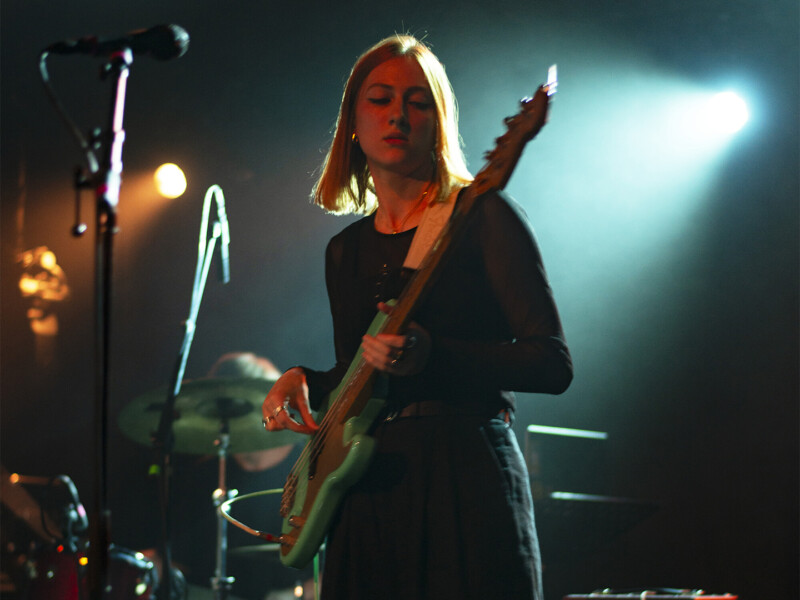
 articleLees, kijk, luistereducationstudent jazz & pop Er was altijd veel muziek in huis
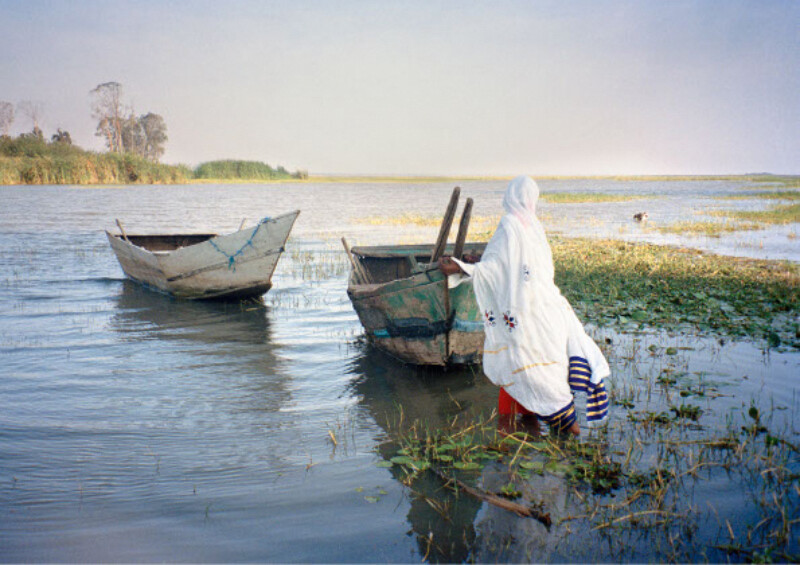
 articleLees, kijk, luistereducationstudent photography እሺ እሺ Eshi Eshi, About the observer
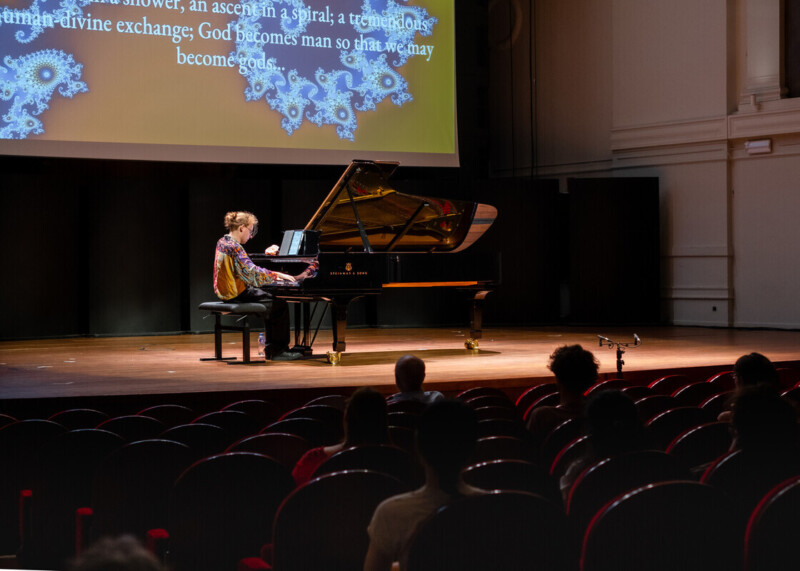
 articleLees, kijk, luistereducationstudent classical music I think music’s most important role is one of connection
 articleLees, kijk, luistereducationmaster instrumentenbouw 19th Century Banjos: S.S. Stewart and Horace Weston
 presentationLees, kijk, luistereducation