Two years in Messiaen’s World
LINDE VERJANS
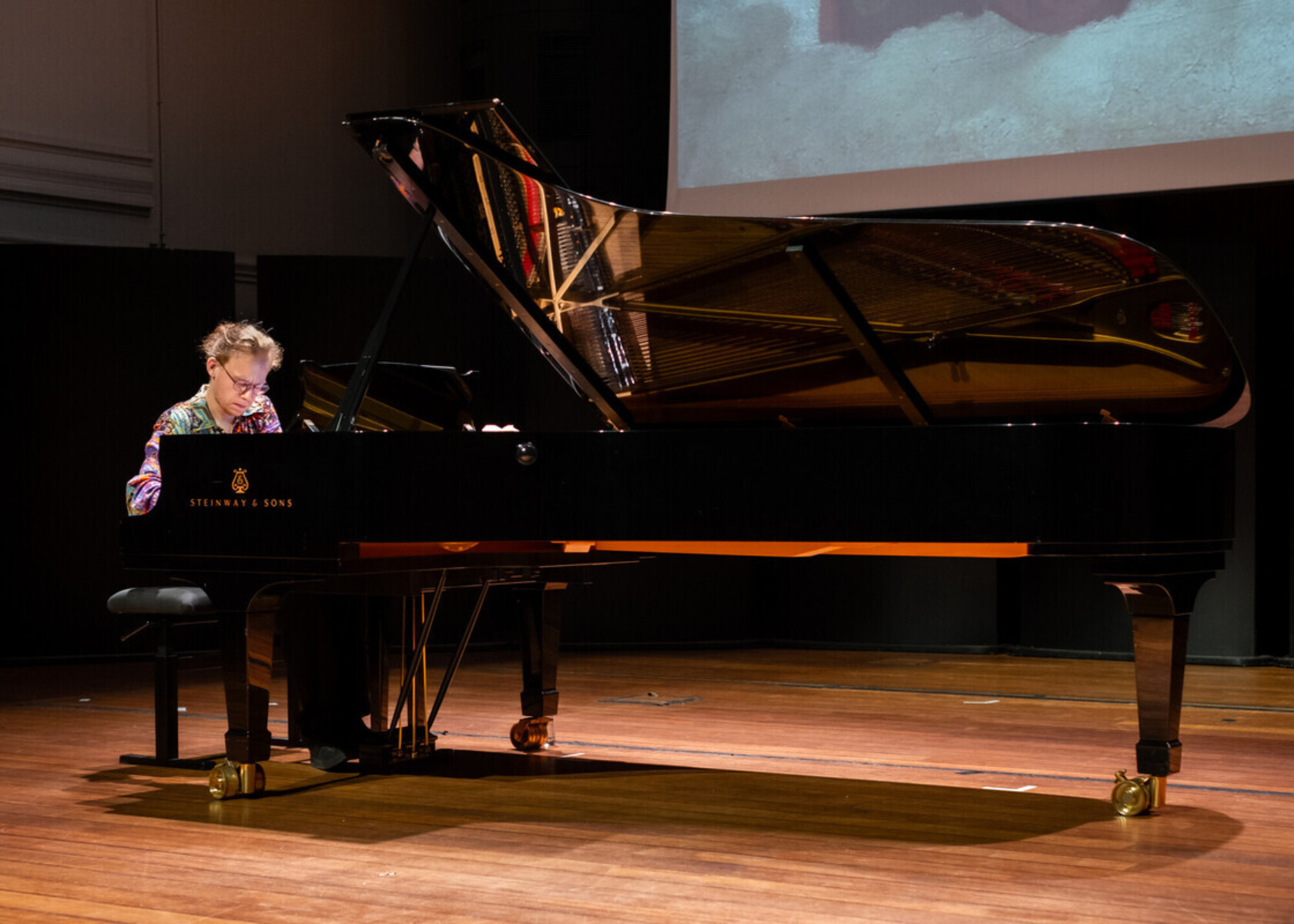
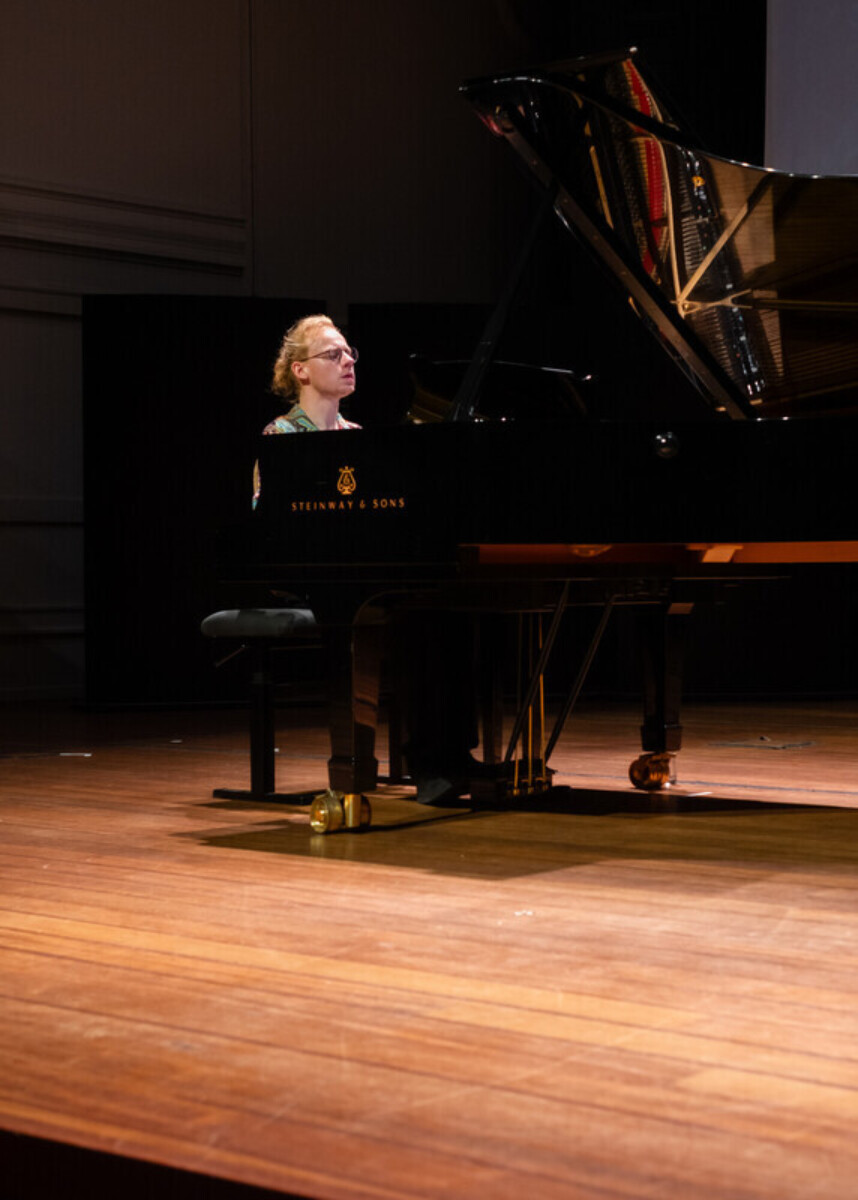
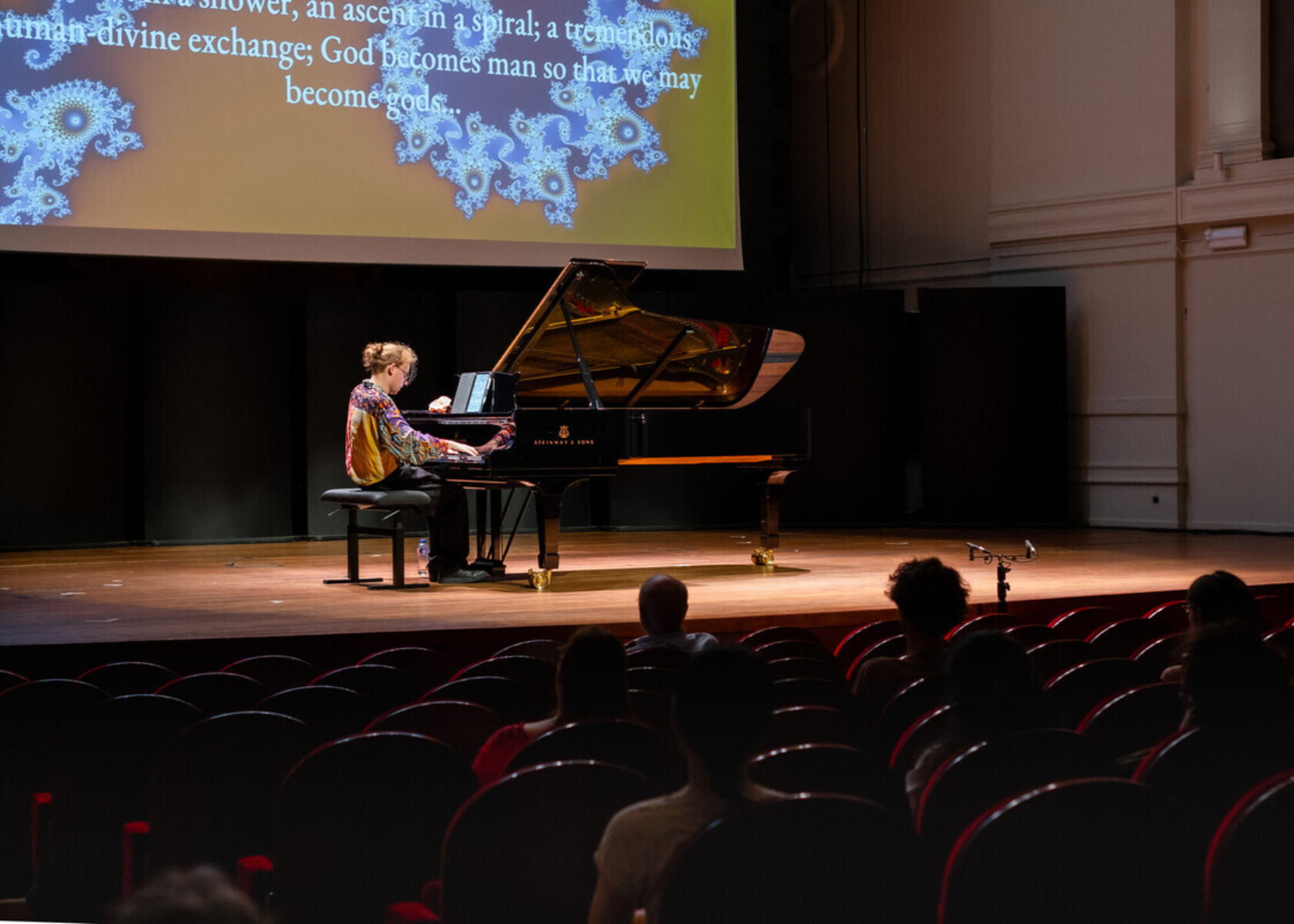
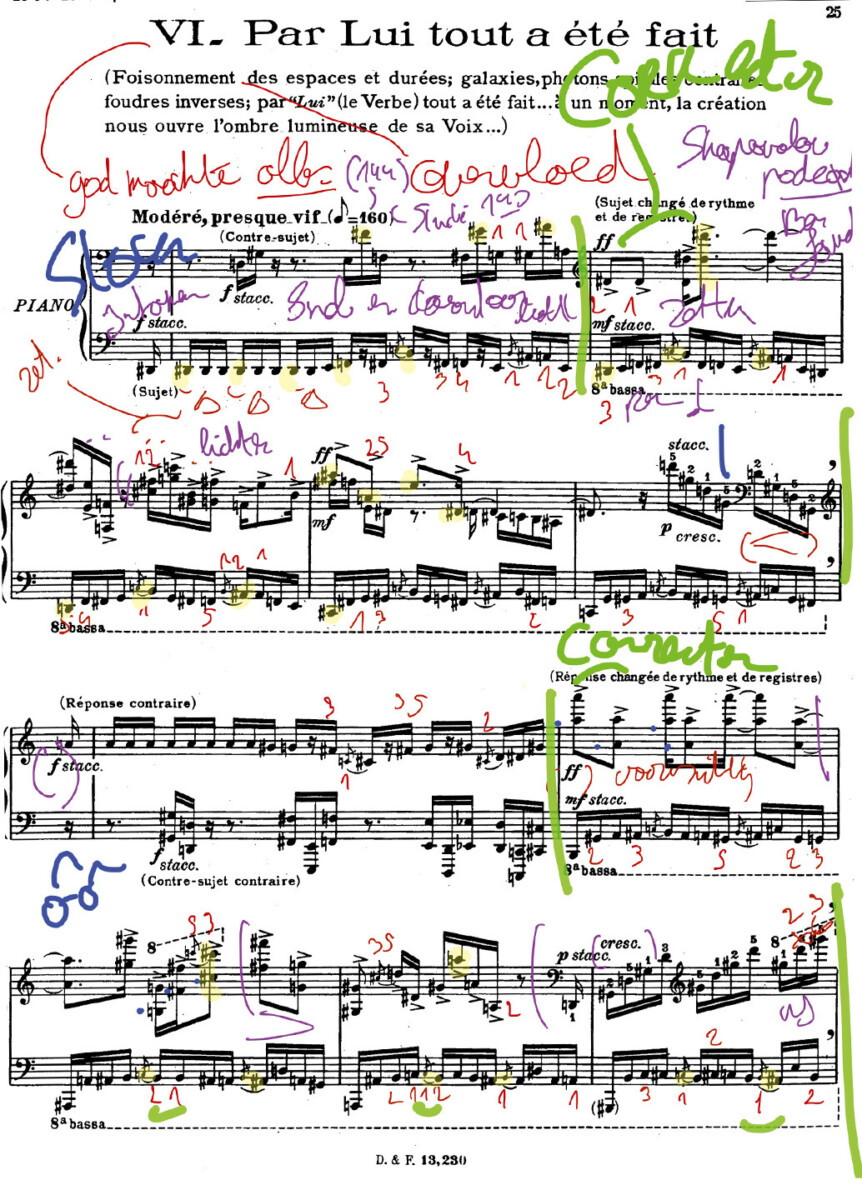
When I speak to pianist Bert Lasseel, the summer is just entering its third heatwave. A few months earlier, in June, he had graduated from the music programme at KASK & Conservatorium with a performance of Messiaen’s Vingt Regards sur l’Enfant Jésus, a piece lasting over two hours. Now the future, with all its possibilities, lies open before him.
How did you find your way into the world of music?
BERT LASSSEEL
I think I’m a late bloomer. Around the age of fifteen, I didn’t know what I wanted to do with my life. I was feeling a bit lost. Until I discovered Beethoven. For me, he was the gateway to classical music. It was immediately clear to me that I wanted to learn to play music and that I’d want to do that for the rest of my life.
LV
That sounds quite radical.
BL
For me, it was simply very clear: that was the only option. I started studying the piano quite intensively straight away. A few months later, I made the switch to the KSO, and a few years after that I started at KASK & Conservatorium.
LV
Not an obvious choice, when you’ve only just started learning an instrument.
BL
No, and yet… it couldn’t have turned out any other way. And in a way, it’s easy to commit fully to something. You know what your goal is and what you need to do at every moment of the day.
LV
Was your choice of KASK & Conservatorium just as obvious?
BL
I wanted to do contemporary music, and the school is renowned for that. There’s a good composition class and, during the project week, for example, there’s also a focus on contemporary repertoire. Everything falls into place. You can engage with that new music in a really relaxed atmosphere. And, of course, I was also very keen to specialise under Daan (Vandewalle, ed.). I love his nonchalance, which was a world away from the rather strict, Russian style of playing I’d experienced with a previous teacher. He’s made the joy of playing central to his teaching, and that has done me a world of good. It’s helped me to be more relaxed whilst playing and to put things into perspective. At the same time, he set the bar very high when it came to mastering the score. Right from the start, I had to get to grips with a lot of difficult repertoire very quickly. That gives you a sort of professional attitude, which I love: I like to see progress.
LV
You just mentioned that your love of music began as a sort of coup de foudre with Beethoven. Does he still play an important role in your life as a musician?
BL
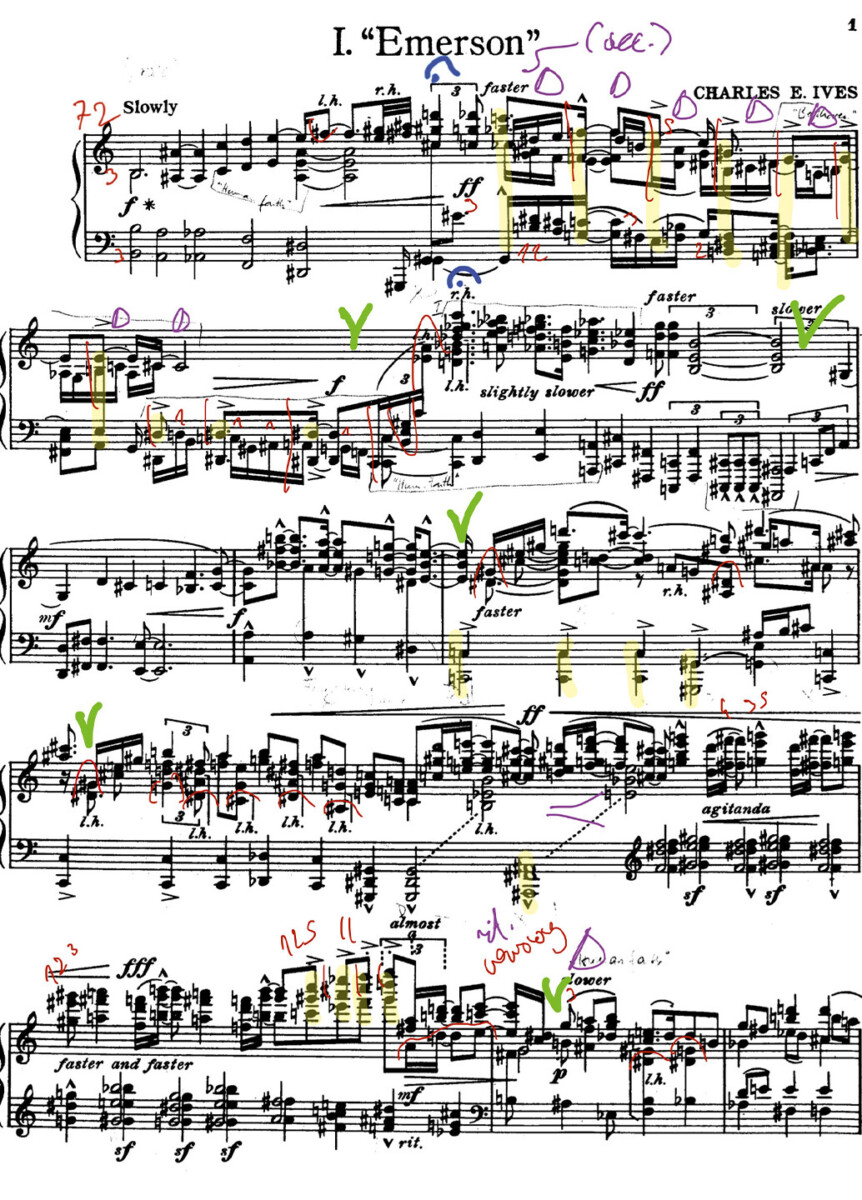
Not really. I moved on to twentieth-century piano music quite quickly, via Schoenberg and later Messiaen as well. The repertoire from the last century appeals to me the most. That’s another great thing about the school, by the way: things are a bit freer and more personal here than at other conservatoires. Take the way an exam programme is put together, for example. At most conservatoires, your programme has to comply with strict rules: works from different stylistic periods, a concerto, a solo piece. That’s not at all how you’d put together a concert programme. In Ghent, I was given the chance to really do my own thing and follow my own vision. During my master’s, I was able to devote two years to Messiaen’s work, which allowed me to delve deeply into his world. I wouldn’t have been able to afford that level of focus anywhere else.
LV
You’ve now become a Messiaen specialist. Is your love for his music still just as strong after two years – or perhaps even stronger? Or do you need a litte distance?
BL
More the latter (laughs). No, actually, both are true: I’ve only come to appreciate him more. At the same time, it’s good to make room for other things now.
LV
Such as?
BL
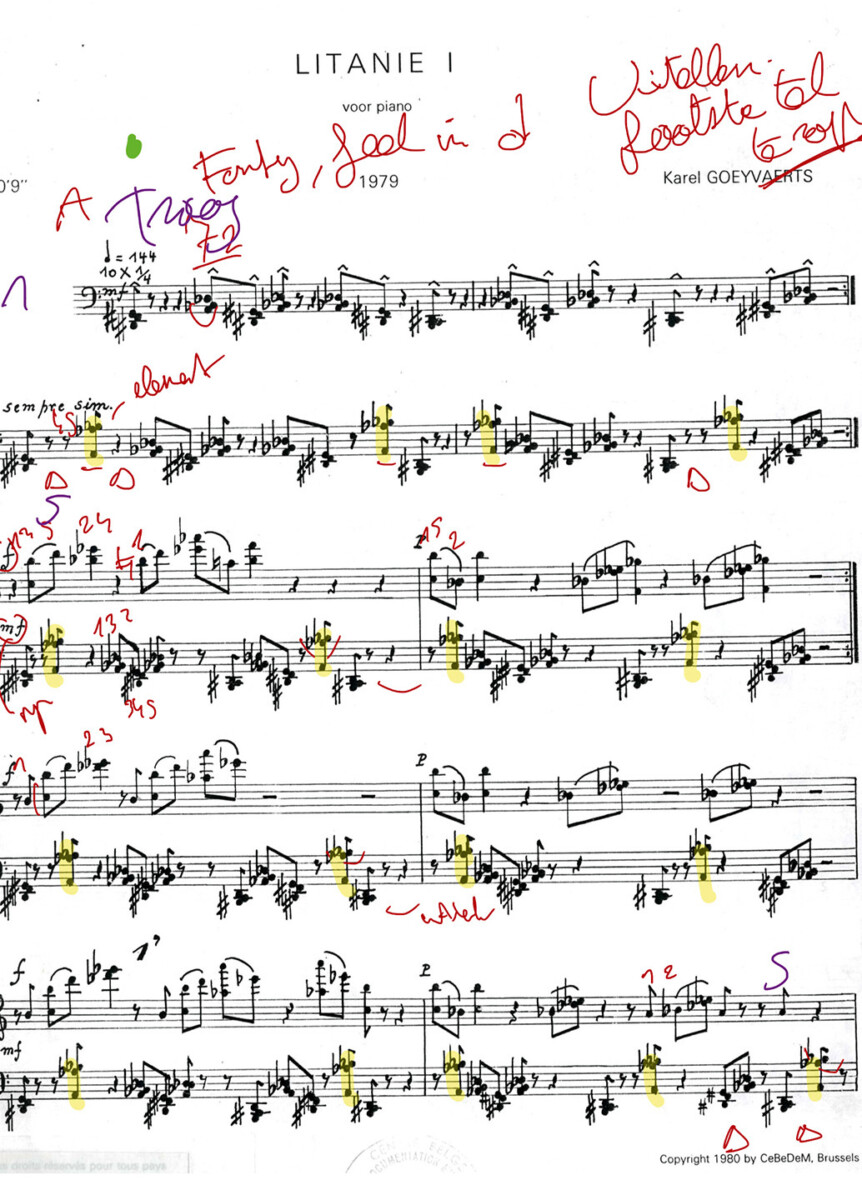
Next March I’ll be performing Ligeti’s concerto with students of Tom De Cock, and in the autumn there’s a collaboration with Spectra centred on the music of Lucien Goethals.
LV
Performance opportunities that come your way through the school?
BL
Yes, indeed. That’s another great thing about KASK & Conservatorium: you make connections easily, the atmosphere is brilliant and you get plenty of opportunities.
LV
What appeals to you so much about Messiaen’s work?
BL
He has such a distinctive voice, with his own harmonic system, his religious obsession and his boundless love for nature. It’s incredibly rewarding to engage deeply with his body of work.
LV
Perhaps you share that capacity for hyperfocus. Just as you knew straight away that you wanted to be a musician, Messiaen did exactly what he wanted to do and followed his own path.
BL
(Pauses to think) Perhaps so. Although for him it really was a life’s work. I don’t know if I’ll keep focusing on the same thing for that long.
LV
Apart from Messiaen, who else do you look up to?
BL
There’s an American pianist, Frederic Chiu, who I think is underrated. I’ve learnt a great deal from the way he practices and his intellectual approach to music. I also admire Glenn Gould for that reason. He took the interpretation of music so incredibly seriously and was wonderfully creative with it.
LV
Is that an approach you adopt yourself?
BL
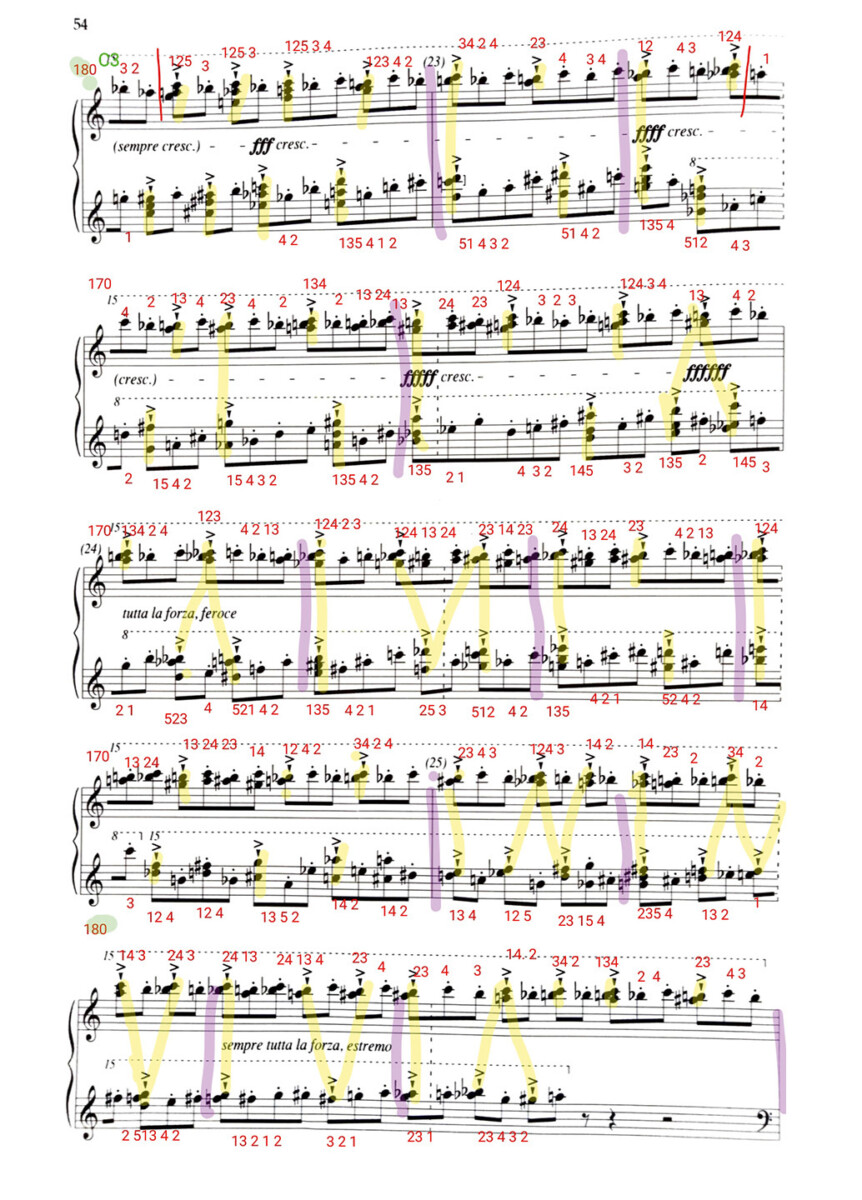
I’d like to, but the music I’ve been working on a lot so far isn’t very flexible in terms of interpretation. I don’t mind that. But with Bach, you can do almost anything. Not so with Messiaen. Throughout history, music has become increasingly specific; there’s less room in the score for personal interpretation. For Messiaen, you need an excellent piano and a large concert hall. That music is so extreme. If you don’t respect certain things, you really ruin it, whereas Bach always holds up in all sorts of situations, on a wide variety of instruments.
text: Linde Verjans
photos: Jonathan Verschaeve
 FashioneventAgendaArtistic activities
Fashion students from KASK & Conservatorium present their graduation projects during 2 shows on Campus Bijloke, for the first time in the Gent Jazz tent.
Godshuizenlaan 2
9000 Gent
 ExhibitionexpoAgendaArtistic activities
Spread out over the Bijloke campus, you can discover the work of students in photography, graphic design, autonomous design, fine arts, textile design, fashion, musical instrument making, interior design, landscape and garden architecture, landscape development, digital design and development, curatorial studies, educational master in audiovisual and visual arts and the educational master in music and performing arts.
 film and animationfilmAgendaArtistic activities
Our audiovisual arts master students will project their final works into the world during the avant-premières at Sphinx Cinema on 23 June. Tickets will be available soon.
Later, from 25 to 28 June, we will repeat the films at KASKcinema. Admission is free, no need to make a reservation.
9000 Gent
9000 Gent
 MastersoundsconcertAgendaArtistic activities
Mastersounds is known among connoisseurs as the holy grail of up-and-coming musical talent. During this festival, part of Graduation 2026 at KASK & Conservatorium, graduating students in jazz, pop and music production present their own projects. Between 15 and 25 June 2026, they will shake the foundations of the Minard theatre and De Centrale. They were preceded by Ramkot, Balthazar, Tomàn, Senne Guns, Douglas Firs, Nordmann, Amatorski, Faces on TV, Shht, Yong Yello, Loverman, Iskander Moon... In addition, every year we celebrate the birth of the new Masterworks LP, a compilation album that brings together all that talent. Get your copy at the festival.
Romain Deconinckplein 2
9000 Gent
Kouter 29
9000 Gent
Romain Deconinckplein 2
9000 Gent
 Drama, KASK DramadramaAgendaArtistic activities
During the Drama Festival, drama master’s students present their graduation work. Offbeat and classical drama, crossovers, performances and multidisciplinary work can be seen at various locations in Ghent. The Drama Festival runs from 15 to 20 June 2026.
 Classical music, MIRY Concert hallconcertAgendaArtistic activities
Our classical music students hone their skills until they are ready for their exam recitals. You can attend this joyous occassion, as the exam concerts of master’s students of classical music and composition are open to the public. Postgraduates musical performance practice will also spoil your ears. All concerts take place in our very own MIRY Concert Hall.
 As If More Could Save UsexpoAgendaArtistic activities
As If More Could Save Us emerges from the inhabitation of Curatorial Studies 2025-2026 in Kunsthal Gent. As one of the main partners of Curatorial Studies, Kunsthal Gent has hosted exhibitions from the postgraduate program since 2023. Building on this ongoing collaboration, this year’s exhibition is shaped by the building’s spaces, its internal dynamics, and both existing and new works. It takes place from 29 May to 28 June, 2026.
At the heart of Kunsthal Gent lies the story of Sarah Winchester, the heiress to a weapon manufacturer’s fortune, who relentlessly expanded her house with its endless rooms under the belief that she was haunted by restless spirits. Her house, with its endless rooms, staircases leading nowhere and looping corridors, translates as a ritual of building in response to uncertainty.
Mirroring this spatial imagery, Kunsthal Gent itself reads like a manuscript constantly written and rewritten; a fragmented landscape in which exhibitions unfold over time. After being built as a carmelite monastery in the 13th century, the building which now houses Kunsthal Gent underwent many transformations from opera storage to archaeological museum, and even to a squatting site.
In the spirit of Sarah Winchester, As If More Could Save Us reintroduces a selection of objects from STAM – Ghent City Museum to Kunsthal Gent, where they were previously exhibited during a time when the site still served as an archaeological museum, alongside objects from Huis van Alijn, which enter this context for the first time. Placing the past alongside the present, this ever-changing environment also gains an additional layer through contemporary works by Danai Anesiadou, Pélagie Gbaguidi, Mélina Ghorafi, Leto Keunen, Susu Laroche, Pàpoo Thibau and Julie Vanlook.
By bringing together historical objects, contemporary artworks and the spatial complexity itself, As If More Could Save Us explores how meaning is never fixed but continuously renegotiated. The exhibition builds on this evolving structure. Each space is shaped by what came before; a layering of gestures and intentions across centuries. Things accumulate here, like they always have.
Curators
Eline Adriaensen, Samira Ali Reiza Beigi, Houda Ben Azzouz, Anna Bruni, Cristina Carnelos, Alex Celis, Emma Crombé, Anaïs Du Champs, Tess Ego, Youssef Elkhiar, Zinnia Fay Fay, Nora Franco, Charlotte Frenay, Val Holfeld, Théo Jack Scherer, Bruna Martins, Antoine Meffre Chol, Sutanee Panyajai, and Alice Zitelli.
Supported by
curatorial studies and Kunsthal Gent
Many thanks to
Sonia D’Alto, Laura Herman, Isabel Van Bos and Curatorial Studies KASK Team; Valentijn Goethals, Danielle van Zuijlen, Jana Vasiljević, Tomas Lootens, Aike Roodenburg, Bert Bossaert, Klaartje Van Thuyne, Jens Wijnendaele, Tim Bryon, Mark Kokotov and Kunsthal Gent Team; STAM Ghent and Huis van Alijn.
Lange Steenstraat 14
9000 Gent
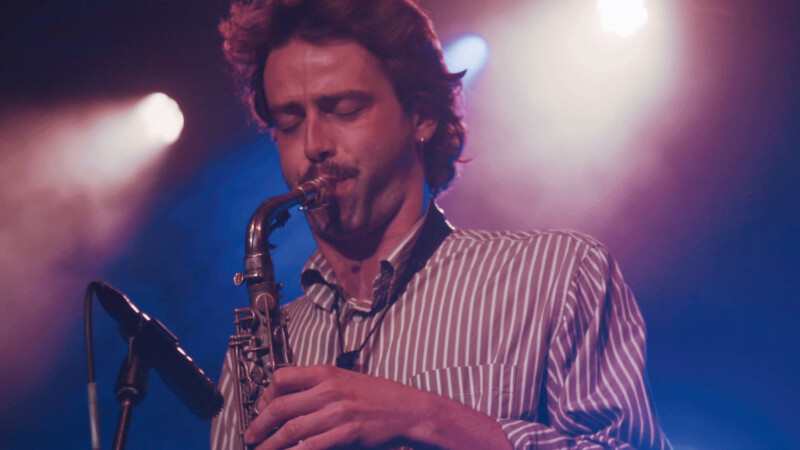
 articleLees, kijk, luistereducationstudent jazz & pop Show us who you are, not what you do
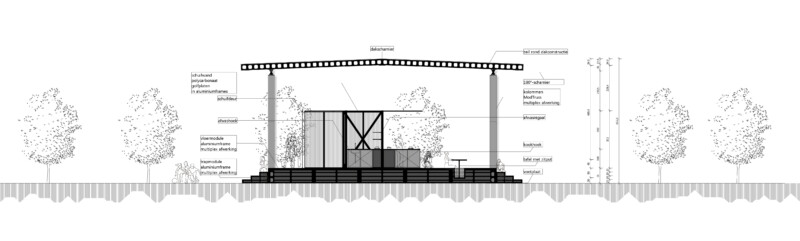
 articleLees, kijk, luistereducationstudents interior design The parasitic pavilion, The inner landscape, The contemporary temple
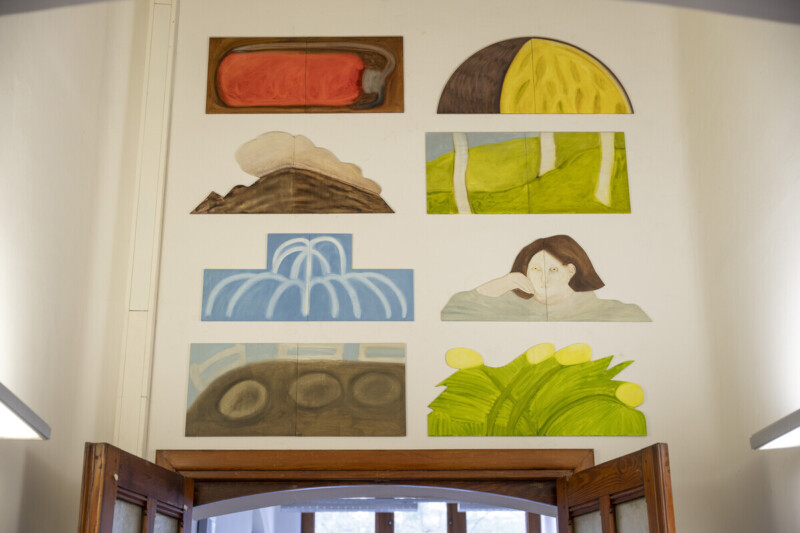
 articleLees, kijk, luistereducationstudent graphic design Master Year
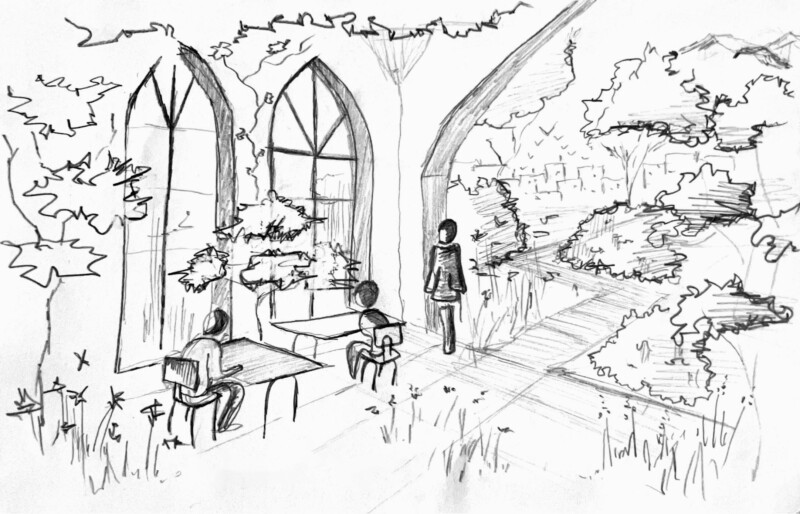
 articleLees, kijk, luistereducationstudents landscape development Could you sketch out your vision for Bijloke 2.0 in 2100?
 articleLees, kijk, luistereducationstudent jazz & pop Er was altijd veel muziek in huis
 articleLees, kijk, luistereducationstudent photography እሺ እሺ Eshi Eshi, About the observer
 articleLees, kijk, luistereducationstudent classical music I think music’s most important role is one of connection
 articleLees, kijk, luistereducationmaster instrumentenbouw 19th Century Banjos: S.S. Stewart and Horace Weston
 presentationLees, kijk, luistereducation