 Joost Rekveld, Disobedient Practices
 ongoingOnderzoek
Systems that Matter
Dialogues with Machines, Joost Rekveld, Disobedient Practices
 completedOnderzoek
Dialogues with Machines
 Disobedient Bodiesresearch presentationAgendaOnderzoek
Three recently completed book projects inspire an evening of reflection. From very different angles these projects look for ways to think and act beyond anthropocentrism. They challenge the idea of the human as a singular, dominant maker of the world, seeking to demonstrate a rich plurality of perspectives instead. How can artists and designers be receptive in their work to the voices of the non-human entities we live among?
Disobedient Bodies marks the first public moment for two newly formed research clusters at KASK & Conservatorium: The Body Plural and Disobedient Practices. Members of both clusters will present their work and engage in dialogue around these themes, inviting new ways of imagining our relationships with the entities around us.
The event will consist of a small exhibition, informal presentations and an in-depth conversation about the areas where the books and the research clusters overlap. The evening will be moderated by curator and researcher Edith Doove.
The following books will be subject of discussion:
- Tju|ho – Thoughtful Ways of Making and Walking
Published by Jap Sam Books, Tju|ho – Thoughtful Ways of Making and Walking is a fully bilingual (English and Ju|’hoan) publication that explores thoughtful design, showing how place and community shape sustainable ways of making and walking.
The book centres on the re-creation of the traditional hunting sandal N!ang N|osi in Nhoma, Namibia, and its true owner, the Eland. Since 2021, the project has evolved through close collaboration with the Ju|’hoan communities of Nhoma and Tsumkwe.
At its heart, Tju|ho is a living process of annotation and re-narration, aimed at showing different ways of perceiving and relating to the environment.
The publication is edited by Catherine Willems, Festus Soroab, Anca Ușurelu, and the Ju|’hoan Transcription Group in Tsumkwe, Namibia. Catherine Willems is affiliated with the research cluster The Body Plural.
- Decentering Design – Practice in a More-than-human World
An invitation to journey beyondhuman-centric thinking and into the more-than-human world. By merging theory with practice, the publication offers strategies, insights, and exercises that cultivate a deeper sensitivity to the interconnected more-than-human community we form with all living beings. With diverse contributions by architects, landscape architects, product- and interaction designers, artists, photographers, philosophers, academics, curators, policy makers and policy officers. Contributions include FormaFantasma, Superflux, Eva Meijer, Clemens Driessen, Mihnea Tanasescu, Dries Segers and Jacopo Leveratto, among others.
This publication is the outcome of a research project by Bert De Roo, Giliam Ganzevles, Mirte van Aalst and Glenn Deliège, and edited and designed by Jurgen Maelfeyt. Published by APE (Art Paper Editions). A new project, Intermediate Zones, by Bert De Roo, Giliam Ganzevles and Jerry Galle Galle is affiliated with the research cluster Disobedient Practices.
- Liberate the Machines!
A personal experience of a dialogue with machines, narrated through the making of the experimental film Mechanisms Common to Disparate Phenomena; #59. Through this narration the book develops a view on how humans can learn from the devices they constructed. The human technical milieu is a collective product, a long-term external memory to which each generation contributes and the design and development of technology is therefore a form of politics. Media archaeology is presented as a method to investigate this collective construction.
By Joost Rekveld, design by Isabelle Vigier. Published by Studio Joost Rekveld and KASK & Conservatorium. Joost Rekveld is affiliated with the research cluster Disobedient Practices.
Lange Steenstraat 14
9000 Gent
start: 20:30
Doctoral defense Joost Rekveldresearch presentationAgendaOnderzoekOn October 28, Joost Rekveld, artistic researcher at KASK & Conservatorium, will defend his doctorate to obtain the title Doctor of Arts. On behalf of the candidate and his promotors, Dr. Edwin Carels (HOGENT - KASK & Conservatorium) and Prof. Dr. Christel Stalpaert (UGent), we would like to invite you to this occasion.
The public defense will start at 16:30 in auditorium Cirque in the Cloquet building on Campus Bijloke. Afterwards, you are welcome to attend the reception. Please confirm your attendance by sending an e-mail to joost.rekveld@hogent.be.
The film Mechanisms Common to Disparate Phenomena; #59 (2023, 79 min.) is the main artistic outcome of the PhD project. It will be screened the same evening at 20:30 in KASKcinema.
Dialogues with Machines
This research project explores the idea that new things can be learned in interaction with devices. In Joost Rekvelds practice as a media-artist, the notion of a Dialogue with Machines refers to a back-and-forth between devising and observing. Implicit in this back-and-forth process is a relative absence of hierarchy between verbal thinking and making, and between the maker and the made, which is why new insights can emerge.
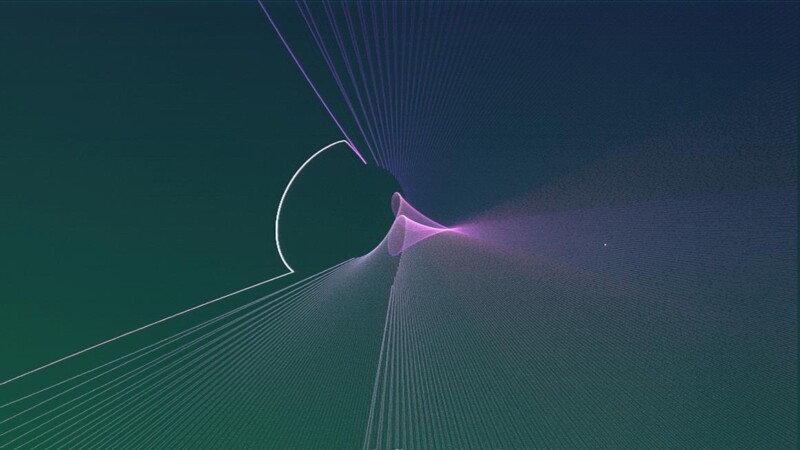
Practical work in this research project involved building analogue electronic machines and generating moving images with them. The main artistic outcome of this was the film Mechanisms Common to Disparate Phenomena; #59, a feature-length abstract animated science fiction film that looks at the experiences shared by humans and electronic circuits during the Cold War.
In the reflective part of his artistic research, Rekveld attempts to uncover possible sources of the agency of machines. In the long essay Liberate the Machines!, he gives theoretical and historical context to the making of his film #59. It also narrates his personal experience of a dialogue with machines in the process of producing this film and the tools that were necessary for making it. These two strands come together in a view on the relation between humans and machines and the role of media-archaeology in investigating this relation. Under the title Seven Devices Joost Rekveld wrote seven media-archaeological essays. In them, he discusses topics from the history of electronic analogue computing, animated automata, cybernetics and self-organisation, looking for different approaches to reflect on the role of machines in a collaboration with humans.
The research project Dialogues with Machines was financed by the HOGENT Arts Research Fund.
Cloquet
Louis Pasteurlaan 2
9000 Gent
 Mechanisms Common to Disparate Phenomena; #59 (2023), KASKcinemafilmAgendaArtistic activitiesOnderzoek
On October 28, Joost Rekveld, artistic researcher at KASK & Conservatorium, will defend his doctorate to obtain the title Doctor of Arts. The film Mechanisms Common to Disparate Phenomena; #59 (2023, 79 min.) is the main artistic outcome of the PhD project. It will be screened the same evening at 20:30 in KASKcinema.
Mechanisms Common to Disparate Phenomena; #59
Our computing technology arose during the Cold War as a side effect of the development of atomic weapons and their associated planetary surveillance systems. In 1961, at perhaps the coldest point of this period, Edward Lorenz and Yoshisuke Ueda independently discovered deterministic chaos in their computing systems. In film #59, humans, aliens and devices vacillate between these two poles of on the one hand a fever dream of human control over the planet and a lively, machinic chaos on the other hand.
In a re-enactment of ancestral ways of computing, the animations were made as analog electronic signals. These were generated using period equipment, including an analog computer from 1963, early sonar and radar oscillators, and bits from flight simulators. This film is an attempt to liberate these technologies from their military origins.
Joost Rekveld, 2023, 79'
Cloquet
Godshuizenlaan 4
9000 Gent