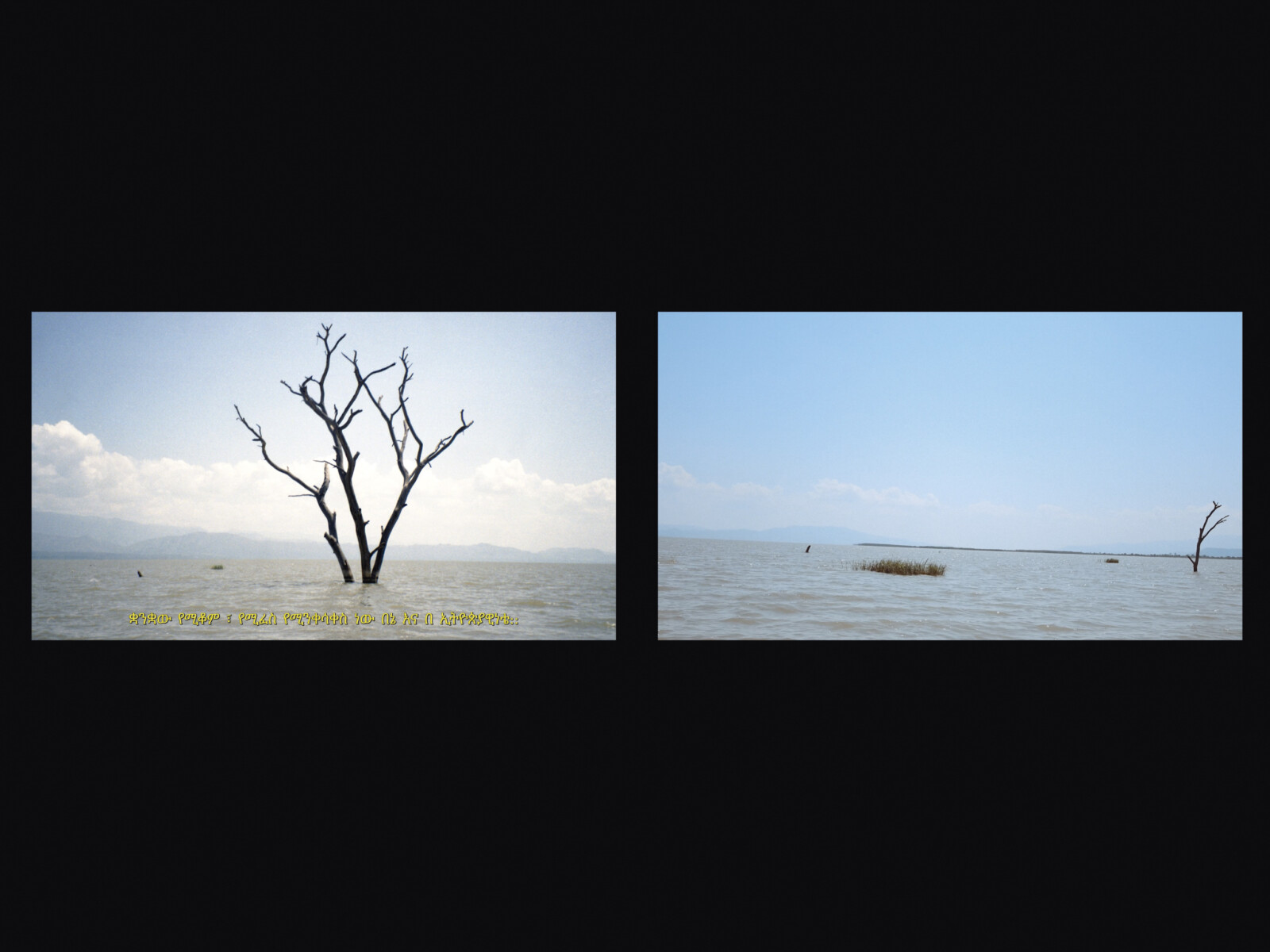
እሺ እሺ Eshi Eshi, About the observer
Given their shared sensitivities regarding language and translation, we put Kedist Coppejans in touch with the artist Lisa Spilliaert. Lisa completed her master’s degree in photography at KASK & Conservatorium in 2013. They met and asked each other questions.
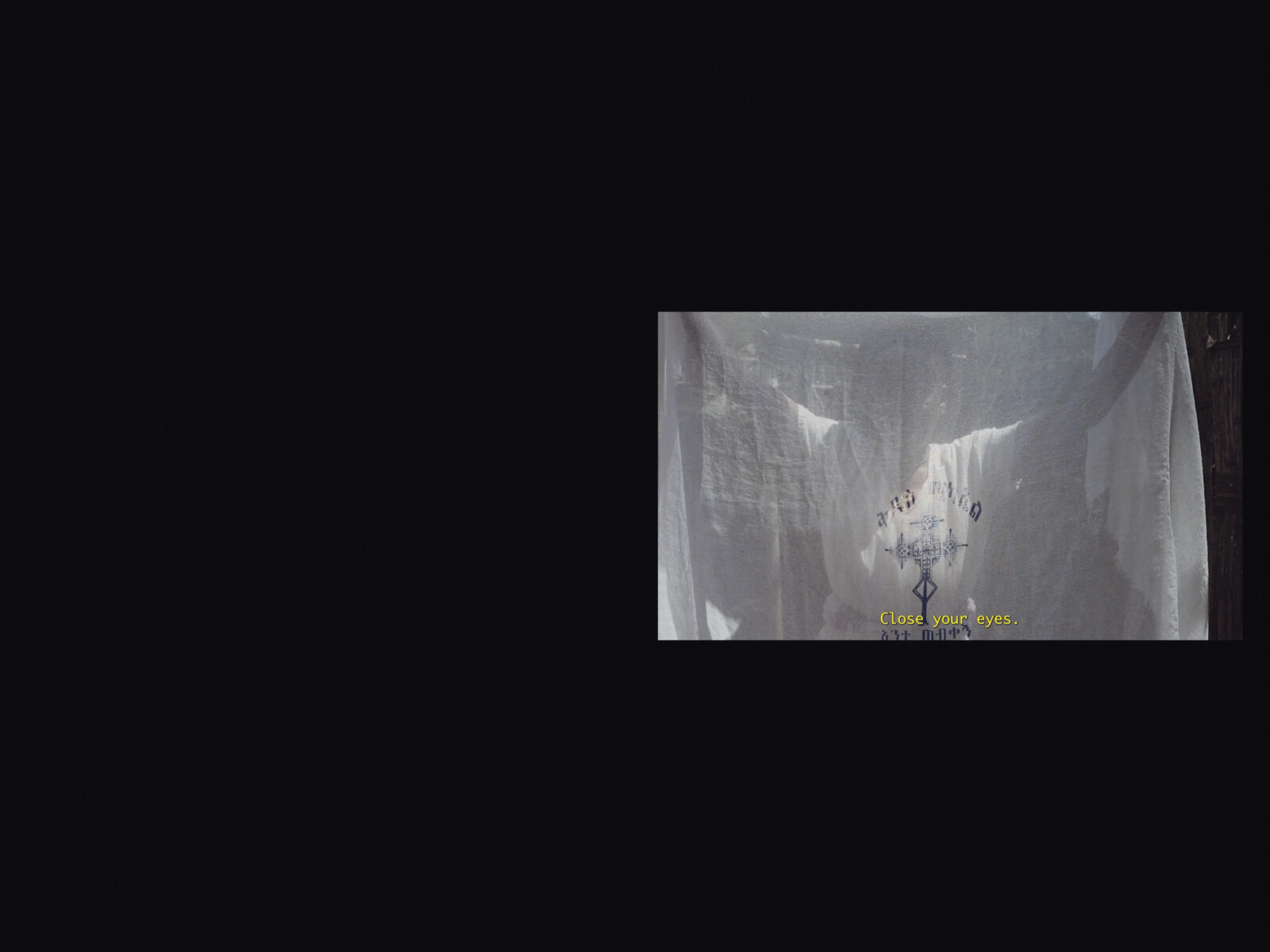
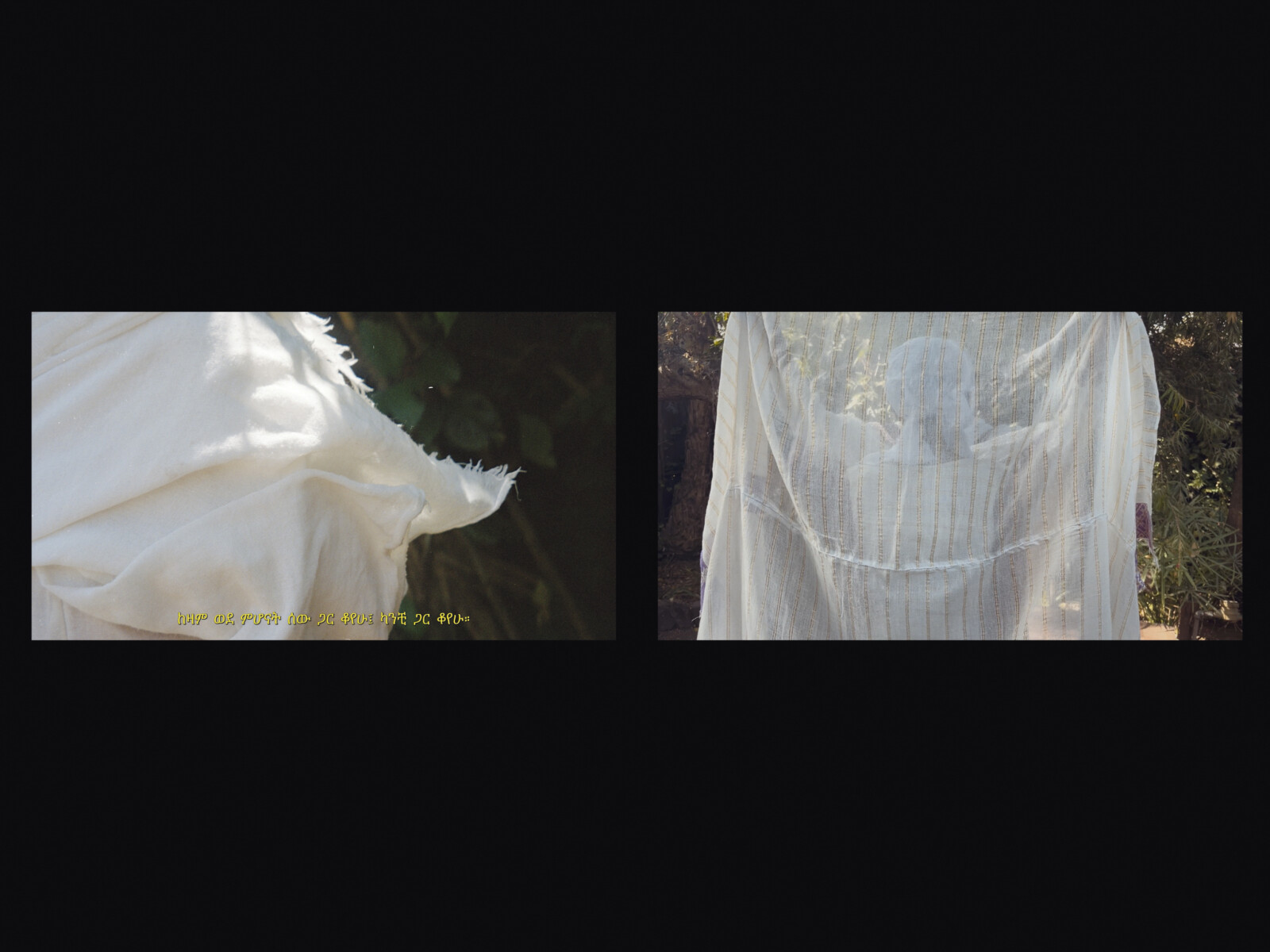
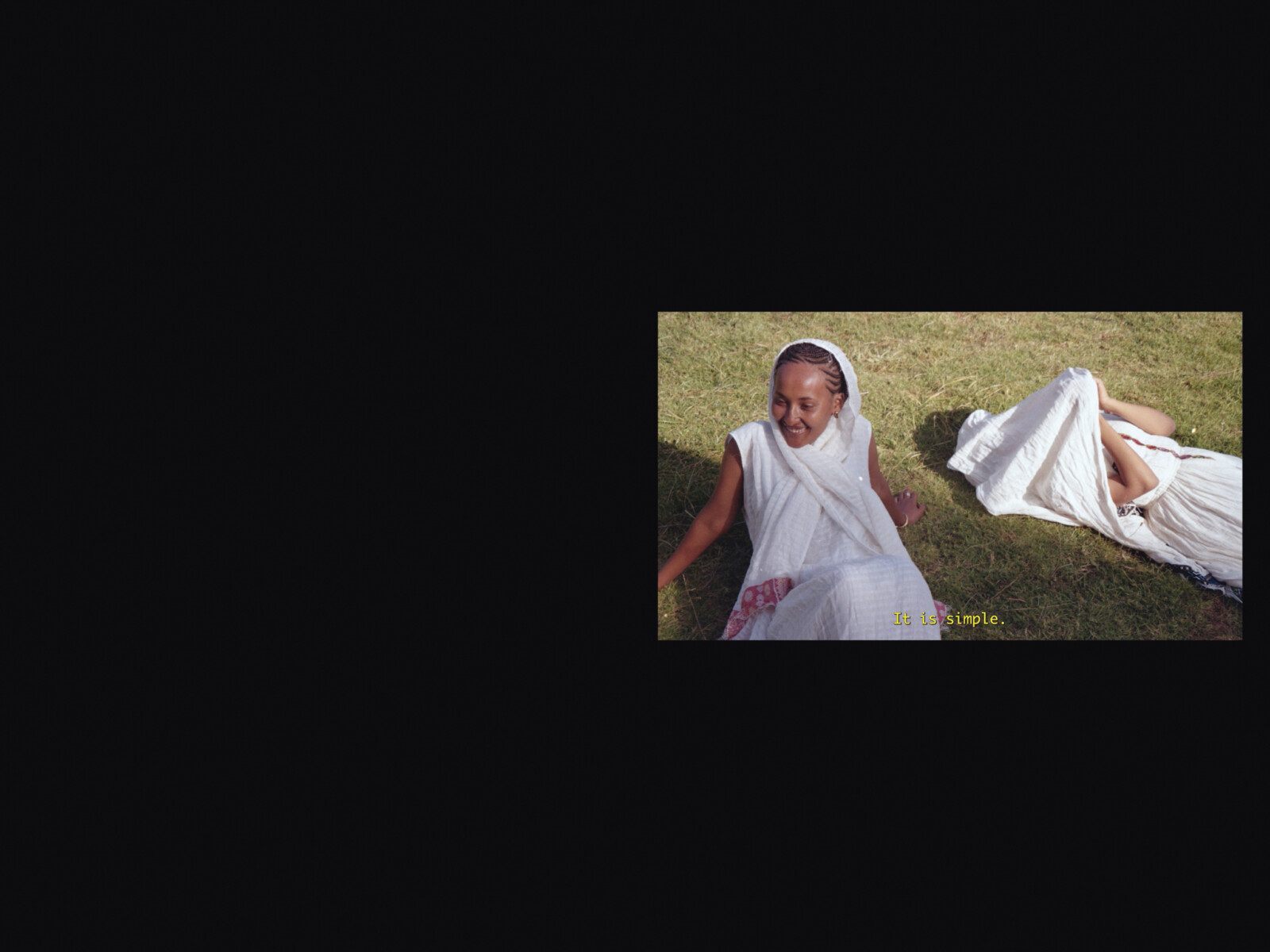
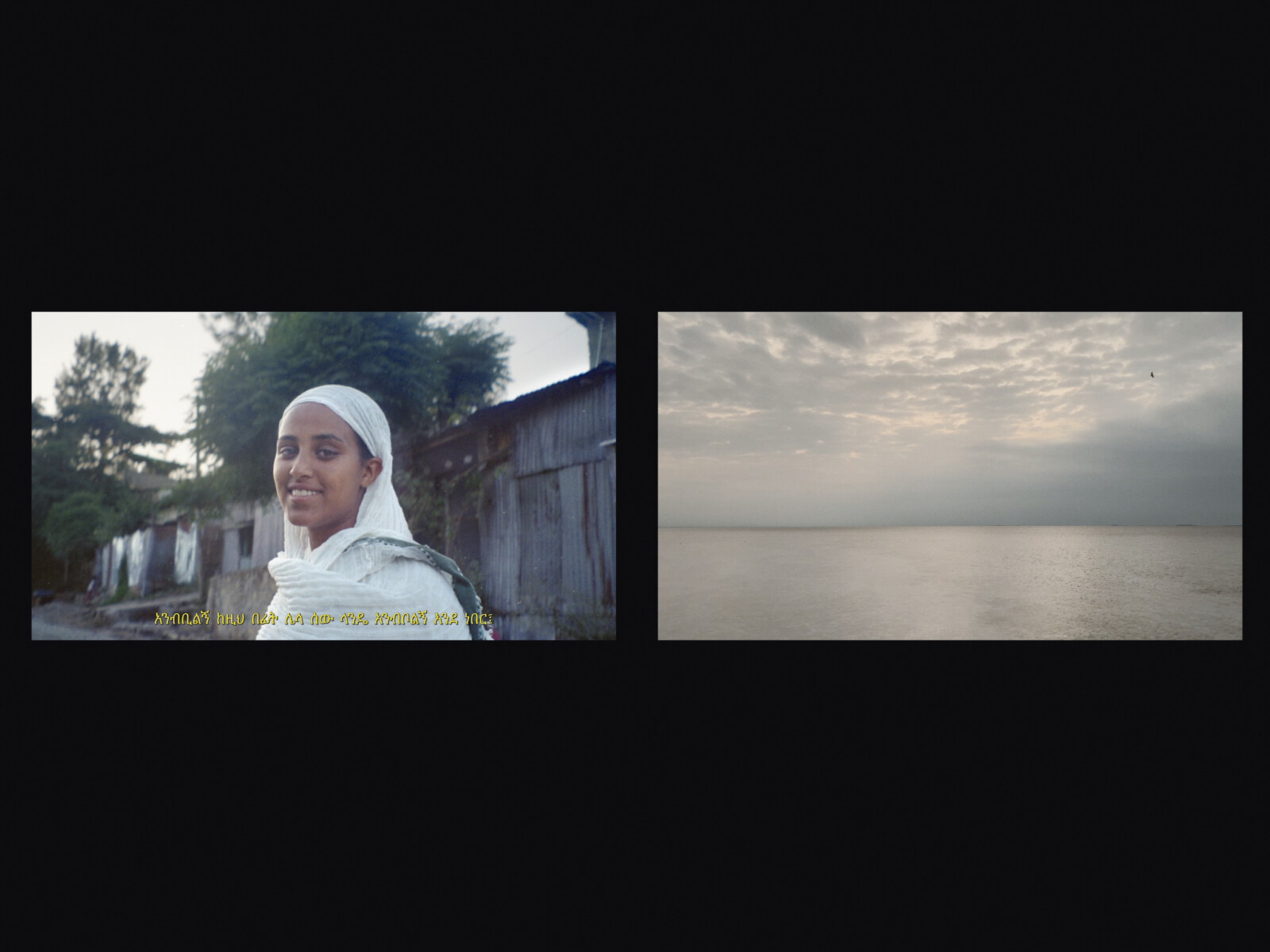
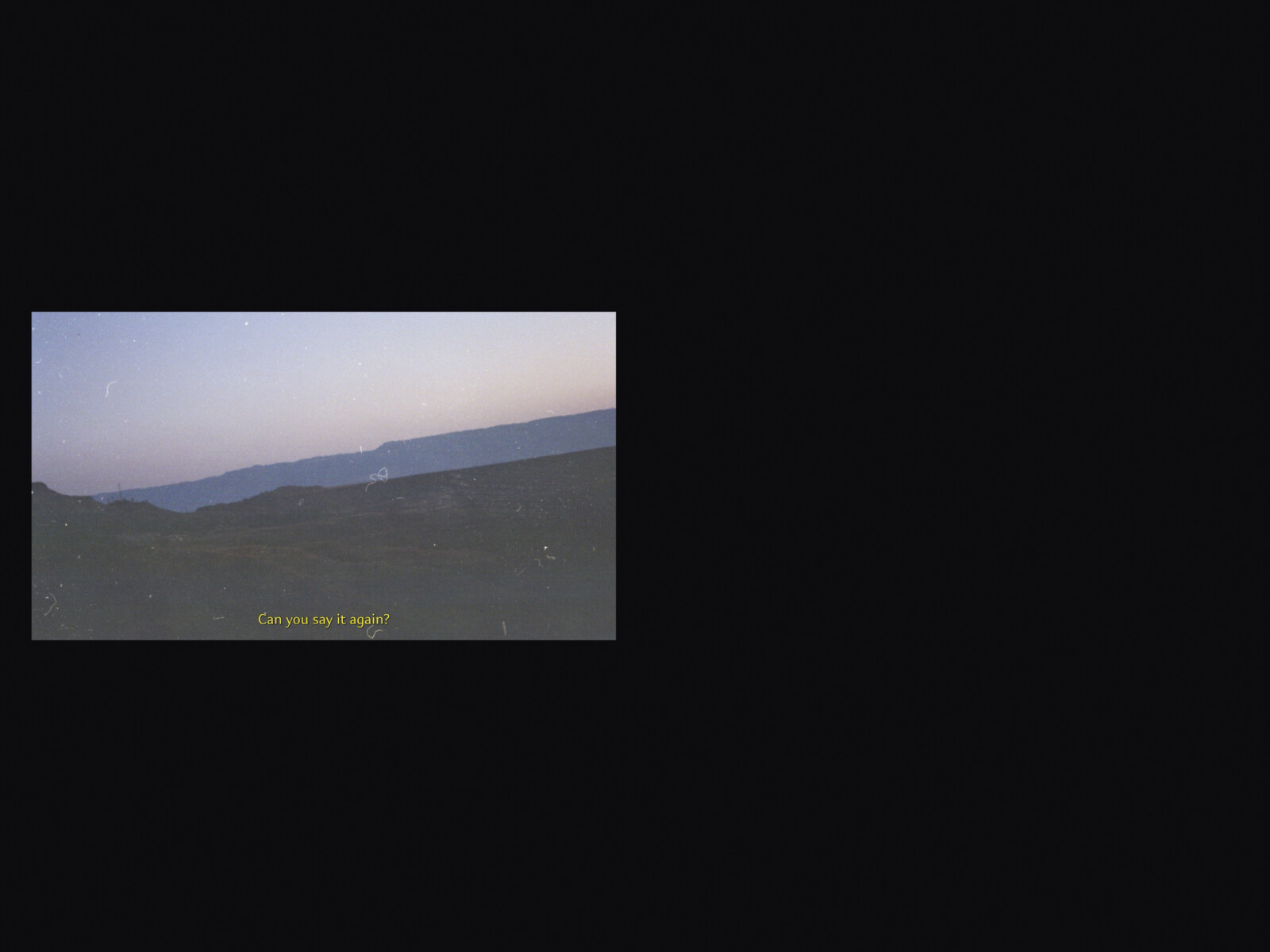
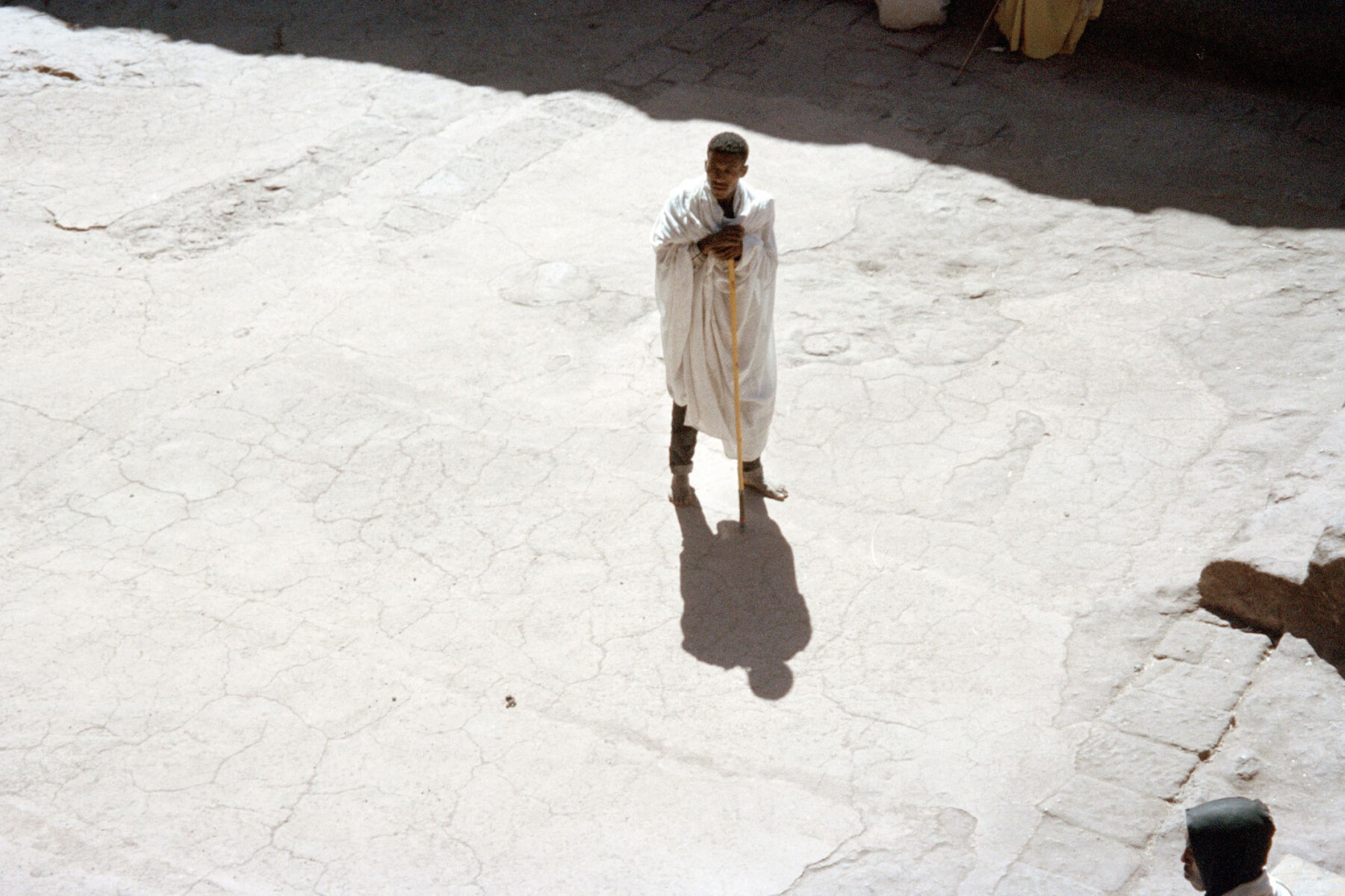
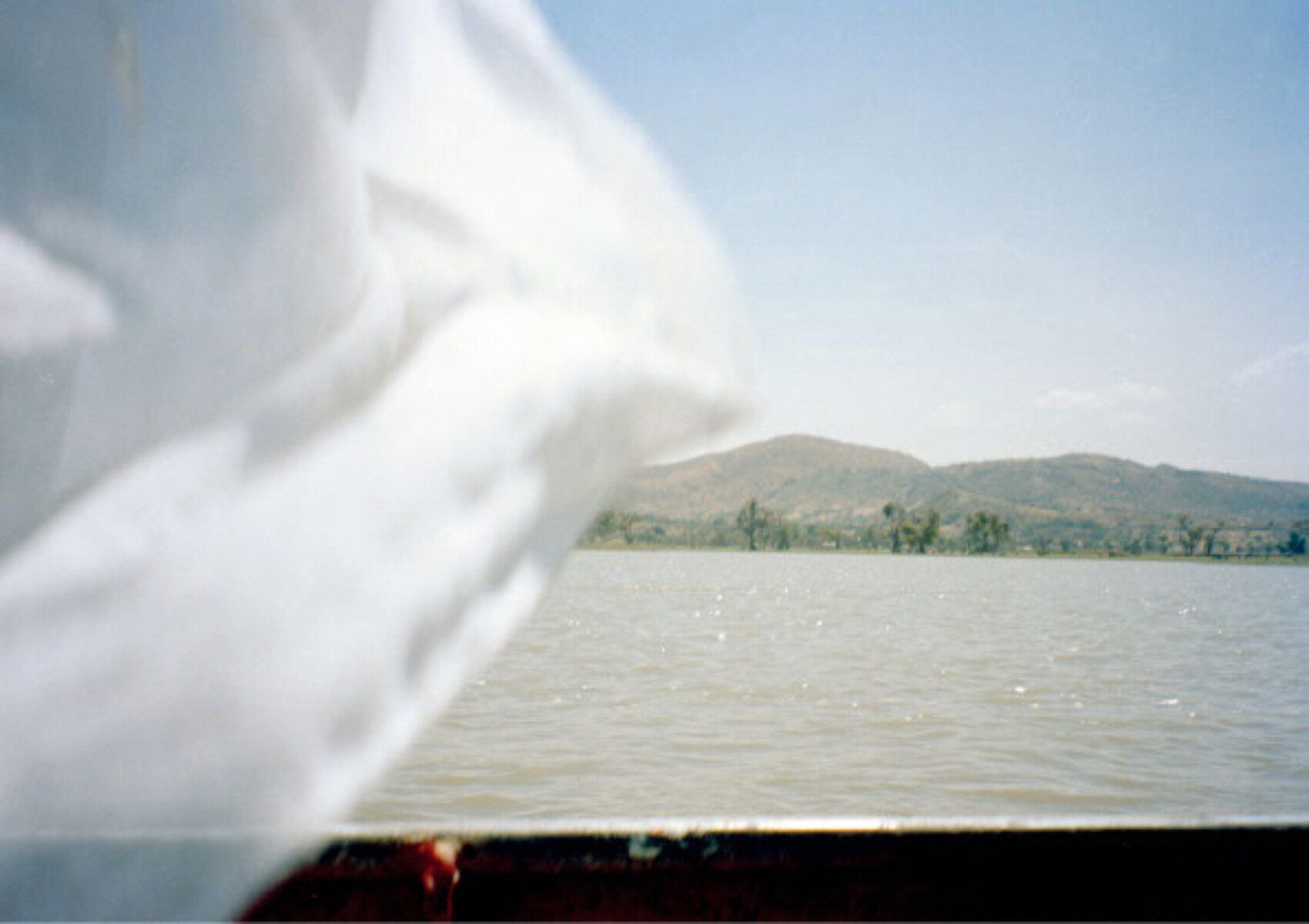
Through text, photography and film, እሺ እሺ Eshi Eshi explores the artist’s evolving relationship with a lost language, not merely as a tool for communication, but as material, structure, and subject. Words appear as fragments, traces, captions, interruptions, or absences; images become forms of reading; while film unfolds as a space where meaning is continuously constructed and undone. Moving between the visual and the verbal, the work questions how language shapes perception, memory, intimacy, and identity.
LISA SPILLIAERT
One of my earliest memories is of a game I made up to try and stop myself thinking. At first it was exciting: I said “Stop, stop, stop…” out loud in my head, but it turned out to be an impossible task and, as a result, frightening. I was standing on a university campus where we used to play. The concrete ground was covered with berries that had fallen from a tree. I found myself in a silent, tornado-like state of imagination.
Meanwhile, I do this spontaneously throughout my daily life, in a way that still isn’t calming. I realise that I haven’t thought in words for a very long time. I take in what I see, and with that come vague references to other images, or a haze, sometimes a sort of amoeba. Do other people do this too? These formless primal shapes might come quite close to linguistic images. I recognise that in your work, and you make it shareable.
KEDIST COPPEJANS
People often focus on how an artist creates a piece of work, but I don’t actually think that’s relevant. What’s more important is: does the work (which I have now completed and passed on) move someone (in whatever way)? Does it make people think? Is my work relevant?
I have handed over my work. So I don’t want it to be about me now, but about you – about how you ask yourself questions, question your own assumptions, explore, but also find strength.
እሺ እሺ Eshi Eshi is about the importance of language in expressing a feeling. I wonder whether people who are unable to express their sadness or joy, disappointment or hope, are regarded as ‘fully human’. And if you are not regarded as ‘fully human’, can you regard yourself as fully human?
Or do you lack the language to ask yourself that question? It’s as if language is indispensable to being a person. What if the only words you can really shout are ‘Stop, stop, stop’?
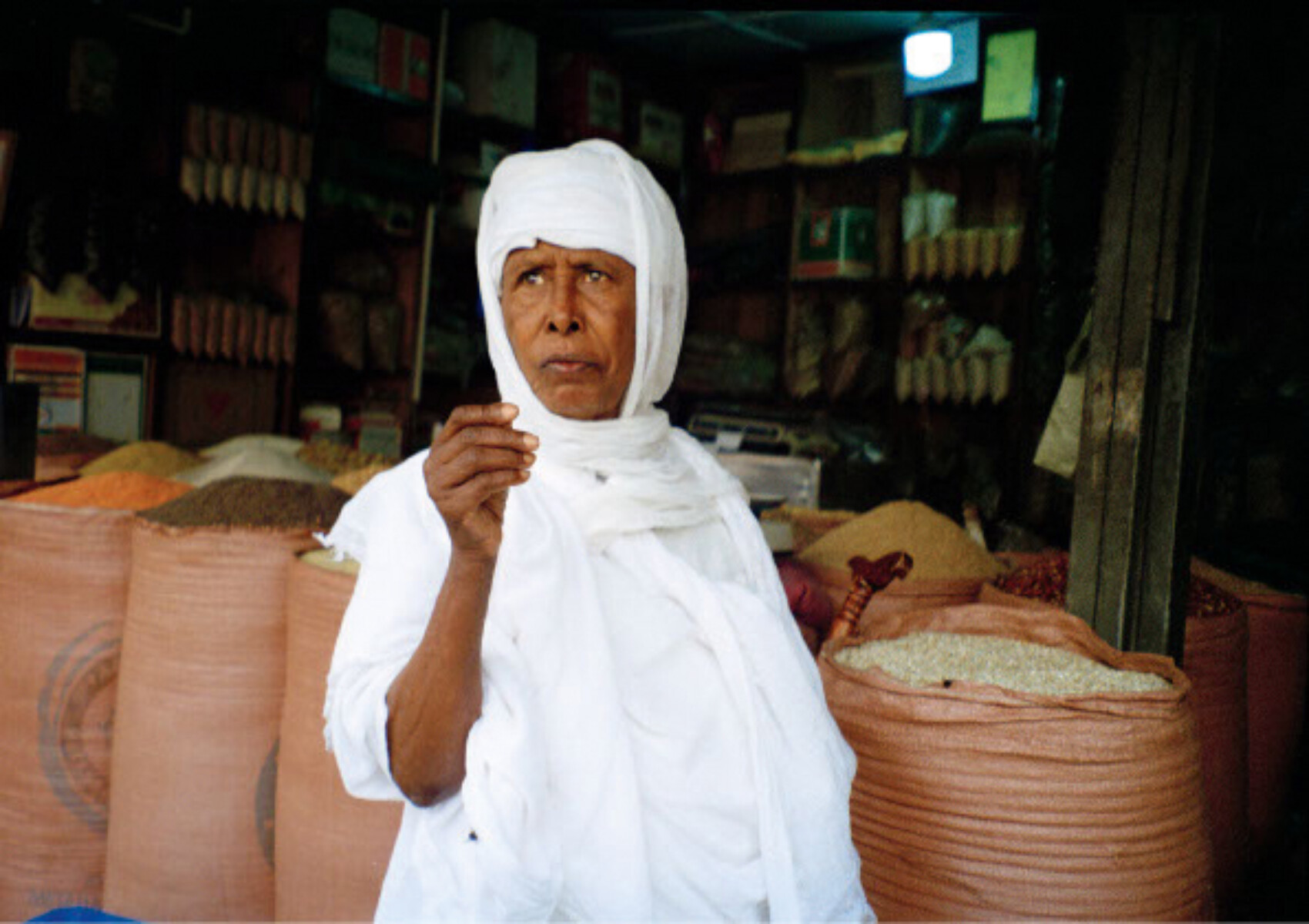
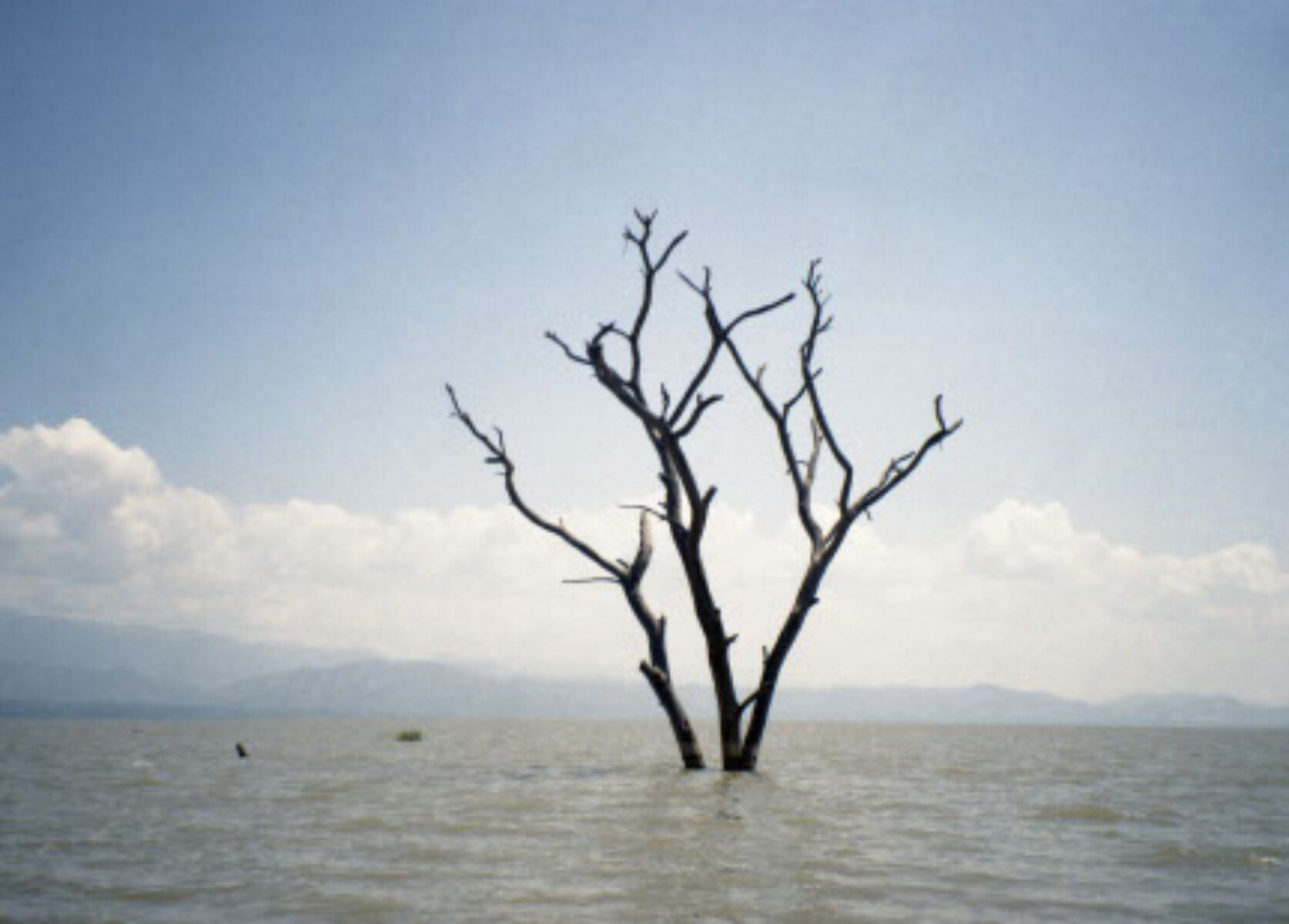
LS
Is my work relevant? Whilst studying at KASK & Conservatorium, I often heard the teachers say: “We like your work, but that’s because we know you.” Personal ingredients that resonate on a universal level can form a strong foundation for a piece of work. For me, it still remains a guessing game: what will be the outcome of my “personal” effort?
I know what it’s like not to be regarded as ‘complete’ by society. For me, that’s also linked to the feeling that I’m still an immature person. As a teenager, I had a great thirst for self-knowledge. By being so preoccupied with absorbing the new language in Belgium at the age of seventeen, I lost sight of growing up. In Japan, I catch myself identifying with teenagers; my (linguistic) development seems to be on hold there time and again. In both languages – and therefore in both societies – I feel powerless, immature and rebellious.
Language is pretty crucial if you want to be ‘someone’. When I came to Belgium, I was convinced that the Dutch language had to become a part of me, like a piece that was still missing. Until then, I’d been regarded in Japan as a Belgian girl. In Belgium, I thought, I’d finally just be a Belgian girl. But in Bruges, I didn’t fit in there either. Unexpectedly, I was given a new label: the Japanese girl – an identity I’d long since given up in Japan. Languages were impossible to grasp from my state of confusion and disappointment: who to be, what to choose. However banal it all sounds now: these things were of vital importance to me. I now think back to that sickening feeling, my body wanting to throw up the languages.
The act of giving up, accepting and repulsing identities is closely linked to the concept of language, yet it is anything but a simple matter to come to terms with. For me, this asymmetry is explored in እሺ እሺ Eshi Eshi. In the film, a language is made tangible in all its complex forms, whilst at the same time standing out so beautifully from the rest in all its simplicity.
I feel at ease with translations. It feels like a space where I can be free. I like to read two books at the same time, in different languages. Translating something literally in everyday life has a playful quality to it, and I really enjoy it. Sometimes I end up confusing myself or the person I’m talking to, but that confusion gives rise to surprise. Watching or making films gives me a similar sense of freedom.
I found myself in tears after the first minute of the film እሺ እሺ Eshi Eshi. It consists of a static landscape with what appears (due to the glitches in the sound) to be a long-distance call in which someone is trying to pronounce her own name under the guidance of someone on the other end of the line. I learnt how to pronounce my name ‘correctly’ almost twenty years ago. I’m surprised that this short clip moved me. I thought I’d become desensitised or ‘too strong’ for that by now.
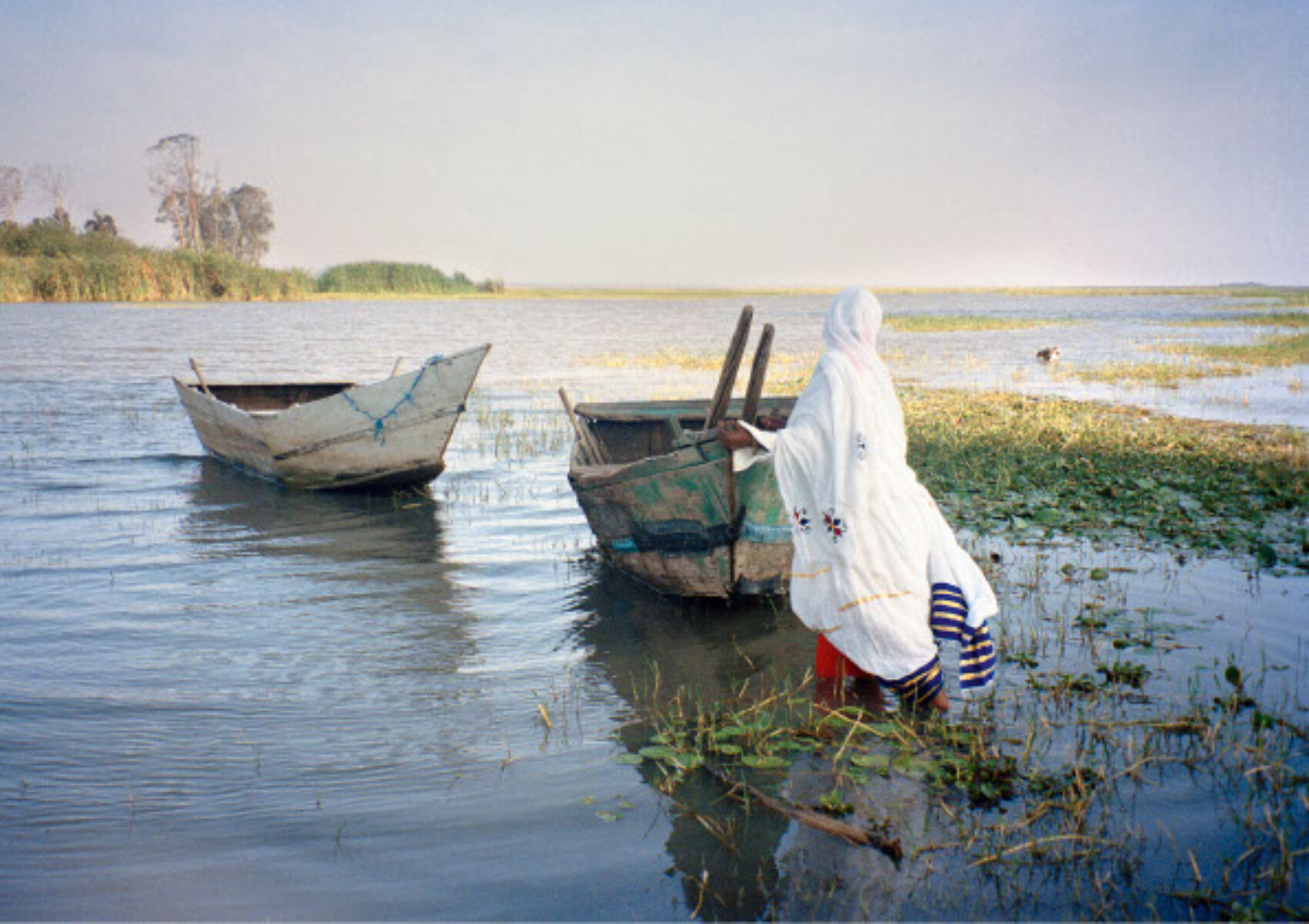
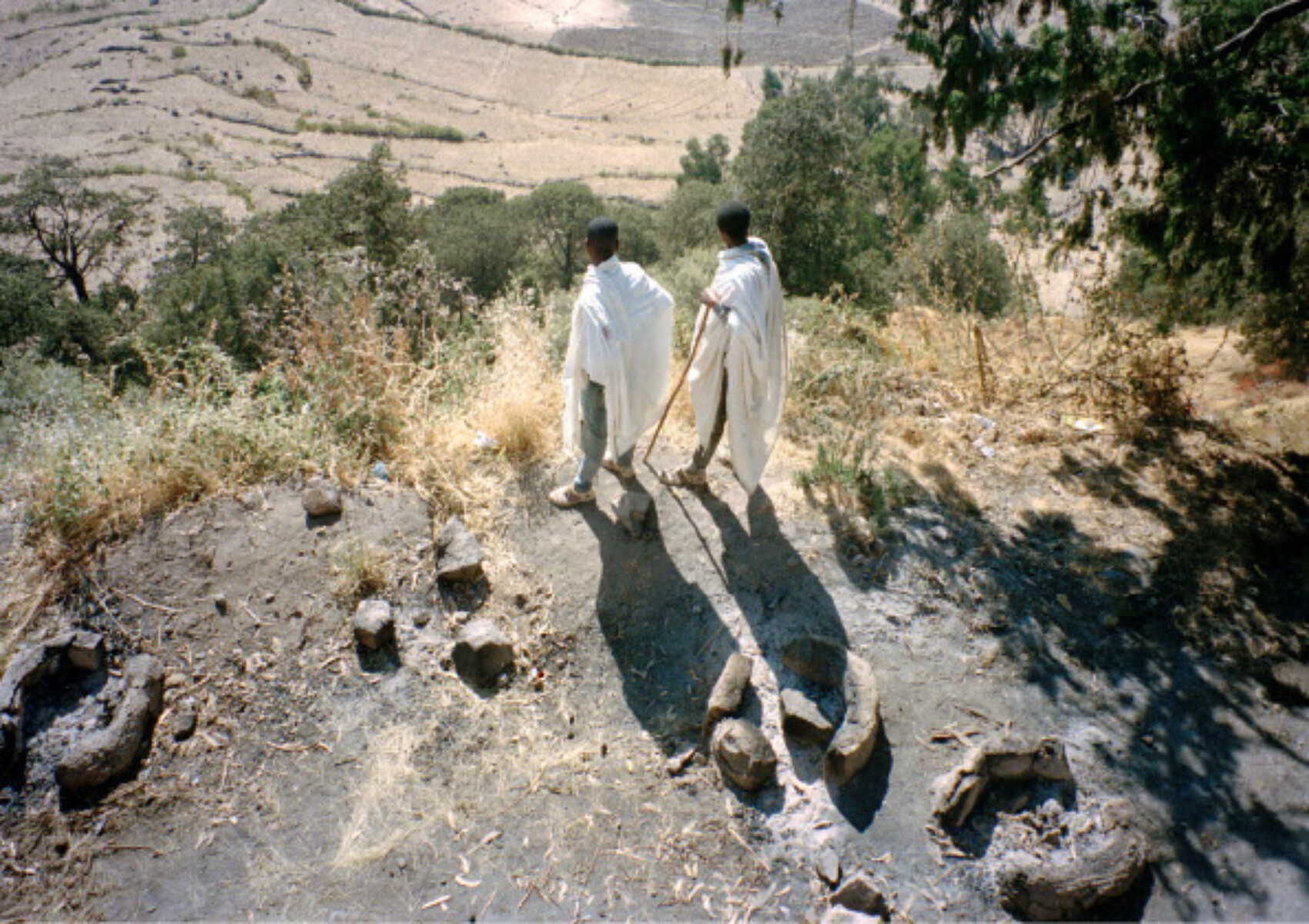
LS
The film continues for another ten minutes. As the still and moving images alternate across two fixed frames, I listen to the narration. This alternation made me ponder the singular and plural in our grammar, and how something so abstract can shape a person. After nearly twenty years, I still find it a difficult concept, especially when I’m writing. I often find it a superfluous rule, but it also shapes me by making me think twice about it every time: do I include it/me or not?
The narratives in እሺ እሺ Eshi Eshi sometimes resemble translations of one another, or at other times seem neither translated nor subtitled. All of this takes place within the intuitive, precise editing. Whilst watching, I felt repelled in a welcoming way. And I felt at home. It wasn’t a contradiction to feel welcome whilst there was still a sense of distance. Perhaps it is necessary to embrace that sense of repulsion from the outset if you wish to connect.
text: Lisa Spilliaert
images: Kedist Coppejans
 FashioneventAgendaArtistic activities
Fashion students from KASK & Conservatorium present their graduation projects during 2 shows on Campus Bijloke, for the first time in the Gent Jazz tent.
Godshuizenlaan 2
9000 Gent
 ExhibitionexpoAgendaArtistic activities
Spread out over the Bijloke campus, you can discover the work of students in photography, graphic design, autonomous design, fine arts, textile design, fashion, musical instrument making, interior design, landscape and garden architecture, landscape development, digital design and development, curatorial studies, educational master in audiovisual and visual arts and the educational master in music and performing arts.
 film and animationfilmAgendaArtistic activities
Our audiovisual arts master students will project their final works into the world during the avant-premières at Sphinx Cinema on 23 June. Tickets will be available soon.
Later, from 25 to 28 June, we will repeat the films at KASKcinema. Admission is free, no need to make a reservation.
9000 Gent
9000 Gent
 MastersoundsconcertAgendaArtistic activities
Mastersounds is known among connoisseurs as the holy grail of up-and-coming musical talent. During this festival, part of Graduation 2026 at KASK & Conservatorium, graduating students in jazz, pop and music production present their own projects. Between 15 and 25 June 2026, they will shake the foundations of the Minard theatre and De Centrale. They were preceded by Ramkot, Balthazar, Tomàn, Senne Guns, Douglas Firs, Nordmann, Amatorski, Faces on TV, Shht, Yong Yello, Loverman, Iskander Moon... In addition, every year we celebrate the birth of the new Masterworks LP, a compilation album that brings together all that talent. Get your copy at the festival.
Romain Deconinckplein 2
9000 Gent
Kouter 29
9000 Gent
Romain Deconinckplein 2
9000 Gent
 Drama, KASK DramadramaAgendaArtistic activities
During the Drama Festival, drama master’s students present their graduation work. Offbeat and classical drama, crossovers, performances and multidisciplinary work can be seen at various locations in Ghent. The Drama Festival runs from 15 to 20 June 2026.
 Classical music, MIRY Concert hallconcertAgendaArtistic activities
Our classical music students hone their skills until they are ready for their exam recitals. You can attend this joyous occassion, as the exam concerts of master’s students of classical music and composition are open to the public. Postgraduates musical performance practice will also spoil your ears. All concerts take place in our very own MIRY Concert Hall.
 As If More Could Save UsexpoAgendaArtistic activities
As If More Could Save Us emerges from the inhabitation of Curatorial Studies 2025-2026 in Kunsthal Gent. As one of the main partners of Curatorial Studies, Kunsthal Gent has hosted exhibitions from the postgraduate program since 2023. Building on this ongoing collaboration, this year’s exhibition is shaped by the building’s spaces, its internal dynamics, and both existing and new works. It takes place from 29 May to 28 June, 2026.
At the heart of Kunsthal Gent lies the story of Sarah Winchester, the heiress to a weapon manufacturer’s fortune, who relentlessly expanded her house with its endless rooms under the belief that she was haunted by restless spirits. Her house, with its endless rooms, staircases leading nowhere and looping corridors, translates as a ritual of building in response to uncertainty.
Mirroring this spatial imagery, Kunsthal Gent itself reads like a manuscript constantly written and rewritten; a fragmented landscape in which exhibitions unfold over time. After being built as a carmelite monastery in the 13th century, the building which now houses Kunsthal Gent underwent many transformations from opera storage to archaeological museum, and even to a squatting site.
In the spirit of Sarah Winchester, As If More Could Save Us reintroduces a selection of objects from STAM – Ghent City Museum to Kunsthal Gent, where they were previously exhibited during a time when the site still served as an archaeological museum, alongside objects from Huis van Alijn, which enter this context for the first time. Placing the past alongside the present, this ever-changing environment also gains an additional layer through contemporary works by Danai Anesiadou, Pélagie Gbaguidi, Mélina Ghorafi, Leto Keunen, Susu Laroche, Pàpoo Thibau and Julie Vanlook.
By bringing together historical objects, contemporary artworks and the spatial complexity itself, As If More Could Save Us explores how meaning is never fixed but continuously renegotiated. The exhibition builds on this evolving structure. Each space is shaped by what came before; a layering of gestures and intentions across centuries. Things accumulate here, like they always have.
Curators
Eline Adriaensen, Samira Ali Reiza Beigi, Houda Ben Azzouz, Anna Bruni, Cristina Carnelos, Alex Celis, Emma Crombé, Anaïs Du Champs, Tess Ego, Youssef Elkhiar, Zinnia Fay Fay, Nora Franco, Charlotte Frenay, Val Holfeld, Théo Jack Scherer, Bruna Martins, Antoine Meffre Chol, Sutanee Panyajai, and Alice Zitelli.
Supported by
curatorial studies and Kunsthal Gent
Many thanks to
Sonia D’Alto, Laura Herman, Isabel Van Bos and Curatorial Studies KASK Team; Valentijn Goethals, Danielle van Zuijlen, Jana Vasiljević, Tomas Lootens, Aike Roodenburg, Bert Bossaert, Klaartje Van Thuyne, Jens Wijnendaele, Tim Bryon, Mark Kokotov and Kunsthal Gent Team; STAM Ghent and Huis van Alijn.
Lange Steenstraat 14
9000 Gent
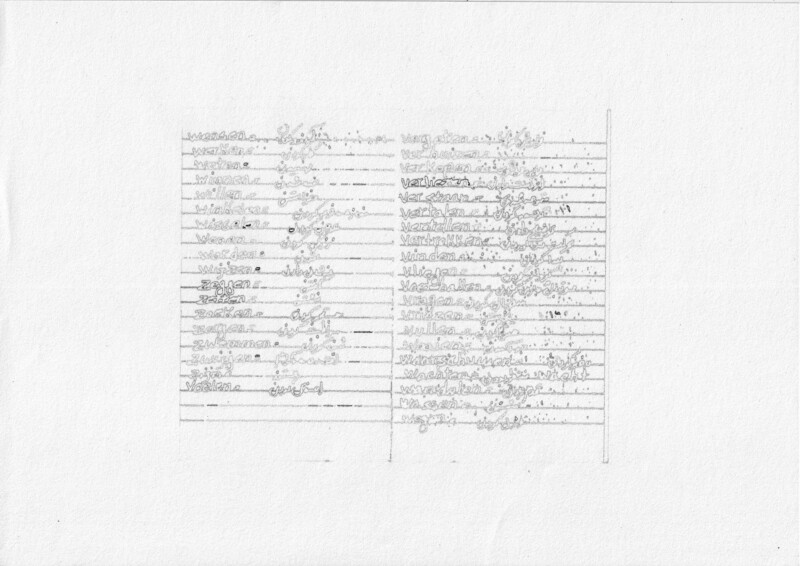 articleLees, kijk, luistereducationstudent jazz & pop Show us who you are, not what you do
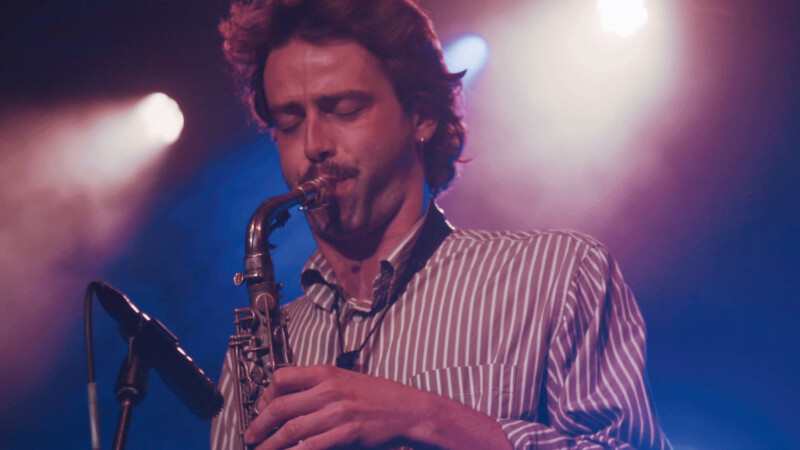 articleLees, kijk, luistereducationstudents interior design The parasitic pavilion, The inner landscape, The contemporary temple
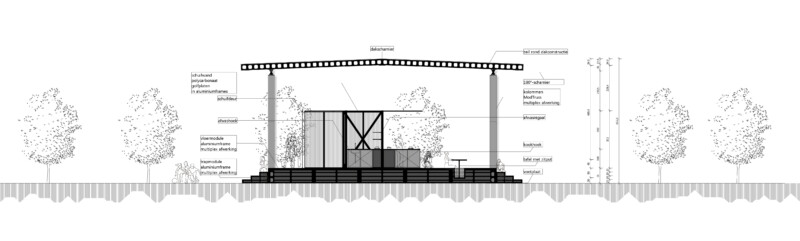 articleLees, kijk, luistereducationstudent classical music Two years in Messiaen’s World
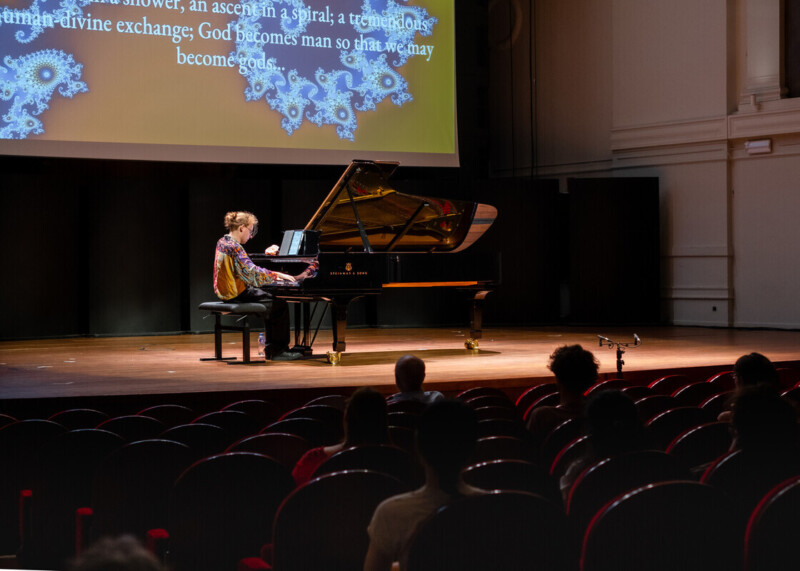 articleLees, kijk, luistereducationstudent graphic design Master Year
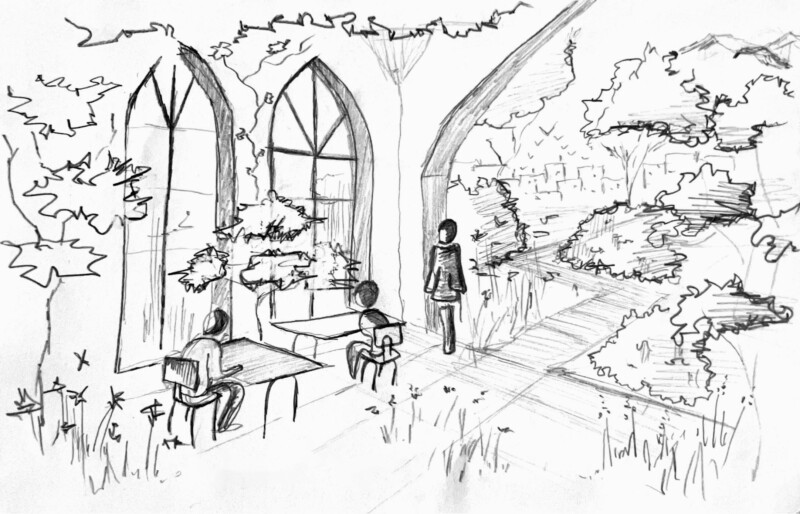
 articleLees, kijk, luistereducationstudents landscape development Could you sketch out your vision for Bijloke 2.0 in 2100?
 articleLees, kijk, luistereducationstudent jazz & pop Er was altijd veel muziek in huis
 articleLees, kijk, luistereducationstudent classical music I think music’s most important role is one of connection
 articleLees, kijk, luistereducationmaster instrumentenbouw 19th Century Banjos: S.S. Stewart and Horace Weston
 presentationLees, kijk, luistereducation