

Register and follow these steps
upcoming dates
31.10.26 – 20.12.26,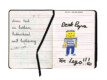 Stress Test, KIOSKexpoAgendaArtistic activities
What happens to an artistic practice when you become a parent? And what happens to an arts institution when an artist’s life disrupts its plans?
Stress Test reflects on how the birth of a child can affect both an artist and an institution. When an artist asked KIOSK to consider postponing his exhibition so he could care for his child, his request also became a stress test for KIOSK: how flexible can an institution be? What responsibility does it bear towards the people it works with?
KIOSK made room for his circumstances and chose to create something new in place of his exhibition. With the help of artists close to KIOSK and its network, a group exhibition took shape around fathers, fatherhood, fathering, and artistic practice. Works based on personal experiences and intimate stories explore care, the love and tension between father and child, and the desire to have or not to have children.
An open call for birth announcement cards designed by artist-fathers extended the invitation to contribute beyond KIOSK’s network. These cards bring together intimate and public moments: the arrival of a child, the announcement of a new life… and an artist becoming a father.
With works by
Ava Pudelek-Hoffman + Nicholas Hoffman, Chloë Delanghe, Danilo Zocatelli, Edouard Peeters-Wintein, Eva Maria Bouillon, Fabrice Schneider, Henry Andersen, Herman Van Ingelgem, Jacques Lizène, Julia Schouten, Laurens Mariën, Leen Voet, Marthe Merckx, Odette & Jasper Rigole, Paul Casaer, Sambasiva Rao Patchineelam & Vijai Maia Patchineelam, Trudo Engels, Vaast Colson, Vanya, Johan & Willem Vermeersch, Veronika Eberhart, Willy Van Ingelgem, and all the artists who contributed birth announcement cards
Louis Pasteurlaan 2
9000 Gent
Mon-Sun, 12:00-18:00
This project explores the tension between expectation and uncertainty, control and surrender. It shifts the familiar dynamics of the photo booth and raises the question of who takes the initiative, who decides when the moment has arrived, and who is in control of being looked at. The focus here is not so much on the photograph itself, but on everything that precedes it: the waiting, the hesitation and the anticipation of something that could happen at any moment.
You’ll find the Photobooth on the Bijloke campus, where it’s regularly moved to a new spot.
9000 Gent
Registration for the 2026 entrance examinations for students starting in the 2026–2027 academic year has now closed.
We will announce the new dates in early December 2026. At that point, you will also be able to register via our platform (step 2).
If you're curious about what the exam involves, read on. Please note that this information is subject to change until early December.
Have you completed your registration (step 2) and
submitted your preparatory dossier (step 3)?
If so, you are welcome to take part in the admission test.
when?
The admission test starts at 9:00 am on the first day of your chosen session.
You are expected to be available for all of the specified days.
Further details regarding the daily schedule will be provided at the start of the session.
where?
Campus Bijloke - Marissal
Louis Pasteurlaan 2, 9000 Ghent
deadlines
- session July:
- session August:
Each candidate puts together a preparatory dossier consisting of several parts (personal information, written motivation, film and portfolio). See below for technical details.
personal details
A curriculum vitae with passport photo, overview of past studies, artistic and other activities,... (in 1 .pdf document)
Submit the PDF document using the button below. Adapt your file name according to this scheme:
- lastname_firstname_data.pdf
written motivation
A written motivation for the choice of study and school (max. 500 words, 1 .pdf document).
Submit the PDF document using the button below. Adapt your file name according to this scheme:
- lastname_firstname_motivation.pdf
visual portfolio
A representative selection of personal work. The work in this portfolio should relate to the film programme: photographs, films, music, drawings, collages, etc. Autonomous artistic work and school-based commissions are possible, but group works made in school are not eligible. Texts, photos, scans of drawings/paintings, etc. are bundled in a pdf document and forwarded together with the rest of the preparatory dossier.
The film should be placed on Vimeo (where a 'Basic' account can be created free of charge). In the portfolio, you then place a link to these films on Vimeo.
Send the portfolio as a PDF document. Adapt the file name according to this scheme: lastname_firstname_portfolio.pdf
film
A self-made film of up to 3 minutes. The choice of subject, style, form and elaboration are free, but must show observation skills and authenticity. Please avoid video clips. School-based group works are not eligible.
Adapt your file name according to this scheme: lastname_firstname_film
Use common file formats (.mov, .mp4) and keep file size within limits.
The test starts with a written part. During the afternoon and the following days, you will be invited for some motivational interviews and a practical test.
written test and film review
The written test consists of three sections. The first is a list of words or proper nouns that the student must define as accurately as possible. This is followed by two text excerpts. The student summarizes the first one in their own words. The second serves as the basis for a short opinion piece. The goal is to allow the examination committee to form an impression of the candidate’s general knowledge and theoretical background, as well as to assess their language proficiency and ability to reason.
motivation interviews
During 3 motivation interviews, the candidate's motivation towards art education in general and the specific field of study in particular will be examined. The preparatory dossier forms the basis for the interview and questioning. It is important that the candidate can explain the elements in the dossier and clarify the study choice and expectations.
Interests, general and cultural knowledge, thinking skills, creative attitudes and understanding of image formation are probed. Important qualities here are: critical sense, commitment, drive, love of art and design, perseverance, self-discipline and sense of humour.
photo test
A photo assignment will be given on the spot. Bring your own, simple digital camera; a mobile phone with photo function will do.
Please note that locations and times are subject to change. Changes will be communicated on the spot.
On the last day of the session, there will be deliberations and proclamation including a feedback moment. During the proclamation, candidates will learn whether they are accepted or not.