

Register and follow these steps
upcoming dates
12.09.26 – 22.11.26, Veva Leye, Jelle Martens, KIOSKexpoAgendaArtistic activities
Drawing from seemingly endlessly proliferating word sequences—which arise from a single word through a simple rule and through association—Veva Leye creates montages that present the same words in completely different ways. Uncannily coagulating, these word images expand and contract in an accordion-like movement. A similar rhythm characterizes Jelle Martens’ (photo)graphic registrations that combine fragments, reproductions and trivial observations into layered prints and drawings. Every print layer, every drawing operates as a temporary frame bringing together images that only temporarily solidify, overlap, and fall apart again. Image and language tumble along, stumble upon. Letters form words form images reading looking.
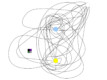 SPITS No.17: Quinten Struyven, SPITSexpoAgendaArtistic activities
"An insistent research into Adolph Pauli's educational and sentimental trajectory"
SPITS is an exhibition initiative of the drawing studio and is located under a neo-Gothic pointed arch in the entrance hall of the Pauli building. SPITS is a platform to exhibit the medium, with teachers and students working together to develop thematic presentations several times a year.
Registration for the 2026 entrance examinations for students starting in the 2026–2027 academic year has now closed.
We will announce the new dates in early December 2026. At that point, you will also be able to register via our platform (step 2).
If you're curious about what the exam involves, read on. Please note that this information is subject to change until early December.
Have you completed your registration (step 2)?
If so, you are welcome to take part in the admission test.
when?
The admission test starts at 9:00 am on the first day of your chosen session.
You are expected to be available for all of the specified days.
Further details regarding the daily schedule will be provided at the start of the session.
where?
Campus Bijloke - Kunsttoren
Offerlaan 5, 9000 Ghent
Each candidate puts together a preparatory file consisting of several parts (personal information, written motivation, portfolio and image file). This preparatory file is brought to the motivation interview.
The candidate takes their personal work from the file back home after the test. Candidates who have little or no artistic work can also participate in the test.
personal details
- Recent passport photograph
- A curriculum vitae listing past studies, artistic and other activities,...
written motivation
A written motivation regarding the choice of study and school (maximum 1 A4 sheet)
portfolio
The candidate puts together a folder of their own work, which allows the selection committee to get the broadest possible, yet representative, picture of your creative-imagery abilities: autonomous artistic work, school assignments or work made for third parties (drawings, photographs, sketches, painted studies, photographs of sculptures or spatial work, graphic work, texts, poems, music, computer prints, stage acts, performances or other creations,...).
visual file
The candidate compiles an image file of inspirational work by others. This means making a selection of reproductions of works of art, advertisements, printed matter; exhibition catalogues; monographs of artists, writers, designers, illustrators, filmmakers, musicians... ; magazines, literature, publications, campaigns,.... This can find its form in a file on A4, but equally it can be a collection of posters, books, flyers, DVDs,... that one brings along.
The written test consists of three sections. The first is a list of words or proper nouns that the student must define as accurately as possible. This is followed by two text excerpts. The student summarizes the first one in their own words. The second serves as the basis for a short opinion piece. The goal is to allow the examination committee to form an impression of the candidate’s general knowledge and theoretical background, as well as to assess their language proficiency and ability to reason.
During an individual interview, which will take place on campus, the candidate's motivation towards art education in general and the specific field of study in particular will be examined. The preparatory file and the practical test form the basis for this questioning. It is important that the candidate can explain the elements in the dossier and clarify the study choice and expectations.
Interests, general and cultural knowledge, thinking skills, creative attitudes and insight into image-making are probed. Important qualities here are: critical sense, involvement, drive, love of art and design, perseverance, self-discipline and sense of humour, ability to put things into perspective, etc.
The candidate should be able to critically explain their image file during the individual interview.
During the first day, the candidate must complete two practical tests. These tests test the candidate's creative and visual skills, which relate to the ability to create images based on observation; spatial insight, rendering of proportions, perspective, sense of composition, etc.; developing images of texts, being able to analyse and interpret literary texts, etc.; aspects of design.
The practical tests will be announced on the first day of the admission test session. Bring paint and drawing material.
At the end of day 1, this test will be submitted. The result will be discussed during the motivational interview.
Please note that locations and times are subject to change. Changes will be communicated on the spot.
On the last day of the session, there will be deliberation and proclamation including a feedback moment. The proclamation is done on campus.