

Register and follow these steps
upcoming dates
31.10.26 – 20.12.26,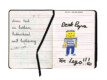 Stress Test, KIOSKexpoAgendaArtistic activities
What happens to an artistic practice when you become a parent? And what happens to an arts institution when an artist’s life disrupts its plans?
Stress Test reflects on how the birth of a child can affect both an artist and an institution. When an artist asked KIOSK to consider postponing his exhibition so he could care for his child, his request also became a stress test for KIOSK: how flexible can an institution be? What responsibility does it bear towards the people it works with?
KIOSK made room for his circumstances and chose to create something new in place of his exhibition. With the help of artists close to KIOSK and its network, a group exhibition took shape around fathers, fatherhood, fathering, and artistic practice. Works based on personal experiences and intimate stories explore care, the love and tension between father and child, and the desire to have or not to have children.
An open call for birth announcement cards designed by artist-fathers extended the invitation to contribute beyond KIOSK’s network. These cards bring together intimate and public moments: the arrival of a child, the announcement of a new life… and an artist becoming a father.
With works by
Ava Pudelek-Hoffman + Nicholas Hoffman, Chloë Delanghe, Danilo Zocatelli, Edouard Peeters-Wintein, Eva Maria Bouillon, Fabrice Schneider, Henry Andersen, Herman Van Ingelgem, Jacques Lizène, Julia Schouten, Laurens Mariën, Leen Voet, Marthe Merckx, Odette & Jasper Rigole, Paul Casaer, Sambasiva Rao Patchineelam & Vijai Maia Patchineelam, Trudo Engels, Vaast Colson, Vanya, Johan & Willem Vermeersch, Veronika Eberhart, Willy Van Ingelgem, and all the artists who contributed birth announcement cards
Louis Pasteurlaan 2
9000 Gent
Mon-Sun, 12:00-18:00
This project explores the tension between expectation and uncertainty, control and surrender. It shifts the familiar dynamics of the photo booth and raises the question of who takes the initiative, who decides when the moment has arrived, and who is in control of being looked at. The focus here is not so much on the photograph itself, but on everything that precedes it: the waiting, the hesitation and the anticipation of something that could happen at any moment.
You’ll find the Photobooth on the Bijloke campus, where it’s regularly moved to a new spot.
9000 Gent
Registration for the 2026 entrance examinations for students starting in the 2026–2027 academic year has now closed.
We will announce the new dates in early December 2026. At that point, you will also be able to register via our platform (step 2).
If you're curious about what the exam involves, read on. Please note that this information is subject to change until early December.
Have you completed your registration (step 2) and
submitted your preparatory dossier (step 3)?
If so, you are welcome to take part in the admission test.
There will be two sessions of the entrance test, but we would like as many people as possible to attend the July session.
when?
The admission test starts at 9:00 am on the first day of your chosen session.
You are expected to be available for all of the specified days.
Further details regarding the daily schedule will be provided at the start of the session.
where?
Campus Bijloke - Marissal
Louis Pasteurlaan 2, 9000 Ghent
deadlines
- session July:
- session August:
You will compile a preparatory dossier. The dossier contains your personal details and a written motivation. You submit this online in advance.
During the exam, you will bring portfolio with you to the interview and will not need to submit it digitally.
personal data
- recent passport photograph
- formal information about yourself
written motivation
Written motivation: why do you choose to study photography and KASK Photography in particular.
portfolio
You will bring your portfolio to the interview during the exam, so you do not need to submit it digitally.
Your portfolio requires some preparation: you will make a representative selection of images that illustrate your interest in art and photography in particular.
These can be your own images, but also sources of inspiration. Think about what we stand for as a KASK photography course. Candidates who have little or no artistic work can also take part in the test. You will bring back your personal work from the file after the test.
Please note! If you want to show something digitally or online, you must bring your own laptop.
The written test consists of three sections. The first is a list of words or proper nouns that the student must define as accurately as possible. This is followed by two text excerpts. The student summarizes the first one in their own words. The second serves as the basis for a short opinion piece. The goal is to allow the examination committee to form an impression of the candidate’s general knowledge and theoretical background, as well as to assess their language proficiency and ability to reason.
A written image analysis test in which students are presented with various photographic images. Specific and/or open-ended questions are asked.
Interests, general and cultural knowledge, thinking skills, creative attitudes and understanding of image making will be explored. Important qualities are: critical sense, commitment, drive, love of photography and art, perseverance, self-discipline and the ability to put things into perspective.
You must also be able to discuss your image file during the one-on-one interview.
Bring a working smartphone or digital camera. Make sure the battery is fully charged. You will be asked to take photographs at different times.
It is not important that the pictures are technically correct, but that they can form the basis of a conversation about imaging, photography and content expectations.
If you have little or no previous experience, you are welcome to take this test.
The timetable, what is expected and how to upload the images will be communicated on the first day of the entrance test.
Please note that locations and times are subject to change. Changes will be communicated on the spot.
On the last day of the session, there will be deliberations and proclamations.
The proclamation is done on campus, the results are not communicated by phone or mail. The candidates who are not accepted will be given the opportunity for a post-proclamation discussion.