Meditation session on Playfulness
Deze Meditation Session of Playfulness was deel van de Research Days 2026: PLAY. Tijdens twee meditatiesessies nodigt Geert Belpaeme je uit om de dagelijkse performance van een onbeweeglijke identiteit te laten varen. Onze identiteit is een positief geladen ‘niets’. In dat spanningsveld zijn we onbepaald en tegelijk vol mogelijkheden. In de beginnerssessie op donderdag wordt de basis gelegd voor een dieper begrip van speelsheid in ons bestaan. De sessie op vrijdag bouwt verder op die inzichten om het radicale potentieel van speelsheid in een ontwrichte wereld te exploreren.
Hieronder vind je een transcriptie van de Meditation Sessions.
FIRST MEDITATION – 19.03.26
I would like to invite you to take a comfortable position. You can lie down if you want to, if that feels the most comfortable position for you. You can even do this standing, if that feels right. But I enjoy doing this sitting down. And while you sit, or lie, or stand, you might want to lengthen your spine. Making it upright and alert without being stiff or forced. You can put both your hands with the palms up on top of you thighs, just below the knees, or you can put them in your lap on top of each other.
And when you have found a comfortable position, sitting, lying down, or standing, you can now carefully close your eyes and gradually focus your attention inside, towards yourself.
At the start of this meditation, I want to reassure you. I am not a real meditation coach. I don’t even have any experience what so ever guiding meditations. So, I don’t really know how to do this, but I am very good a playing that I know.
MUSIC Hiroshi Yoshimura – Water copy
I understand how to lower my voice a bit and slow down my speech, in order to softly invite you to trust me and to fully relax, to release the tension in your muscles and to focus on your breathing. Because that is how I imagine meditations start, from breathing and from relaxation.
So if you are ready, we can now together take a deep breath. In through the nose, out through the mouth. Breathe in and then as you open your mouth, relax your shoulders.
And gradually, through the breathing, you start nesting in your meditation. You don’t have to control your breathing, you don’t have to force you mind to be silent.
So, as I am now playing that I am guiding you in this meditation, you could play that you hear me. And for this as well you don’t really have to do anything, it just happens by itself. The vibrations do that for you, vibrations that are produced by my vocal cords and that bridge the space between you and me. My vibrations reach your eardrums, and that is why you can hear me.
FADE OUT Water Copy
You don’t even have to play that you hear me because you are already hearing me. So now you can play that you are listening to me and that you are following me, full of trust, knowing very well that I have no idea what I am actually doing, but I’m very good at playing that I know what I have to do.
END Water Copy
And maybe, while I’m saying all this, you might say to yourself: but I was already listening and I was already following. Well, then apparently you are feeling really playful today. And in your playful instinct you understand, just as I do, that in the end meditating really comes down to pretending to breathe in and then just pretending to breathe out and then you just start again. And dare to listen to that inner playful being that lives in your core, in your chest and in you belly, as a willing and open power within yourself, as obvious as breathing
MUSIC Ice Copy – Hiroshi Yoshimura
And these vibrations that reach your ear drums, which means you can now actively act as if you are listening to me, also reach your entire body. So now, I want you to, for a moment, take the time to notice that you have a body.
Take a moment to feel how your body feels, be aware of the sensation of your body. We are now going to aim our focus to every part of your body and we are slowly going to scan it. So first focus your attention on the top of your head. And while you breath in and out, feel the sensation on the top of you head. Breathe in and out from the top of your head, and gradually we are now going to shift our attention down, to you forehead, your eyes, your nose, your cheeks, your lips, you throat, your shoulders, your elbows and your palms and bring it down to your chest, your belly, your hips, your thighs, your knees, your calves and your toes. Good, take a deep breath in and out.
And while you are breathing in and breathing out, we could ask ourselves what is actually happening here as we do what we are doing now, playing together, acting as if we meditate.
There are those that would say that playing means that this is not real. That we are not really doing this. That this is not a real meditation. And yet, you hear my voice, don’t you, my voice that is quietly like a rippling brook finding its way from the source, my mouth, to the estuary in the see that is in between your ears. And for sure you are lying or sitting relaxed on the floor, totally relaxed, while your breathing softly moves your chest and you belly up and down on the rhythm of a gently rolling sea.
So what does it mean, then, that we are playing this?
That I am playing that I guide you and you, as you are doing, you play that you let yourselves be guided, that you hear my voice and that my voice leads you deeper and deeper, away from this external world to an inner world, a world that unfolds within you body, as a warm and sunny landscape. And take a moment to imagine that landscape, that landscape that unfolds from within.
MUSIC Dream – Hiroshi Yoshimura
Maybe it has hills, fields, rivers, forests… And try to see which colours this landscape has. And while you enjoy the colours and the warmth, I want you to slowly move towards the highest point in your landscape. And while you stand there, watching out over that landscape, that inner landscape that is you, you could ask yourself the question:
Who am I?
Who am I really?
And what does it matter if something is real or not-real?
There are those that would say: credibility!
Ah, credibility! The curse of every actor! Not only on stage. Also in our so called ‘real’ life so much of our energy goes towards the search for that credibility. In your job, in your function, in the relationship with your friends, loved ones, towards yourself… Everywhere you want to be credible and you know all to well how fragile that credibility is, how easily broken (through) or exposed.
And while you stand there on top of you mountain, or on your hill, on the highest point of your landscape that is you, I want you to try and recall a moment in which you were credible. It is not important with whom you were there or what happened, just try to remember that feeling of credibility, and while you feel that feeling, you tell yourself: I am nothing.
And i want to invite you to repeat this sentence in yourself while you stand there on top of you mountain: I am nothing.
And while you repeat that sentence in your mind, consider that being nothing does not have to be a bad thing at all. That that nothing maybe is not a void, but a fullness. The multiplicity that the philosopher Alain Badiou is speaking about. Not a nothing that points at something missing, but a nothing that breathes potential. A positively charged void, as Zizek would call it. An indeterminacy.
And while you keep repeating that sentence in your head, see if you can recall a moment where you were uncertain. It is not important with whom you were there or what happened, but really remember the feeling of being uncertain and say to yourself the following sentence: I will never be something.
And while you repeat this sentence, realize that uncertainty does not have to be a weakness, but could just as well be a force as also the philosopher Anna Tsing writes: “What if precarity, indeterminacy, and what we imagine as trivial are the center of the systematicity we seek?
Precarity is the condition of being vulnerable to others. Unpredictable encounters transform us; we are not in control, even of ourselves. Unable to rely on a stable structure of community, we are thrown into shifting assemblages, which remake us as well as our others. We can’t rely on the status quo; everything is in flux, including our ability to survive. Thinking through precarity changes social analysis. A precarious world is a world without teleology. Indeterminacy, the unplanned nature of time, is frightening, but thinking through precarity makes it evident that indeterminacy also makes life possible.”
And now see if you can recall in your mind a moment in which you were vulnerable. It is not important with whom you were on that moment or what happened, but really remember that feeling of being vulnerable and in say to yourself: I (also) cannot (even) want to be something.
And realise, while you repeat that sentence, that wanting to be something might actually mean you are limiting your true multiplicity. I would venture to say that what is real, is a standardized restriction of what is possible. Realness is standardized certainty. The restriction of the uncertainty that drives life. Playing is daring to dwell in that uncertainty. Playing is dealing with the doubt that I am not ‘I’, that time is not ‘time’ and mass is not ‘mass’. Playing is not something that only happens amongst children or on the theatre stage. Playing is essential to our being because we can never fully push these doubts and uncertainties away. Just as in physics, in Quantum Mechanics, uncertainty is the ultimate unground in which we have to found our existence, as if we constructed our world on moving foundations and as it were on running water, as Nietzsche wrote it.
END Dream
And now see if you can recall a moment where you were playful. It is again not important who was there or what happened, but remember that feeling of playfulness and mentally repeat the following sentences by Fernando Pessoa: I am nothing, I will never be something, I cannot even want to be something, but nevertheless I cherish all the dreams of the world.
MUSIC View From My Window – Hiroshi Yoshimura
And while you systematically, mentally repeat these sentences, try to see where you feel this in your body and follow that feeling. See if you can just take a minute longer to really sink into that feeling.
And while you are hanging around in that feeling, we can slowly start to prepare ourselves for the end of this meditation.
In a moment, as we will open our eyes, you will not be someone else, but maybe you will be a little less yourself.
In a moment, as we will again open our eyes, we will all be players.
In a moment, when we will open our eyes, when we will rise and start the day, we will play that we are at the research days in KASK. We won’t all play the same roll. Some of us will play to be artists, curators, artistic researcher, students, teachers? Some will play that they are full of trust, some will speak with a certain authority of conviction. Others will play to be a bit more silent, to listen in, to keep their thoughts to themselves. There are those who will play to be curators, communication managers, deans, … There are those that will play pessimistic visions of the future and others who will play to have naive ideas. There are those that will play that they know what artistic research actually is.
But don’t be fooled. Nobody here knows anything about anything. So let us be uncertain and vulnerable together. Let us allow the meetings of the coming days to touch us and change us. Let us be indetermined and by being that make life possible. Let us, in a field that relies so much on play, really try to be playful.
And I would like to end this meditation with a quote from a booklet I recently wrote, titled De speelse mens – which I might translate as ‘a playful being’.
“To play, you must act. Even more than an essential freedom, the practice of playing points to an essential responsibility. It is no coincidence that the word we use to designate ‘playing a character in a film or play’ essentially means ‘to do’. To act, to perform, to take action… all these words derive from the Latin ‘agere’, which, in addition to ‘acting’ or ‘doing something’, primarily means: ‘setting something in motion’. Playing is not only setting something (else) in motion, but above all setting ourselves in motion.”
When you’re ready, you can very gently start to open your eyes.
Tomorrow there is a second meditation session that will continue where left off today.

SECOND MEDITATION — 20.03.26
For those of you who weren’t here yesterday. Today we will continue to build upon the work that we did yesterday. But don’t worry, you should be able to follow. And if you do get lost along the way, don’t panic, stay with your breathing and trust in the fact that getting lost and not understanding is the true art of the artistic researcher.
At the start of this second and advanced meditation session I again would like to invite you to take a comfortable position. You can lie down if you want to, if that feels the most comfortable for you. You can even do this standing, if that feels right. But, as yesterday, I will do this sitting down. And while you sit, or lie, or stand, you might again want to lengthen your spine. Making it upright and alert without being stiff or forced. You can put both your hands with the palms up on top of your thighs, just below the knees, or you can put them in your lap on top of each other.
And when you have found a comfortable position, sitting, lying down, or standing, you can now carefully close your eyes and gradually focus your attention inside, towards yourself.
MUSIC andate – Ryuicki Sakamoto
I will be your guide again today. And as you might remember, at least for those who were able to join yesterday, I have no clue at all how this works. I am not a real meditation coach. I don’t have any diploma’s. I don’t even have any experience, except for yesterday, when together we acted as if we were doing a meditation and playfully managed to sink deeper and deeper into our inner landscape, to reach our inner highs, and, from that viewpoint, to unmistakably see and acknowledge the nothingness that grounds us, to embrace the uncertainty that might scare us but that enables life.
Today, as you gradually relax, as you release the tension in your muscles and focus on your breathing, we will play the same game. We will again act as if we share this meditative moment.
We will start again with our breath. By taking a deep breath. In through the nose, out through the mouth.
Yet, today we face a problem. Because how can we play what we already know? By acting out our meditation yesterday did we not make today’s playfulness impossible? Have we now become ‘real’ meditators? Have I become a ‘real’ meditation coach? Have you become a meditation junky?
Facing these questions I have to think of Richard Schechner who wrote: “Performances are human actions or events that have been constructed through a multi-stage process (…) Any given performance has a history—it is the result of processes of learning and transmission that have preceded (and may succeed) it. A performance is the second (or third or fourth...) presentation of a practiced act.”
Is this a performance? Are we performing instead of playing?
MUSIC Cumulonimbus – Pt. 2 – Max Richter
Take a moment to let that question materialize in your body. See if you can squeeze that question into a miniscule almost non-existent point, yet a very real point, a point as small as the universe before the big bang. A point that is nothing but potential.
And feel that point, that potent, yet unanswered question at the top of your head. Let it activate the top of your head. Feel that point, that question and feel how it’s power and potential gently heats up the top of your head. And when you feel the heat, let it slowly drop through your body, let it gently touch and warm your forehead, your eyes, your nose, your cheeks, your lips, you throat, your shoulders, your elbows and your palms and let it seep into your chest, your belly, your hips, your thighs, your knees, your calves and your toes.
And as you enjoy that warmth, that warmth that is now making your whole body glow, try to reconnect to the fact that this warmth is actually a question. That your body is glowing in anticipation, wanting to answer that question. As you lie down, or stand or sit in this space, in this body, sharing this space with other bodies, what are you doing? Are you meditating? Are you performing a meditation? Are you playing that you meditate?
We could retort to theory to solve this issue. That might be what the artistic researcher in you would feel comfortable doing.
But as with everything in meditation, I assume, we will have to look for the answer somewhere in our body. So just take a moment to enjoy the fact that you have a body and that having a body is in fact a very strange thing. What does it mean to ‘have’ your body. Your body that is not a thing. Your body that is also not one thing. Your body that is many bodies. Your bodies that are many overlapping phenomena, that need to shape and perform themselves, that materialize in as many ambiguous and overlapping social, cultural, natural and political realities.
Within sociology and cultural studies, there is a comprehensive theoretical framework which suggests that we ‘perform’ our existence. Or, to put it in another way, that our existence is ‘performative’. Our social and cultural lives and identities are shaped by regulatory, performative practices.
And it goes a lot further than just identities. Through performing, we perpetuate all the objects that make up our world, both material and immaterial objects, and everything in between. We perform the tree-ness of a tree through the way we climb it, pick its fruit or fell it. We perform the god-ness of the gods through the way we worship or revile them; through the wars we wage in their name; through the people we condemn for their sake... everything that exists, is a performance.
But playing is not performing. Play revolves around the performativity we described, but it indicates the opposite dynamic, moving away from the stability of objects. Play pushes the boundaries. It seeks meaning where, according to the norm, only meaninglessness is to be found. Play tends towards disruption, towards seeking out glitches in the systems. Play is the disruption of what, from a performative perspective, possesses a precarious stability.
So, let’s see if we can really allow some playfulness in this meditation. Let us take a moment to destabilize that very vessel we perform ourselves in. Let us try to playfully rip apart the uniform prison of our so called human body.
MUSIC Healing is a miracle – Julianna Barwick
So let us take this moment to materialize our body here and now in its fluid multiplicity. As the body that lives biologically, the body that circulates blood, that hosts colonies of bacteria and viruses, the body that eats and digests, the body that distinguishes itself from what is not the body, the body that creates an ‘in’ and an ‘out’, the body that hosts feelings, thoughts, who knows even a soul, who knows where, who knows how, the body that after this meditation will again meet and greet other bodies, the body that shares language and gestures, the body that happens mostly with and within the other body, the body that grabs and manipulates spaces and objects, the body that allows buildings to be buildings, doors to be doors, chairs to be chairs, the body that touches and caresses, the body that wants to be an image of a body, the body that wants to hide all the other bodies… Let all those bodies live simultaneously in you in this moment. Let all these places where you exist, happen at the same time, let that chaos be you.
And now breathe in that chaos. Breathe and live and become that breath, become first and foremost that body that breathes. The body that shares and circulates air with other bodies. Let us be that space of air passing through. Let us be that passing through. Let us perform that reality.
Let us once again performatively breath in and performatively breath out. Performing your breath, performing a person breathing, needs nothing more than to do the breathing. To slowly let the air seep in, and gently let it slip out again. And see if this is even something you are doing or if this is something you could perceive as being done to you. Who is acting here? Who is acting who? Who is making who move? Is it you moving the air? Or the air moving you? What if today, for the entire day, as a playful act, we decide on the second. We perform a consistent reality in which we are being moved by the air we breathe.
And let that air bring you back to your inner landscape. That colorful landscape we visited yesterday. Let that air, your breath, as you might have possessively called it in your previous life, as if you owned any of it, let that air be a gentle breeze that passes through your body, that again is not a thing you own. Let your body be a place in the world where you linger. Let yourself become nothing more than the air that moves through that place, through that landscape, air that touches the surfaces of your body, that notices its pains and desires, that moves with its impulses, that trembles with its fears and ecstatic joys.
And as we arrive at this effervescent state, almost disappearing within ourselves, take a moment to remember Pessoa’s words we encountered yesterday: I am nothing, I will never be something, I cannot even want to be something, but nevertheless I cherish all the dreams of the world.
And take a moment to really feel and appreciate that nothingness, which is not a nothingness that you can find somewhere at the beginning or end of something, it is a nothingness that lives in the midst of you. That is you. And that might be a scary thought.
I am nothing.
So scary it might make you question: Am I actually willing to play?
MUSIC BWV 614 – Johann Sebastian Bach, Ryuichi Sakamoto
And I want you to seriously consider that question. In your life, knowing that playing means radically embracing and allowing uncertainty, am I really willing to play? Isn’t it more comfortable to stick to performing the certainties we live by with and for each other. Isn’t it more comfortable to have only one body and not have to be many.
That might be a choice, for you.
But know that playing is not always a choice. Children don’t choose to play. They play because they do not have the certainty of our actions. Similarly, many people do not have access to many certainties you might take for granted. They have to play where they are not allowed to perform.
During a panel discussion yesterday, our college Bauke Lievens mentioned a beautiful distinction between ‘as if’ and ‘what if’. Some of you might be in a privileged position, as for sure I am, in which there are many ‘as if’s’ I can easily perform. I can easily act as if I am a teacher, I could easily pass for being a lawyer, or a doctor, people trust me to be a father, a friend, I easily get away with being an intelligent person, a knowledgeable person, a trustworthy person, a gentle person… people will grant me these roles. You even trusted me to be your meditation coach while I have repeatedly pointed out that I have no clue what I am doing. But there are many people that do not have as many ‘as if’s’ they are allowed or granted to perform. And in the absence of the ‘as if’, the ‘what if’ emerges. A speculative, playful position that does not strive for normative performances, but dares to provoke yet unscripted relations and realities.
MUSIC andata – Ryuicki Sakamoto
This is the end of our meditation today. If you feel like it, you can still linger a bit in that airy and undefined space you are at, or is it even a space, in that state of being breath, of softly touching upon surfaces, ideas, questions, of carrying them with you, passing them through. Stay there for as long as you want. And if you are ready, you can open your eyes.
 Reflecting NightonderzoekspresentatieAgendaOnderzoek
Hoe maken we van licht een volwaardige en gelijkwaardige betekenisgever binnen een hedendaagse dramaturgie? Reflecting Light is een onderzoeksproject van verschillende lichtontwerpers die letterlijk de spots richten op het gebruik van licht in de podiumkunsten. Met de steun van KASK & Conservatorium en kunstencentrum BUDA geven ze al vier jaar lang vorm aan een discours over lichtontwerp, en trachten ze deze kennis – formeel en informeel – te delen, onder andere via fanzines en residenties.
Het project groepeert lichtontwerpers Emese Csornai, Ezra Veldhuis, Henri Emmanuel Doublier, Jan Fedinger, Jan Maertens en Tomi Humalisto - en werkte samen met Bruno Pocheron, Estelle Gautier, Ingunn Fjellang Sæther, Leticia Skrycky, Maureen Beguin, Meri Ekola, Minna Tiikkainen, Pernille Plantener Holst en Materia Leve.
Als slot van dit deel van het traject organiseert Reflecting Light in de duistere winter twee nachten met lezingen, presentaties en installaties over licht en lichtontwerp.
Reflecting Night — Kortrijk
Een feest vermomd als een programma met lichtinstallaties door Emese Csornai, Ezra Veldhuis, Henri Emmanuel Doublier, Leticia Skrycky, Lucas Van Haesbroeck & Minna Tiikkainen, lezingen, de performance Las Lámparas door Leticia Skrycky, muziek, eten & drinken en Kampvuur met Bosse Provoost en Ezra Veldhuis.
Las Lámparas, een performance van Leticia Skrycky, is een elektrische choreografie waarin geluid het licht beweegt en licht op zijn beurt geluid maakt, waardoor de hele omgeving en al je zintuigen worden ingeschakeld. Spots worden elektrische vreugdevuren, die een oeroude staat van observatie activeren, zoals naar een vuur staren. Las Lámparas onthult zichzelf als een plek om te blijven én om los te laten.
Kapucijnenstraat 10
8500 Kortrijk
 Reflecting Light, KunstenbibliotheekonderzoekspresentatieAgendaArtistieke werkingOnderzoek
Hoe maken we van licht een volwaardige en gelijkwaardige betekenisgever binnen een hedendaagse dramaturgie? Reflecting Light is een onderzoeksproject van verschillende lichtontwerpers die letterlijk de spots richten op het gebruik van licht in de podiumkunsten. Met de steun van KASK & Conservatorium en kunstencentrum BUDA geven ze al vier jaar lang vorm aan een discours over lichtontwerp, en trachten ze deze kennis – formeel en informeel – te delen, onder andere via fanzines en residenties.
Het project groepeert lichtontwerpers Emese Csornai, Ezra Veldhuis, Henri Emmanuel Doublier, Jan Fedinger, Jan Maertens en Tomi Humalisto - en werkte samen met Bruno Pocheron, Estelle Gautier, Ingunn Fjellang Sæther, Leticia Skrycky, Maureen Beguin, Meri Ekola, Minna Tiikkainen, Pernille Plantener Holst en Materia Leve.
Als slot van dit deel van het traject organiseert Reflecting Light in de duistere winter twee nachten met lezingen, presentaties en installaties over licht en lichtontwerp.
Reflecting Light, Kunstenbibliotheek — Gent
kunstenaars halen topics en vragen uit de verzamelde Reflecting Light-fanzines - in een programma met (collectieve) lezingen, discussie, performatieve interventies, presentatie van een nieuw platform en installaties - met Matéria Leve, Judith Dhondt, Amelia Malfait Lakhtara en de lichtontwerpers van Reflecting Light.
Geert Belpaeme is als artistiek onderzoeker verbonden aan KASK & Conservatorium, de school of arts van HOGENT en Howest. Het onderzoeksproject Reflecting Light werd gefinancierd door het Onderzoeksfonds Kunsten van HOGENT.
 Design X Play, Design DialogueslezingAgendaArtistieke werking
Theo De Meyer (BE), gemodereerd door Geert Belpaeme (BE)
Kan de aandacht voor ‘spel’ in design en architectuur onze beleving van objecten en ruimtes veranderen? In deze Design Dialogue nodigt de Gentse architect Theo De Meyer, je uit om mee te denken over het potentieel van spel in architectuur en vormgeving. Onder de noemer Stand van Zaken – vertaald als State of Play – verkent hij samen met Stefanie Everaert de rol van spel in het ontwerpproces. Ze onderzoeken hoe spel vorm, functie en betekenis op een unieke manier samenbrengt. Hun benadering gaat verder dan puur plezier; het spelelement stimuleert creativiteit en maakt design zowel toegankelijk als betekenisvol.Tijdens zijn lezing deelt Theo De Meyer zijn visie op de kruisbestuiving tussen spel en ontwerp. Hoe beïnvloedt ‘spel’ de interactie tussen mensen en hun omgeving? Hoe kan het ontwerpers inspireren om buiten conventies te denken? Door zijn expertise en praktijkervaring werpt De Meyer licht op hoe een dergelijke benadering niet alleen tot innovatieve oplossingen leidt, maar ook bijdraagt aan het creëren van ruimtes en objecten die resoneren met een breed publiek. Met het spelelement als uitgangspunt worden niet alleen creatieve grenzen verlegd, maar ontstaat ook een brug tussen functionaliteit, esthetiek en menselijke beleving. Theo De Meyer gaat tijdens deze lezing ook in gesprek met artistiek onderzoeker en KASK & Conservatorium-docent Geert Belpaeme die de praktijk van de toneelspeler gebruikt als uitgangspunt voor een bredere verkenning van het spelelement en betekenisvorming in ons bestaan.
Sprekers
Theo De Meyer is een architect die woont en werkt in Gent (BE). De Meyer beweegt zich tussen architectuur, design en de kunsten, vaak in projecten die de verschillende disciplines samenbrengen. Hij speelt met context en schaal, interpreteert en transformeert, waardoor vanuit het bouwen nieuwe werelden ontstaan.
De Meyer is naast architect ook docent. Samenwerking speelt een belangrijke rol in zijn praktijk, over de grenzen van disciplines heen. Zo vormt hij met Stefanie Everaert -doorzon interieur architecten- de kern van het modulaire collectief Stand Van Zaken: bedenkers van meubelen en architectuur door samenwerkingen met specialisten in diverse vakgebieden. Stand Van Zaken ondersteunt het creëren en ontwikkelen van objecten, gebouwen en ideeën vanuit een gedeeld enthousiasme
Geert Belpaeme (BE) is theatermaker en speler. Hij studeerde in 2010 af aan de opleiding drama van KASK & Conservatorium waar hij sindsdien ook doceert en onderzoek doet. In zijn werk focust hij zich op de kracht en relevantie van clownerie als eigentijdse praktijk. Zijn artistieke taal combineert speelsheid met filosofische strengheid in voorstellingen die de overheersende narratieven van onze tijd willen uitdagen. Hij heeft recentelijk ook het essay De Speelse Mens geschreven, dat een filosofische verkenning van speelsheid in ons bestaan is.
Design Dialogues
Design Dialogues is een gecureerde lezingenreeks georganiseerd door het design departement van KASK & Conservatorium en Design Museum Gent. Eigenzinnige stemmen uit het brede ontwerpveld worden uitgenodigd om te reflecteren over de rol, impact en toekomst van design in een veranderende wereld. Elke lezing is een kritische dialoog rond een thema en wordt afgesloten met een open discussie tussen de spreker en het publiek. Onze missie: engagerende perspectieven aanreiken die designstudenten en -enthousiastelingen in staat stellen de uitdagingen van vandaag en morgen aan te gaan.
i.s.m. Design Museum Gent
Cloquet
Louis Pasteurlaan 2
9000 Gent
 Boekvoorstelling Geert BelpaemeonderzoekspresentatieAgendaOnderzoek
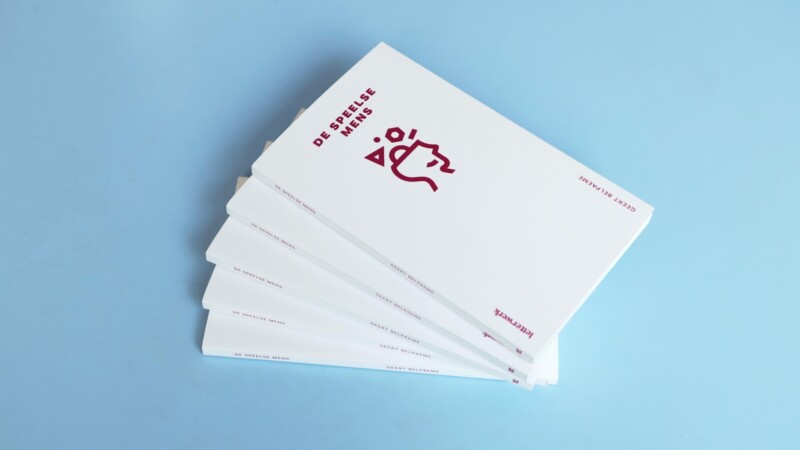
De Speelse Mens van artistiek onderzoeker Geert Belpaeme onderzoekt de praktijk van de toneelspeler als uitgangspunt voor een bredere verkenning van speelsheid en betekenisvorming in ons bestaan. Dit boekje is vanaf 16 september beschikbaar in boekhandels in Vlaanderen en Nederland en op de website van Letterwerk.
Tijdens de boekvoorstelling zullen docent Jan Steen, oud-student Marie Schraepen en schrijver, theater- en filmmaker Pieter De Buysser vanuit hun perspectieven reageren op de tekst.
De boekpresentatie is gratis. Een plekje reserveren mag en kan door een mailtje te sturen naar boekhandel@limerick.be.
Geert Belpaeme is als artistiek onderzoeker verbonden aan KASK & Conservatorium, de school of arts van HOGENT en Howest. Het onderzoeksproject Towards a New Materialism werd gefinancierd door het Onderzoeksfonds Kunsten van HOGENT.