
19.02.26 – 02.03.26, #189 Lâle Lootens, Washing The Soul
In een ademende, veranderlijke ruimte raakt Washing The Soul aan een innerlijke verschuiving, een beweging van loslaten en terugkeren. In die omwenteling wordt het zelf zachter, ontvankelijk voor wat het overstijgt. Wat hier resoneert, is een stille toenadering tot het onnoembare.
Louis Pasteurlaan 2
9000 Gent
Mon-Thu: 08:00 – 22:00
Fri: 08:00 – 18:00
Sat-Sun: 12:00 – 18:00
 presentationLees, kijk, luistereducationcurated by curatorial studies Crying could be a solvent
 articleLees, kijk, luistereducationartistic activitiescurated by curatorial studies 24 Hour Swan Lake
 articleLees, kijk, luistereducationartistic activitiesresidenten Jumping Fences
 presentationLees, kijk, luisterartistic activitiesresident Jumping Fences
 presentationLees, kijk, luisterartistic activitiesstudents fine arts loose ends: meeting, meandering, wandering
 articleLees, kijk, luistereducationstudenten grafisch ontwerp To un-fold
 presentationLees, kijk, luistereducationartistic activities Inside Conversations
 articleLees, kijk, luistereducationartistic activities MAP#127: Emma Onghena & Kas Wellens, Blikveld
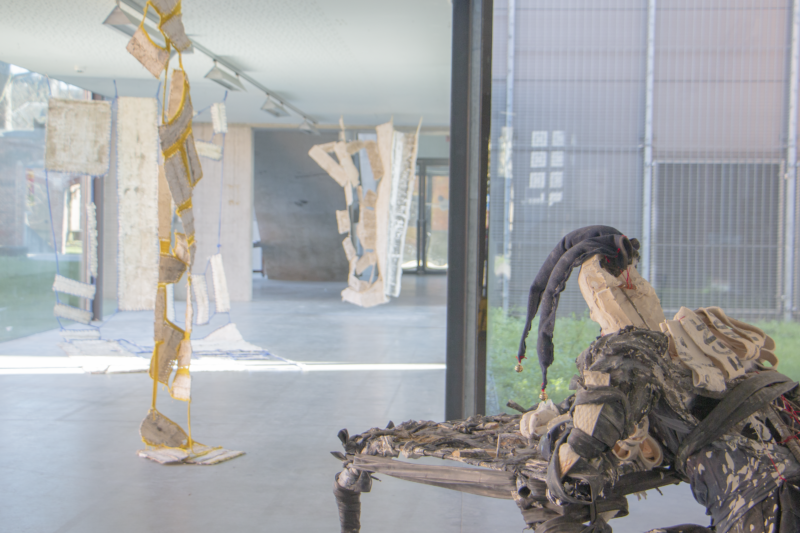 articleLees, kijk, luistereducationartistic activities MAP#128: Anna Schlooz & Paula Vicente, Intra-action
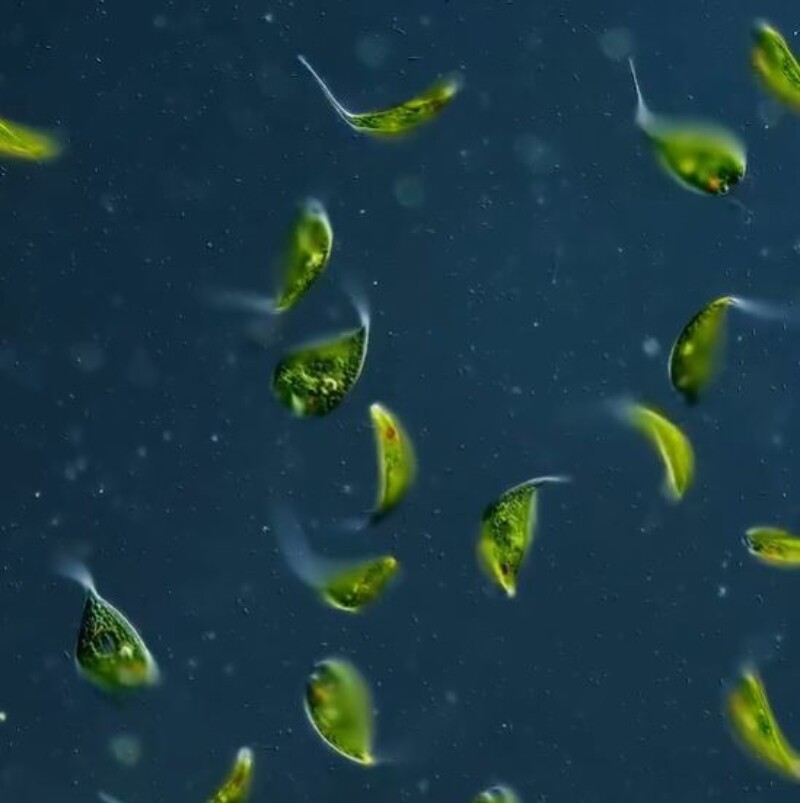 articleLees, kijk, luistereducationartistic activities MAP#130: Teodora Oita & Kei Sendak, I cannot translate, I cannot send either
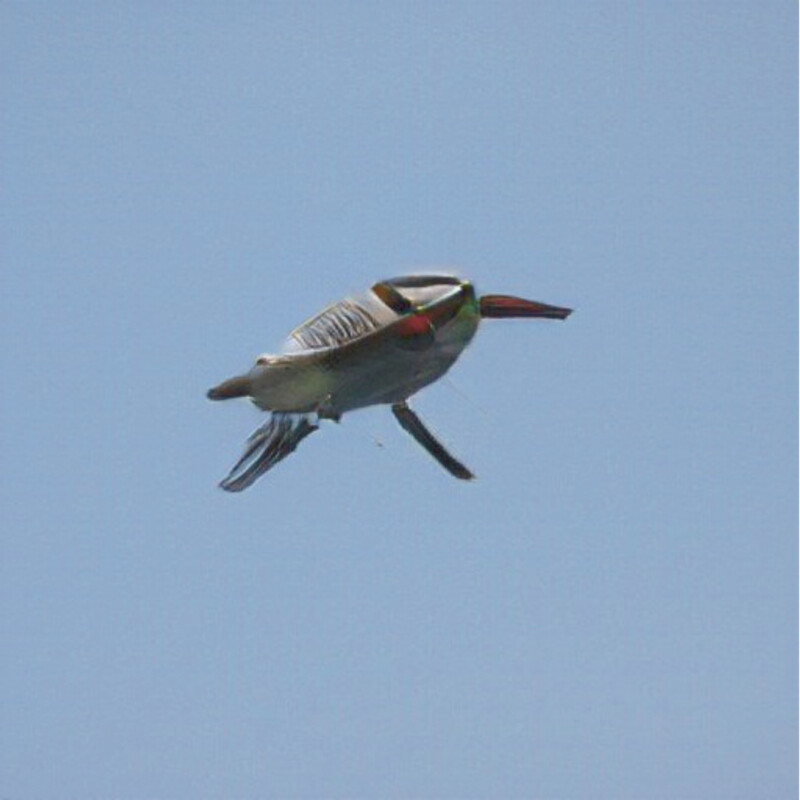 articleLees, kijk, luistereducationartistic activities MAP#134: George Chinnery & Reza Yavari
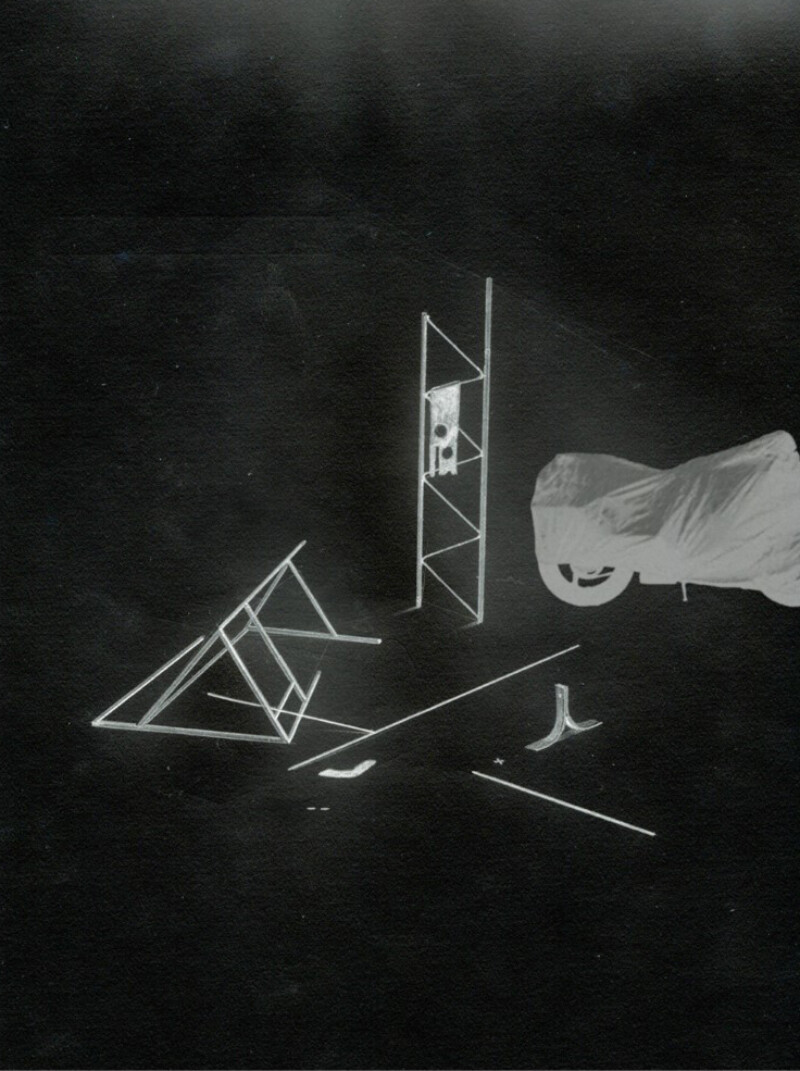 articleLees, kijk, luistereducationartistic activities
 #197 Matts Nauwelaers, Masterprojecten (MAP)expoAgendaArtistic activities
‘Fabricate Nature’ is an exploration of the way in which we, as human beings, relate to a natural world that is becoming increasingly distorted, yet on which we have simultaneously come to depend to a great extent. This alienation is visible everywhere. The forests we walk through are often man-made and consist of monocultures that take their toll on flora and fauna. The food on shop shelves contains ingredients whose names we can barely read or understand. The landscape around us, too, is increasingly defined by a mechanical, man-made environment. It is precisely this alienation that Matts Nauwelaers seeks to portray in his exhibition. ‘Fabricate Nature’ explores the boundary between the natural and the man-made, and asks how we relate today to a natural world that is increasingly being shaped, adapted and replaced by our own hands.
Marissal
Louis Pasteurlaan 2
9000 Gent
Mon-Thu: 08:00 – 22:00
Fri: 08:00 – 18:00
Sat-Sun: 12:00 – 18:00
 THE CELLAR (and our faces, my heart, brief as photos), Het PaviljoenexpoAgendaArtistic activities
In The Cellar (and our faces, my heart, brief as photos), Duccio Viani transforms Het Paviljoen into a domestic cellar brought to the surface: a space of accumulation filled with photographs, letters, postcards and other traces of individual and family histories.
Starting from his own family archive, Viani expanded his research into family cellars and their contents, exploring what he describes as an ecology of the self. As the apparent order of the archive begins to collapse, photographs and documents are exposed to humidity, decay and transformation. What was preserved as evidence of individual lives gradually loses its structure and becomes matter.
The installation is extended by Compost, a collaborative sound piece by Alex Celis and Duccio Viani. Moving between descent and ascent, water and vegetation, decomposition and renewal, the work imagines the cellar as part of a larger cycle in which memories, images, bodies and environments continually change form.
Through The Cellar and Compost, Viani and Celis immerse us in this cycle of accumulation, decay and transformation, asking what remains of the things we preserve—and what might emerge when we allow them to decay.
Duccio Viani
Duccio Viani is a visual artist based between Brussels and Florence. With a background in academia, linguistics and literature, his practice spans painting, mixed media and photography. Working primarily with photographs and paper, he explores the passage of time, material decay and the impermanence of images and objects. Rather than treating photography as a means of preservation, Viani approaches photographic prints as material to be manipulated, degraded, transformed and recycled.
Alex Celis
Alex Celis is a Chilean researcher, curator and interdisciplinary creator with a background in philosophy. Working across writing, documentary film, sound and visual media, he combines theoretical inquiry with artistic experimentation. His current research centres on curating violence and curating decay, exploring how encounters with images and materials can disrupt perception and provoke critical reflection.
Curated by Houda Ben Azzouz
Houda Ben Azzouz is a Brussels-based artist and researcher working across visual and curatorial practices. With a background in journalism, information design, cultural and curatorial studies, her work examines how visual, symbolic, and spatial forms shape narratives and meaning. Working across visual, spatial, and written forms, she explores the often-unspoken frameworks that influence how we see, understand, and relate to the world around us, with particular attention to what becomes visible, accessible, and valued within cultural contexts.
Louis Pasteurlaan 2
9000 Gent
finissage 31.10.26, 16:00–19:00
 #196 Mo Paeleman, Masterprojecten (MAP)expoAgendaArtistic activities
Beste Jack,
We kennen elkaar niet. Dit is een uitnodiging. Een instructieboekje. Zo een die je tegenkomt bij je nieuwe aangekochte monopolydoos. Iets wat je niet opent omdat je allang de spelregels, of je eigen versie kent. Beste Jack, ik vraag: wil jij met mij dit spel spelen?
Het spel van het onwetende, van vrijheid en van ontdekking.
Ik speel niet graag alleen. Lees jij de instructies?
Dus Jack, wat is spel voor jou? Speel jij wel volgens de spelregels? Of ga je mee met mij de spelregels overtreden. Dan kunnen we op het einde samen onze onverdiende overwinning vieren. Je moet wel weten, wie graag de regels breekt, botst natuurlijk wel op muren, want valspelers worden uiteindelijk altijd uitgesloten.
Groetjes
Marissal
Louis Pasteurlaan 2
9000 Gent
Mon-Thu: 08:00 – 22:00
Fri: 08:00 – 18:00
Sat-Sun: 12:00 – 18:00
 Cuntish Magazine, Het PaviljoenexpoAgendaArtistic activities
Launch of the first official issue of the post porn magazine, CUNTISH MAGAZINE
Cuntish Magazine is a sexual and political publication, edited and designed by master student Inès De Laender.
Cuntish Magazine is part of a research into the wide movement of post-pornography. Instead of censoring sexual imagery, it could be reclaimed and reimagined — forming a political stance on the body, sex(uality), gender and image, resisting normative representations. It aims for another way of producing pleasure through looking, creating a counteraction to mainstream internet-porn culture.
In collaboration with experimental publisher copyshop— and bookstore Out of Stock
 #195 Kyra Voordeckers, Masterprojecten (MAP)expoAgendaArtistic activities
Curated by Nora Franco
A scenography of memories
This place refers to a space beyond itself
A space that no longer exists as it once did
This is how I remember it
At least, I think it is
This is a desperate attempt to hold on
Onto something temporary
keep writing
keep drawing
And above all, to keep dreaming
Of how everything once looked
Until I can no longer distinguish
What is still real
And what I have imagined
But does that still matter?
A memory is temporary. They fade, they deform and eventually, they disappear. We cannot perceive or recall time as merely a physical dimension, but only through its traces, places, images, and events.
We remember through space, especially through the intimacy of the house. To remember is to dream; to dream is to create memory. In trying to translate this, we encounter limits. Walls, details, and sharpness cannot contain the multidimensionality of memory. Incompleteness and fragmentation hold a suggestive, emotional power. They force us toward memory and imagination. Shadows, as reductions, leave space to complete what is missing.
Within this, I question textile as a material for scenography. Rather than filling space, I explore how it can expand through shadow, transparency, and reflection, existing beyond its physical form.
As a costly and temporary medium, textile calls for adaptability rather than fixed, site-specific design. Atmosphere emerges not from covering a space, but from engaging with it, working in relation to what is already there.
In this project, scenography is simply a space that refers to a place outside itself. It does so without imitating it, without creating an exact copy. The opportunity to fantasize is stronger than the realistic image.
Marissal
Louis Pasteurlaan 2
9000 Gent
Mon-Thu: 08:00 – 22:00
Fri: 08:00 – 18:00
Sat-Sun: 12:00 – 18:00
 #194 Louis Locus, Jonas Van Geel, Masterprojecten (MAP)expoAgendaArtistic activities
Marissal
Louis Pasteurlaan 2
9000 Gent
Mon-Thu: 08:00 – 22:00
Fri: 08:00 – 18:00
Sat-Sun: 12:00 – 18:00
 #193 Margaux De Pauw, Charlotte Bracke, Masterprojecten (MAP)expoAgendaArtistic activities
RANDVOORWAARDE is a collaboration between Margaux De Pauw and Charlotte Bracke.
Together, they explore the role of fire extinguishers within an exhibition space and how they can relate to paintings without being perceived as a distraction. Rather than ignoring the fire extinguisher, Charlotte aims to draw attention to it. We are all familiar with the accompanying pictograms, but they often disappear from view until danger threatens.
In this exhibition, they bring the fire extinguisher, pictogram and painting together. What is normally ignored becomes a playful interaction here. For perhaps the fire extinguisher is the most successful object in the art world: it hangs in every museum.
In Margaux’s paintings, spatiality plays a central role. The works function as tools for spatial thinking: they create a field in which depth is simultaneously suggested and counteracted. It is a process of constant reformulation. It is precisely in this that Margaux and Charlotte find common ground: in reformulating reality, in seeking depth in places where it does not seem to be found at first glance.Marissal
Louis Pasteurlaan 2
9000 Gent
Mon-Thu: 08:00 – 22:00
Fri: 08:00 – 18:00
Sat-Sun: 12:00 – 18:00
 #192 Rosa Lut, Masterprojecten (MAP)expoAgendaArtistic activities
‘Have you ever heard a nightingale scream?’, tells the story of Philomela, one of the many women in Greek mythology whose voice has been silenced. Through audio works, Anne Rosa Lut explores how women, just like songbirds, have altered their voice in order to be heard within a patriarchal society filled with noise.
Thu: 09:00-20:00
Fri: 09:00-16:00
 #191 Lotte Vanpuyvelde, Riet Van Lysebettens, Masterprojecten (MAP)expoAgendaArtistic activities
Frilly Blouse Syndrome takes its cue from Linda Nochlin’s essay Why Have There Been No Great Women Artists? (1971), and examines the representation and visibility of women within art history.
Taking Rosa Bonheur as a starting point, we encounter a 19th-century female artist who did not so much find her place as take it — and then simply stayed there.
Marissal
Louis Pasteurlaan 2
9000 Gent
Mon-Thu: 08:00 – 22:00
Fri: 08:00 – 18:00
Sat-Sun: 12:00 – 18:00
Marissal
Louis Pasteurlaan 2
9000 Gent
Fri: 08:00 – 18:00
Sat-Sun: 12:00 – 18:00
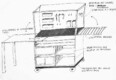 KopieKar printing workshop, Het PaviljoenAgendaArtistic activities
On February 11, starting at 20:00, we will celebrate the construction and launch of the KopieKar in Het Paviljoen!
That same day, we cordially invite everyone to our first print workshop, from 15:00 to 18:00. Everyone is welcome: to print, to try out the tools, or just to come and watch.
Participants are encouraged to bring their own anti-tools: unconventional tools (nothing is too strange!) that we can use to print and experiment together.
The results of this first meeting will be exhibited and celebrated in the evening (with free drinks!).
 Hana Hassanzadeh Kiani, Karin De Vos, Lotte Baelen, Het PaviljoenAgendaArtistic activities
The Kopiekar is a mobile meeting place and workshop where exchange is stimulated through alternative printing techniques. The cart is a small printing studio: a portable collection of tools and materials. Its mobile nature creates an unpredictable dialogue with the immediate environment.
The focus is on collective creation and learning around so-called anti-tools: unpredictable, playful and unconventional tools that invite experimentation rather than efficiency. These tools influence not only the creative process, but also the content and form of the resulting printed matter.
The concept of the Kopiekar is rooted in the idea of commonism, where joint management and shared use of resources are central. This principle is reflected in the way the collection is structured. Tools and materials from personal collections are loaned out and thus made temporarily available to a wider audience. These sustainable resources form the core of the ever-changing collection. Non-sustainable materials, such as paper and ink, are replenished through a system of free contributions.
The collection is activated during gatherings: meetings in which makers are invited to bring an anti-tool, introduce it and share their working methods. Participants then explore this tool collectively by experimenting with it and making prints together. The outcome of each gathering is influenced by three factors: the tool, the chosen theme and the location of the KopieKar. Each gathering results in a series of jointly (re)produced prints.
In addition to the gatherings, the Kopiekar organises open studio days. During these walk-in moments, the workshop is accessible to anyone who wants to use the printing techniques available. In this way, the Kopiekar becomes a mobile hub that opens up resources and knowledge to people who do not have access to them themselves. Outside these fixed times, the Kopiekar can also be used on request for collaborations and projects. Each (anti-)tool will be included in an inventory so that people know which materials are available at any given time. For accessible use, all tools will be accompanied by a logbook in which previous applications and material composition are noted.
In this way, the Kopiekar aims to be a place of exchange between makers, tools and knowledge. Through encounters, shared ownership and collective experimentation, the Kopiekar contributes to the democratisation of printing techniques and the revaluation of making as a collaborative process.
Louis Pasteurlaan 2
9000 Gent