

De staartpen van de vuurvogel
On birds, rituals and mourning
Things are not going well for our birds. While new research suggests they are far more complex than we think and possess a form of consciousness, species diversity is going steeply downhill.
De staartpen van de vuurvogel is a lament and a pamphlet against that decline, but also an ode to the splendour of birds, from the humble skylark to the somptuous honey buzzard. For the world would look empty, silent and bleak without them.
published by Academia Press
2018, NL
ISBN 9789401447768
 Veronique Aicha, Studium Generale, KASKcinemalectureAgendaArtistic activities
Garrett Bradley once said: “The tendency to forget is humanity’s Achilles’ heel. But trying to remember is the driving force and the seed of constant revolution.”
Some films cannot be summarised easily. They demand attention, time and a different way of looking at things. ‘Time’ is one such film. Without passing explicit judgement, ‘Time’ raises fundamental questions about how we view justice.
The past plays a central role in Bradley’s films, and the concept of time lies at their heart. Her use of the camera reflects an abstraction of reality. In ‘Time’, the wives of men in detention – and the detained men themselves – are constantly drawn back to that one moment in the past for which they have been condemned, whilst at the same time being swept towards the future.
What unfolds in ‘Time’ is not a classic tale of guilt and punishment, but an intimate and multi-layered exploration of what it means to live with the consequences of a single moment. The film moves between the past and the present, revealing how time itself plays a central role in the prison system. During this evening, Garrett Bradley’s film ‘Time’ serves as the starting point for a broader reflection on prisons and perceptions, not only in the United States, but also closer to home in Belgium and Europe. What does it mean to lock someone up in prison? And what are the alternatives?
Veronique Aicha will give an introduction to Garrett Bradley’s documentary ‘Time’, followed by a screening of ‘Time’.
- Veronique Aicha works at the intersection of art, justice and philosophy. In her work, she explores and develops new perspectives on criminal law. She has worked on criminal law projects across Europe, visited prisons and detention centres throughout the continent, and taught philosophy to people in detention for many years. She is also active as a writer, presenter and programme maker, and develops cultural and social programmes centred on justice, imagination and systemic change.
- Garrett Bradley uses narrative, documentary and experimental film forms to address themes such as race, class, family relationships, social justice, the culture of the American South and the film history of the United States. Bradley has won numerous awards, including the 2019 Prix de Rome and the 2017 Sundance Jury Prize for the short film ‘Alone’, which was released by The New York Times OpDocs and was nominated for an Oscar in the short non-fiction film category, having been shortlisted by the Academy.
Bradley’s work has been featured in various venues, including her role as second unit director on Ava DuVernay’s ‘When They See Us’ and the 2019 Whitney Biennial. In December 2019, Bradley’s first solo exhibition opened at the Contemporary Arts Museum Houston (CAMH), curated by Rebecca Matalon. In January 2020, Bradley became the first African-American woman to win the Best Director award at the 2020 Sundance Film Festival for her debut feature-length documentary, ‘Time’.
This talk and film screening will take place at KASKcinema. The auditorium is wheelchair accessible and a limited number of spaces are provided within the auditorium. The wheelchair-accessible toilet is located on the first floor and is accessible via a lift (90 cm wide, 1.35 m deep). There is another toilet available further down the corridor, past the KASKcafe, for those using a wider wheelchair. Anyone with further questions about accessibility facilities can contact the organisers: helena.verheye@hogent.be.
free for students and staff at HOGENT, Howest, Ghent University and KASK & Conservatorium
Cloquet
Godshuizenlaan 4
9000 Gent
 Nele Buyst, Studium GeneralelectureAgendaArtistic activities
A poignant reflection on space, care and justice, and on what is at stake when place disappears.
Hectare by hectare, the last remaining open spaces are disappearing. Belgium and the Netherlands are leading the way in building over their landscapes, but the trend is the same worldwide. How is it possible that this visible and far-reaching change continues, despite our knowledge of the consequences?
Drawing on a concrete struggle to preserve a historic marshland area in the city of Ghent, Nele Buyst explores what a place actually is, and who determines what happens to it. She shows how ecological, social and cultural interests are intertwined, and how dominant ways of thinking shape our view of space.
Inspired by anti-colonial, feminist and ecological thinkers, this essay explores not only the limits of our thinking, but also the power of resistance and imagination.
Nele will read an excerpt, Zindzi Tillot will recite a poem and Marieke De Munck will provide illustrations. This will be followed by a discussion and a Q&A with the audience. Afterwards, you can buy the book at the bookstall and we’ll round off the evening with drinks and music.
‘Plaats maken’ by Nele Buyst is a publication in the Karakters series, pocket-sized essays on philosophy and cultural criticism. The Karakters series is a collaboration between Studium Generale, Academia Press, deBuren and rekto:verso.
- Nele Buyst publishes poems and essays. Her second collection, ‘CORPS, poreus’ (2024) was nominated for the Grote Poëzieprijs. She is working on a PhD thesis on the potential of aesthetic practices for ecological restoration and is affiliated with the Centre for Ethics at the University of Antwerp. She is an editor at rekto:verso.
- Zindzi Tillot lives in Brussels and studies spoken word. She is a member of the feminist writers’ collective Hyster-X and an editor at the literary platform Kluger Hans. In recent years, she has worked primarily as a poet. These days, she also engages in prose, video art and performance. As well as art and literature, she has a keen interest in social equality, video games, fashion, film, philosophy and internet culture. Her work could be described as melancholic fever dreams with sharp edges. In 2023, she took part in the writing residency in Paris.
- Marieke De Munck is an artist, curator and creative producer specialising in transdisciplinary and participatory art practices. She currently works as a curator at Kunstcentrum VIERNULVIER (Ghent, Belgium). Her expertise lies in curating site-specific and socially engaged practices, urban community labs, ecologically driven practices, artistic guidance and mapping/visual harvesting. Before joining VIERNULVIER, she was artistic coordinator of WILDEMANNEN WOESTEWIJVEN, a biennial multidisciplinary city festival in Ghent. Marieke holds a Master’s degree in Fine Art from LUCA School of Arts and a Master’s degree in Theatre Studies from Ghent University.
The Balzaal is accessible to wheelchair users. The lift at reception will take you to the correct floor. A sign language interpreter will be provided for this talk. If you have any further questions about accessibility facilities, please contact the organisers: helena.verheye@hogent.be. More information about the venue’s accessibility.
Dutch spoken
free for students and staff at HOGENT, Howest, Ghent University and KASK & Conservatorium
Sint-Pietersnieuwstraat 23
9000 Gent
 Paola Verhaert, Studium GeneralelectureAgendaArtistic activities
The digital society seems like an unstoppable express train. But who laid the tracks, who sets the speed, and where is the journey headed? In this lecture, Paola Verhaert deconstructs the dominant metaphors of our digital society. Metaphors, such as that of the digital express train, which wrongly suggest that technology is a neutral tool, rather than a currency of power.
Drawing on the work of thinkers such as Nancy Fraser and Paulo Freire, Paola makes a case for digital justice. For a digital society in which technology serves people, rather than the other way round, and in which citizens themselves can decide which technologies they wish to embrace, build or reject.
The evening begins with a lecture by Paola Verhaert, followed by an artistic intervention by Maria Magdalena de Cort. Finally, there will be a post-event discussion with panellist Judith Zoë Blijden, moderated by Annelies Bontjes.
- Paola Verhaert is a researcher and writer with ten years’ experience working at the intersection of technology and social justice. In her work, she studies the political and social impact of digital technologies, with a particular focus on the impact on citizens, marginalised groups and the government. As a writer, she explores themes related to technology, politics and culture. Her work has been published in outlets including Hard//hoofd, de Reactor, Knack, Samenleving & Politiek and MO*, and in 2025 her first book, entitled ‘Technology is politics: The struggle for digital justice’, was published. In 2024, Paola was appointed ‘Scherpsteller’ by the Flemish-Dutch house of literature and debate, deBuren, and the Hannah Arendt Institute, with the remit to focus on social developments over a two-year period.
- Judith Zoë Blijden is a Dutch lawyer and philosopher. She works at the intersection of research, policy and art. She is the founder of Is This Art Maybe and the creator of The Digital Period, a philosophical project that explores the relationship between humans and technology. She also works as a senior legal adviser at Hooghiemstra & Partners, a consultancy specialising in law and technology.
- Maria Magdalena de Cort works as an actress, writer and theatre maker. In 2023, she completed her Master’s in Drama at KASK & Conservatorium. She is a founding member of the feminist thinking-and-creating Magdalena Collective. In 2024, together with Jonas Baeke and Mats Van Droogenbroeck, she created INFINITYFOREVER (Kopergietery). She writes short stories and poetry as part of the techno-poetry project Moenen & Mariken (i.c.w. Robbe Embrechts), with which she has performed as a vocalist at events including Crossing Border, Suikerrock and the Bronzen Uil awards ceremony. Since 2023, she has been a member of the Ostend-based writers’ collective De Letteristen. She has a passion for electronic music, feminist literature and unreliable narrators. In 2025, she took part in the writers’ residency at deBuren.
- Annelies Bontjes is the Belgium correspondent for the Dutch newspaper *Trouw* and a freelance presenter. She also writes for *De Standaard* and can be heard weekly on ‘De Ontdekking van België’ on VRT Radio 1. Her interests lie in social and political issues, with a particular focus on the relationship between Belgium and the Netherlands.
This lecture is a collaboration between deBuren and Studium Generale Gent and will take place in the MIRY Concert Hall. The venue is wheelchair accessible via a lift to the first floor. A Flemish sign language interpreter will be provided for this lecture. Anyone with further questions about accessibility facilities can contact the organisers: helena.verheye@hogent.be. On the day, questions can be addressed to the student assistant at the reception desk.
9000 Gent
 Lichen Hamraie, Staci Bu Shea, Carly Everaert, Studium Generale, KASKlezingenlectureAgendaArtistic activities
The evening starts with an online lecture by Lichen Hamraie, followed by a conversation together with Leni Van Goidsenhoven. Afterwards there will be interventions by Staci Bu Shea and Carly Everaert, ending with an aftertalk.
Accessibility is often understood as a way to correct built environments not designed with disability in mind. In this talk, Dr. Lichen Hamraie, Canada Research Chair in Technology, Society, and Disability, will will instead explore the broader meanings and practices of access in the twentieth and twenty-first century architecture, design, and disability arts. The talk will focus on four themes: assimilation and anti-assimilation, productivity and anti-productivity, normalization and critique, and the new vocabularies of critical access.
Considering how we can be transformed through giving and receiving care, curator, writer and careworker Staci Bu Shea will reflect on vulnerability and its implications for connection and dignity across interpersonal and institutional domains.
Award-winning costume designer and dramaturgical scenographer Carly Everaert’s presentation will trace how creating spaces for other(ed) bodies — and radically rethinking what a learning space can be — opened the way for their long-term collaboration with Mira Thompson: “Interdependence: On Disability Justice and the (Performing) Arts”. Together, they developed a practice in which co-creation is lived interdependence, crip time is a generative force, and artistic freedom can flourish. This led Carly to altarscenography: theorising how care, attention and solidarity create sacred spaces, where aesthetics and ethics meet as the spiritual foundation for solidarity itself.
About the speakers
- Lichen Hamraie is the Canada Research Chair in Technology, Society, and Disability, and Associate Professor of Social Science at York University. Hamraie’s research on disability and design has helped form the fields of critical access studies and crip technoscience. They are the director of the Critical Design Lab. Hamraie is author of ‘Building Access: Universal Design and the Politics of Disability’ (2017) and host of the Contra* podcast on disability and design. They are a 2022 United States Artists Fellow and Member of the U.S. Access Board.
- Staci Bu Shea is a curator, writer, educator and careworker based in Utrecht, the Netherlands. Broadly, Bu Shea convenes with others over aesthetic, critical, and poetic practices of social reproduction and care work, as well as its manifestations in interpersonal relationships, daily life, community organizing, and institutional practices. Bu Shea is the author of Dying Livingly (Solution series, Sternberg Press, 2025). Bu Shea was curator at Casco Art Institute of Working for the Commons (Utrecht, 2017–2022) and co-curator of Barbara Hammer: Evidentiary Bodies at Leslie-Lohman Museum of Art (New York, 2017). Bu Shea holds an MA from the Center for Curatorial Studies, Bard College (Annandale-on-Hudson, 2016).
- – Carly Everaert is an award-winning costume designer and dramaturgical scenographer. As a lecturer and researcher at the Academy of Theater and Dance in Amsterdam, Carly explores costume, bodies, and sustainability from an intersectional perspective. Their practice is becoming increasingly rooted in the principles of Disability Justice, making diverse abilities, knowledge, and ways of moving more visible. Carly collaborates with artists, curators, educators, and scholars who prioritize embodied knowledge. Carly’s methodology combines critical reflection with material experiments—where making is viewed as a form of thinking. Carly is chair of the jury for the Dutch Theater Festival’s Design Award. Their essay ‘Altarscenography, disability justice and staging coincidence, a secular-spiritual practice of solidarity, on solidarity, coincidence, and shared vulnerability as scenographic practice’ will be published in August 2026.
- Leni Van Goidsenhoven is Assistant Professor of Critical Disability Studies at the Department of Literary and Cultural Analysis at the University of Amsterdam (The Netherlands). Her research focuses on disability, illness, neurodiversity, and non-normative bodyminds in the arts and literature. She is the author of Autisme in veelvoud (Garant, 2020) and OnGehoord (EPO, 2021). Her recent work includes the special issue Cripping Choreography and the forthcoming volume Disability Heritage: Participatory and Transformative Engagement (co-edited with Manon Parry, Routledge). Alongside her academic work, she regularly curates projects for theatres and museums.
This programme is a collaboration between Curatorial Studies, KASKlectures and Studium Generale Gent. The event will be in English and will take place in the Zwarte Zaal of KASK & Conservatorium. The Zwarte Zaal is located on the ground floor and is accessible to wheelchair users, there’s also an accessible toilet in the hallway of KASKcafé. In case you use a wheelchair, go via the entrance of KASKcinema instead of the Louis Pasteurlaan entrance. There are works in the street of KASKcinema, but it’s possible to pass by the entrance at Godshuizenlaan 4. A translation into Flemish sign language will be provided. If you have any further questions about accessibility facilities, please contact the organisation: helena.verheye@hogent.be
Marissal
Louis Pasteurlaan 2
9000 Gent
 Farah Focquaert, Studium GeneralelectureAgendaArtistic activities
What if nobody truly chooses freely who they become or what they do? Farah Focquaert challenges us to rethink punishment and retribution. Our current legal system relies heavily on the idea that people ‘deserve punishment’ purely on the basis of personal responsibility. Focquaert explores an alternative: a form of justice that does not revolve around revenge or moral guilt, but around restoration for all those involved, the protection of society and early prevention. What does that mean in practical terms for prisons, punishments and policy? Can we move towards a more humane system that focuses on change and genuine social safety? Can we, and are we willing to, recognise that repression not only makes our society less safe, but is, moreover, inherently unjust?
Following the lecture, Farah Focquaert will be in conversation with Sibo Rugwiza Kanobana.
- Philosopher Farah Focquaert works as a visiting professor in the Department of Philosophy and Moral Sciences at Ghent University, and as a lecturer in the Applied Psychology programme at Artevelde University College. She is an expert in, amongst other things, research into free will and moral responsibility, punishment and detention. She is the author of ‘A Better Life Without Free Will.’ (B&L, 2025)
- Sibo Rugwiza Kanobana is a senior lecturer in sociolinguistics and postcolonial studies at the Open University of the Netherlands. He is co-author of The Bastards of Our Colony: Untold Stories of Belgian Mestizos (2010), editor of the essay collection Black Pages: Afro-Belgian reflections on Flemish (post)colonial literature (2021) and author of *White Order: On Race, Class and Whiteness* (2024) and *Lumumba’s Dream: What His Legacy Can Teach Us Today* (2025). He was an editor at *rekto:verso* from 2016 to 2024.
This lecture will take place at MIRY Concert Hall. The hall is wheelchair-accessible via a lift to the first floor. A Flemish sign language interpreter will be provided for this lecture. Anyone with further questions about accessibility facilities can contact the organisers: helena.verheye@hogent.be. On the day, questions can be put to the student assistant at the reception desk.
This lecture takes place in Dutch
9000 Gent
 Norbert Peeters, Studium GeneralelectureAgendaArtistic activities
British biologist Charles Elton is often regarded as the founder of research into animals and plants that colonise new areas. His 1958 book The Ecology of Invasions by Animals and Plants is considered the official starting point for this field of study. However, naturalists had been observing life forms establishing themselves in unfamiliar environments long before that.
As early as the eighteenth century, the famous Swedish scholar Carolus Linnaeus observed that exotic plants sometimes spread on their own and take root in the wild. He was the first to map how these newcomers spread across the world. Humans in particular play a key role in this.
Unlike today, Linnaeus did not see these successful exotic species as a threat, but as an enrichment of the native nature. It was none other than Charles Darwin who was the first to label a successful exotic species as “invasive”.
During his voyage on the Beagle, he saw how a European garden plant was rapidly spreading across the pampas of South America, displacing typical pampas plants. Not long after, Europe was hit by its first real plant invasion: a seemingly innocent aquatic plant from North America captivated science, politics and the press.
In this lecture, botanical philosopher Norbert Peeters will talk more about this forgotten history of thinking about plants that establish themselves in new areas. He will base his talk on his recent doctoral research. After the lecture, Norbert Peeters will talk to Tim Adriaens, a landscape ecologist specialising in invasive species. Helen Weeres, Saïda Ragas and Malika Soudani will provide literary and cinematic interventions on the subject of being exotic.
- Norbert Peeters is a botanical philosopher, writer and university teacher in Philosophy at Wageningen University & Research. Peeters studied Archaeology and Philosophy. At Leiden University, he is writing a dissertation on the conceptual history of invasion ecology, in which he writes about the earliest developments in thinking about invasive plants. As a botanical philosopher, he is interested in the extraordinary world of plants. Following Darwin's vision of the plant kingdom, Peeters argues for a different way of looking at and describing plants. In 2016, he made his debut with Botanical Revolution: The Plant Theory of Charles Darwin. He subsequently wrote Rumphius' Herbarium: Stories from the Ambonese Flora (2020) and Wilderness Varnish: A Philosopher in the Vondelpark (2021), among other works. In 2023, he co-edited the reissue of Flora Batava: the wild plants of the Netherlands.
- Helen Weeres has a background in poetry, literary and cultural analysis, and gender studies, and works in the (research) arts alongside regenerative farmers, scientists, and other artists. Helen's practice is fuelled by poetry and a fascination with artefacts and instruments that inspire regenerative interactions between humans and a broader ecosystem. Themes such as human-inclusive ecosystems, lost (pagan) rituals and folklore, queer ecology, and human-soil relationships are often central to Helen's evocative poems, performances, installations, and (inter)active gatherings. Helen is co-organiser and coordinator of Queer miQ, an “open” stage that invites FLINTAQ* people to “queer” the microphone. In 2025-2026, Helen will develop new literary work outside the book in collaboration with TILT, made possible in part by the Dutch Foundation for Literature.
- Saïda Ragas is an illustrator and comic strip artist. Her work is based on her idealistic, sex-positive and feminist ideas. Through playful and colourful images, she shares personal experiences, social footnotes and dream images. In 2024, Saïda was a finalist in the annual illustration competition De Stoute Stift (The Naughty Pencil) organised by deBuren. Together with Kato Kagenaar, Saïda is part of the sex-positive art collective HALFNAAKT.
- Malika Soudani is an author and teacher of creative writing in primary and secondary education in the Netherlands. In 2021, she graduated in Creative Writing at ArtEZ Arnhem with the poetry collection Waar ik een slaapkamer heb gehad (Where I had a bedroom). She did an internship at production house SLAA and worked as a PR assistant for Read My World. In the summer of 2019, Malika took part in deBuren's annual writing residency in Paris.
- Malika organises writing workshops and courses on themes such as spirituality, sexuality and (solo) intimacy. She recites her work at various venues and enjoys participating in panel discussions on social issues. In the summer, she is one of the writing workshop staff at Buitenkunst, where she also works as a cook.
- Tim Adriaens started as a landscape ecologist at the Institute for Nature Conservation in 2000, working on area visions and ecological networks. He then started a project on invasive species at the institute. He coordinates research on invasive species and is very active in international projects on sustainable control, setting up surveillance and warning systems, citizen science, horizon scanning and risk analysis, impact research and human dimensions research of biological invasions. He has many international projects in his portfolio, such as LIFE, Interreg and Horizon projects, as well as assignments for the European Commission and the IUCN. Tim has been part of the INBO management team since 2024. He is responsible for the Species Diversity, Open Science Lab for Biodiversity, Wildlife Management and Invasive Species teams. Tim is very active in the public debate on invasive species and their management. He often comments in the media on invasive species such as raccoons, Asian hornets, African clawed frogs and plant invasions, and their impact on nature conservation and management.
This lecture will take place in the Botanical Garden of the GUM. More information about the accessibility of the venue can be found on their website. A sign language interpreter will be provided for this lecture. If you have any further questions about accessibility facilities, please contact the organisation: anais.vanertvelde@hogent.be. Questions can be asked at the reception desk on site.
Ledeganckstraat 35
9000 Gent
 Margrit Shildrick, Studium GeneralelectureAgendaArtistic activities
This lecture is part of the Dag van de Filosofie, tickets will be available starting from February 10 via www.dagvandefilosofie.be
Monsters and the monstrous have always evoked the contradictory responses of fascination and fear. The boundaries between the human and the monstrous are dangerously porous and how these boundaries are drawn works to define who we are and how we define the normal (body). A sense of ontological, epistemological and ethical uncertainty and confusion that can resolve either in outright horror at the human inability to control a seemingly threatening materiality, or in a move towards alternative and more hopeful modes of becoming.
It’s little exaggeration to say that the representation of the monstrous/the anomalously embodied/the strange leaks and flows across material, political, philosophical, artistic and bioscientific imaginaries alike. The very excessiveness of corporeality that promises to productively transgress conventional expectations and boundaries can be both scholarly and fun, and under conditions of promise can revalue what has been figured as the excluded other.
Following the lecture, Margrit Shildrick will engage in a conversation with Professor of Ethics and Moral Philosophy Seppe Segers. This afternoon is a collaboration between the Dag van de Filosofie, Ghent University and Studium Generale Gent.
- Margrit Shildrick is Guest Professor of Gender and Knowledge Production at Stockholm University and works mainly in the field of biophilosophy. Her projects include an ongoing collaboration with Queer Death Studies; excursions into bioart and its posthumanist implications; and rethinking the concept of the gift as far more than exchange. Books include Leaky Bodies and Boundaries (1997), Embodying the Monster: Encounters with the Vulnerable Self (2002), Dangerous Discourses: Subjectivity, Sexuality and Disability (2009), and Visceral Prostheses: Somatechnics and Posthuman Embodiment (2023).
- Seppe Segers is a professor of ethics and moral science at the Department of Philosophy and Moral Science at Ghent University. He teaches ethics, moral science and feminist criticism, exploring the open meaning of “morality”, the relationships between description and prescription, and between moral value and non-moral value (if such a thing exists). Most of his published work deals with applied ethics.
This lecture and aftertalk will be in English and will take place in the Zwarte Zaal at KASK & Conservatorium. The Zwarte Zaal is located on the ground floor and is accessible to wheelchair users, there’s also an accessible toilet in the hallway of KASKcafé. In case you use a wheelchair, go via the entrance of KASKcinema instead of the Louis Pasteurlaan entrance. There are works in the street of KASKcinema, but it’s possible to pass bu the entrance at Godshuizenlaan 4. A translation into Flemish sign language will be provided. If you have any further questions about accessibility facilities, please contact the organisation: anais.vanertvelde@hogent.be
 Lisette Ma Neza, Studium GeneralelectureAgendaArtistic activities
Tickets are available via the website of VIERNULVIER. Students and staff of HOGENT, Ghent University, Artevelde, KASK & Conservatorium can send an email to helena.verheye@hogent.be with a photo of their staff or student card to receive a discount code for a free ticket.
‘Onvertaalbaar’ is Lisette Ma Neza's intimate search for her own language. She grew up in a multilingual environment and discovered that no language is complete. Through untranslatable words, memories and encounters, she explores how language barriers both clash and merge, and how multilingualism can be both vulnerable and enriching.
‘There are few people who can touch you with words in such a way that it seems as if they are holding up a mirror to you and opening a window to their magical inner world. Lisette does this time and time again, and I am grateful to be able to read her and learn from her.’ – Dalilla Hermans, author and theatre maker
Lisette will read from her book and theatre maker Aminata Demba will talk to her. Afterwards, you can buy the book at the book stand and we will conclude with drinks and music. Untranslatable by Lisette Ma Neza is a publication in the Karakters series, pocket-sized essays on philosophy and cultural criticism. The Karakters are a collaboration between Studium Generale, Academia Press, deBuren and rekto:verso.
- Lisette Ma Neza grew up in the Netherlands speaking French, English, Dutch and Kinyarwanda. She moved to Brussels to study audiovisual arts at the LUCA School of Arts, and she still lives there today. She is now an award-winning slam poet, the official city poet of Brussels, and gives poetry workshops at the Paleis in Antwerp and the Koninklijke Vlaamse Schouwburg (KVS).
- Aminata Demba is an actress, presenter, moderator and artistic team member at the theatre company Laika vzw. In recent years, she has been a creator and performer in various theatre productions at NT Gent and KVS, among others. In addition to her acting career, she is the driving force behind RepresentBelgium, an initiative to make our visual culture in the audiovisual sector more inclusive for underrepresented groups. She also gives lectures on the theme to film students and is often asked to speak or moderate events.
- Graziela Dekeyser is an Assistant Professor in the Education, Culture and Society research group at KU Leuven. Her research expertise lies at the intersection of multilingualism, emotions and educational inequality.In the coming years, she will focus specifically on how current pedagogical issues and new school concepts in primary education can contribute to pedagogical policy in a diversifying educational landscape. Graziela is also strongly committed to close cooperation with the education sector, including through her chairmanship of the LOP Primary Education Antwerp.
The Ballroom is accessible to wheelchair users. The lift at the reception takes you to the right floor. A sign language interpreter will be provided for this lecture. If you have any further questions about accessibility facilities, please contact the organisation: anais.vanertvelde@hogent.be
Dutch spoken
Sint-Pietersnieuwstraat 23
9000 Gent
 Lennart Soberon, Studium Generale, KASKcinemalectureAgendaArtistic activities
Traversées (Mahmoud Ben Mahmoud, 1983, Belgium-France-Tunisia, 91’).
At 18:00 there will be a screening for students, followed by a second screening for the general public at 20:30, without a lecture. Tickets for the first screening can be found here, while tickets for the 20:30 screening will be available online in January.
All hands on deck, KASKcinema and Studium Generale are shipmates for this special screening of Traversées. On New Year's Eve 1980, Tunisian Youssef takes a ferry trip from Ostend to Dover. However, as he enters the new year in the middle of the English Channel, his visa expires. At the mercy of the administrative inflexibility of nation states, he finds himself in an impossible situation. Without a valid passport, he is refused entry by both British and Belgian border guards and is doomed to remain adrift between the two nations.
This long-lost gem of a film by Tunisian filmmaker Mahmoud Ben Mahmoud is one of the more eccentric treasures of Belgian film history. With Kafkaesque wit and psychological sensitivity, Mahmoud questions the absurdities of national borders. The result is a poetic parable that, 30 years later, also turns out to be a prophetic nightmare. While Youssef plots his escape, the threat of right-wing nationalists looms over the interior and the walls of Fortress Europe are further fortified. Borders seem to slowly multiply to almost metaphysical proportions.
Prior to this screening, film scholar Lennart Soberon will give an introduction on the representation of border landscapes. Although we easily recognise classic border iconography such as checkpoints and fences, modern borderscapes are characterised by their opaque nature. In order to identify state violence, we must also be aware of the administrative, digital and emotional barriers through which power reproduces itself.
- Lennart Soberon is a researcher in film studies (VUB) and artistic coordinator at KASKcinema. As part of the Reel Borders project, he works on the cinematic representation of national borders.
This lecture and film screening will take place at KASKcinema. There is ongoing work in the street near KASKcinema, but it is possible to drive up to the entrance at Godshuizenlaan 4. The venue is accessible to wheelchair users and a limited number of spaces are available in the auditorium. The toilet for wheelchair users is located on the first floor and is accessible by lift (90 cm wide, 1 m 35 deep). There is another toilet available further down the corridor past the KASKcafe for those who use a wider wheelchair. A written version of the introduction will be provided. The introduction is in Dutch. The film itself is in several languages and subtitled in English. If you have any further questions about accessibility facilities, please contact the organisation: anais.vanertvelde@hogent.be.
Cloquet
Godshuizenlaan 4
9000 Gent
 Albina Fetahaj, Studium GeneralelectureAgendaArtistic activities
Debates about migration often get stuck in the same dichotomy: either you are in favour of open borders, or you want to turn Europe into a fortress. But what if we refuse to be locked into that straitjacket? In this lecture, Albina Fetahaj breaks open the current frameworks of thinking. This starts with the simple, but never asked, question: ‘What is a border?’. Anyone who takes this question seriously is in for quite a journey of discovery. Because it soon becomes clear that borders are more than just dry lines on a dead map. They are mechanisms of power. By intermingling with race, class and gender, among other things, borders determine who is welcome and who is not, who is allowed to feel at home somewhere and who is excluded or expelled.
Fetahaj challenges us to break open that order and make the unthinkable, a world without borders, conceivable. Her plea goes beyond simply thinking away borders: it is an invitation to reimagine the world order itself and to search together for a more just future – for everyone.
After the lecture, Albina will talk to postdoctoral researcher Natan De Coster. Getting the Voice Out, a collective that collects stories from people in Belgium's closed centres, will share testimonies.
- Albina Fetahaj studied Conflict and Development Studies and Gender and Diversity at Ghent University. In 2024, her debut ‘Grenskolonialisme’ was published by EPO Uitgeverij. In her work, she studies borders and migration from a decolonial perspective, with a particular focus on anti-colonial resistance. She is of Kosovar-Albanian descent.
- Natan De Coster is a postdoctoral researcher at Ghent University, where he conducts research on race and class dynamics in South Africa. He obtained his doctorate in political science with a historical-ethnographic work on a “white” working-class neighbourhood in Cape Town where, despite apartheid politics, people lived across colour lines. He is interested in how large structures such as colonialism and apartheid are experienced by ordinary people. He is currently working on a book based on his doctoral research. Natan obtained a master's degree in philosophy from KU Leuven and an additional master's degree in Conflict and Development Studies from Ghent University.
- Getting the Voice Out is a collective based in Brussels that collects testimonies from people in Belgium's closed centres. Belgium currently has six such centres, where people are detained for administrative reasons while awaiting deportation. There is virtually no access to information about the detention centres and what exactly happens inside them. The website gettingthevoiceout.org was set up in collaboration with the No Border network to publicise the voices of the detainees and the conditions in which they are held and deported. The collective also supports all forms of individual and collective struggle by detainees. By “struggle”, they mean any form of resistance to detention and threats of deportation. They are not advocates of non-violence on principle and support all forms of resistance against these prisons. They also believe that surviving in a closed centre is an act in itself that requires a form of resistance. Getting the Voice Out demands an end to detention centres, prisons and all other forms of incarceration.
This lecture will take place in MIRY Concert Hall. The hall is wheelchair accessible via a lift to the first floor. A sign language interpreter will be provided for this lecture. If you have any further questions about accessibility facilities, please contact the organisation: anais.vanertvelde@hogent.be. Questions can be asked on site to the student assistant at the desk.
Dutch spoken
9000 Gent
 Sofie Avery, Sita Mohabir, Elly Van Eeghem, Studium GeneralelectureAgendaArtistic activities
This afternoon event is part of the Festival of Equality and is a collaboration between deBuren and Studium Generale. Tickets are available via the Festival of Equality website from Tuesday 14/10. Students can attend free of charge by reserving a student ticket.
Sita Mohabir, Sofie Avery, and Elly Van Eeghem will examine the concept of safe(r) spaces in three mini-keynotes: are they limiting or liberating, and are they even possible?
Sita Mohabir examines how the intersections of disability, ethnicity, and gender determine who is included and who is excluded within organizations. Her keynote speech focuses on the question of what a ‘safe space’ can mean for groups that often have less opportunity to feel truly safe and heard. She discusses the conditions and pitfalls of creating such spaces. At the same time, she emphasizes that differences and inequality also exist within marginalized groups, where people can experience privileges as forms of exclusion at the same time — and she invites us to take a critical look at our own role in creating more inclusive spaces.
Sofie Avery takes aim at the university as a safe space. In recent years, our media have reported on testimonies of transgressive behavior and toxic leadership in the academic world, resulting in public outrage. In attempts to avoid damage to their image, universities repeatedly miss the mark. How can we bring about the necessary cultural change, and why is mandatory bystander training not enough?
Elly Van Eeghem examines how we experience the public spaces of the city where we live, work, pass through, and live as (un)safe. How do we deal with the difference between actual safety issues in the city and people's feelings of insecurity? She takes us to various cities where she has worked in recent years to build new places together with residents, thereby changing the image and perception of a square, street, bridge, park, or parking lot.
The discussion will be moderated by Anneleen Lemmens, coordinator of Engagement Arts, an organization dedicated to tackling sexism, abuse of power, and inappropriate behavior in the broader cultural sector.
- Sita Mohabir is passionate about sustainable systemic change, in which no one has to disappear in order to belong. Through her company Equitable Inclusion, she supports organizations in exposing and breaking through structural mechanisms of exclusion — at the intersection of ableism, racism, sexism, inaccessibility, and language. With accessible training courses, workshops, and policy advice, she makes it tangible how exclusion persists in systems, language, and daily practice, and encourages change based on knowledge, emotion, and collective responsibility. She combines strategic advice with experiential knowledge and makes room for perspectives that are often missing. Her interventions invite reflection, shift, and action — always with the question: Who decides? For whom is this space truly safe? Who is still being asked to adapt? And who is still missing?
- Sofie Avery is a philosopher, activist, and amateur sea dog. Sofie is particularly interested in power differences and the question of how institutions should deal with them. Sofie conducts research at the University of Antwerp and Ghent University on sexually transgressive behavior in academia. Sofie's first book, Over de Schreef: macht en grenzen aan de universiteit (Beyond the Line: Power and Boundaries at University), was published in February 2025 by Letterwerk.
- Elly Van Eeghem works as an artist exploring the meaning, design, and use of our urbanized environment. Her work consists of videos, photographs, texts, actions, and installations in public spaces. She creates both individual work and collective projects with other creators or residents of a neighborhood, city, or village. Her long-term project, (Dis)placed Interventions, was created during a city residency at Kunstencentrum VierNulVier and a doctorate in the arts at KASK & Conservatorium, where she teaches. This led to CAMPUSatelier, where Elly is creating various collective projects between 2021 and 2024.
- Anneleen Lemmens studied Literature and Theater Studies at the universities of Ghent and Antwerp and then followed the programme Drama – Directing at RITCS in Brussels. Since then, she has been primarily active as coordinator of Engagement Arts, an organization dedicated to tackling sexism, abuse of power, and inappropriate behavior in the broader cultural sector. In this context, Anneleen completed the programme to become a confidential advisor and immersed herself in prevention by giving lectures and workshops at art schools and institutions.
This lecture will be held in Dutch.
This lecture will take place in the Theaterzaal at Vooruit. Work is currently underway at Vooruit to improve accessibility. During the work, the elevator to the theater will remain accessible. The entrance to the festival will be moved to the concert hall, via Parijsberg. Enter the Parijsberg via Lammerstraat and walk the first part of the way to the loading and unloading area. There will also be signage here. Here you will find a notice from VIERNULVIER with the telephone number of the person in charge. (they/them) will come and collect you there with the elevator and take you to the level of the concert hall.
The hall is accessible to wheelchair users, accompanied by a VIERNULVIER employee. Wheelchair spaces are available in rows 1 and 17 of the stalls. There is an accessible toilet nearby. A live sign language interpreter will be provided for this lecture. If you have any further questions about accessibility facilities, please contact the organization: anais.vanertvelde@hogent.be
Sint-Pietersnieuwstraat 23
9000 Gent
 Sharvin Ramjan, Studium GeneralelectureAgendaArtistic activities
What does it mean to guard your boundaries in a world where everything is constantly rubbing, pushing and pulling? How do you stay true to yourself when systems, people or desires force you in opposite directions?
In this essay for the Karakters series, author Sharvin Ramjan takes you on a journey through different cities and diverse themes to examine boundaries in cross-sexual identity friendships, open relationships and at work. Not a neutral view, but a lens shaped by intersections: of cultures and perspectives, of duties and privileges, of inner tension and external expectations. The tone is personal, essayistic and confrontational.
‘Sharvin Ramjan finds the right words to capture the spirit of the times and ask pertinent questions about our work culture, the complexity of contemporary relationships and the hypocrisy in the diversity debate. His disarming tone ensures that you always feel engaged as a reader.’ – Jozefien Meijer, media maker, writer and Talent Development Coordinator at deBuren
Nooit Genoeg (Never Enough) by Sharvin Ramjan is a publication in the series Karakters, pocket-sized essays on philosophy and cultural criticism. The Karakters are a collaboration between Studium Generale, Academia Press, deBuren and Rekto:Verso. During this book presentation, Sharvin will read from Nooit Genoeg. This will be followed by a conversation about boundaries in work and relationships with Kelia Kaniki Masengo and several artistic interventions. Afterwards, there will be time for a drink and you can purchase the book at the book stand.
- Sharvin Ramjan fulfils various roles in the Dutch cultural landscape. Through his presenting, moderating and writing, he questions the norms and values we take for granted. Sharvin strives for diversity, equal opportunities and greater representation of marginalised groups within the arts, culture and creative sectors and beyond.
- Kelia Kaniki Masengo writes, speaks and bounces through life. Her participation in the first edition of Nieuw Geluid, a talent development programme for high-profile voices organised by deBuren, gave Kelia the push she needed. Since then, she has devoted herself to hosting, writing fiction for young children and making jokes. In 2024, Kelia was selected for Get Up Stand Up, a programme for budding comedians organised by 'Nuff Said.
This lecture will be held in Dutch.
Deze lezing zal plaatsvinden in de Kazematten. Het gehele gebouw is rolstoeltoegankelijk via een ruime lift. Voor deze lezing is een tolk gebarentaal voorzien. Wie verdere vragen heeft over de toegankelijkheidsvoorzieningen, kan contact opnemen met de organisatie: anais.vanertvelde@hogent.be
Kazemattenstraat 17
9000 Gent
 Jolien Gijbels, Chanelle Delameillieure, Studium GeneralelectureAgendaArtistic activities
In 1500, Woyeken Hagen voluntarily allowed herself to be kidnapped so that she could marry a man she had chosen herself. In 1601, Marin le Marcis was subjected to intimate physical examinations without her consent to determine whether she had male or female sexual characteristics. In 1889, Charlotte underwent the first unwanted caesarean section in Belgium.
Three people, three different times and circumstances. Their stories seem to have little in common. And yet there is one element that connects them: in each case, it revolves around the presence, or rather the absence, of consent.
Today, we mainly associate consent with sexual violence and #MeToo. But history shows that the struggle for control over one's own body is much older and more multifaceted. In “A forgotten history of consent”, historians Chanelle Delameillieure and Jolien Gijbels examine how people have navigated between coercion and free will throughout the centuries. How did marginalised groups manage to create space for their own choices? What forms of resistance, negotiation or silent protest were involved?
This lecture opens a window onto the surprising, often uncomfortable history of a concept that everyone is familiar with, but which remains difficult to define precisely. A look at the past makes it clear that people agreed to situations they did not actually want for various reasons, and that not everyone had the same amount of say. The lecture shows that consent can often be difficult to reduce to a simple yes or no and invites further reflection on the many shades of grey between coercion and freedom.
The lecture by Jolien Gijbels and Chanelle Delameillieure will be followed by a panel discussion with Douwe Haenen and moderator Anneleen Lemmens. In between, there will be an artistic intervention by Yousra Benfquih.
- Jolien Gijbels is a teacher in History at the Vrije Universiteit Brussel. She researches the history of medicine and gender in the nineteenth and twentieth centuries. She is currently co-editing a public book with Chanelle Delameillieure on consent from different historical perspectives.
- Chanelle Delameillieure is a teacher in medieval history at KU Leuven. Her research focuses on gender, family and crime history. She is the author of ‘Wijvenwereld’, a popular science book about women in the Middle Ages, and is co-authoring a book with Jolien Gijbels about consent in the past.
- Yousra Benfquih is a writer, poet and spoken word artist. In 2017, she won the txt-on-stage competition “Naft voor Woord” and was selected for the deBuren writing residency in Paris. Since then, Yousra has been a fixture on the Flemish stage, from Bozar to Roma, Arenberg to Theater aan Zee. Her written work can be read in Kluger Hans, DW B, De Poëziekrant, De Revisor and De Gids, among others. Yousra is one of the regular authors/house authors of Rekto:verso and teaches Spoken Word at LUCA School of Arts, Writing for Performance. She is currently working on her poetry collection.
- Anneleen Lemmens studied Literature and Theatre Studies at the universities of Ghent and Antwerp and then followed the programme Drama – Directing at the RITCS in Brussels. Since then, she has been primarily active as coordinator of Engagement Arts, an organisation dedicated to tackling sexism, abuse of power and inappropriate behaviour in the broader cultural sector. In this context, Anneleen completed the programme to become a confidential advisor and immersed herself in prevention by giving lectures and workshops at art schools and institutions.
- Douwe Haenen is a programme maker and heritage professional. During his studies at the Reinwardt Academy, he focused on ethical issues within the cultural sector. He has worked and advised for deBuren, the Bonnefantenmuseum, OSCAM and SHCL, among others. He currently works as a programme maker at Curieus, where Douwe continues to promote accessibility and participation in the cultural sector.
This lecture is held in Dutch
This evening is a collaboration between Studium Generale and deBuren. This lecture will take place in the MIRY Concert Hall. The hall is wheelchair accessible via a lift to the first floor. A sign language interpreter will be provided for this lecture. If you have any further questions about accessibility facilities, please contact the organisation: anais.vanertvelde@hogent.be. Questions can be asked to the student assistant at the desk on site.
free for students and staff of HOGENT, Howest, Ghent University, and KASK & Conservatorium
9000 Gent
 Sinan Çankaya, Studium GeneralelectureAgendaArtistic activities
We are still living in colonial times. That old order has not disappeared, but has changed form. Behind our democratic, liberal façade lies a pecking order that still determines which lives count and which can be destroyed.
While our leaders undermine international law and remain complicit in the genocide of the Palestinian people, the question arises: what does that do to us? What does it say about our society, our institutions?
Aimé Césaire wrote about how the dehumanisation that is accepted elsewhere inevitably returns to us. He called this the “colonial boomerang”. Writer and anthropologist Sinan Çankaya already sees this spiral of violence, for example in the ways in which freedom and security are discussed in Europe. Politicians in the Netherlands and Flanders repeatedly fuel fascist energies. In his lecture, Çankaya analyses the temptation of racial and sexual spectres in uncertain times.
How do you remain human when violence looms? How do we save democracy when its foundations are being eroded from within? And above all: are we prepared to pay the price of resistance?
After the lecture, Sinan Çankaya will be in conversation with journalist Samira Bendadi.
Previous communications stated that the title of the lecture would be “Guilt and shame as social wounds”, but the speaker has since changed the title and content to “The fascist boomerang: on violence, dehumanisation and the crisis of democracy”.
- Sinan Çankaya is an anthropologist and writer. He obtained his doctorate with a study on diversity within the Dutch police force and researched ethnic profiling in the Netherlands. He has written essays on identity and exclusion for De Correspondent. His book Mijn ontelbare identiteiten (My Countless Identities, 2023) was awarded the Jan Hanlo Essay Prize Groot, the Sociologische Bril (Sociological Perspective) and the E. du Perron Prize. His latest book, “Galmende geschiedenissen” (2025), is about who is allowed to speak and who is silenced, about which dead we remember and which stories we bury deeper. He wrote the introduction to the Dutch edition of Edward Said's Orientalism and is a university teacher at VU Amsterdam.
- Samira Bendadi is a journalist at MO* and has worked for both radio and television in the past. Her expertise lies mainly in the field of migration and citizenship. In addition to her focus on migration in Belgium, she has produced numerous reports in various countries in North Africa and the Middle East. In recent years, she has focused in particular on the situation in Libya and Sudan.
Her journalistic work is always based on a human rights perspective. Whether it concerns in-depth reports, analytical contributions or interviews with writers and artists, both in Belgium and Europe or the Arab world, the political context and its impact on human rights are always central to her approach. Bendadi is the author of Dolle Amina’s. Feminisme in de Arabische Wereld (2008). In 2019, she was co-curator and co-author of the book Textiel in Verzet (Textiles in Resistance), a publication accompanying the exhibition of the same name on textiles, migration and resistance, commissioned by the Fashion Museum (MoMU).
This lecture will be in Dutch.
This lecture is part of the Dark Nights series at the GUM Forum. More information about accessibility can be found on their website. A sign language interpreter will be present for this lecture. If you have any further questions about accessibility facilities, please contact the organisers: anais.vanertvelde@hogent.be. Questions can also be asked at the reception desk on site.
K.L. Ledeganckstraat 35
9000 Gent
 [cancelled] Sigrid Wallaert, Studium GeneralelectureAgendaArtistic activities
This lecture has been cancelled due to illness.
In recent years, there has been no denying it: Taylor Swift is everywhere, including at university. But how far does her influence actually extend? In this lecture, we will take a closer look at the so-called Swiftian Turn in academia and how it challenges academic ideals of knowledge and expertise. The line between fan and researcher is blurring, and new types of knowledge are being produced. What does it mean for science when Taylor Swift enters our lecture halls and journals? And does the pop star also influence current politics and feminism?
After the lecture, Sigrid Wallaert will talk to researcher Barbara van Dijck.
- Sigrid Wallaert is a postdoctoral researcher in philosophy at Ghent University. Her research focuses on knowledge injustice, feminist anger, medical humanities, and sometimes Taylor Swift. Her first book, Kwaad spreken: Wie gelooft de boze vrouw?, was published by Letterwerk in 2023.
- Barbara Van Dyck is a political agroecologist and ecofeminist. She is currently affiliated with the Agroecology Lab at the Université Libre de Bruxelles. In her work as a researcher and activist, she focuses on the intertwining of technology, knowledge, power, and politics in agriculture. In this way, she aims to contribute to sharpening our collective imagination, to make room for practices in which care for vulnerable and finite life is paramount.
This lecture is held in Dutch
This lecture will take place in the MIRY Concert Hall. The hall is wheelchair accessible via a lift to the first floor. A sign language interpreter will be provided for this lecture. If you have any further questions about accessibility facilities, please contact the organisation: anais.vanertvelde@hogent.be. Questions can be asked on site to the student assistant at the desk.
9000 Gent
 Bieke Purnelle, Studium GeneralelectureAgendaArtistic activities
No body is so often commented on, standardised and controlled as that of women. Dress codes, beauty standards, abortion laws, headscarf bans,... What women wear, how they behave, how they look and what happens to their bodies has been the subject of debate, policy and political struggle for centuries everywhere. At the same time, women's bodies have remained a kind of medical mystery all this time. Against the obsessive urge to police women is a bewildering lack of knowledge and understanding of female anatomy, biology and physiognomy. This contradiction highlights that the personal is still political, a slogan of feminists from the 1960s and 1970s, which remains relevant today.
This evening, gender expert and writer Bieke Purnelle presents a new publication in the Karakters series, pocket-sized essays on philosophy and cultural criticism. Karakters is a collaboration of Studium Generale, Academia Press, de Buren and Rekto:Verso. After the reading, there will be time for drinks and you can buy the book and have it signed at the book stand.
- Bieke Purnelle is co-director at Rosa vzw, knowledge centre for gender and feminism. She is a freelance writer and columnist for De Standaard, MO, et al.
This lecture will take place at MIRY Concert Hall. The hall is wheelchair accessible via a lift to the first floor. A sign language interpreter is provided for this lecture. Anyone with further questions about accessibility facilities should contact the organisation: anais.vanertvelde@hogent.be. On site, questions can be put to the job student at the desk.
Dutch spoken
9000 Gent
 Sabrina Strings, Studium GeneralelectureAgendaArtistic activities
In the West, we commonly believe that the aversion to fatness is rooted in medical concerns, especially given the purported “obesity epidemic.” However, studies have shown that the aversion to fat bodies in the West precedes medical warnings about any presumed relationship between size and health. Further, research has long-established that the group most likely to be denigrated for being fat is Black women. In this presentation, Strings will show that contrary to popular beliefs, fatphobia is not rooted in health concerns. Rather, it arose as a mechanism to justify the booming enterprise of slavery through the degradation of Black people, and Black women in particular, as unrestrained in their “animal appetites.” Moreover, when the medical establishment elected to take up questions regarding the relationship between fat and health in the 20th century, physicians chose BMI as its proxy, a tool mired in colour-blind racism.
This event is a collaboration between Studium Generale and VIERNULVIER.
- Sabrina Strings is Assistant Professor of Sociology at the University of California, Irvine. She previously held an appointment as a Chancellor’s Postdoctoral Fellow in the Department of Sociology and the School of Public Health at the University of California, Berkeley.
- Philsan Osman is co-author of “For Whom We Want to Care: Ecofeminism as Inspiration” (EPA 2021). She is originally from Somalia and is a writer, activist and community builder.
**free for students and staff HOGENT, Howest, UGent and KASK & Conservatorium
i.s.m. VIERNULVIER
Sint-Pietersnieuwstraat 23
9000 Gent
 Louise Souvagie, Studium GeneralelectureAgendaArtistic activities
In the summer of 2024, writer Louise Souvagie undertook a Six Week Crossfit Challenge. It provided an occasion to reflect on social engineering, heteronormativity in fitness culture and the inherent rebellion of the fat body. After all, isn't being fat and staying fat an act of rebellion in a world that tells us we are in control of our weight?
Fitness is imbued with an idea that we live in battle with our own bodies. When you win, you demonstrate your success with the combination of a successful before and after photo. But what if you live in a body that rejects a timeline from point A to point B? Then you soon fall into a category of people fighting for inclusion for various reasons such as the queer community. Unexpectedly, down-ups and deadlifts lead to the affinity between queerness and the fat body.
After the lecture, Louise Souvagie will be in conversation with activist Philsan Osman. This event takes place as part of the WACF festival and is a collaboration between Studium Generale and VIERNULVIER.
- Louise Souvagie is a writer and moderator. In 2019, she obtained a Master's degree in visual arts from KASK & Conservatorium. She made the podcast ‘GALLERINAS’ and wrote for Rekto:Verso and Extra Extra Magazine. In recent years, she participated in Nieuw Geluid (deBuren), the Week of Art Criticism (Frans Masereel Centrum) and the Mediakaravaan (de lage landen). She teaches art criticism at the Lemmens Institute in Leuven.
- Philsan Osman is co-author of ‘Voor Wie Willen We Zorgen: Ecofeminisme als inspiratiebron’ (EPO 2021). A native of Somalia, she is a writer, activist and community builder.
This lecture will take place at The Minard Theatre —the New Hall is easily accessible for wheelchair users. When purchasing a ticket, please mention that you are a wheelchair user. Then a separate seat will already be reserved for you and your possible companion. Upon arrival at the theatre, you can easily reach the ticket desk via a gentle ramp. Sign in there, and our venue staff will look for escorts. A writing interpreter will be provided. Anyone with further questions about accessibility facilities can contact the organisation: anais.vanertvelde@hogent.be. On the spot, questions can be put to the job student at the desk.
**free for students and staff HOGENT, Howest, UGent and KASK & Conservatorium
i.c.w. VIERNULVIER
Dutch spoken
Romain Deconinckplein 1
9000 Gent
 Olave Nduwanje, Studium GeneralelectureAgendaArtistic activities
The term sexual racism refers to the farce of racial stereotypes, fantasies, fears and lusts projected onto non-white bodies. Sexual racism is deeply rooted in the perceived superiority of the white (male) psyche. A psyche that, through reason, has acquired control and discipline over the white (male) body. As a Black trans woman with an active sexual practice in the diaspora, sexual racism is a daily occurrence.
Is it possible to truly love a Black trans woman? Is it possible to lust after me without fetishising me? What roles do desire and shame play in the emergence of fetishism? Does my Black transwoman body fulfil the role of psycho-sexual terrorist? Can you covet and love a body if that body also evokes fear? How do I neutralise the transmisoginoire violence of those who covet me? How do I escape from this?
Olave: ‘Tonight, we will hold any fig leaves over our pubes. That is, I'm going to talk about sexual violence in my talk, and I won't shun or gloss over erotic and pornographic language. I invite attendees to an exploration of intimacy and sexuality from my perspective — coarseness and violence are the norm and the mechanisms by which my sexual complexity threatens to be flattened.’
- Olave Nduwanje was born in Burundi and raised in the diaspora and is a Black trans woman writer. She was a literary contributor to ‘Zwart- Afro-europese literatuur uit de Lage Landen’ (2018), ‘De Goede Immigrant' (2020) and 'Being Imposed upon' (2020). She has also published several times in De Standaard, OneWold Magazine and also the NRC Handelsblad. Her track record as a writer so far has been marked by short-term projects (columns, articles, literary contributions to anthologies, readings, etc.). Her ambition is to break away from this, in the next few years, and move towards two major projects: a play (working title ‘A Bubble of Five’) and a novel about dying.
This lecture will take place at MIRY Concert Hall. The hall is wheelchair accessible via a lift to the first floor. A sign language interpreter is provided for this lecture. Anyone with further questions about accessibility facilities should contact the organisation: anais.vanertvelde@hogent.be. On site, questions can be put to the job student at the desk.
Dutch spoken
9000 Gent
 (cancelled) Lennart Soberon, Studium Generale, KASKcinemalectureAgendaArtistic activities
Due to personal circumstances, Lennart Soberon will unfortunately have to be absent for next week's Studium lecture. This Studium evening is therefore cancelled; at 20:30, however, the film will still play in the regular KASKcinema programme, without introduction.
Studium Generale and KASKcinema join forces for an anthology on cinematic corporeality. Although cinema deals in immortality, few bodies have been so successfully preserved for eternity as that of Jean-Claude Van Damme. Once Belgium's most sought-after export, JCVD melted celluloid prints throughout the 1980s and 1990s with the sight of his buttock, stomach and biceps muscles. Fresco-like fight manoeuvres and eyes full of childlike innocence made him stand out with splits and shoulders above the hunks of brute flesh that made up action cinema.
Soaked in techno-paranoia as only the nineties felt, this small-scale sci-fi epic outlines the story of a cyborg soldier on the run from the government agency that created him — as well as a gruff Dolph Lundgren. This breakthrough film from genre craftsman Roland Emmerich has the same genetic material as his later hits, such as ‘Independence Day’ (1998), but stands out for its more intimate scale and red-blooded characters. Van Damme takes centre stage here as Emmerich's supreme Vitriviusman; a body exposed from all sides to exhibit the bliss of action anatomy.
Prior to the film, film scholar and programmer Lennart Soberon will give an introduction on the body politics of American action cinema. In action cinema, (men's) bodies are always a canvas on which desires, insecurities and enemy images of their time are depicted. Using analysis of the genre and its history, Lennart discusses the incarnate power structures these icons represent.
- Lennart Soberon is a researcher in film studies (VUB) and artistic coordinator at KASKcinema. His PhD research dealt with the representation of violence and the construction of enemy images in Hollywood cinema. He is currently working on a project on the cinematic representation of national borders.
This lecture and film screening will take place at KASKcinema. The venue is wheelchair accessible and a limited number of places are provided in the auditorium. The toilet for wheelchair users is on the first floor, accessible by lift. A written-out version of the introduction will be provided. The introduction will be in Dutch and the film will be in English with Dutch subtitles. Anyone with further questions about accessibility facilities should contact the organisation: anais.vanertvelde@hogent.be.
Dutch spoken
Cloquet
Godshuizenlaan 4
9000 Gent
 publicationLees, kijk, luisterartistic activities Nooit genoeg
 publicationLees, kijk, luisterartistic activities Schuld en boete
 publicationLees, kijk, luisterartistic activities Polaroid
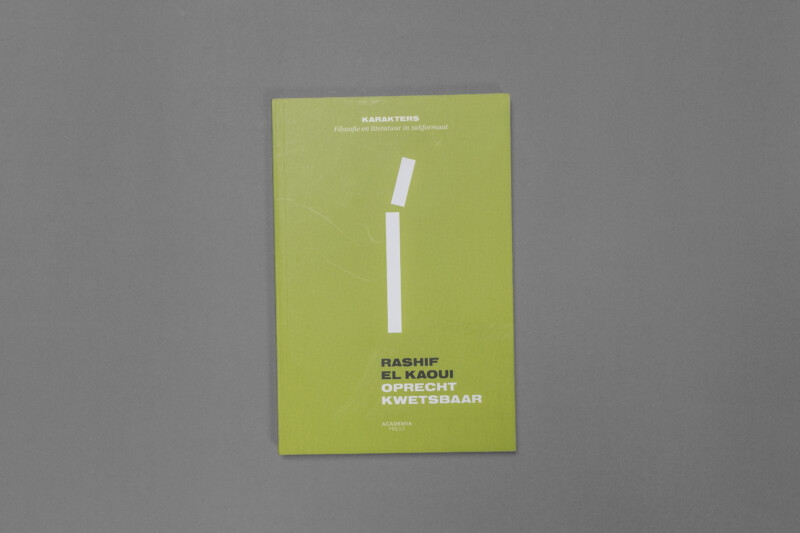
 publicationLees, kijk, luisterartistic activities Oprecht kwetsbaar
 publicationLees, kijk, luisterartistic activities Ik weet niet, dus ik ben
 publicationLees, kijk, luisterartistic activities Van melkweg tot moraal
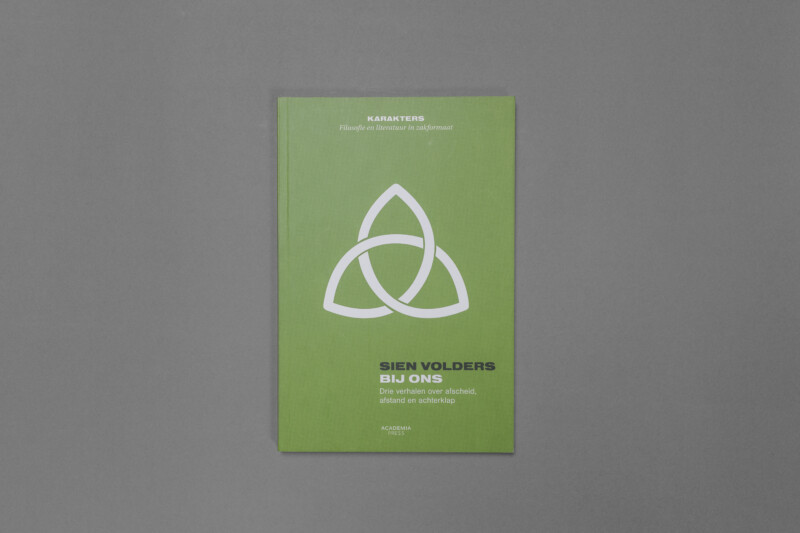
 publicationLees, kijk, luisterartistic activities Bij ons
 publicationLees, kijk, luisterartistic activities De mens in opstand
 publicationLees, kijk, luisterartistic activities Cafuné
 publicationLees, kijk, luisterartistic activities Allmensch
 publicationLees, kijk, luisterartistic activities Zorgangst
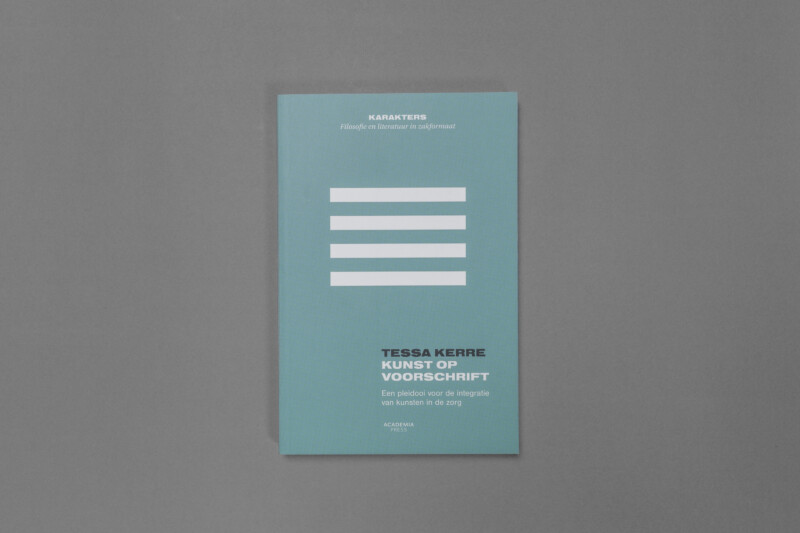
 publicationLees, kijk, luisterartistic activities Kunst op voorschrift
 publicationLees, kijk, luisterartistic activities DominantieWaarom we denken wat we denken
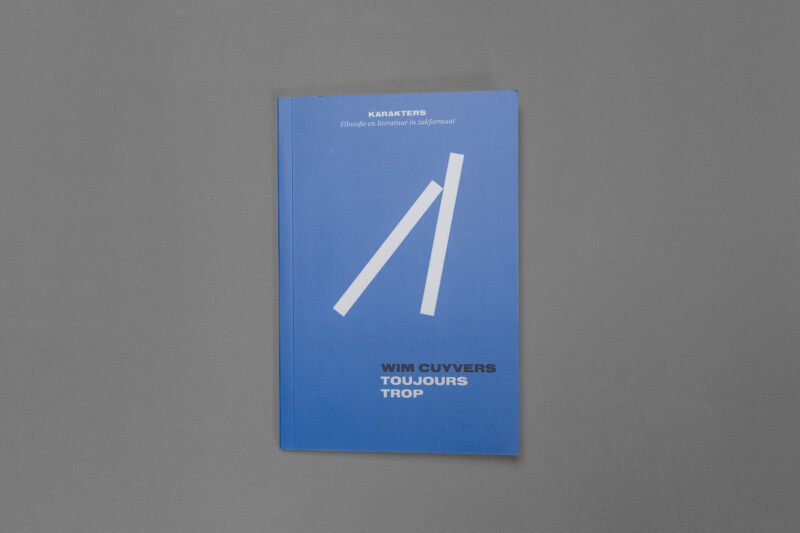
 publicationLees, kijk, luisterartistic activities Toujours Trop
 publicationLees, kijk, luisterartistic activities Heersers
 publicationLees, kijk, luisterartistic activitiesKarakters Deze hoedanigheid
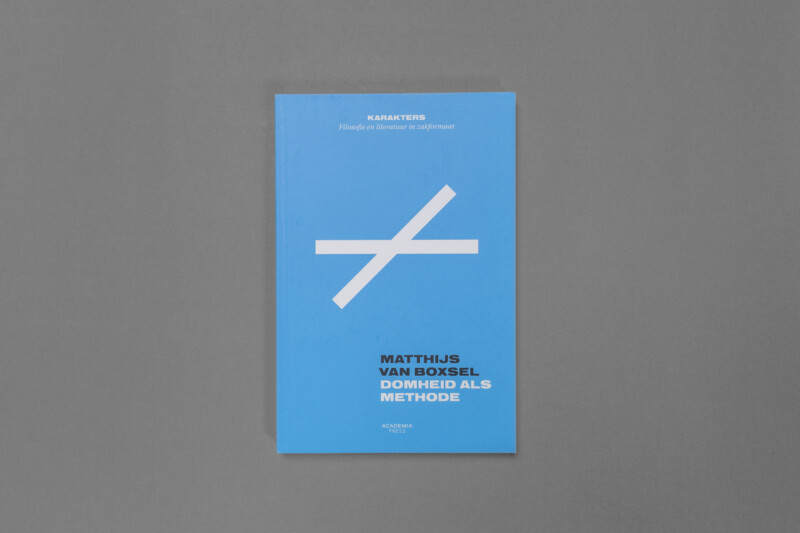
 publicationLees, kijk, luisterartistic activitieskarakters Domheid als methode
 publicationLees, kijk, luisterartistic activitiesKarakters De Zielhouderij
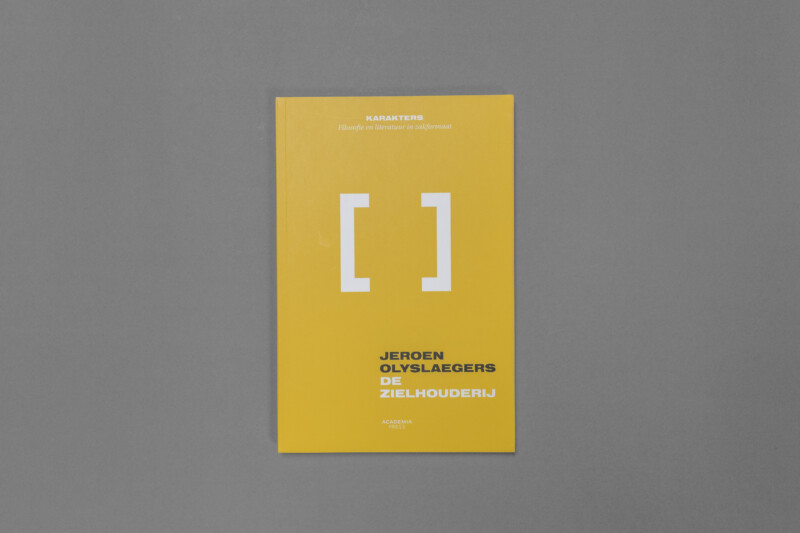 publicationLees, kijk, luisterartistic activities De mens ... Maat van alle dingen
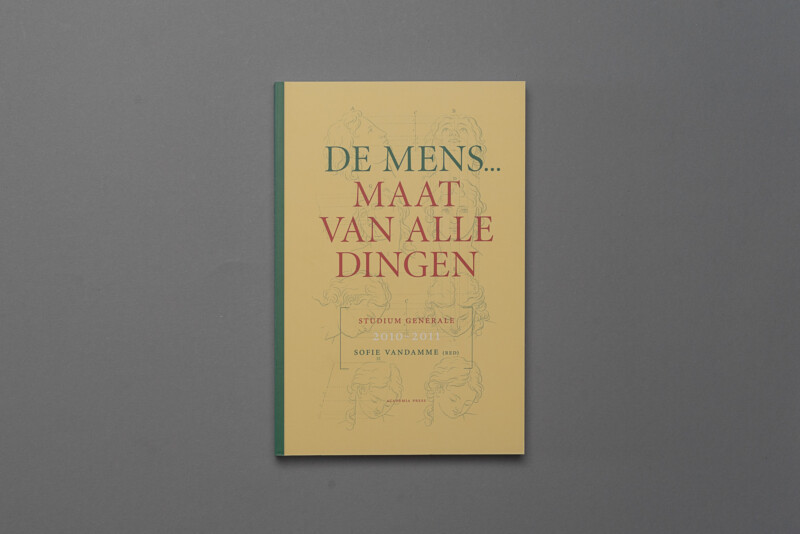 publicationLees, kijk, luisterartistic activities