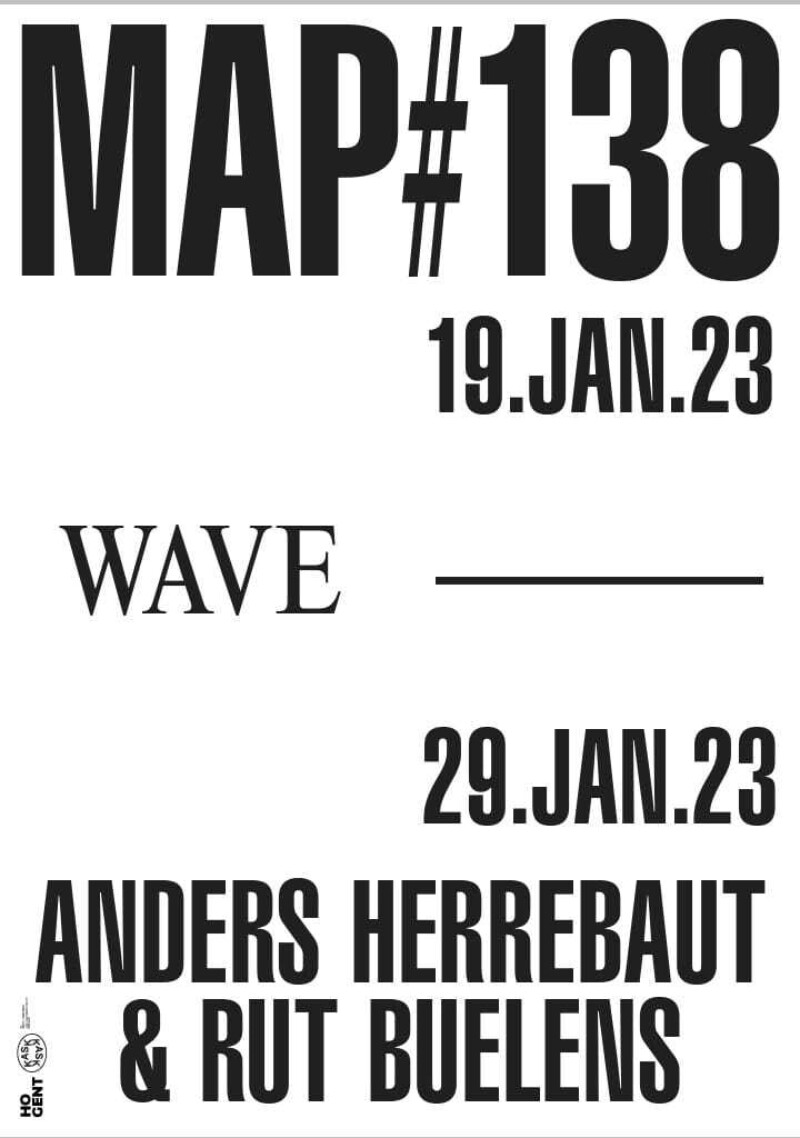
19.01.23 – 29.01.23, #138: Wave, Anders Herrebaut & Rut Buelens
Tentoonstelling met werk van masterstudenten vrije kunsten Anders Herrebaut & Rut Buelens
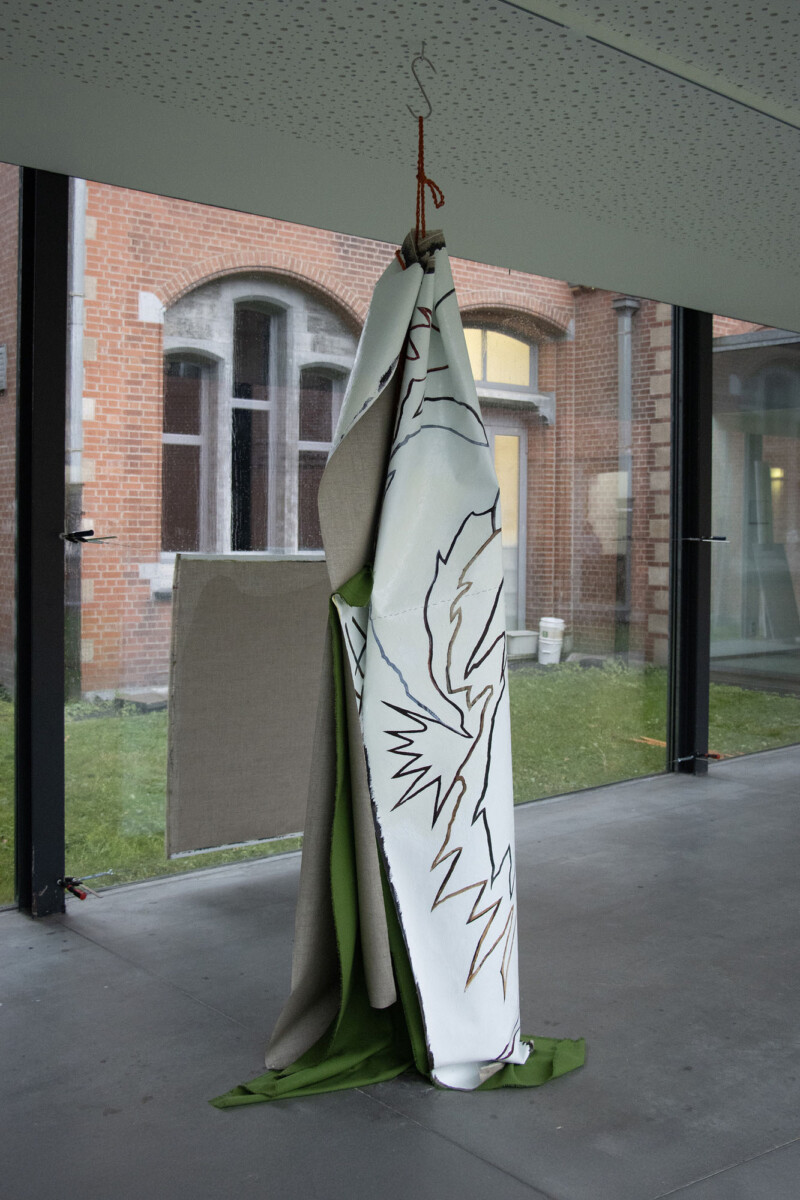 presentatieLees, kijk, luisteronderwijsstudenten vrije kunsten loose ends: meeting, meandering, wandering
 artikelLees, kijk, luisteronderwijsstudenten grafisch ontwerp To un-fold
 presentatieLees, kijk, luisteronderwijsartistieke werkingstudent fotografie Inside Conversations
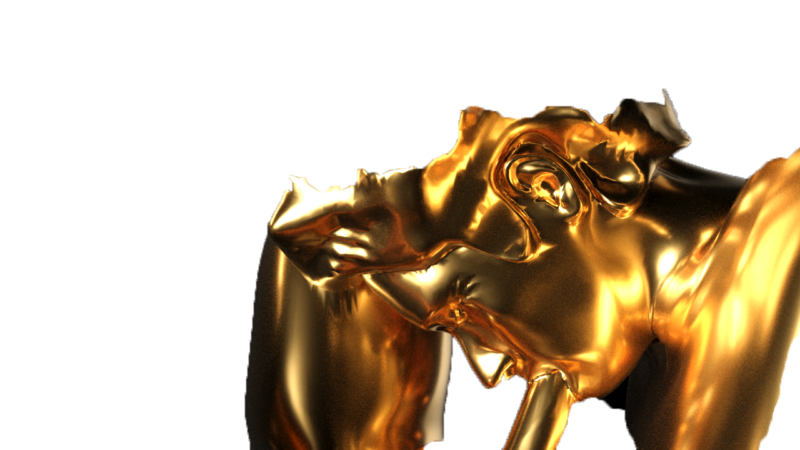 artikelLees, kijk, luisteronderwijsartistieke werking MAP#127: Emma Onghena & Kas Wellens, Blikveld
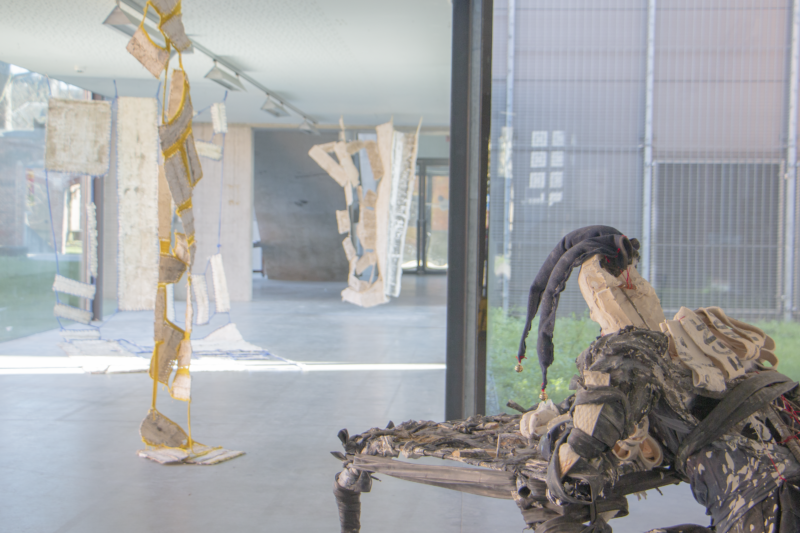 artikelLees, kijk, luisteronderwijsartistieke werking MAP#128: Anna Schlooz & Paula Vicente, Intra-actio
 artikelLees, kijk, luisteronderwijsartistieke werking MAP#130: Teodora Oita & Kei Sendak, I cannot translate, I cannot send either
 artikelLees, kijk, luisteronderwijsartistieke werking MAP#134: George Chinnery & Reza Yavari
 artikelLees, kijk, luisteronderwijsartistieke werking
 #197 Matts Nauwelaers, Masterprojecten (MAP)tentoonstellingAgendaArtistieke werking
"Fabricate Nature" is een onderzoek naar de manier waarop wij ons als mens verhouden tot een steeds verder verbasterde natuur, waarvan we tegelijk in grote mate afhankelijk zijn geworden. Die vervreemding is overal zichtbaar. De bossen waarin we wandelen zijn vaak door de mens aangeplant en bestaan uit monoculturen waar fauna en flora onder te lijden hebben. Het voedsel in de winkelrekken bevat ingrediënten waarvan we de namen nauwelijks nog kunnen lezen of begrijpen. Ook het landschap rondom ons wordt steeds meer bepaald door een mechanische en door de mens vormgegeven omgeving. Het is precies die vervreemding die Matts Nauwelaers in zijn expo probeert weer te geven. "Fabricate Nature" onderzoekt de grens tussen het natuurlijke en het door de mens geconstrueerde, en stelt de vraag hoe we ons vandaag nog verhouden tot een natuur die steeds meer door onszelf wordt gevormd, aangepast en vervangen.
Marissal
Louis Pasteurlaan 2
9000 Gent
ma-do: 08:00 – 22:00
vr: 08:00 – 18:00
za-zon: 12:00 – 18:00
 #196 Mo Paeleman, Masterprojecten (MAP)tentoonstellingAgendaArtistieke werking
Beste Jack,
We kennen elkaar niet. Dit is een uitnodiging. Een instructieboekje. Zo een die je tegenkomt bij je nieuwe aangekochte monopolydoos. Iets wat je niet opent omdat je allang de spelregels, of je eigen versie kent. Beste Jack, ik vraag: wil jij met mij dit spel spelen?
Het spel van het onwetende, van vrijheid en van ontdekking.
Ik speel niet graag alleen. Lees jij de instructies?
Dus Jack, wat is spel voor jou? Speel jij wel volgens de spelregels? Of ga je mee met mij de spelregels overtreden. Dan kunnen we op het einde samen onze onverdiende overwinning vieren. Je moet wel weten, wie graag de regels breekt, botst natuurlijk wel op muren, want valspelers worden uiteindelijk altijd uitgesloten.
Groetjes
Marissal
Louis Pasteurlaan 2
9000 Gent
ma-do: 08:00 – 22:00
vr: 08:00 – 18:00
za-zon: 12:00 – 18:00
 #195 Kyra Voordeckers, Masterprojecten (MAP)tentoonstellingAgendaArtistieke werking
Curated by Nora Franco
A scenography of memories
This place refers to a space beyond itself
A space that no longer exists as it once did
This is how I remember it
At least, I think it is
This is a desperate attempt to hold on
Onto something temporary
keep writing
keep drawing
And above all, to keep dreaming
Of how everything once looked
Until I can no longer distinguish
What is still real
And what I have imagined
But does that still matter?
A memory is temporary. They fade, they deform and eventually, they disappear. We cannot perceive or recall time as merely a physical dimension, but only through its traces, places, images, and events.
We remember through space, especially through the intimacy of the house. To remember is to dream; to dream is to create memory. In trying to translate this, we encounter limits. Walls, details, and sharpness cannot contain the multidimensionality of memory. Incompleteness and fragmentation hold a suggestive, emotional power. They force us toward memory and imagination. Shadows, as reductions, leave space to complete what is missing.
Within this, I question textile as a material for scenography. Rather than filling space, I explore how it can expand through shadow, transparency, and reflection, existing beyond its physical form.
As a costly and temporary medium, textile calls for adaptability rather than fixed, site-specific design. Atmosphere emerges not from covering a space, but from engaging with it, working in relation to what is already there.
In this project, scenography is simply a space that refers to a place outside itself. It does so without imitating it, without creating an exact copy. The opportunity to fantasize is stronger than the realistic image.
Marissal
Louis Pasteurlaan 2
9000 Gent
ma-do: 08:00 – 22:00
vr: 08:00 – 18:00
za-zon: 12:00 – 18:00
 #194 Louis Locus, Jonas Van Geel, Masterprojecten (MAP)tentoonstellingAgendaArtistieke werking
Marissal
Louis Pasteurlaan 2
9000 Gent
ma-do: 08:00 – 22:00
vr: 08:00 – 18:00
za-zon: 12:00 – 18:00
 #193 Margaux De Pauw, Charlotte Bracke, Masterprojecten (MAP)tentoonstellingAgendaArtistieke werking
RANDVOORWAARDE is een samenwerking tussen Margaux De Pauw en Charlotte Bracke.
Samen onderzoeken ze de verhouding van brandblussers binnen een exporuimte en hoe die zich tot schilderijen kunnen verhouden zonder als storend te worden gezien. In plaats van de brandblusser te negeren, wil Charlotte er net aandacht naartoe brengen. De bijhorende pictogrammen zijn ons allemaal bekend, maar verdwijnen vaak uit ons zicht, tot er gevaar dreigt.
In deze expo laten ze brandblusser, pictogram en schilderij samenwerken. Wat normaal genegeerd wordt, wordt hier een speelse interactie. Want misschien is de brandblusser wel het meest succesvolle object in de kunstwereld: hij hangt in elk museum.
Bij Margauxs schilderijen speelt ruimtelijkheid een centrale rol. De werken functioneren als instrumenten om ruimtelijk te denken: ze creëren een veld waarin diepte tegelijk wordt gesuggereerd en tegengewerkt. Het is een proces van constante herformulering. Net in dat gegeven vinden Margaux en Charlotte elkaar: in het herformuleren van de realiteit, in het zoeken naar diepte op plaatsen waar die op het eerste moment niet te vinden lijkt.
Marissal
Louis Pasteurlaan 2
9000 Gent
ma-do: 08:00 – 22:00
vr: 08:00 – 18:00
za-zon: 12:00 – 18:00
 #192 Rosa Lut, Masterprojecten (MAP)tentoonstellingAgendaArtistieke werking
‘Heb je ooit een nachtegaal horen schreeuwen?’, vertelt het verhaal van Philomela, één van de vele vrouwen uit de Griekse mythologie die werd bestolen van haar stem. Aan de hand van een audiowerk onderzoekt Anne Rosa Lut hoe vrouwen, net als zangvogels, hun stem aanpassen om gehoord te worden binnen een patriarchale samenleving vol ruis.
do 09:00-20:00
vr 09:00-16:00
 #191 Lotte Vanpuyvelde, Riet Van Lysebettens, Masterprojecten (MAP)tentoonstellingAgendaArtistieke werking
Frilly Blouse Syndrome vertrekt vanuit het essay Why Have There Been No Great Women Artists? van Linda Nochlin (1971), en bevraagt vrouwelijke representatie en zichtbaarheid binnen de kunstgeschiedenis.
Met Rosa Bonheur als vertrekpunt verschijnt een 19de-eeuwse kunstenares die haar plaats niet zozeer vond, maar eerder nam — en daar vervolgens gewoon bleef.
Marissal
Louis Pasteurlaan 2
9000 Gent
ma-do: 08:00 – 22:00
vr: 08:00 – 18:00
za-zon: 12:00 – 18:00
 #189 Lâle Lootens, Masterprojecten (MAP), Het PaviljoententoonstellingAgendaArtistieke werking
In een ademende, veranderlijke ruimte raakt Washing The Soul aan een innerlijke verschuiving, een beweging van loslaten en terugkeren. In die omwenteling wordt het zelf zachter, ontvankelijk voor wat het overstijgt. Wat hier resoneert, is een stille toenadering tot het onnoembare.
Louis Pasteurlaan 2
9000 Gent
ma-do: 08:00 – 22:00
vr: 08:00 – 18:00
za-zon: 12:00 – 18:00
Marissal
Louis Pasteurlaan 2
9000 Gent
vr: 08:00 – 18:00
za-zon: 12:00 – 18:00
 #188 Alyssia Reale, Lenie Van Asten, Masterprojecten (MAP)tentoonstellingAgendaArtistieke werking
Dit project brengt het werk van twee beeldhouwers samen. Lenie creëert witte, humoristische mengwezens: combinaties van verschillende levende wezens die samen een nieuw, eigen universum vormen.
Alyssia Reale vertrekt vanuit alledaagse consumptieobjecten, vaak speelgoed, en onderzoekt hoe hun betekenis vervaagt door tijd, gebruik en herinnering. Met felle kleuren en speelse vormen balanceert haar werk tussen herkenbaarheid en abstractie.
Rippelstippel fungeert als verbindend element in de ruimte en versterkt de samenhorigheid tussen beide oeuvres. Het sobere kleurgebruik van Lenie vormt een spannend contrast met Alyssia’s opvallende kleuren, waardoor hun werken elkaar aanvullen en versterken.
Marissal
Louis Pasteurlaan 2
9000 Gent
ma-do: 08:00 – 22:00
vr: 08:00 – 18:00
za-zo: 12:00 – 18:00